
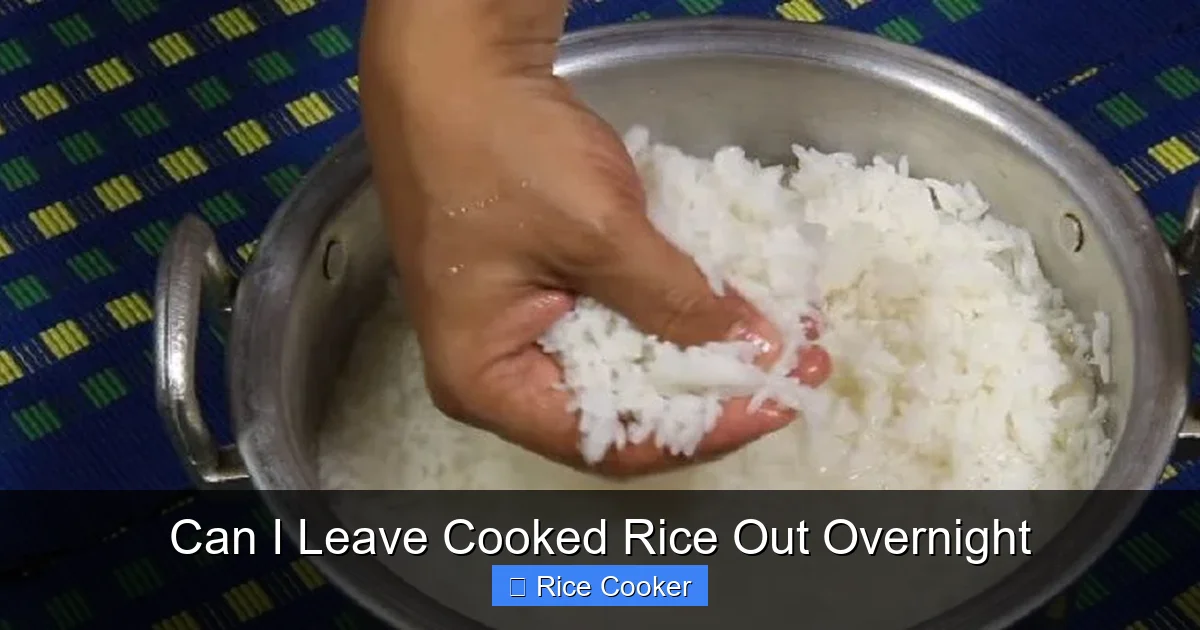
Can I leave cooked rice out overnight? The short answer is no—leaving cooked rice at room temperature for more than 2 hours increases the risk of foodborne illness. Rice can harbor Bacillus cereus, a bacteria that produces heat-resistant toxins. For safety, always refrigerate or freeze cooked rice within 1–2 hours of cooking. Understanding proper handling prevents spoilage and keeps your meals safe and delicious.
Key Takeaways
- Bacillus cereus risk: Cooked rice left at room temperature can grow Bacillus cereus, which causes food poisoning even after reheating.
- Time matters: Do not leave cooked rice out for more than 2 hours (or 1 hour if ambient temperature exceeds 90°F/32°C).
- Refrigeration is key: Store cooked rice in shallow containers and refrigerate within 1–2 hours of cooking.
- Reheating doesn’t kill all toxins: Bacillus cereus produces heat-stable toxins; proper cooling and storage are essential.
- Use frozen rice wisely: Freezing rice slows bacterial growth and preserves quality for up to 6 months.
- Check for spoilage signs: Discard rice if it smells off, feels slimy, or shows mold.
- Safe practices prevent illness: Follow food safety guidelines to protect yourself and your family.
Quick Answers to Common Questions
Can I leave cooked rice out overnight if I’m using a rice cooker?
No. Even with a rice cooker’s warming function, leaving rice out overnight increases the risk of Bacillus cereus growth. Refrigerate within 2 hours.
Does reheating rice kill all bacteria?
Yes, reheating kills bacteria, but not the heat-stable toxins produced by Bacillus cereus. Proper storage is essential to prevent toxin formation.
How long can cooked rice sit at room temperature?
Do not leave cooked rice out for more than 2 hours (1 hour if above 90°F/32°C). After that, the risk of food poisoning rises sharply.
Can I freeze cooked rice?
Yes. Freeze in shallow, labeled containers. It stays safe for up to 6 months. Thaw in the fridge before reheating.
How do I know if rice has gone bad?
Look for off smells, slimy texture, or mold. When in doubt, discard it. Bacillus cereus doesn’t always alter appearance or smell.
📑 Table of Contents
- Introduction: The Hidden Danger in Your Plate
- Why Is Cooked Rice Dangerous When Left Out?
- The Science Behind Rice Spoilage
- How Long Can You Safely Leave Cooked Rice Out?
- Safe Storage Tips for Cooked Rice
- What Happens If You Eat Bad Rice?
- Common Myths About Rice Safety
- Conclusion: Keep Your Rice Safe, Stay Healthy
Introduction: The Hidden Danger in Your Plate
Have you ever finished a big pot of rice for dinner, only to realize you didn’t have time to put it away? Maybe you were rushing to clean up, or the kids were asking for seconds. You might think, “It’s just rice—how bad could it be?” But here’s the truth: leaving cooked rice out overnight is not just inconvenient—it can be dangerous.
Cooked rice is a common ingredient in cuisines around the world, from sushi to fried rice. It’s soft, versatile, and satisfying. But beneath its innocent appearance lies a potential health hazard. Rice grains can absorb moisture during cooking and become a perfect breeding ground for bacteria—specifically, Bacillus cereus. This bacterium thrives in warm, moist environments and can multiply rapidly if rice is left sitting out too long.
You might wonder, “If I reheat rice later, won’t that kill any bacteria?” Unfortunately, that’s not enough. Bacillus cereus produces spores and toxins that survive standard reheating. So even if your rice looks and smells fine, it could still make you sick. In this article, we’ll explore why you shouldn’t leave cooked rice out overnight, how to store it safely, and what to do if you accidentally left some out.
Whether you’re using a rice cooker, stovetop, or microwave, understanding safe handling practices ensures your meals stay delicious and your family stays healthy. Let’s dive into the science, the practical tips, and the real-life scenarios that every home cook should know.
Why Is Cooked Rice Dangerous When Left Out?
Visual guide about Can I Leave Cooked Rice Out Overnight
Image source: recipeofbangladesh.com
When raw rice is cooked, its surface becomes moist and warm—ideal conditions for bacterial growth. But the real danger comes from Bacillus cereus, a spore-forming bacterium commonly found in soil and grain. These spores can survive the cooking process because they’re heat-resistant. Once the rice cools slightly and enters the “danger zone” (between 40°F and 140°F / 4°C and 60°C), the spores begin to germinate and multiply.
Bacillus cereus is particularly tricky because it produces two types of toxins:
– **Emetic toxin**: Causes vomiting and nausea, often within 1–5 hours after eating contaminated rice.
– **Enterotoxin**: Leads to diarrhea and abdominal cramps, appearing 6–15 hours later.
What makes this especially concerning is that reheating rice doesn’t destroy these toxins. Boiling rice at 212°F (100°C) will kill bacteria, but it won’t break down the toxins already produced. That’s why simply microwaving leftover rice isn’t enough—if it was left out too long, it could still cause food poisoning.
Another reason cooked rice is risky is its texture. Unlike meats or vegetables, rice has a starchy, porous structure that holds water well. This moisture retention helps bacteria spread quickly through the grains. If rice sits uncovered on the counter, it absorbs kitchen odors, dries out unevenly, and invites contamination from dust, insects, or other foods.
Even if you’ve used a rice cooker with a warming function, be cautious. While modern rice cookers keep food warm for a few hours, they aren’t designed for long-term storage. The warming plate typically maintains rice at around 170°F (77°C), which kills bacteria but doesn’t stop toxin production if spores were already active before cooking.
So, while a warm rice cooker might seem convenient, it doesn’t eliminate the risk of leaving cooked rice out overnight. The safest approach is to treat cooked rice like other perishable foods—refrigerate promptly.
The Science Behind Rice Spoilage

Visual guide about Can I Leave Cooked Rice Out Overnight
Image source: preparedcooks.com
Understanding how rice spoils helps explain why refrigeration is non-negotiable. When rice is cooked, the starches gelatinize, creating a sticky, moist environment. This is where Bacillus cereus enters the picture. These bacteria form tough spores that survive cooking. As the rice cools, the spores wake up and start multiplying.
The rate of bacterial growth depends on temperature. The “danger zone” for food is between 40°F and 140°F (4°C and 60°C). Within this range, bacteria double every 20 minutes under ideal conditions. That means one bacterium can become millions in just a few hours.
Here’s a quick example: Imagine you cook 2 cups of rice. If you leave it on the counter for 3 hours at 75°F (24°C), the number of bacteria could increase by thousands. Even if you eat only a small portion, you might ingest enough toxins to get sick.
Temperature also affects texture. As rice cools, moisture evaporates, causing clumping. If left uncovered, it may dry on top while staying soft underneath—a sign of uneven cooling. This inconsistency makes reheating difficult and increases the chance of cold spots where bacteria survive.
Freezing changes the starch structure in rice, making it softer upon reheating. That’s why frozen rice often turns mushy. But freezing also halts bacterial growth completely. So while texture suffers slightly, safety improves dramatically.
In summary, the combination of moisture, warmth, and starch makes cooked rice uniquely vulnerable to rapid spoilage. Without proper cooling, it becomes a time bomb for foodborne illness.
How Long Can You Safely Leave Cooked Rice Out?
The general rule is clear: **do not leave cooked rice out for more than 2 hours**. If the room temperature is above 90°F (32°C), reduce this to just 1 hour. These guidelines come straight from the U.S. Food and Drug Administration (FDA) and the USDA.
Let’s break it down:
– **Room temperature (70°F / 21°C):** Max 2 hours
– **Hot kitchen (above 90°F / 32°C):** Max 1 hour
After 2 hours, the risk of Bacillus cereus toxin production rises significantly. Even if the rice looks and smells fine, it could still be unsafe.
Some people argue, “I left rice out overnight and felt fine.” That’s true—you might not get sick every time. But that doesn’t mean it’s safe. Bacillus cereus outbreaks are often underreported because symptoms can be mild or mistaken for stomach flu. One contaminated meal might not hurt anyone, but repeated exposure increases the risk.
Here’s another angle: rice used in sushi is cooked, then cooled quickly and kept refrigerated. Sushi chefs use special techniques to prevent spoilage. But even then, rice is consumed within a few days. Never serve rice at room temperature for extended periods, especially in buffet settings.
If you’re preparing rice for a large group, consider timing your cooking so that rice is served fresh or stored properly. For example, cook rice in the morning, serve lunchtime, then refrigerate leftovers. Avoid cooking rice the night before unless you plan to freeze it.
Remember: Time is the enemy of food safety. The longer rice sits, the higher the chance of contamination.
Safe Storage Tips for Cooked Rice
Storing cooked rice correctly is simple but crucial. Follow these steps to keep your rice safe and tasty:
Cool Quickly
Don’t let rice sit for hours. Spread it in a single layer on a baking sheet or shallow dish. This speeds up cooling and reduces condensation, which encourages mold.
Use Shallow Containers
Transfer cooled rice to airtight containers or resealable plastic bags. Choose containers no deeper than 2 inches. Thin layers freeze and thaw faster, preserving texture better.
Label and Date
Write the date on the container. Refrigerated rice lasts 3–4 days. Frozen rice can last 6 months—but don’t rely on memory alone. When in doubt, throw it out.
Refrigerate Promptly
Place containers in the refrigerator within 1–2 hours of cooking. Don’t pile hot rice on top of cold leftovers—this raises the fridge’s internal temperature.
Freeze for Long-Term Storage
For rice you won’t eat soon, freeze it. Portion into 1-cup servings. Wrap in foil or freezer-safe bags, removing as much air as possible. Thaw in the fridge overnight before reheating.
Reheat Thoroughly
Always reheat rice until steaming hot throughout. Use a food thermometer to ensure it reaches 165°F (74°C). Stir occasionally to distribute heat evenly.
By following these steps, you protect yourself from foodborne illness while keeping rice flavorful and usable.
What Happens If You Eat Bad Rice?
Eating spoiled rice can lead to two types of food poisoning:
Vomiting Type
Symptoms appear 1–5 hours after eating. You’ll feel nauseous and may vomit within an hour. This usually lasts 12–24 hours and resolves on its own.
Diarrhea Type
This starts 6–15 hours later. Expect watery diarrhea, cramping, and sometimes fever. Symptoms last 1–2 days.
Both types are caused by Bacillus cereus toxins. Unlike infections, toxins aren’t killed by reheating. So even if you boil rice that was left out, it could still make you sick.
If you experience severe symptoms—dehydration, high fever, or blood in stool—seek medical help. Most cases are mild and treated with rest and fluids.
Prevention is always better than treatment. Stick to safe handling practices, and you’ll avoid the discomfort entirely.
Common Myths About Rice Safety
Many people believe outdated or incorrect ideas about rice safety. Let’s debunk some myths:
Myth 1: “Rice is safe if I reheat it thoroughly.”
False. Reheating kills bacteria, but not the toxins they produce. If rice was left out too long, reheating won’t make it safe.
Myth 2: “Leftover rice is fine as long as it smells good.”
Not necessarily. Bacillus cereus doesn’t change the smell or taste of rice. You can’t rely on appearance or odor to judge safety.
Myth 3: “Cooked rice can sit out all night if I cover it.”
Covering slows drying but doesn’t stop bacterial growth. Covering traps warmth and moisture, speeding up spoilage.
Myth 4: “Freezing ruins rice forever.”
Not true. While frozen rice can become soft, it’s perfectly safe to eat. Just thaw and reheat properly.
Myth 5: “All rice is equally risky.”
Actually, basmati and jasmine rice have lower spore counts than wild rice or brown rice, which retain more moisture. But all cooked rice carries risk if mishandled.
Stay informed and trust science over superstition.
Conclusion: Keep Your Rice Safe, Stay Healthy
Leaving cooked rice out overnight is never worth the risk. Bacillus cereus is a silent threat that can turn a delicious meal into a health scare. By storing rice properly—cooling it quickly, refrigerating within 2 hours, and reheating thoroughly—you protect your family from unnecessary illness.
Modern rice cookers are great tools, but they don’t replace good food safety habits. Always treat cooked rice like other perishables. Think ahead, plan portions, and prioritize safety over convenience.
Whether you’re feeding a small family or hosting a dinner party, these tips apply everywhere. A little extra effort now saves you from regret later. So next time you cook rice, remember: when in doubt, chill it out.
Frequently Asked Questions
Is it safe to eat rice left out overnight?
No, it is not safe. Cooked rice left at room temperature overnight can develop Bacillus cereus toxins, which may cause food poisoning even after reheating.
How should I store cooked rice properly?
Cool rice quickly, transfer to shallow containers, and refrigerate within 2 hours. Label with the date and consume within 3–4 days.
Can freezing affect the taste of rice?
Freezing can soften rice slightly, but it doesn’t spoil. Thaw and reheat thoroughly to enjoy safe, edible rice.
What are the symptoms of rice poisoning?
Symptoms include nausea, vomiting, diarrhea, and abdominal cramps. They usually appear within 1–15 hours after eating contaminated rice.
Should I worry about rice in my rice cooker?
If rice has been in the cooker for over 2 hours, it’s best to discard it. The warming plate isn’t sufficient for long-term safety.
Can I reuse leftover rice for fried rice?
Only if it’s been stored properly in the refrigerator. Make sure it’s been cooled and refrigerated within 2 hours of cooking.