
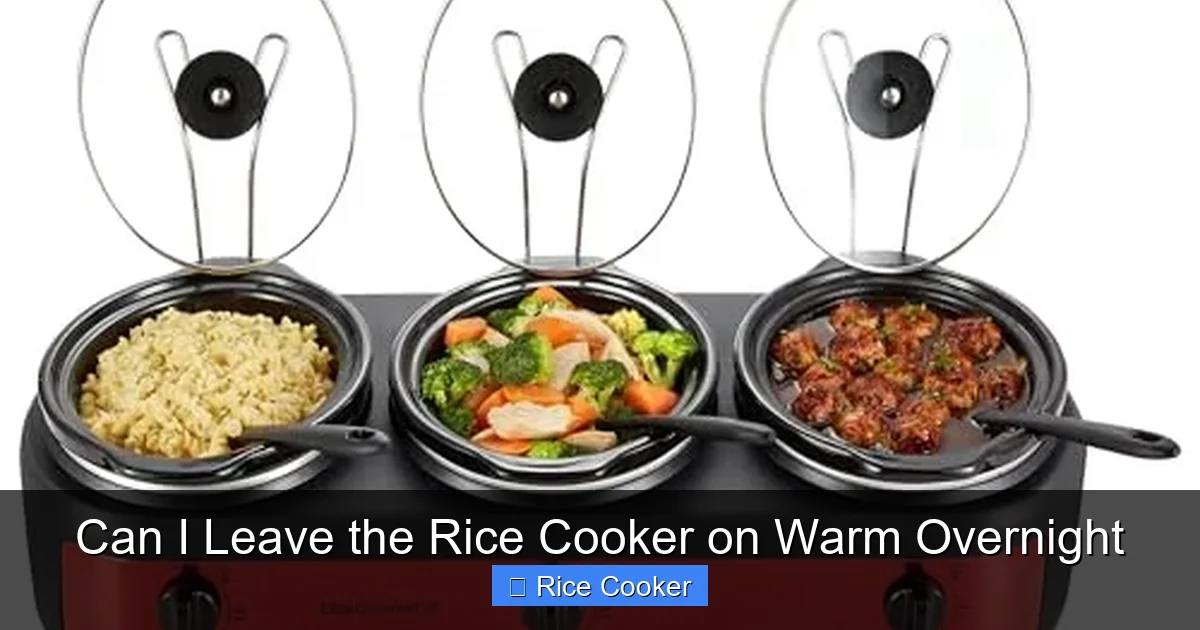
Leaving the rice cooker on warm overnight is usually safe, thanks to built-in temperature controls that prevent overheating. However, food safety and appliance longevity depend on proper usage and maintenance. Always follow manufacturer guidelines and avoid leaving uncooked rice soaking too long.
Key Takeaways
- Safety First: Most modern rice cookers are designed with automatic shut-off and warm settings that maintain a safe temperature (around 140°F/60°C), minimizing burn risk and bacterial growth.
- Food Safety Risks: Leaving cooked rice in the warm setting for more than 8–10 hours increases the chance of bacterial contamination, especially if the environment isn’t perfectly sealed or clean.
- Appliance Longevity: Continuous use on warm mode can wear out heating elements over time, reducing your rice cooker’s lifespan and efficiency.
- Best Practices: If you must leave rice warm overnight, transfer it to an airtight container and refrigerate within 2 hours to preserve freshness and safety.
- Energy Efficiency: The warm setting uses minimal power—about 10–25 watts—so energy consumption isn’t a major concern, but it’s still not ideal for long-term storage.
- Cleaning Matters: Regular cleaning of the inner pot and warming plate prevents mold and bacteria buildup, especially important if you frequently use the warm function.
- Know Your Model: Some rice cookers have advanced features like keep-warm timers or delayed start functions—check your manual to see what yours offers.
📑 Table of Contents
- Can I Leave the Rice Cooker on Warm Overnight?
- How Do Rice Cookers Work?
- The Science Behind the Warm Setting
- Risks of Leaving Rice Cooker on Warm Overnight
- When Is It Safe to Leave Rice Cooker on Warm?
- Best Practices for Using the Warm Setting
- Alternatives to Leaving Rice Cooker on Warm Overnight
- Signs Your Rice Cooker Is Unsafe to Use
- Conclusion: Should You Leave the Rice Cooker on Warm Overnight?
Can I Leave the Rice Cooker on Warm Overnight?
Have you ever come home late from work, only to find a perfectly cooked bowl of rice waiting for you? Or maybe you’re meal prepping for the week and want to have warm rice ready when you need it. In both cases, the question arises: Can I leave the rice cooker on warm overnight? It sounds convenient—why turn it off when it’s already doing the job? But convenience doesn’t always mean safety or practicality.
Rice cookers are kitchen staples, loved for their simplicity and ability to produce consistent results. Most models come with a “warm” setting that maintains cooked food at a steady temperature after cooking is complete. This feature is great for serving leftovers or keeping food ready during busy days. But when it comes to overnight use, things get a little tricky. You’re not just dealing with heat—you’re dealing with food safety, appliance performance, and long-term maintenance.
Let’s break it down. We’ll explore how rice cookers work, the science behind the warm setting, the real risks involved, and most importantly, what you can do to stay safe while still enjoying that warm, fluffy rice whenever you want it.
How Do Rice Cookers Work?

Visual guide about Can I Leave the Rice Cooker on Warm Overnight
Image source: metrocookingdallas.com
Before we dive into whether you should leave your rice cooker on warm overnight, let’s talk about how these appliances actually work. Understanding the mechanics helps explain why they behave the way they do—and what happens when you push them beyond normal use.
Most rice cookers operate using a simple yet effective system: a heating element at the bottom and a thermostat that monitors temperature. When you add water and rice, the unit heats up. Once the water reaches boiling point and evaporates, the rice absorbs the remaining moisture and cooks through steam. At this stage, the thermostat detects the drop in temperature and switches the cooker to the “warm” setting.
The warm function keeps the inner pot at a consistent low heat—usually around 140°F (60°C)—enough to prevent cold rice but not hot enough to re-cook or dry out the grains. Modern models often include multiple sensors and timers to ensure precise control, making them reliable for everyday cooking.
Some advanced rice cookers also feature fuzzy logic technology, which mimics human decision-making by adjusting heat based on rice type, quantity, and even ambient conditions. These smart systems help reduce sticking and burning, further enhancing safety and usability.
But here’s the catch: while the warm setting is designed to be safe for short periods, it wasn’t specifically engineered for 8+ hour stretches. That’s where the debate begins.
The Science Behind the Warm Setting
To truly understand the risks and benefits of leaving your rice cooker on warm overnight, we need to look at the science behind food storage and temperature control.
Food safety experts emphasize the importance of the “danger zone,” which refers to temperatures between 40°F and 140°F (4°C to 60°C). Within this range, harmful bacteria like *Bacillus cereus*—the culprit behind many cases of food poisoning from rice—can multiply rapidly. This bacterium is especially common in starchy foods like rice because it produces heat-resistant spores that survive cooking.
When rice is cooked, these spores are activated. If the rice cools slowly or stays warm for too long, they begin to grow and release toxins that can cause vomiting or diarrhea—even if the food looks and smells fine.
Now, here’s where the rice cooker’s warm setting shines: it keeps food above 140°F, which technically puts it outside the danger zone. So, in theory, leaving rice warm in the cooker should prevent bacterial growth, right?
Well… not exactly.
Even though the temperature is safe, there are other factors at play. For one, the warm setting isn’t always perfectly stable. Small fluctuations in temperature can occur due to power surges, aging components, or poor insulation. More importantly, the surface of the rice may cool faster than the center, creating micro-zones where bacteria could thrive.
Additionally, the warm plate underneath the pot can retain moisture, which promotes condensation. If that moisture drips onto the rice or settles in crevices, it creates an environment perfect for mold and yeast growth—especially overnight.
So while the warm setting is safer than room temperature, it’s not foolproof. And prolonged exposure increases the risk, particularly if the rice has been sitting for more than 6–8 hours.
Risks of Leaving Rice Cooker on Warm Overnight
Let’s be honest: leaving your rice cooker on warm all night might seem harmless, but it comes with several potential downsides. Let’s go through the main risks so you can make an informed decision.
Bacterial Growth and Food Contamination
As mentioned earlier, the primary concern is bacterial contamination. While the warm setting keeps the rice above the danger zone, it doesn’t eliminate the risk entirely. *Bacillus cereus* can still develop under certain conditions—especially if the rice was already slightly contaminated before cooking or if the cooker isn’t cleaned regularly.
Another issue is cross-contamination. If you’ve used the same spoon multiple times or stored other foods nearby, particles can mix into the rice. Overnight, these tiny contaminants can multiply and compromise the entire batch.
Dryness and Texture Changes
Cooked rice left on warm for too long tends to dry out. The surface loses moisture faster than the inside, leading to a sticky or rubbery texture. Even if the rice still looks good, the mouthfeel can be disappointing.
This drying effect is especially noticeable in jasmine or basmati rice, which are naturally less sticky. After 12 hours on warm, they can become gummy and unappetizing.
Energy Consumption and Cost
While the warm setting uses very little power—typically 10–25 watts—running it continuously overnight adds up. Over a month, that’s enough electricity to light a small LED bulb for several days. Not a huge amount, but unnecessary if you don’t need the rice that early.
Moreover, keeping the appliance on all night increases wear and tear on internal components, which can shorten its lifespan.
Fire Hazard and Electrical Safety
Although rare, leaving any electrical appliance unattended for long periods poses a fire risk. Faulty wiring, overheating elements, or dust accumulation can lead to malfunctions. Rice cookers aren’t designed for continuous operation, so using them beyond intended limits increases vulnerability.
Older models or those with damaged cords are particularly risky. Even if your cooker seems fine today, unseen damage could escalate over time.
Mold and Odor Buildup
Moisture trapped under the lid or on the warm plate can encourage mold growth. This is especially true if the rice cooker isn’t cleaned after each use. Over time, mold spores accumulate and can spread to your rice—or worse, to other foods in your kitchen.
Additionally, residual odors from previous meals can linger and affect the taste of future batches.
When Is It Safe to Leave Rice Cooker on Warm?
Despite the risks, there are situations where leaving your rice cooker on warm overnight is perfectly acceptable—if done correctly. Here’s when it’s okay and how to do it safely.
Short-Term Use (Under 6 Hours)
If you’re planning to eat the rice within 6 hours, the warm setting is generally safe. Most rice cookers are designed to handle this kind of intermittent use. Just make sure the rice was freshly cooked and hasn’t been sitting out for more than 2 hours prior to being placed in the warm setting.
For example, if you cook dinner at 7 PM and turn off the cooker at 8 PM, leaving it on warm until 1 AM the next day, you’re likely in the clear. The rice remains above the danger zone, and the risk of spoilage is low.
High-Quality Models with Advanced Features
Some premium rice cookers come with enhanced safety features like dual thermostats, auto-shutoff timers, and humidity control. These models are better suited for longer warm cycles.
For instance, the Zojirushi NS-ZCC10 offers a “keep warm” function that automatically adjusts temperature and shuts off after 12 hours. Similarly, the Panasonic SR-DF151 has a “delayed start” option that lets you schedule cooking and warming precisely when you need it.
If your rice cooker has such features, it’s safer to leave it on warm overnight—as long as you trust the technology and clean it regularly.
In a Clean, Dry Environment
Even with a good model, cleanliness matters. Make sure the inner pot, lid, and warm plate are thoroughly washed and dried before use. A damp or dirty surface increases the risk of contamination.
Also, place the rice cooker in a draft-free area away from open windows or air conditioning vents. Sudden temperature changes can affect performance and safety.
Best Practices for Using the Warm Setting
If you still want to use the warm setting—whether for convenience or meal prep—follow these tips to minimize risks.
Transfer Rice to an Airtight Container
Instead of leaving rice in the cooker overnight, cook it ahead of time and store it properly. Transfer the rice to a glass or stainless steel container with a tight-fitting lid. Refrigerate within 2 hours and reheat thoroughly before eating.
This method is far safer and preserves texture better. Plus, you can portion the rice for easy grab-and-go lunches.
Use the Warm Setting Only When Needed
Don’t turn on the warm setting unless you plan to serve the rice soon. If you’re not going to eat it within 4–6 hours, it’s better to cool it down and refrigerate it.
Many rice cookers have a “timer” function that lets you delay cooking and warming. Use this to your advantage—set it for the exact time you want the rice ready.
Clean Your Rice Cooker Weekly
Build-up of starch, grease, and moisture can lead to odor, mold, and even electrical issues. Disassemble the parts (where possible), wash them with warm soapy water, and dry completely before reassembling.
Never immerse the base in water—it contains electrical components.
Avoid Stacking or Blocking Vents
Ensure the rice cooker has proper airflow. Don’t stack pots on top or block ventilation holes. Good airflow helps regulate internal temperature and reduces strain on the heating element.
Alternatives to Leaving Rice Cooker on Warm Overnight
If you’re worried about safety or just want to save energy, consider these alternatives.
Refrigerate and Reheat
This is the gold standard for food safety. Cook rice in batches, divide into containers, and store in the fridge. When ready to eat, reheat it on the stove or in the microwave until steaming hot throughout.
Modern microwaves with turntables distribute heat evenly, ensuring safe and tasty results.
Use a Thermos or Vacuum Flask
For on-the-go warmth, transfer cooked rice to a vacuum-insulated container. These retain heat for up to 12 hours without electricity.
They’re especially useful for packed lunches or picnics.
Meal Prep with Portion Control
Plan your meals weekly and cook rice in advance. Use portion-sized containers and label them with dates. This reduces waste and ensures you always have safe, ready-to-eat rice.
Signs Your Rice Cooker Is Unsafe to Use
Even with careful use, rice cookers can develop problems. Here’s how to spot warning signs.
Strange Smells or Mold
If you notice a sour, musty, or chemical odor, stop using the cooker immediately. Clean it thoroughly and check for mold under the lid or around the rim.
Uneven Heating or Failure to Warm
If the warm setting doesn’t activate or the rice cools quickly, the thermostat or heating element may be failing. Have it inspected by a professional.
Cracked Lid or Warped Pot
Damage compromises the seal and can lead to leaks or contamination. Replace damaged parts right away.
Frequent Power Surges or Tripped Breakers
This indicates an electrical issue. Unplug the cooker and consult an electrician.
Conclusion: Should You Leave the Rice Cooker on Warm Overnight?
So, can you leave the rice cooker on warm overnight? Technically, yes—but with caveats. For short durations and with clean, high-quality equipment, it’s generally safe. However, for anything beyond 6–8 hours, the risks outweigh the convenience.
The safest approach is to cook rice when needed, transfer it to an airtight container, and refrigerate it. This method protects your health, preserves flavor and texture, and extends the life of your appliance.
Remember: food safety isn’t about perfection—it’s about consistency. Small habits like proper storage, regular cleaning, and timely reheating make a big difference.
Your rice cooker is a powerful tool, but like any appliance, it works best when used wisely. By understanding its limits and following best practices, you can enjoy perfectly cooked rice every time—without worrying about what happens when you walk away.
Frequently Asked Questions
Is it safe to leave rice in the rice cooker on warm for 8 hours?
Yes, it can be safe for up to 8 hours if the rice cooker maintains a consistent temperature above 140°F and was freshly cooked. However, the risk of bacterial growth increases over time, so it’s best to transfer rice to a sealed container and refrigerate after 6–8 hours.
Can bacteria grow in rice left on warm?
Yes, certain bacteria like *Bacillus cereus* can grow in cooked rice if it stays in the “danger zone” (40°F–140°F) for too long. Even though the warm setting keeps rice above 140°F, temperature fluctuations and moisture can create conditions favorable for slow-growing bacteria.
How long can rice stay on warm in a rice cooker?
Most manufacturers recommend using the warm setting for no more than 10–12 hours. Prolonged exposure increases the risk of dryness, texture changes, and bacterial contamination. For best results, consume within 6–8 hours.
Should I unplug my rice cooker overnight?
Yes, it’s a good safety practice to unplug the rice cooker when not in use, especially overnight. This reduces the risk of electrical hazards, saves energy, and extends the appliance’s lifespan.
What happens if you leave rice cooker on warm all night?
Leaving it on warm all night may cause the rice to dry out, develop off-flavors, or accumulate moisture that encourages mold. There’s also a slight risk of component wear or electrical issues, though modern models are built to handle occasional use.
Is it cheaper to leave rice cooker on warm?
The energy cost of running the warm setting overnight is low—about $0.01–$0.03 per night. However, the cumulative cost over months is minimal, and the safety risks make it worth avoiding. Refrigeration is more efficient and safer.
Can I Leave Cooked Rice Out of the Fridge
Yes, it can be safe for up to 8 hours if the rice cooker maintains a consistent temperature above 140°F and was freshly cooked. However, the risk of bacterial growth increases over time, so it’s best to transfer rice to a sealed container and refrigerate after 6–8 hours.