
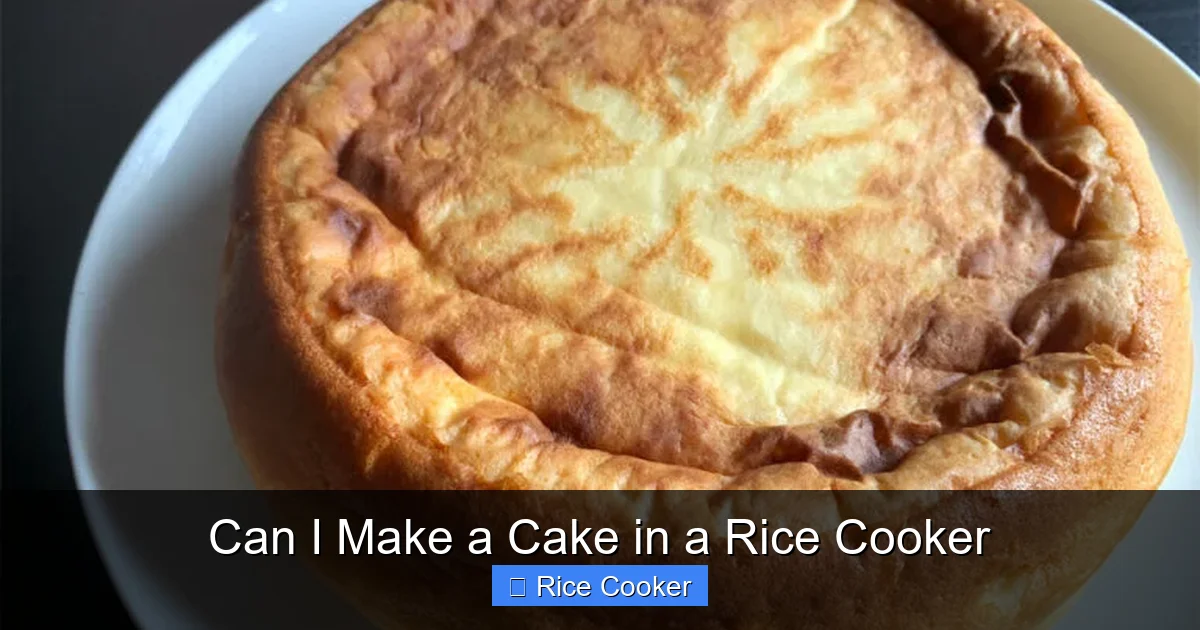
You absolutely can make a cake in a rice cooker — no oven required! With just a few basic ingredients, your trusty rice cooker transforms into a versatile baking tool that delivers moist, fluffy results every time. Whether you’re short on time or just want to try something new, this method is simple, affordable, and surprisingly effective.
Key Takeaways
- Rice cookers are versatile: Beyond cooking rice, they can bake cakes, steam vegetables, and even make yogurt with the right settings.
- Simple ingredients work best: Use flour, sugar, eggs, milk, and oil — avoid complex mixes that require precise temperatures.
- Non-stick pan is essential: Always use a non-stick insert or line the inner pot to prevent sticking and damage.
- Baking time varies: Most cakes take 30–45 minutes depending on size, batter consistency, and model of rice cooker.
- Customize freely: Add chocolate chips, fruit, or spices to create your favorite flavors without extra effort.
- Safety first: Never run the rice cooker empty and always unplug it after use for safety.
- Cleanup is easy: A quick rinse or wipe usually does the trick thanks to non-stick surfaces.
[FEATURED_IMAGE_PLACEHOLDER]
Can I Make a Cake in a Rice Cooker?
Have you ever been craving a warm slice of cake but realized your oven is out of order, or maybe you’re just looking for a fun kitchen experiment? You might be surprised to learn that your everyday rice cooker — the humble appliance sitting quietly on your counter — can actually become your secret weapon for baking delicious, moist cakes. That’s right: you absolutely can make a cake in a rice cooker, and it’s easier than you think.
Most people associate rice cookers with steaming perfectly fluffy white rice or making congee for breakfast. But these compact machines are far more capable than their name suggests. With the right technique and a little creativity, a rice cooker can handle everything from custards to steamed buns — and yes, even cake. In fact, rice cooker cakes have been a staple in many Asian households for decades, especially where ovens aren’t common or accessible.
The magic lies in how rice cookers regulate temperature and moisture. When switched to the “cook” mode, they maintain a steady heat that mimics a low-temperature oven environment. This gentle, consistent warmth allows batters to rise evenly and set without scorching — perfect for delicate desserts like vanilla, chocolate, or red bean cakes. Plus, because the inner pot traps steam, the cake stays incredibly moist, often more so than traditional baked versions.
In this comprehensive guide, we’ll walk you through everything you need to know about making cake in a rice cooker: from choosing the right model to mastering your first recipe, troubleshooting common issues, and even customizing flavors to suit your taste. Whether you’re a complete beginner or just curious about alternative baking methods, this article will equip you with all the knowledge and confidence to turn your rice cooker into a dessert-making powerhouse.
Why People Are Turning to Rice Cookers for Baking
In recent years, there’s been a quiet revolution in home kitchens: people are discovering that their rice cookers do much more than cook grains. From steamed dumplings to cheesecakes, savory stews to fluffy pancakes, these appliances are proving themselves as multi-functional kitchen heroes. So why are so many cooks turning to their rice cookers for dessert?
First, convenience plays a big role. Rice cookers require minimal setup. There’s no preheating, no babysitting the oven, and no complicated timers. Just mix, pour, press start, and wait. For busy parents, college students living in dorms, or anyone who wants a sweet treat without the fuss, this simplicity is unbeatable.
Second, rice cookers are energy-efficient. Unlike ovens, which consume a lot of electricity and take time to heat up, rice cookers use less power and reach optimal baking temperatures quickly. This makes them ideal for small spaces or eco-conscious bakers.
Third, rice cookers produce uniquely tender results. Because they rely on steam and indirect heat, cakes made in rice cookers tend to be denser and moister than those baked conventionally. The texture is often described as “cake-like but richer,” with a soft crumb that melts in your mouth.
Finally, rice cookers open up dessert options for those without ovens. Whether you’re camping, traveling, or simply don’t own one, a rice cooker can fill the void. And let’s be honest — who doesn’t love cake?
What You’ll Need to Get Started
Before you begin, gather a few essentials. Don’t worry — you probably already have most of these items lying around your kitchen.
A working rice cooker with a non-stick inner pot is mandatory. Avoid models with scratched or damaged coatings, as they can affect heat distribution and increase sticking. If your rice cooker only has a metal pot (not recommended), consider purchasing a removable silicone or ceramic liner designed for baking.
Basic mixing tools: a whisk, spatula, measuring cups, and spoons. A small bowl for combining wet ingredients and another for dry ones works best.
Ingredients vary by recipe, but a standard cake requires just five core components:
– Flour (all-purpose works fine)
– Sugar
– Eggs
– Milk or water
– Oil (vegetable, canola, or coconut)
Optional add-ins include vanilla extract, cocoa powder, baking powder, salt, and mix-ins like chocolate chips, berries, or nuts.
For flavor variations, experiment with matcha powder, cinnamon, or fruit purees. The beauty of rice cooker cakes is how easily they absorb flavor without needing special techniques.
Choosing the Right Rice Cooker Model
Not all rice cookers are created equal when it comes to baking. While any functioning rice cooker can technically make a cake, some features will improve your success rate significantly.
Look for models with a “Keep Warm” function. This setting helps retain heat during the final stages of baking, ensuring your cake finishes cooking evenly. Many modern rice cookers also offer multiple modes — such as “Steam,” “Slow Cook,” or “Bake” — though these aren’t always necessary for cake-making.
Size matters too. Smaller rice cookers (1–2 cups capacity) are great for single-serving cakes, while larger ones (3–6 cups) can handle bigger batches. Just remember: the deeper the pot, the thicker your batter should be to ensure even cooking.
Avoid ultra-cheap, single-use rice cookers without temperature control. These may overheat or undercook your cake. Instead, invest in a reliable brand like Zojirushi, Panasonic, or Instant Pot — all of which are known for durability and consistent performance.
If you’re serious about experimenting, consider a smart rice cooker with programmable timers and sensors. These allow for greater precision, though traditional models get the job done just fine for beginners.
The Science Behind Rice Cooker Baking
Understanding how rice cookers work under the hood demystifies the process. When you add water to the inner pot and close the lid, the heating plate beneath generates heat. As the water reaches boiling point, steam builds up inside the sealed container.
This trapped steam is key to cake-making. It creates a humid environment that prevents the batter from drying out, while the gradual transfer of heat ensures even rising. Unlike dry-heat ovens, rice cookers rely on convection and conduction, which distribute warmth more uniformly throughout the batter.
Because rice cookers don’t circulate air like ovens do, cakes bake slower and at lower temperatures — typically between 180°F and 200°F (82°C to 93°C). This slow, gentle heat is what gives rice cooker cakes their signature tenderness.
Another advantage is moisture retention. The closed system means very little evaporation occurs during baking. As a result, cakes stay juicy and dense, with a custard-like interior that’s almost pudding-like in texture.
Of course, this also means you must monitor batter thickness carefully. Too thin, and the cake collapses; too thick, and it becomes rubbery. The ideal consistency should coat the back of a spoon smoothly — similar to heavy cream or melted ice cream.
Step-by-Step Guide: How to Make a Basic Vanilla Rice Cooker Cake
Ready to bake your first cake? Follow this foolproof recipe for a classic vanilla version. It uses just seven ingredients and takes less than 20 minutes of prep time.
Ingredients:
– 1 cup all-purpose flour
– 1/2 cup granulated sugar
– 1/4 tsp salt
– 1/2 tsp baking powder
– 1 large egg
– 1/2 cup milk
– 1 tbsp vegetable oil
– 1 tsp vanilla extract (optional)
Instructions:
1. Grease the inner pot of your rice cooker with butter or non-stick spray. This prevents sticking and makes cleanup a breeze.
2. In a medium bowl, whisk together the flour, sugar, salt, and baking powder until well combined.
3. In a separate bowl, beat the egg lightly. Add the milk, oil, and vanilla. Mix until smooth.
4. Pour the wet ingredients into the dry ingredients. Stir gently until just combined — do not overmix. A few lumps are okay; overmixing leads to tough cakes.
5. Pour the batter into the prepared inner pot. Use a spatula to smooth the top.
6. Close the lid and turn the rice cooker to the “Cook” setting. Do not press “Cancel” or open the lid during baking.
7. After 30 minutes, carefully lift the lid to check if the cake is done. Insert a toothpick into the center — if it comes out clean, the cake is ready. If damp crumbs stick to it, close the lid and cook for another 5–10 minutes.
8. Once baked, remove the inner pot using oven mitts (it will be hot). Let the cake cool for 5 minutes before slicing.
Serve warm with powdered sugar, fresh fruit, or a drizzle of honey. Store leftovers in an airtight container at room temperature for up to two days.
Pro Tips for Perfect Results
Even experienced bakers can struggle with their first rice cooker cake. Here are some insider tips to guarantee success every time.
Preheat isn’t needed — unlike ovens, rice cookers build heat gradually. Just add batter and press start immediately.
Use room-temperature ingredients. Cold eggs or milk can cause uneven mixing and affect rising.
Don’t skip greasing. Even non-stick pots benefit from a light coating to prevent sticking.
Avoid opening the lid mid-bake. Steam escapes, and temperature drops can ruin the cake’s structure.
Let the rice cooker switch to “Keep Warm” naturally. Don’t force it off early.
For fluffier cakes, sift the flour and add a pinch of cream of tartar to the dry mix.
Clean the inner pot immediately after use. Starchy residue hardens over time and is harder to scrub off.
Troubleshooting Common Issues
Even with the best intentions, things can go wrong. Here’s how to fix the most frequent problems.
Cake sticks to the bottom: Likely due to insufficient greasing or a damaged non-stick surface. Always grease generously and inspect your pot regularly.
Cake is too dense or gummy: Could mean underbaking or batter that’s too thick. Next time, reduce liquid slightly or extend cooking time by 5 minutes.
Cake sinks in the middle: Usually caused by overmixing or too much leavening agent. Stick to tested ratios and mix just until combined.
Rice cooker smokes: Rare but possible if the pot is dirty or the heating plate isn’t clean. Wipe down the base before each use.
Batter overflows: Happens when the pot is too full. Keep batter below halfway to allow expansion.
No rise at all: Check your baking powder — expired or clumped powder won’t activate properly.
Flavor variations and creative twists
One of the joys of rice cooker baking is how easy it is to customize. Swap out ingredients to match your mood or dietary needs.
Chocolate lovers can replace half the flour with cocoa powder and add 1/2 cup of chocolate chips. Banana nut cake? Mash one ripe banana into the wet ingredients and fold in chopped walnuts.
Fruit cakes shine with seasonal additions: blueberries, strawberries, or diced apples add natural sweetness and color.
For spice enthusiasts, cinnamon, cardamom, or nutmeg bring warmth to fall and winter recipes.
Vegan bakers can substitute flax eggs (1 tbsp ground flax + 3 tbsp water = 1 egg) and plant-based milk.
Gluten-free? Use a 1:1 gluten-free flour blend — results remain tender and delicious.
Nut-free, dairy-free, keto-friendly — the possibilities are endless. The key is maintaining balance: too many substitutions can throw off texture.
Healthier alternatives
Want to cut calories or sugar without sacrificing taste? Try these swaps:
Replace refined sugar with honey, maple syrup, or mashed dates.
Use whole wheat flour or almond flour for added fiber and nutrients.
Reduce oil by half and add unsweetened applesauce or mashed banana instead.
Add pureed pumpkin or zucchini for moisture and hidden veggies.
Top with Greek yogurt or nut butter instead of whipped cream.
While rice cooker cakes won’t replace your favorite bakery treats overnight, they’re a fantastic way to enjoy homemade desserts with fewer additives and more control over ingredients.
Comparing Rice Cooker Cakes to Oven-Baked Cakes
So how do rice cooker cakes stack up against traditional oven-baked versions?
Texture: Rice cooker cakes are denser and moister, with a custard-like interior. Oven cakes are lighter and airier due to dry heat and air circulation.
Flavor development: Ovens allow Maillard reactions (browning) that create deeper flavors. Rice cooker cakes stay paler but retain subtle sweetness.
Baking time: Rice cooker cakes take 30–45 minutes; oven cakes usually 25–35 minutes depending on size.
Equipment cost: Rice cooker cakes require only one appliance; ovens demand significant space and energy.
Accessibility: Rice cooker cakes win for off-grid living, dorm rooms, or small kitchens.
Flaver profile: Ovens deliver richer crusts and caramelized edges; rice cooker cakes offer uniform softness throughout.
Ultimately, both methods have merits. If you crave lightness and browning, use an oven. If you prioritize moisture, convenience, and minimal cleanup, stick with your rice cooker.
Frequently Asked Questions
Can I use any type of flour for rice cooker cakes?
All-purpose flour works best for beginners due to its balanced protein content. Whole wheat, almond, or gluten-free blends can be used, but adjust liquids slightly and expect a denser texture. Sifting helps incorporate air and prevent clumps.
How do I prevent my cake from sticking to the rice cooker pot?
Always grease the inner pot thoroughly before adding batter. Use butter, oil, or non-stick spray. For extra insurance, line the bottom with parchment paper. Clean the pot immediately after baking to remove any residue.
Can I make layered or multi-tiered cakes in a rice cooker?
Technically yes, but it’s challenging. The limited space means you’d need very shallow pans or ramekins placed side by side. Most bakers opt for single-layer cakes instead. Consider dividing batter into smaller molds for individual servings.
Is it safe to bake in a rice cooker long-term?
Yes, as long as the inner pot is non-stick and undamaged. Avoid metal utensils that could scratch the coating. Never run the unit empty or attempt to bake without water or batter in the pot.
Can I reheat rice cooker cakes?
Absolutely. Wrap slices in foil and warm them in the rice cooker on “Keep Warm” for 5–10 minutes, or microwave for 20–30 seconds. Reheated cakes regain much of their original moisture and flavor.
Do I need special ingredients for rice cooker cakes?
Nope! Standard pantry staples are all you need. Some recipes call for baking powder or vanilla extract, but these are optional. The simplicity is part of the appeal — no fancy equipment or exotic ingredients required.
This is a comprehensive guide about can i make a cake in a rice cooker.
Key Takeaways
- Understanding can i make a cake in a rice cooker: Provides essential knowledge
Frequently Asked Questions
What is can i make a cake in a rice cooker?
can i make a cake in a rice cooker is an important topic with many practical applications.