
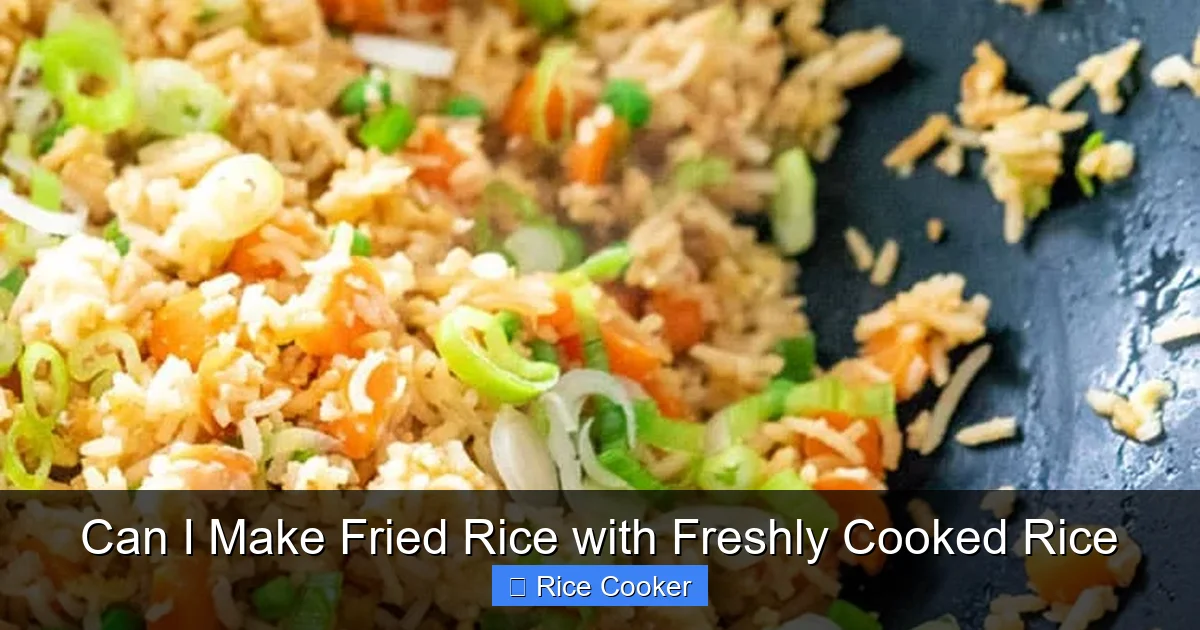
You absolutely can make great fried rice using freshly cooked rice, but there are key tricks to avoid mushy or clumpy results. The secret lies in how you handle your rice right after cooking. With proper cooling, minimal moisture, and the right stir-frying technique, even day-old rice works wonders—but fresh rice can also shine when used correctly. This guide walks you through everything you need to know to turn your perfectly cooked rice into crispy, flavorful fried rice every time.
Have you ever opened your rice cooker, scooped out a perfectly fluffy bowl of steamed jasmine or basmati rice, and wondered: *Can I make fried rice with freshly cooked rice?* The answer is a resounding yes—but not without knowing a few culinary secrets. Many home cooks assume that only leftover rice works for fried rice, but that’s actually a myth born from convenience rather than science. When done right, freshly cooked rice can deliver the same satisfying chew, aroma, and flavor as traditional day-old fried rice. In fact, using just-cooked rice allows you to control seasonings and timing more precisely, leading to fresher-tasting results.
The key difference between fresh and day-old rice lies in moisture content and grain structure. Freshly cooked rice tends to be softer and stickier because it still holds residual steam and moisture. Day-old rice dries out slightly, which helps each grain stay separate during stir-frying. However, with simple adjustments—like spreading the rice to cool and letting it lose some surface moisture—you can transform freshly cooked rice into ideal fried rice base. Whether you’re making a quick dinner or prepping ahead, understanding these nuances will elevate your fried rice game.
In this article, we’ll explore everything about using freshly cooked rice for fried rice, from preparation tips to cooking methods, ingredient pairings, and equipment choices like rice cookers that simplify the process. You’ll learn why texture matters, how to avoid common pitfalls, and get pro-level techniques for restaurant-quality results at home.
Key Takeaways
- Freshly cooked rice works—but needs proper handling to avoid sticking and sogginess. Spread it out on a tray and let it cool uncovered to reduce excess moisture.
- Chilling helps achieve that perfect bite. While some swear by day-old rice, slightly cooled fresh rice can give similar texture if handled well.
- High heat and quick cooking are essential. Use a hot wok or skillet, keep oil slicking the surface, and stir constantly for even browning.
- Don’t overcrowd the pan. Cook in batches if needed to prevent steaming instead of frying.
- Add ingredients in stages: proteins first, then veggies, then rice last for maximum crispness and flavor development.
- Season wisely—use soy sauce, oyster sauce, or sesame oil near the end so flavors don’t burn.
- A good rice cooker simplifies the process, ensuring consistently cooked grains that respond well to stir-frying.
📑 Table of Contents
- Why Texture Matters in Fried Rice
- How to Prepare Freshly Cooked Rice for Stir-Frying
- Cooking Techniques for Perfect Fried Rice
- Ingredient Pairing Tips
- Role of Your Rice Cooker in Making Fried Rice
- Customizing Your Fried Rice Recipe
- Storing and Reheating Fried Rice Safely
- Final Thoughts: Embrace the Process
Why Texture Matters in Fried Rice
Fried rice isn’t just about taste—it’s a textural experience. You want each grain to be slightly chewy, not mushy; golden in spots, not pale and wet; and free-floating, not mashed together. Achieving this balance starts before you even touch the pan.
When rice is freshly cooked, it comes straight from the steam chamber with high internal moisture. If you toss this directly into a hot wok without letting it breathe, the excess water turns into steam inside the pan, causing the rice to clump and steam instead of fry. That’s why seasoned chefs recommend letting rice sit for 15–30 minutes after cooking, especially if planning to use it later that day.
But what if you’re making fried rice immediately? Even then, you need to manage the rice’s condition. Spread it out on a large baking sheet or tray, fluff it gently with a fork, and leave it uncovered at room temperature for about 10–15 minutes. This allows surface moisture to evaporate while keeping the interior tender. Think of it as pre-drying your canvas before painting.
Another factor is starch release. Overcooked or under-seasoned rice may lack the right starch profile for browning. A properly cooked medium-grain white rice (like Japanese short-grain, Chinese jasmine, or American long-grain) strikes the sweet spot. It has enough starch to create a light crust when stir-fried but doesn’t turn gluey.
How to Prepare Freshly Cooked Rice for Stir-Frying
Visual guide about Can I Make Fried Rice with Freshly Cooked Rice
Image source: thumbs.dreamstime.com
If you’ve just finished cooking rice in your rice cooker, don’t rush to chop vegetables or crack eggs. Take five minutes to prepare the rice properly first. Here’s a step-by-step method:
Start by pressing the “Keep Warm” button off once the rice is done. Leaving it on traps moisture and encourages further steaming. Instead, open the lid immediately and use a fork to gently loosen any clumps. Don’t mash it—just break up stubborn pieces.
Next, spread the rice evenly across a clean baking sheet or flat tray lined with parchment paper. Aim for a single layer so air circulates freely around each grain. Let it sit uncovered for 10–20 minutes depending on humidity. In dry climates, you might not need much time; in humid areas, longer drying helps.
Once cooled slightly but still warm, transfer the rice back to a mixing bowl. At this point, lightly fluff it again with the fork—this redistributes heat and ensures even frying. Now you’re ready for the main event.
Pro tip: If you’re short on time, you can skip the full cooling step by using a fan or placing the tray near a gentle airflow source. Just don’t go straight from cooker to pan.
Cooking Techniques for Perfect Fried Rice
Now comes the fun part—actually making the dish. Fried rice demands speed, heat, and confidence. Unlike boiling noodles or simmering soups, you’re working against the clock. Every second counts when you want those edges to crisp up.
Begin by heating your wok or large skillet over high heat until smoking slightly. Add enough neutral oil (peanut, canola, or vegetable) to coat the bottom thinly—about 1–2 tablespoons. Swirl it around so the entire surface glistens. Too little oil leads to sticking; too much makes the rice greasy.
Once the oil shimmers, push it to one side and add beaten eggs. Scramble them quickly until just set—they should be soft curds, not dry rubber. Remove the eggs immediately and set aside. Eggs absorb heat fast and can become tough if left too long.
Add aromatics next: minced garlic, ginger, or scallions. Sauté for 10–15 seconds until fragrant—don’t let them brown or they’ll turn bitter. Then introduce protein (shrimp, chicken, tofu) if using. Sear until lightly colored, then move everything to the edge of the pan.
Now add the vegetables—bell peppers, peas, carrots, mushrooms—depending on your recipe. Stir-fry until bright-colored and slightly softened, about 1–2 minutes. The goal here is quick cooking to preserve crunch and color.
Finally, bring the center of the pan back to high heat. Pour in the prepared rice and break up any lumps with the spatula. Toss everything together, scraping the bottom constantly to encourage fond (the flavorful brown bits). This Maillard reaction creates depth and prevents burning.
Season generously with soy sauce, maybe a splash of oyster or hoisin sauce, a pinch of sugar, and a dash of sesame oil near the end. Taste and adjust—fried rice should be savory, umami-rich, and balanced.
Return the reserved eggs to the pan, mix well, and serve immediately. Hot off the stove, the rice should have a slight sheen and individual grains dancing in the pan.
Common Mistakes to Avoid
Even experienced cooks stumble sometimes. Here are frequent errors when using freshly cooked rice:
– Using cold rice: While some prefer it, cold rice fries poorly because it lacks moisture and doesn’t interact well with hot oil.
– Overcrowding the pan: Packing too much rice forces it to steam. Cook in smaller batches if needed.
– Skipping the egg step: Egg acts as a binder and adds richness. Omitting it results in drier, less cohesive rice.
– Adding salt early: Salt draws out moisture. Season toward the end to maintain texture.
– Stirring too hard or too often: Gentle tossing preserves grain integrity. Vigorous stirring breaks them apart.
Ingredient Pairing Tips
Fried rice shines when components complement each other in flavor, texture, and color. Start with a solid foundation—your rice—then build upward.
Proteins play a crucial role. Chicken breast (cut into small cubes), shrimp (deveined and patted dry), pork belly (sliced thin), or scrambled eggs all work beautifully. For vegetarians, cubed tofu or mixed mushrooms offer satisfying alternatives.
Vegetables should be uniform in size and cut for even cooking. Broccoli florets, snap peas, shredded carrots, and corn kernels are classics. Bell peppers add sweetness and vibrant color. Mushrooms impart earthiness and umami.
Soy sauce forms the backbone of seasoning, but don’t rely solely on it. Add a spoonful of oyster sauce for body, a teaspoon of sugar for balance, and a drizzle of dark soy for color. Sesame oil goes last—its aroma fades quickly when heated, so add it off-heat.
Optional extras include chilies for heat, green onions for freshness, or crushed peanuts for crunch. Fresh herbs like cilantro or Thai basil can brighten the dish post-cooking.
Remember: less is more when layering flavors. Build complexity gradually rather than dumping everything in at once.
Role of Your Rice Cooker in Making Fried Rice
Your rice cooker isn’t just for steaming rice—it’s an essential tool in crafting great fried rice. Modern models offer settings like “quick cook,” “warm,” and even “stir-fry” modes (on premium units), simplifying the entire process.
When selecting rice for fried rice, consistency is king. A rice cooker ensures every batch is evenly cooked, avoiding underdone centers or overcooked exteriors. Look for recipes that specify water-to-rice ratios—usually 1:1 for short-grain or 1.2:1 for long-grain varieties.
Some advanced rice cookers come with accessories like steamer baskets or induction heating systems that enhance browning potential. Others have timers so you can prep ingredients while rice finishes cooking. These features save time and reduce cleanup.
For best results, always rinse uncooked rice before cooking to remove excess starch. This prevents gummy textures and promotes better separation during frying. Rinse until the water runs relatively clear—not spotless, but mostly cloudy-free.
After cooking, most rice cookers keep food warm for hours. Resist the urge to leave rice sitting in this mode unless you’re waiting to fry it. Instead, follow the cooling steps outlined earlier.
With practice, your rice cooker becomes your secret weapon for effortless, consistent fried rice—whether using fresh or leftover grains.
Comparing Fresh vs. Day-Old Rice
| Feature | Freshly Cooked Rice | Day-Old Rice |
|———————–|—————————|—————————-|
| Moisture Level | High | Low |
| Grain Separation | Moderate (if cooled) | Excellent |
| Browning Potential | Good (with prep) | Better |
| Flavor Development | Immediate | Slightly deeper |
| Best Use Case | Same-day fried rice | Leftover repurposing |
Both types work—there’s no definitive winner. Fresh rice offers simplicity and freshness, while day-old rice provides reliable texture. Choose based on availability and preference.
Customizing Your Fried Rice Recipe
Fried rice is wonderfully adaptable. Swap ingredients based on what’s in season, dietary needs, or personal taste. Here are creative twists:
– Mediterranean Style: Use lemon zest, olives, sun-dried tomatoes, feta cheese, and oregano.
– Korean-Inspired: Add gochujang, kimchi, bulgogi beef, and nori flakes.
– Indian Fusion: Incorporate turmeric, curry powder, chickpeas, and cilantro.
– American Comfort: Include ham, green beans, carrots, and a fried egg on top.
– Vegan Option: Rely on marinated tempeh, roasted sweet potatoes, and tamari.
Don’t forget sauces! Sriracha mayo, chili crisp, or peanut dipping sauce can transform plain fried rice into a standout meal.
Experimentation is encouraged. Keep notes on what works so you can recreate favorites or invent new ones.
Storing and Reheating Fried Rice Safely
Leftover fried rice tastes best within two days. Store it in an airtight container in the refrigerator. Never leave it at room temperature for more than two hours to avoid bacterial growth.
Reheat in a nonstick skillet over medium-high heat, adding a splash of water or broth to revive moisture. Stir frequently until heated through—about 3–4 minutes. Microwave works too, but skim the surface first to prevent sogginess.
Avoid reheating more than once. If you must, ensure it reaches 165°F internally.
Freezing fried rice is possible—up to three months—but texture suffers slightly upon thawing. For best quality, freeze in portions and defrost overnight in the fridge.
Always smell before eating. Off odors indicate spoilage. When in doubt, throw it out.
Final Thoughts: Embrace the Process
Making fried rice with freshly cooked rice is entirely doable—and often preferable—when you understand the basics. It requires attention to moisture, timing, and technique, but the payoff is worth it: hot, fragrant, restaurant-style meals made in under 20 minutes.
Whether you’re using a trusty rice cooker or relying on stovetop mastery, remember that fried rice rewards practice and patience. Start simple: rice, egg, soy sauce, green onion. Gradually add proteins and veggies as confidence grows.
And never underestimate the power of a well-chosen rice cooker. It removes guesswork from the equation, giving you consistently excellent grains every time. With its help, even novice cooks can achieve impressive results.
So next time you fire up that rice cooker, don’t stop at a plain side dish. Challenge yourself to turn that fluffy pile into something extraordinary. Your taste buds—and your family—will thank you.
Frequently Asked Questions
Can I use cold rice from yesterday for fried rice?
Yes, cold or day-old rice is actually ideal for fried rice because it’s drier and fries better without clumping. Simply reheat it briefly in a microwave before stir-frying to reactivate the starch.
Should I rinse my rice before cooking if I plan to make fried rice?
Absolutely. Rinsing removes excess surface starch, preventing overly sticky rice. Rinse until the water is mostly clear, then cook according to your rice cooker’s instructions.
What type of rice works best for fried rice?
Short-grain or medium-grain white rice (like Japanese short-grain, Chinese jasmine, or Calrose) works best due to their starch content and ability to stay separate when stir-fried. Long-grain rice also works well if handled properly.
Do I need to add extra oil when using freshly cooked rice?
Not necessarily. Freshly cooked rice still contains moisture, so too much oil can make it greasy. Use just enough to coat the pan and allow browning. Less is usually better.
How long should I let freshly cooked rice cool before using it?
Let it cool uncovered for 10–20 minutes at room temperature. Spread it out on a tray to allow surface moisture to evaporate. It should feel slightly damp but not wet to the touch.
Can I make vegetarian fried rice with freshly cooked rice?
Definitely. Use plenty of colorful vegetables, plant-based proteins like tofu or tempeh, and flavorful sauces such as soy sauce, miso paste, or mushroom broth. Add fresh herbs before serving for brightness.