
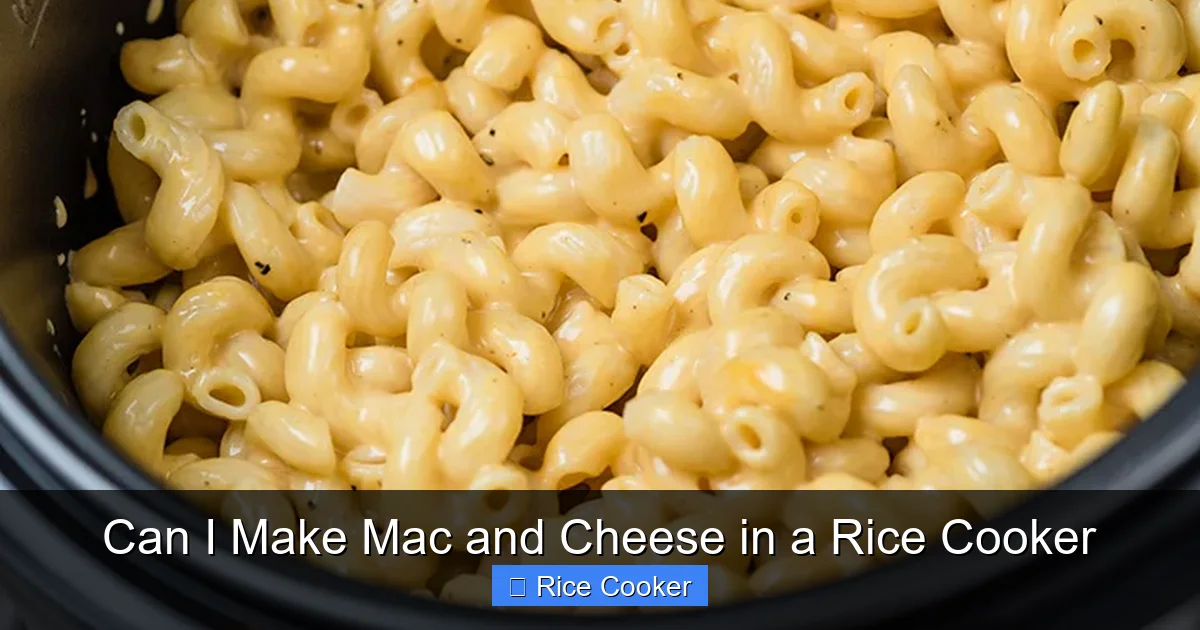
Making mac and cheese in a rice cooker is not only possible but surprisingly simple. With just a few ingredients and your trusty appliance, you can enjoy creamy, cheesy pasta without the hassle of boiling pots on the stove. This no-fuss method is ideal for beginners, dorm rooms, or anyone who loves quick, comforting meals.
Key Takeaways
- Rice cookers work perfectly for mac and cheese: The appliance’s ability to maintain consistent heat and steam makes it an excellent tool for cooking pasta and emulsifying cheese sauce.
- Minimal prep and cleanup: You don’t need a stovetop, extra pots, or constant stirring—just add ingredients, press a button, and let the magic happen.
- Customizable and budget-friendly: Use your favorite cheeses, seasonings, and even add-ins like bacon or broccoli to make it your own.
- Perfect for meal prep or dorm life: Compact, efficient, and great for small spaces where traditional cooking isn’t practical.
- Consistent results every time: Once you know the ratio of liquid to pasta, your mac and cheese turns out creamy and evenly cooked.
- Great for gluten-free options: Pair gluten-free elbow macaroni with dairy-free cheese alternatives for inclusive, allergy-friendly meals.
- Tips for success: Don’t overfill the rice cooker, stir gently at the end, and use a bit more milk if needed for creaminess.
[FEATURED_IMAGE_PLACEHOLDER]
Can I Make Mac and Cheese in a Rice Cooker?
If you’ve ever found yourself staring into your kitchen cabinets, wondering how to whip up a bowl of creamy, gooey mac and cheese without standing over a hot stove, then you’re in luck. Yes—you absolutely can make mac and cheese in a rice cooker. In fact, using this humble kitchen appliance might just become your new favorite shortcut for comfort food.
Whether you’re a college student living in a dorm, someone who hates doing dishes, or just someone who craves that perfect blend of tender pasta and rich cheese sauce, the rice cooker is here to save the day. Not only does it simplify the process, but it also delivers consistent, restaurant-quality results with minimal effort. Let’s dive into everything you need to know about making the creamiest, cheesiest mac and cheese using nothing but your rice cooker.
The Surprising Versatility of Your Rice Cooker
At first glance, your rice cooker might seem like a one-trick pony—boil rice, done. But peel back the layers, and you’ll discover it’s actually a powerhouse kitchen multitasker. From steaming vegetables to baking cakes and even making soups, rice cookers are designed to handle a variety of tasks with precision and ease.
One of the most underappreciated uses? Cooking pasta. Specifically, mac and cheese. The secret lies in the way rice cookers regulate temperature and moisture. Unlike stovetop methods that require constant attention and risk overcooking or burning, a rice cooker maintains a steady environment—perfect for transforming dry pasta into tender noodles and blending cheese into a silky sauce.
Plus, there’s something deeply satisfying about walking away from your meal while it cooks. No more hovering, stirring, or worrying about scorched bottoms. Just set it and forget it (with a little help from a splash of milk and some patience).
Why Choose a Rice Cooker for Mac and Cheese?
You might be wondering: “Why go through all this trouble when I could just boil pasta and mix it with cheese?” Fair question. But here’s why the rice cooker method stands out:
- Less Mess: Fewer pots and pans mean less scrubbing.
- Energy Efficient: Rice cookers use less energy than stovetops.
- Hands-Off Convenience: Ideal for multitasking or relaxing while dinner cooks.
- Even Heat Distribution: No hot spots or uneven cooking.
- Portable: Great for camping, dorm rooms, or tiny kitchens.
- Consistent Results: Once you master the technique, every batch turns out perfect.
And let’s be real—sometimes, the best meals are the ones that come together quickly and with love. That’s exactly what this method offers.
What You’ll Need
Before we get cooking, let’s gather our ingredients and tools. You don’t need anything fancy—just a few basics and your rice cooker.
Ingredients:
- 8 oz (about 2 cups) dried elbow macaroni or pasta of choice
- 2 cups water or pasta cooking liquid (plus a splash of milk)
- 1½ cups shredded cheddar cheese (sharp cheddar works best)
- ½ cup evaporated milk or whole milk
- 2 tablespoons butter
- 1 teaspoon salt
- ¼ teaspoon black pepper
- Optional: garlic powder, paprika, or mustard powder for extra flavor
Equipment:
- A standard rice cooker with a non-stick inner pot
- A fork or spatula for stirring
- A measuring cup and spoon
Pro Tip:
For the creamiest texture, shred your own cheese instead of using pre-shredded. Pre-shredded cheese often contains anti-caking agents that can make sauces grainy.
Step-by-Step Guide: How to Make Mac and Cheese in a Rice Cooker
Now comes the fun part—actually making it. Follow these steps for foolproof, creamy mac and cheese every time.
Step 1: Prep Your Ingredients
Start by gathering everything you need and measuring out your pasta, water, and cheese. Having everything ready before you begin ensures a smooth cooking process.
Step 2: Add Ingredients to the Rice Cooker Pot
Pour the dry macaroni into the inner pot of your rice cooker. Then add 2 cups of water. If you prefer a creamier texture, you can use a mix of water and milk—try 1½ cups water and ½ cup milk.
Next, add the butter, salt, pepper, and any optional seasonings you like. Stir briefly to combine.
Step 3: Start the Cooking Cycle
Close the lid and turn on the rice cooker. Select the “Cook” or “White Rice” setting—most rice cookers don’t have a specific “pasta” mode, so this works just fine.
Let the cooker do its thing. Most rice cookers will automatically switch to “Warm” once the pasta is fully cooked.
Step 4: Add Cheese and Cream
Once the rice cooker switches to warm, open the lid and stir the pasta gently. At this point, add the evaporated milk (or regular milk), half of the shredded cheese, and any additional seasonings.
Close the lid and let it sit for 5–10 minutes. This allows the cheese to melt and blend into the pasta.
Step 5: Final Stir and Serve
After 5–10 minutes, open the lid again and stir well. Add the remaining cheese and stir until fully melted and creamy. If the mixture seems too thick, add a tablespoon or two of warm milk and stir again.
Serve immediately while hot and creamy.
Variation: Baked Mac and Cheese
Want a crispy top like a casserole? Try this upgrade:
After adding the cheese and milk in Step 4, transfer the mixture to a greased baking dish. Sprinkle extra cheese on top and bake at 375°F (190°C) for 15–20 minutes until bubbly and golden.
Common Mistakes to Avoid
Even with the best tools, mistakes can happen. Here’s how to avoid them:
- Overfilling the Pot: Never fill the rice cooker beyond two-thirds full. Overcrowding prevents even cooking and can lead to mushy pasta.
- Using Too Much Water: Stick to the recommended 2:1 water-to-pasta ratio. Too much liquid dilutes the cheese sauce.
- Skipping the Milk: Milk is essential for creaminess. Relying solely on water results in a dry, starchy mess.
- Not Stirring After Adding Cheese: Always stir gently after adding cheese to prevent clumping.
- Opening the Lid Too Early: Resist the urge to peek! Each time you open the lid, heat escapes, extending cooking time.
Tip for Gluten-Free Lovers
Use gluten-free elbow pasta made from rice, corn, or quinoa. Just be sure to rinse the cooked pasta under cold water after draining to remove excess starch, which can cause sticking.
Customizing Your Mac and Cheese
The beauty of this recipe is its flexibility. Want to jazz it up?
Add Protein:
- Cook and crumble ½ cup of bacon or sausage
- Add grilled chicken, ham, or turkey
- Toss in canned tuna or white beans for a vegetarian option
Include Veggies:
- Steamed broccoli florets
- Sautéed mushrooms or spinach
- Diced bell peppers or zucchini
Experiment with Cheeses:
Try a blend like:
- Sharp cheddar + Gruyère + Parmesan
- Mozzarella + Monterey Jack
- Dairy-free vegan cheese for a plant-based version
Spice It Up:
Add a pinch of cayenne, smoked paprika, or Dijon mustard for depth.
Tips for Perfect Every Time
Want to take your mac and cheese game to the next level? These expert tips will ensure consistent success:
- Use the Right Pasta: Elbows are traditional, but penne, rotini, or shells also work well due to their shape holding cheese sauce.
- Pre-Shred Cheese Carefully: If using pre-shredded, sprinkle a little cornstarch over it to reduce clumping.
- Keep Milk Warm: Warm milk helps melt cheese more smoothly than cold milk.
- Don’t Rush the Cheese Addition: Add cheese gradually and stir frequently for a smoother sauce.
- Reheat with Care: To reheat leftovers, add a splash of milk and microwave in short bursts, stirring in between.
Storage & Leftovers
Leftover mac and cheese keeps well in an airtight container in the fridge for up to 4 days. When reheating, add a teaspoon of milk to restore creaminess.
Avoid freezing unless you’re using dairy-free cheese, as traditional versions can separate upon thawing.
Is This Method Better Than Stovetop Mac and Cheese?
That depends on your priorities.
If you value speed, simplicity, and minimal cleanup, the rice cooker wins. It’s perfect for solo meals, dorm cooking, or when you’re too tired to stand over a pot.
However, traditional stovetop mac and cheese allows for more control over texture and customization during cooking. Some chefs argue that the stovetop method yields a richer, more nuanced flavor because you can build the sauce slowly.
But for most home cooks—especially those pressed for time—the rice cooker method is a fantastic alternative that doesn’t sacrifice taste or quality.
Final Thoughts: Embrace the Convenience
At the end of the day, making mac and cheese in a rice cooker isn’t just about convenience—it’s about rethinking what your kitchen tools can do. Who knew that your go-to appliance could deliver such a satisfying meal with so little effort?
So the next time you’re craving comfort food, skip the complicated recipes and reach for your rice cooker. With just a handful of ingredients and a push of a button, you’ll have creamy, cheesy goodness waiting for you.
And honestly? There’s something deeply comforting about knowing that no matter how busy life gets, a simple bowl of mac and cheese is always within reach.
FAQs
Can I make gluten-free mac and cheese in a rice cooker?
Yes! Use gluten-free pasta made from rice, corn, or quinoa. Just be sure to rinse it after draining to prevent sticking. Pair it with dairy-free cheese if needed for a fully inclusive meal.
How long does it take to make mac and cheese in a rice cooker?
Most rice cookers take about 15–20 minutes to cook the pasta, followed by 5–10 minutes to melt the cheese. Total time is roughly 25–30 minutes, including prep.
Do I need special settings on my rice cooker?
Nope! Most rice cookers don’t have a “pasta” mode. Use the standard “Cook” or “White Rice” setting. The key is timing and adding cheese at the right moment.
Can I add vegetables to my rice cooker mac and cheese?
Absolutely! Add steamed broccoli, peas, or sautéed mushrooms before cooking. Just make sure they’re cut small enough to cook evenly in the same time as the pasta.
Why is my mac and cheese too thick or too runny?
Thick? Add a splash of warm milk and stir. Runny? You likely added too much liquid or didn’t cook the pasta long enough. Adjust the liquid-to-pasta ratio next time.
Can I make this recipe in advance or reheat it?
Yes! Store leftovers in an airtight container for up to 4 days. Reheat in the microwave with a splash of milk, stirring every 30 seconds until warm and creamy.
This is a comprehensive guide about can i make mac and cheese in a rice cooker.
Key Takeaways
- Understanding can i make mac and cheese in a rice cooker: Provides essential knowledge
Frequently Asked Questions
What is can i make mac and cheese in a rice cooker?
can i make mac and cheese in a rice cooker is an important topic with many practical applications.