
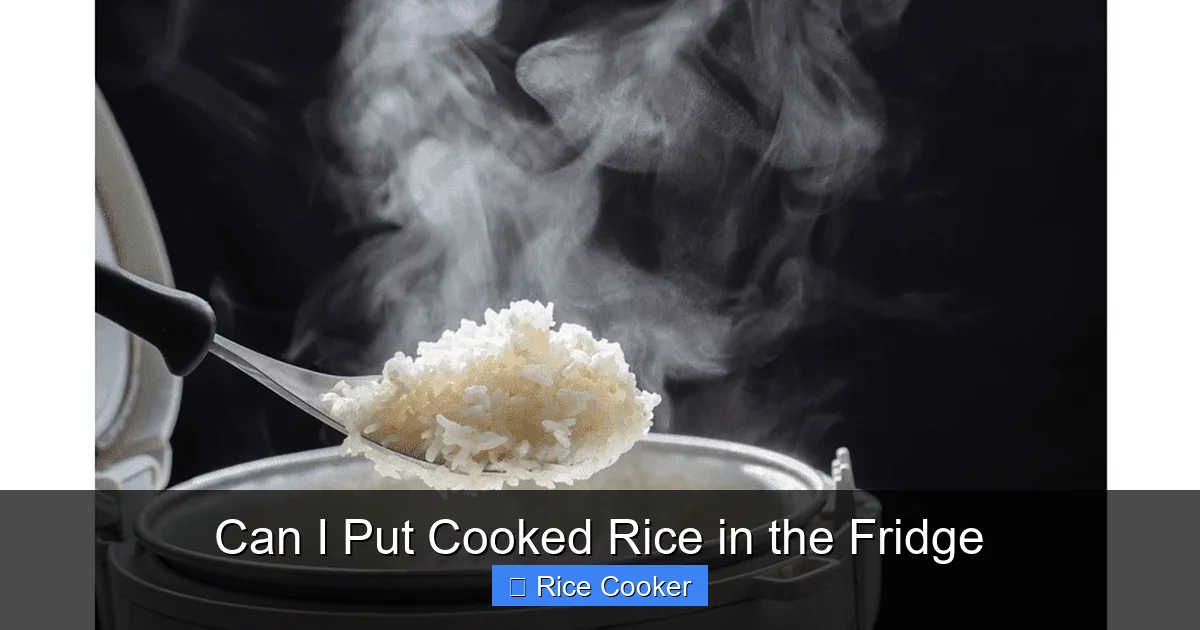
Can I put cooked rice in the fridge? Absolutely—yes! Cooling cooked rice quickly and storing it properly in the refrigerator is one of the safest ways to preserve it and avoid foodborne illness. When done right, refrigerated rice stays safe for up to 4 days, giving you delicious leftovers for meals throughout the week.
Let’s face it: we’ve all been there. You just made a big pot of perfectly fluffy jasmine rice on your rice cooker, and now half of it is leftover. The question pops up instantly: Can I put cooked rice in the fridge? And honestly? Yes—you absolutely can. In fact, refrigerating cooked rice is not only safe, but it’s also one of the most effective ways to keep your rice fresh and prevent foodborne illness.
But here’s the catch: it’s not as simple as tossing a warm bowl into the fridge. Timing, temperature, and storage method all play critical roles in keeping your rice both safe and delicious. Whether you’re meal prepping, saving dinner for tomorrow, or just want to avoid throwing away perfectly good food, understanding how to store cooked rice properly is essential knowledge every home cook should have.
In this guide, we’ll walk you through everything you need to know—from why cooling matters, to how to store it correctly, to how to reheat it without turning it into a sticky mess. We’ll also cover common myths, signs of spoilage, and even when it’s better to freeze instead of refrigerate. So grab your favorite container, and let’s dive into the science (and simplicity) behind storing cooked rice.
Key Takeaways
- Safety First: Always cool cooked rice within two hours to prevent harmful bacteria like Bacillus cereus from multiplying.
- Proper Storage: Use airtight containers or wrap tightly with plastic wrap to minimize exposure to air and moisture.
- Reheating Matters: Always reheat rice thoroughly until steaming hot (at least 165°F) to kill any potential pathogens.
- Freezing Option: For longer storage, freeze cooked rice in portions for up to 6–12 months.
- Portion Control: Divide large batches into smaller containers to speed up cooling and reduce waste.
- Signs of Spoilage: Discard rice that smells off, feels slimy, or has an unusual color or texture.
- Best Practices: Use rice within a few days if refrigerated, or freeze immediately after cooking for best quality.
📑 Table of Contents
- Why Refrigerating Cooked Rice Is Safe—When Done Right
- How to Store Cooked Rice Correctly
- Common Mistakes People Make With Stored Rice
- Freezing vs. Refrigerating: Which Is Better?
- Reheating Cooked Rice Without Making a Mess
- Special Considerations: Rice Types and Diets
- Signs Your Stored Rice Has Gone Bad
- Tips for Restaurant-Quality Leftover Rice
- Environmental Impact: Reducing Rice Waste
- Conclusion: Mastering Cooked Rice Storage Is Simple
Why Refrigerating Cooked Rice Is Safe—When Done Right
You might be surprised to learn that cooked rice is actually a breeding ground for bacteria—specifically, Bacillus cereus. This spore-forming bacterium lives in soil and can survive cooking temperatures. When rice is left at room temperature for too long, these spores can germinate, multiply, and produce toxins that cause food poisoning.
That’s where refrigeration comes in. Cold temperatures slow down bacterial growth dramatically. According to food safety experts at the USDA, keeping perishable foods—including cooked rice—at or below 40°F (4°C) prevents dangerous bacteria from thriving. So yes, putting cooked rice in the fridge is not just safe—it’s necessary.
However, timing is everything. The danger zone for food safety is between 40°F and 140°F (4°C to 60°C). Within this range, bacteria can double in number every 20 minutes. That means if you leave a pot of hot rice sitting out for more than two hours (or one hour if it’s above 90°F), you risk creating a hazardous environment.
The Importance of Rapid Cooling
Many people assume they can just pop warm rice into the fridge and call it a day. But modern refrigerators aren’t cold enough to bring large quantities of food down to safe temperatures quickly. If you pour a full pot of hot rice into a sealed container, the outer layers will cool fast, but the center may remain in the danger zone for hours—creating pockets where bacteria can grow.
That’s why rapid cooling is key. The best approach is to spread the rice out in shallow containers or divide it into smaller portions before refrigerating. This allows heat to escape faster and ensures even cooling throughout.
For example, instead of placing a 2-cup ball of warm rice into a tall container, break it into four ½-cup portions in wide dishes. These will chill much more evenly and safely than one large mass.
How Long Can You Keep Cooked Rice in the Fridge?
Once properly cooled and stored, cooked rice can stay fresh in the refrigerator for up to 4 days. After that, the texture starts to degrade, and the risk of contamination increases—even under refrigeration.
Here’s a quick reference:
– **Day 1–2:** Best quality; ideal for immediate use.
– **Day 3–4:** Still safe to eat, but texture may become slightly mushy.
– **After Day 4:** Not recommended, even if it looks fine.
Remember: Just because rice hasn’t gone bad doesn’t mean it’s still enjoyable to eat. Over time, starches recrystallize (a process called retrogradation), making rice harder and drier when reheated.
How to Store Cooked Rice Correctly

Visual guide about Can I Put Cooked Rice in the Fridge
Image source: uhkkfeeqacwcyryreuie.supabase.co
Storing cooked rice isn’t rocket science—but doing it wrong can lead to waste or worse, illness. Follow these steps for optimal results:
Step 1: Cool It Fast
As mentioned earlier, don’t leave rice sitting out for more than two hours. If you’re not using a shallow pan, consider the ice bath method:
– Place the container of hot rice in a larger bowl filled with ice water.
– Stir occasionally to help distribute heat.
– Check the temperature after 15–20 minutes—it should feel cool to the touch.
Alternatively, transfer the rice to several shallow dishes or freezer-safe bags laid flat in the fridge. These shapes allow for faster airflow and quicker cooling.
Step 2: Use Airtight Containers
Once cooled, store rice in airtight containers or resealable plastic bags. Exposure to air increases oxidation, which affects flavor and texture. Plus, uncovered rice can absorb odors from other foods in the fridge.
Glass or BPA-free plastic containers work well. Avoid leaving rice in its original non-airtight pot or bowl for extended periods.
Step 3: Label and Date
Always label your containers with the date. This helps you keep track of how long the rice has been stored and ensures you use it before it goes bad.
Even if you forget the exact date, a simple “Cooked Rice – 3 Days” note goes a long way in preventing waste.
Step 4: Keep It Covered While Reheating
When you’re ready to eat the rice, cover it loosely while microwaving or steaming. This traps steam and helps heat it evenly without drying it out.
Avoid microwaving rice uncovered—it dries out fast and can develop a rubbery texture.
Common Mistakes People Make With Stored Rice
Despite knowing the basics, many home cooks still make avoidable errors when handling cooked rice. Let’s go over some of the most common pitfalls—and how to fix them.
Mistake #1: Leaving Rice Out Too Long
This is the biggest no-no. As we’ve said, rice left at room temperature for more than two hours (one hour in hot weather) becomes unsafe. Don’t assume it’s okay just because you’ll eat it soon.
If you’re serving a large meal and expect leftovers, start storing the excess as soon as possible—ideally within the first hour.
Mistake #2: Using the Same Utensil Twice
Never scoop rice back into the original cooking pot with the same spoon you used while serving. Once the spoon touches potentially contaminated hands or surfaces, it introduces bacteria back into the batch.
Instead, always use clean utensils when handling stored rice—whether transferring or reheating.
Mistake #3: Freezing in Non-Freezer-Safe Containers
While freezing is great for long-term storage, not all containers are suitable. Glass jars with metal lids can crack due to expansion during freezing. Stick to rigid plastic tubs, freezer bags, or glass containers with plastic lids.
Also, leave a little headspace when freezing—about ½ inch—to allow for expansion.
Mistake #4: Skipping Reheating Instructions
Cold rice tastes fine straight from the fridge, but it’s not safe unless reheated properly. Bacteria can survive refrigeration and become active again when warmed.
Always reheat rice to an internal temperature of at least 165°F (74°C). In the microwave, stir halfway through and add a splash of water to prevent dryness.
Freezing vs. Refrigerating: Which Is Better?
Both methods work, but they serve different purposes. Here’s how to decide which is right for you.
Refrigeration: Best for Short-Term Use
Refrigerating keeps rice safe for up to 4 days. It’s perfect if you plan to eat the rice within that window—say, for lunch prep over the next few days.
Pros:
– Quick turnaround
– No special equipment needed
– Maintains better texture than frozen rice
Cons:
– Limited shelf life
– Risk of spoilage if forgotten
Freezing: Ideal for Bulk or Future Meals
Freezing extends shelf life significantly—up to 6 months for white rice and even longer for basmati or jasmine, which hold up well in cold storage.
Pros:
– Long-term preservation
– Great for meal preppers and busy families
– Reduces food waste
Cons:
– Texture changes slightly upon thawing
– Requires freezer space and proper containers
How to Freeze Cooked Rice Properly
1. Cool the rice completely (use the ice bath method if needed).
2. Portion into small, freezer-safe containers or bags.
3. Lay bags flat to save space and allow even thawing.
4. Label with contents and date.
5. Freeze immediately.
When ready to use, thaw overnight in the fridge or reheat directly from frozen (adding a bit of water to prevent drying).
Reheating Cooked Rice Without Making a Mess
Even the best-stored rice can turn out disappointing if reheated incorrectly. Here’s how to revive it like a pro.
Microwave Method (Most Common)
Place rice in a microwave-safe dish. Cover with a damp paper towel or lid to retain moisture. Microwave on high for 1 minute, stir, then continue in 30-second intervals until steaming hot throughout.
Add a teaspoon of water per cup of rice to combat dryness.
Stovetop Method (Best for Fluffiness)
Bring a small amount of water or broth to a simmer in a saucepan. Add rice, cover, and reduce heat to low. Let it steam for 5–7 minutes, checking occasionally.
This method restores fluffiness better than microwaving alone.
Avoid These Reheating Mistakes
– Overcooking: This leads to mushy, glue-like rice.
– Using the Wrong Container: Metal or non-microwave-safe plastics can leach chemicals.
– Not Stirring: Hot spots can burn rice while the inside remains cold.
Special Considerations: Rice Types and Diets
Different kinds of rice behave slightly differently when stored and reheated. Here’s what to know about popular varieties.
White Rice vs. Brown Rice
White rice stores better than brown rice because it lacks the natural oils found in brown rice, which go rancid faster. Brown rice should be refrigerated or frozen within 2–3 days.
Also, brown rice tends to get chewier when reheated, so it benefits from extra moisture during storage and reheating.
Risotto and Creamy Rices
Risotto, arborio, and other creamy rices contain dairy or broth, which spoil faster. Always refrigerate within 1 hour and consume within 2–3 days.
Consider portioning into single servings and freezing individual portions for easy defrosting.
Vegan and Gluten-Free Options
Many rice-based dishes are naturally vegan and gluten-free, making them ideal for diverse diets. Just ensure cross-contamination doesn’t occur during storage—keep rice containers separate from allergenic foods like nuts or soy sauce.
Signs Your Stored Rice Has Gone Bad
Trust your senses. Even if rice looks fine, it might not be safe or tasty to eat.
Watch for:
– **Unpleasant Odor:** Sour, fermented, or foul smell.
– **Discoloration:** Grey, yellow, or green patches.
– **Texture Changes:** Slimy, mushy, or overly hard.
– **Mold Growth:** Visible fuzzy spots—discard immediately.
If in doubt, throw it out. Food poisoning from contaminated rice can cause nausea, vomiting, and diarrhea—and it’s not worth the risk.
Tips for Restaurant-Quality Leftover Rice
Want your leftover rice to taste like it came straight from the restaurant kitchen? Try these tricks:
– **Salt While Cooking:** A pinch of salt enhances flavor and helps retain moisture.
– **Use Fresh Water:** Old or recycled water can dull taste.
– **Fluff Before Storing:** Gently fluff rice with a fork before cooling to preserve lightness.
– **Store with Herbs or Spices:** Add bay leaves or cilantro stems to infuse subtle flavors (remove before reheating).
These small details make a big difference in final taste and texture.
Environmental Impact: Reducing Rice Waste
Food waste is a global issue, and rice contributes significantly to it. Did you know that nearly 30% of all food produced worldwide ends up rotting in landfills?
By properly storing and using your cooked rice, you’re helping reduce this impact. One cup of saved rice prevents unnecessary emissions from production, transportation, and decomposition.
Plus, repurposing rice creatively—like turning it into fried rice, rice pudding, or even rice flour—keeps it useful instead of wasted.
Conclusion: Mastering Cooked Rice Storage Is Simple
So, can I put cooked rice in the fridge? The answer is a confident yes—as long as you follow basic food safety rules. Cool it fast, store it tight, label it clearly, and reheat it thoroughly. With these simple steps, you’ll enjoy safe, delicious rice leftovers for days, not waste.
Whether you’re using a rice cooker, stovetop, or instant pot, the principles remain the same. Embrace the habit of proper storage, and you’ll save money, reduce stress, and cut down on food waste—all while enjoying restaurant-quality meals at home.
Next time you cook rice, remember: it’s not just about feeding your family today. It’s about nourishing them tomorrow, too.
Frequently Asked Questions
Is it safe to eat rice that’s been in the fridge for 5 days?
No, cooked rice should not be eaten after 4 days in the refrigerator. After that point, the risk of bacterial growth increases, and texture quality declines significantly.
Can I reheat rice multiple times?
It’s best to reheat rice only once. Repeated heating increases the risk of foodborne illness and degrades quality. Always prepare fresh portions when possible.
Does freezing ruin rice?
Freezing doesn’t ruin rice, but it can alter texture slightly—making it firmer or less fluffy. However, this is minimal and generally acceptable for most dishes.
Should I wash rice before refrigerating it?
Washing rice is optional and depends on preference. Some people rinse to remove excess starch, but it’s not required for safety or storage.
Can I leave rice in the fridge overnight?
Yes, but only if it was cooled properly within the first two hours. Never leave hot rice out longer than that before refrigerating.
What’s the best way to cool rice quickly?
The ice bath method works best: submerge the container in ice water and stir occasionally. Alternatively, spread rice in shallow pans for faster airflow.