
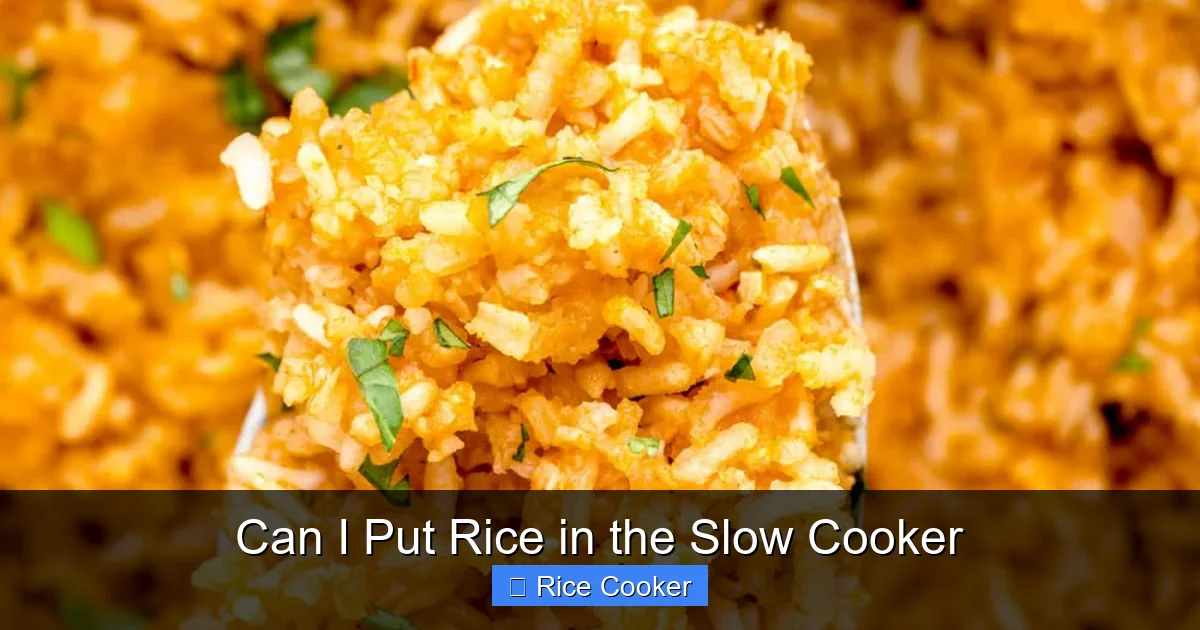
Yes, you can absolutely cook rice in a slow cooker, but it requires the right water-to-rice ratio and timing to avoid mushy or undercooked results. With a few simple adjustments, your slow cooker becomes a convenient tool for hands-off rice preparation that rivals your rice cooker. Whether you’re meal prepping or just want one-pot convenience, mastering slow cooker rice opens up tasty new possibilities.
Key Takeaways
- Water-to-rice ratio matters: Use 1.5 to 2 cups of water per cup of uncooked rice for most types, depending on grain.
- Pre-soaking helps: Soaking white rice for 15–30 minutes before cooking improves texture and reduces stickiness.
- Cook on low heat: Cooking rice on low (instead of high) prevents burning and ensures even absorption.
- Let it rest: After cooking, let the rice sit covered for 10–15 minutes to finish steaming and firm up.
- Add flavor easily: Toss in broth, herbs, or spices while cooking to infuse rice with extra taste.
- Choose the right rice: Short- and medium-grain rice like jasmine or arborio work best; long-grain can also succeed.
- Avoid overfilling: Never fill your slow cooker more than halfway to allow steam circulation.
📑 Table of Contents
- Can I Put Rice in the Slow Cooker? Absolutely—Here’s How!
- The Basics: Why It Works (and What Can Go Wrong)
- Choosing the Right Rice for Your Slow Cooker
- Mastering the Water-to-Rice Ratio
- Step-by-Step Guide: Cooking Perfect Rice in a Slow Cooker
- Flavorful Variations: Beyond Plain White Rice
- Common Myths About Slow-Cooker Rice
- Tips for Success Every Time
- Conclusion: Your Slow Cooker Just Got Upgraded
Can I Put Rice in the Slow Cooker? Absolutely—Here’s How!
Imagine coming home after a long day at work and opening your slow cooker to find perfectly cooked, fluffy rice waiting for you. Sounds dreamy, right? Well, it’s not only possible—it’s actually one of the easiest ways to prepare rice without standing over a hot stove. Yes, you heard that correctly: you can definitely put rice in the slow cooker. In fact, many home cooks have discovered that their trusty Crock-Pot® makes wonderfully tender rice with minimal effort.
But before you grab a bag of basmati and head straight to your kitchen, let’s talk strategy. While slow cookers are fantastic for stews, soups, and roasts, they aren’t traditionally known as “rice cookers.” That doesn’t mean they can’t do the job—just that it takes a bit more finesse. The key lies in understanding how moisture is absorbed versus evaporated. Unlike boiling, where water boils off, slow cookers rely on sealed lids and gentle heat to allow rice to soak up liquid slowly. This method yields soft, evenly cooked grains—if done right.
In this guide, we’ll walk you through everything you need to know about cooking rice in a slow cooker: which types of rice work best, how much water to use, whether soaking makes a difference, and how to avoid common pitfalls like mushy or dry results. We’ll also share some delicious recipe ideas so you can turn plain rice into something extraordinary. Ready to unlock the full potential of your slow cooker?
The Basics: Why It Works (and What Can Go Wrong)
Slow cookers operate at low temperatures—typically between 170°F and 205°F—and keep food simmering gently for hours. This environment is ideal for ingredients that benefit from extended, indirect heat, like beans, meat, and grains. Rice, especially when paired with enough liquid and proper timing, thrives here. The trick is creating the right balance between hydration and evaporation. Too little water, and your rice will be chalky and dry. Too much, and it turns into a sticky paste.
Visual guide about Can I Put Rice in the Slow Cooker
Image source: tamingtwins.com
Another factor is the shape of the grain. Short- and medium-grain rice varieties—like jasmine, sushi, or arborio—have higher starch content, making them clingier and more forgiving in a moist-heavy environment like a slow cooker. Long-grain rice, such as basmati or American long grain, can still work if handled carefully, but may require slightly less liquid and a bit more attention to texture.
Now, why might things go wrong? Common issues include:
- Sticky or clumpy rice: Usually caused by insufficient water absorption time or too much liquid.
- Dry or hard grains: Often due to using too little water or not letting the rice rest after cooking.
- Burned bottom layer: Happens when the slow cooker runs too hot or isn’t stirred occasionally.
But don’t worry—each of these problems has a fix. And once you master the basics, you’ll wonder why you ever used anything else.
Choosing the Right Rice for Your Slow Cooker
Short-Grain vs. Medium-Grain vs. Long-Grain
Not all rice is created equal when it comes to slow cooking. Short- and medium-grain rice varieties absorb moisture more readily and tend to stay tender rather than dry out. Think of them as naturally suited to the slow cooker’s environment.
- Jasmine rice: Fragrant, slightly sticky, and perfect for Asian-inspired dishes like fried rice or biryani.
- Sushi rice: High in amylopectin (a type of starch), giving it that signature chewy-yet-gelatinous texture loved by sushi chefs.
- Arborio rice: Famous for risotto, this Italian short-grain variety releases lots of starch, creating a creamy consistency when cooked slowly.
Long-grain rice can still be made successfully, but it needs a gentler hand. Basmati, for example, tends to stay separate and fluffy when cooked properly, but if you overcook it, it loses its delicate aroma and becomes gummy.
Brown Rice vs. White Rice
Brown rice takes longer to cook because of its bran layer, which acts as a barrier to water absorption. You’ll generally need about 2.5 to 3 cups of water per cup of brown rice—compared to 1.5 cups for white rice. Also, brown rice benefits from pre-soaking to soften those tough outer layers.
If you love whole grains but find them tricky in a slow cooker, try this tip: rinse your brown rice thoroughly, then soak it overnight. Drain and add fresh water just before cooking. This significantly improves texture and reduces cooking time.
Mastering the Water-to-Rice Ratio
This is arguably the most important step. The water-to-rice ratio determines whether your final dish is fluffy, mushy, or somewhere in between. Here’s a quick reference guide:
| Rice Type | Water per Cup of Rice | Cooking Time (Low) |
|---|---|---|
| White short/medium grain | 1.5–2 cups | 2–3 hours |
| Long grain (basmati, etc.) | 1.75–2 cups | 2–3 hours |
| Brown rice | 2.5–3 cups | 3–4 hours |
Note: These times assume a standard 6- or 7-quart slow cooker. Smaller models may require slightly longer cooking.
Why does the ratio matter? Rice contains starch that swells when heated in water. If there’s too little water, the starch can’t fully expand, leaving behind hard centers. Too much water dilutes flavor and creates excess moisture that doesn’t evaporate in a sealed pot—leading to soggy rice.
Pro tip: Always measure both rice and water by volume using measuring cups, not weight. Rice expands as it absorbs water, so “one cup uncooked” will yield more than one cup cooked—usually around 3 cups depending on the variety.
Step-by-Step Guide: Cooking Perfect Rice in a Slow Cooker
What You’ll Need
- 1 cup uncooked rice
- 1.5–2 cups water (adjust based on rice type)
- Optional: salt, butter, oil, broth, or seasonings
- Slow cooker (6- to 7-quart recommended)
- Liquid measuring cup
Instructions
- Rinse the rice: Place rice in a fine-mesh strainer and rinse under cold running water until the water runs clear. This removes excess starch and prevents clumping.
- Soak (optional but helpful): For white rice, soak for 15–30 minutes. Brown rice should soak for at least 2 hours or overnight for best results.
- Add ingredients to slow cooker: Transfer rinsed (and drained) rice to the insert. Pour in water (or broth for added flavor). Add a pinch of salt, a pat of butter, or a splash of oil if desired.
- Cook on low: Cover and set the slow cooker to LOW. Avoid HIGH unless instructed otherwise—high heat can scorch the bottom.
- Do not lift the lid during cooking: Resist the urge to peek! Every time you open the lid, you release steam, which affects cooking time and temperature.
- Check doneness after suggested time: After 2–3 hours (or 3–4 for brown rice), fluff the top with a fork. If grains are still hard in the center, cover and cook 15–30 minutes longer.
- Rest and fluff: Turn off the slow cooker and let the rice sit, covered, for 10–15 minutes. Then gently fluff with a fork before serving.
Troubleshooting Tips
- Rice is too wet: Next time, reduce water by ¼ cup and extend resting time.
- Rice is too dry: Add a splash of warm water or broth and cover again for 10 minutes.
- Bottom layer is burnt: Stir occasionally during the last hour of cooking. Or line the bottom with parchment paper next time.
Flavorful Variations: Beyond Plain White Rice
Plain rice is great, but your slow cooker can do so much more. Once you’ve mastered basic rice, experiment with infused flavors. Here are three easy upgrades:
Herbed Rice with Lemon & Thyme
Add 1 tablespoon chopped fresh thyme, the zest of one lemon, and ½ teaspoon lemon juice to the water along with your rice. Cook as usual. The result? A bright, aromatic side dish that pairs beautifully with roasted chicken or fish.
Coconut Milk Rice
Replace half the water with coconut milk for a subtly sweet, tropical twist. Add a pinch of turmeric for color and a dash of salt. Great with curries or stir-fries.
Tomato-Basil Rice
Dice one small tomato and add it with 1 minced garlic clove and 1 tablespoon fresh basil to the slow cooker. The tomato breaks down into a light sauce, creating a Mediterranean-inspired side.
You can also cook rice directly inside soup or stew bases—just add it halfway through cooking so it absorbs the broth without becoming overdone.
Common Myths About Slow-Cooker Rice
There are a few misconceptions floating around about cooking rice in slow cookers. Let’s debunk them:
- Myth #1: “Slow cookers can’t cook rice at all.” False! With the right technique, slow cookers make excellent rice.
- Myth #2: “You must use a rice cooker for perfect results.” Not true—many people swear by their slow cooker for rice, especially when multitasking.
- Myth #3: “Rice will never get done in a slow cooker.” As long as you use enough liquid and give it enough time, it will cook through.
- Myth #4: “All rice takes the same amount of water.” Different grains have different absorption rates—brown rice needs more than white.
These myths often come from outdated recipes or bad experiences caused by incorrect ratios or timing. But with today’s improved slow cooker designs and better understanding of grain science, making rice is easier than ever.
Tips for Success Every Time
Want consistent, restaurant-quality rice from your slow cooker? Follow these pro tips:
- Use a 6- or 7-quart model: Smaller pots don’t retain heat as well and limit ingredient mixing.
- Preheat the insert (optional): Lightly heating the ceramic insert before adding rice helps prevent sticking.
- Stir once mid-way (for large batches): If cooking more than 2 cups of rice, stir gently after 1 hour to prevent scorching.
- Keep the lid on: Steam builds pressure and maintains humidity—essential for tender rice.
- Store leftovers properly: Cool completely, transfer to an airtight container, and refrigerate within 2 hours. Reheat with a splash of water to restore moisture.
And remember: practice makes perfect. Your first batch might not be flawless, but each attempt teaches you something new—about your machine, your ingredients, and your preferences.
Conclusion: Your Slow Cooker Just Got Upgraded
So, can you put rice in the slow cooker? The answer is a resounding yes—and now you know exactly how to do it right. From choosing the best rice variety to nailing the water ratio and mastering resting techniques, you’re equipped to turn your slow cooker into a versatile kitchen powerhouse.
Whether you’re preparing a weeknight dinner, meal-prepping lunches, or hosting a casual gathering, having a foolproof method for fluffy, flavorful rice on hand saves time and reduces stress. Plus, the hands-off nature of slow cooking frees you up to focus on other parts of the meal—like chopping vegetables or setting the table.
Don’t be afraid to experiment. Try different grains, add herbs, swap water for broth, or even mix in frozen peas and carrots for a complete one-pot meal. Your slow cooker is waiting, ready to transform humble ingredients into something special.
Next time you reach for that bag of rice, consider skipping the stovetop and heading straight for your slow cooker instead. Trust us—you’ll thank yourself later.
Frequently Asked Questions
How much water do I use for rice in a slow cooker?
For most white rice varieties, use 1.5 to 2 cups of water per cup of uncooked rice. Brown rice requires more—about 2.5 to 3 cups per cup. Always adjust based on your specific rice type and slow cooker model.
Should I soak rice before cooking in a slow cooker?
Soaking white rice for 15–30 minutes helps improve texture and reduce stickiness. Brown rice benefits even more from overnight soaking. While not mandatory, it’s highly recommended for best results.
Can I cook rice on high in a slow cooker?
It’s possible, but not ideal. High heat increases the risk of burning the bottom layer and uneven cooking. Stick to LOW for even, tender rice that absorbs liquid properly.
Why is my slow cooker rice mushy?
Mushy rice usually means there’s too much liquid or not enough cooking time. Check your water ratio and ensure the rice has had enough time to absorb moisture. Letting it rest uncovered for 5 minutes after cooking can also help remove excess steam.
Can I add vegetables or meat to rice in a slow cooker?
Absolutely! Add diced carrots, peas, or shredded chicken during the last hour of cooking. Just make sure the protein is already cooked (like rotisserie chicken) or has enough time to become tender.
How do I reheat leftover slow cooker rice?
Transfer to a microwave-safe bowl, add a splash of water or broth, cover, and heat in 30-second intervals until warm. Stir between bursts to distribute heat evenly and restore moisture.