
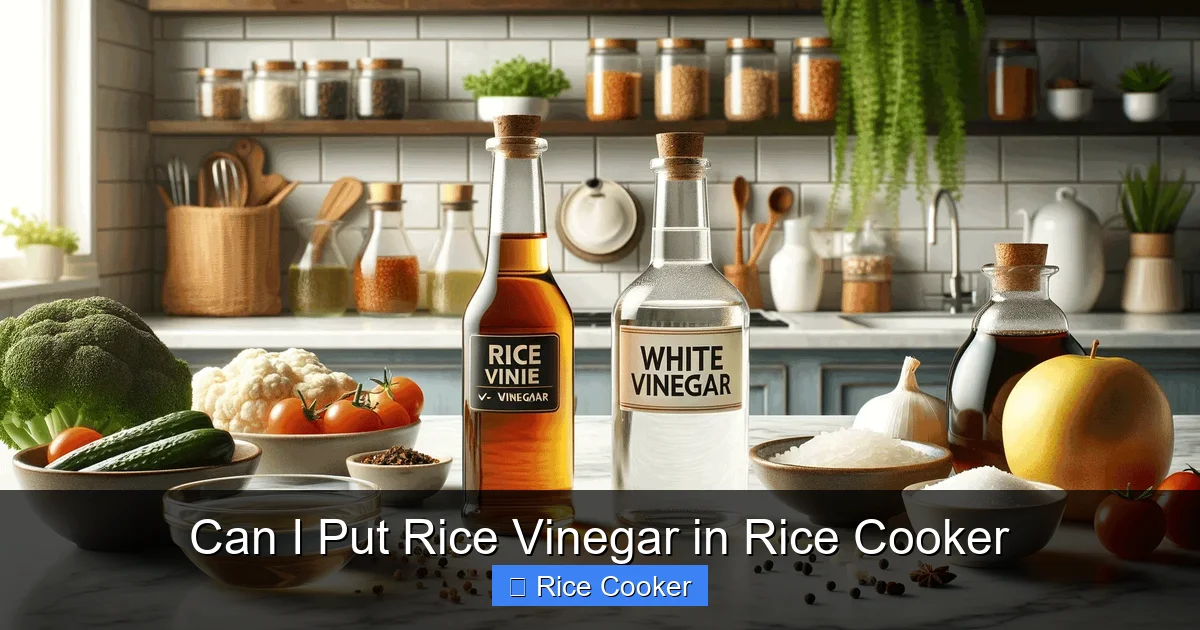
Yes, you can put rice vinegar in a rice cooker, but use it sparingly and at the right stage—typically during the final few minutes of cooking or added afterward. While it won’t harm your appliance, adding too much vinegar may affect texture and taste. This guide walks you through safe methods, flavor pairings, and alternatives so you can enhance your rice without compromising quality.
Have you ever wondered if you can put rice vinegar in rice cooker? It’s a common question among home cooks, especially those making sushi or Japanese-style dishes. Rice vinegar adds a delicate tang that balances rich flavors, but using it in an appliance designed for steaming rice might seem risky. The good news? You absolutely can—but only if you follow the right steps.
In this article, we’ll walk you through everything you need to know about adding rice vinegar to your rice cooker. From timing and measurements to flavor combinations and safety tips, we’ve got you covered. Whether you’re a beginner or a seasoned cook, these insights will help you make the most of your rice cooker while enhancing your meals with authentic taste.
Why Consider Adding Rice Vinegar to Your Rice Cooker?
Rice vinegar is a staple in many Asian cuisines. Unlike regular white vinegar, it’s milder, sweeter, and less harsh on the palate. When used correctly, it can transform plain cooked rice into something extraordinary—especially when making sushi, fried rice, or even simple side dishes with extra zest.
But why add it to the cooker at all? Well, some recipes call for early incorporation to infuse flavor throughout the grain. Others recommend adding it at the end to preserve its freshness. The key is knowing when and how to do it without overpowering the rice or compromising its texture.
Understanding Rice Vinegar and Its Role in Cooking
Before diving into the “how,” let’s talk about what rice vinegar actually is. Made from fermented rice, it typically contains acetic acid, water, and sometimes a touch of sugar or salt. There are different types:
– **White rice vinegar**: Clear, light, and commonly used in sushi.
– **Red rice vinegar**: Slightly darker, richer flavor, often used in Chinese cooking.
– **Black rice vinegar**: Stronger, aged, and used more in medicinal or gourmet dishes.
For most rice cooker applications, white rice vinegar is the go-to choice due to its clean taste and clarity.
The science behind rice vinegar’s role lies in its ability to lower pH levels, which helps prevent bacterial growth—great for food safety—and enhances flavor contrast. In sushi rice, for example, the vinegar balances the sweetness of the rice and cuts through fatty fish.
Can You Actually Put Rice Vinegar in a Rice Cooker?
Short answer: Yes. Long answer: With caution.
Most modern rice cookers have insulated inner pots and precise temperature controls, meaning they won’t react chemically to vinegar. However, prolonged exposure to high heat and acidic environments could potentially degrade non-stick coatings over time—though this is rare with short-term use.
So yes, you can pour rice vinegar directly into the cooker with your rinsed rice. But should you?
It depends on your recipe and desired outcome.
If you’re making sushi rice, some chefs advocate for mixing vinegar with rice early so the flavor penetrates evenly. Others prefer adding it after cooking for a fresher taste. Let’s explore both approaches.
How to Safely Add Rice Vinegar During Cooking
Adding rice vinegar during the cooking cycle requires careful planning. Here’s how to do it right:
**Step 1: Rinse Your Rice Thoroughly**
Start by rinsing long-grain rice (like jasmine or sushi rice) under cold water until the water runs clear. This removes excess starch and prevents clumping.
**Step 2: Measure Your Liquid Accurately**
Follow the standard water-to-ratio (usually 1:1.2 for sushi rice). Then, decide how much vinegar to add. A general rule is 1–2 tablespoons of rice vinegar per cup of uncooked rice. Mix it gently with water before pouring into the cooker.
**Step 3: Add Vinegar Near the End of Cooking**
To avoid mushy rice, add vinegar during the last 5–10 minutes of the cycle. Most rice cookers have a “warm” setting after cooking—this is perfect for finishing touches.
**Step 2: Rinse Your Rice Thoroughly**
Start by rinsing long-grain rice (like jasmine or sushi rice) under cold water until the water runs clear. This removes excess starch and prevents clumping.
**Step 3: Measure Your Liquid Accurately**
Follow the standard water-to-ratio (usually 1:1.2 for sushi rice). Then, decide how much vinegar to add. A general rule is 1–2 tablespoons of rice vinegar per cup of uncooked rice. Mix it gently with water before pouring into the cooker.
**Step 4: Use the Right Rice Cooker Settings**
Select the appropriate mode—“white rice,” “sushi,” or “quick cook”—depending on your needs. Avoid extended soaking unless your recipe calls for it.
**Step 5: Stir Gently After Cooking**
Once done, fold in additional vinegar if needed, using a wooden spatula to avoid crushing grains.
Potential Risks of Adding Too Much Vinegar
While rice vinegar is safe, overdoing it can lead to several issues:
– **Mushy Texture**: Excess acid breaks down starch, making rice gluey or soft.
– **Overpowering Taste**: The tang becomes dominant, masking other ingredients.
– **Nutrient Loss**: High heat and acidity may reduce some vitamins in rice.
Stick to recommended ratios and adjust to taste.
Best Practices for Using Rice Vinegar in Your Rice Cooker
To get the best results, follow these expert tips:
**Use Fresh, Unpasteurized Vinegar**
Old or processed vinegars lose their subtlety. Look for brands labeled “unfiltered” or “organic” for richer flavor.
**Mix Vinegar with Sugar First**
Combining vinegar with a pinch of sugar (about ½ tsp per cup of rice) balances the acidity and prevents overly sharp flavors.
**Try Layering Flavors**
Add aromatics like ginger, scallions, or sesame oil during cooking for extra depth.
**Let Rice Rest After Cooking**
Allow rice to sit covered for 10 minutes after turning off the cooker. This lets flavors settle and improves texture.
Alternatives to Adding Vinegar During Cooking
Not everyone wants to modify their rice cooker routine. If you’re hesitant, consider these alternatives:
**Post-Cooking Addition**
After rice is done, transfer it to a bowl and gently mix in warm vinegar. Cover and let sit for 5–10 minutes. This method gives full control over flavor intensity.
**Pre-Mixing Before Cooking**
Prepare a simple vinegar seasoning mix (vinegar + sugar + salt) and blend it with rinsed rice before adding water. Ideal for sushi rice.
**Using Seasoned Rice Cooker Liners**
Some disposable liners come pre-seasoned with vinegar and salt—perfect for quick sushi prep.
Common Mistakes People Make
Even experienced cooks slip up. Watch out for these errors:
– **Adding undiluted vinegar**: Always dilute with water or another liquid.
– **Skipping rinsing**: Leads to sticky, unappetizing rice.
– **Ignoring rest time**: Skipping the 10-minute rest causes uneven texture.
– **Using tap water only**: Filtered water yields cleaner-tasting rice.
Flavor Pairings That Work Well with Rice Vinegar
Rice vinegar shines when paired thoughtfully. Try these combos:
– **Sushi Rice + Wasabi + Soy Sauce**: Classic trio.
– **Fried Rice + Sesame Oil + Green Onions**: Adds brightness.
– **Pilaf + Citrus Zest + Herbs**: Lightens heavy dishes.
– **Stir-Fry Base + Garlic + Chili Flakes**: Balances spice.
Experiment with small batches first!
Cleaning Your Rice Cooker After Using Vinegar
Since vinegar is acidic, cleaning promptly helps maintain your appliance. Rinse the inner pot immediately after use and wash with warm, soapy water. Avoid abrasive scrubbers that can damage non-stick surfaces.
For stubborn residue, soak the pot in a solution of baking soda and water for 15 minutes before washing.
Frequently Asked Questions About Rice Vinegar and Rice Cookers
Is it bad to put vinegar in a rice cooker?
No, it’s not bad. Rice vinegar is mild and safe for short-term use. Just avoid excessive amounts and high heat exposure to preserve texture.
How much rice vinegar should I add per cup of rice?
Start with 1–2 tablespoons per cup of uncooked rice. Adjust based on taste preference and recipe requirements.
Can I substitute apple cider vinegar for rice vinegar?
Technically yes, but it will alter the flavor profile significantly. Rice vinegar offers a cleaner, less fruity taste ideal for delicate dishes.
Should I add rice vinegar before or after cooking?
Both work! Pre-cooking infusion gives deeper flavor; post-cooking adds freshness. Choose based on your dish and personal preference.
Will adding vinegar make my rice cooker smell?
Only if overused. Small amounts won’t linger. Ensure proper ventilation during cooking to minimize odor.
Can I use rice vinegar in a pressure cooker instead?
Yes, but timing is crucial. Add vinegar in the last 5 minutes of cooking to retain aroma and prevent mushiness.
Final Thoughts: Is It Worth It?
Adding rice vinegar to your rice cooker opens up new culinary possibilities. Whether you’re aiming for perfect sushi rice or simply want to elevate everyday sides, mastering this technique pays off. Just remember: less is often more. Start small, taste as you go, and don’t fear experimentation.
With the right approach, your rice cooker becomes more than just a kitchen gadget—it becomes a tool for flavor innovation. So go ahead, give it a try. Your taste buds (and dinner guests) will thank you.
Key Takeaways
- Rice vinegar is safe to use in a rice cooker—it won’t damage the unit, but timing and amount matter.
- Add vinegar near the end of cooking (last 5–10 minutes) to preserve its aroma and avoid mushy rice.
- Too much vinegar can ruin texture and flavor; start with 1–2 teaspoons per cup of rice.
- Best for sushi rice and Japanese dishes, where subtle acidity enhances balance.
- Alternative methods like post-cooking addition are often safer and give more control.
- Use filtered or low-sodium rice vinegar for better taste and health benefits.
- Always stir gently after adding to distribute flavor without breaking grains.
Frequently Asked Questions
Is it bad to put vinegar in a rice cooker?
No, it’s not bad. Rice vinegar is mild and safe for short-term use. Just avoid excessive amounts and high heat exposure to preserve texture.
How much rice vinegar should I add per cup of rice?
Start with 1–2 tablespoons per cup of uncooked rice. Adjust based on taste preference and recipe requirements.
Can I substitute apple cider vinegar for rice vinegar?
Technically yes, but it will alter the flavor profile significantly. Rice vinegar offers a cleaner, less fruity taste ideal for delicate dishes.
Should I add rice vinegar before or after cooking?
Both work! Pre-cooking infusion gives deeper flavor; post-cooking adds freshness. Choose based on your dish and personal preference.
Will adding vinegar make my rice cooker smell?
Only if overused. Small amounts won’t linger. Ensure proper ventilation during cooking to minimize odor.
Can I use rice vinegar in a pressure cooker instead?
Yes, but timing is crucial. Add vinegar in the last 5 minutes of cooking to retain aroma and prevent mushiness.