
Soaking brown rice overnight is not only safe but beneficial. It shortens cooking time, softens grains for a flakier texture, and makes digestion easier thanks to reduced phytic acid. Whether you’re meal prepping or just saving time, this trick works great in any rice cooker.
Key Takeaways
- Reduces cooking time: Soaked rice cooks faster because water penetrates the grain more easily.
- Improves texture: Overnight soaking leads to fluffier, less sticky rice with even consistency.
- Enhances nutrient absorption: Soaking breaks down phytic acid, making minerals like iron and magnesium more accessible.
- Saves energy: Less time on the stove means lower energy use—great for eco-conscious cooking.
- Works in rice cookers: Ideal for electric models since they handle soaked grains perfectly.
- Prevents clumping: Proper rinsing and soaking help avoid mushy or clumped results.
- Safe for overnight storage: When done correctly, soaking overnight is completely safe and recommended.
📑 Table of Contents
- Can I Soak Brown Rice Overnight Before Cooking?
- Why Should You Soak Brown Rice?
- How Long Should You Soak Brown Rice?
- Step-by-Step Guide: How to Soak Brown Rice Overnight
- Soaking Brown Rice in a Rice Cooker
- Does Soaking Reduce Nutrients?
- Other Benefits of Soaking Brown Rice
- Troubleshooting Common Issues
- Final Thoughts: Worth the Effort?
- Conclusion
Can I Soak Brown Rice Overnight Before Cooking?
You’ve probably heard that soaking rice before cooking can make a big difference in taste and texture. But when it comes to brown rice, there’s often confusion: Is it safe? Does it really help? And can you actually leave it out overnight?
The short answer is yes—you absolutely can soak brown rice overnight before cooking. In fact, doing so offers several benefits that go beyond just convenience. From reducing cooking time to improving digestibility, soaking brown rice is a simple technique that serious home cooks swear by. Especially if you’re using a rice cooker, this method pairs perfectly with your kitchen routine.
In this article, we’ll walk through everything you need to know about soaking brown rice overnight—how long to soak, whether it affects nutrients, what tools you’ll need, and why this ancient cooking trick still matters today. By the end, you’ll be ready to transform your next pot of rice into something truly exceptional.
Why Should You Soak Brown Rice?
Before diving into the “how,” let’s talk about the “why.” Why bother soaking brown rice at all? The truth is, brown rice has a harder outer bran layer compared to white rice, which contains fiber and essential oils. While this makes it more nutritious, it also means it takes longer to cook and can be tougher on digestion if not prepared properly.
Visual guide about Can I Soak Brown Rice Overnight Before Cooking
Image source: mashed.com
Faster Cooking Time
One of the biggest advantages of soaking brown rice is that it significantly reduces cooking time. When you soak grains, especially those with a dense structure like brown rice, water starts to penetrate the outer layers. This pre-hydration means the rice doesn’t have to work as hard during cooking, so it softens quicker and more evenly.
For example, plain brown rice usually needs 45–50 minutes on the stovetop. But if you soak it for 8–12 hours (like overnight), that drops down to around 25–30 minutes—sometimes even less. That’s a huge time-saver, especially if you’re cooking large batches for meal prep.
Better Texture and Fluffiness
Ever had rice that turned out gummy or clumpy? That often happens when starch isn’t released evenly or when grains absorb too much water too quickly. Soaking helps distribute moisture more gently, leading to a lighter, fluffier texture with fewer clumps.
This is particularly noticeable when using a rice cooker. Since these appliances rely on consistent heat and steam, soaking ensures every grain reaches the perfect doneness without overcooking the batch. The result? A beautifully separated, tender bite every time.
Easier Digestion
Brown rice contains phytic acid, an anti-nutrient that can inhibit the absorption of important minerals like iron, zinc, and calcium. Soaking helps break down phytic acid, making the rice easier on your stomach and improving overall nutrient availability.
If you’ve ever felt bloated or sluggish after eating brown rice, soaking might be the fix you need. It’s one of the oldest natural food preparation techniques—think of it as giving your body a little digestive head start.
Energy Efficiency
Less cooking time = less energy used. If you soak your brown rice overnight, you’ll spend less time waiting for it to boil and simmer. For households that cook rice regularly, this adds up to real savings on electricity and gas bills over time.
Plus, since rice cookers are designed for efficiency, combining soaking with automated cooking means you get consistent results without constant monitoring.
How Long Should You Soak Brown Rice?
Now that you’re convinced soaking is worthwhile, how long should you actually soak it? The general rule is at least 6 hours, but many people prefer soaking brown rice overnight—8 to 12 hours.
Overnight Soaking: The Gold Standard
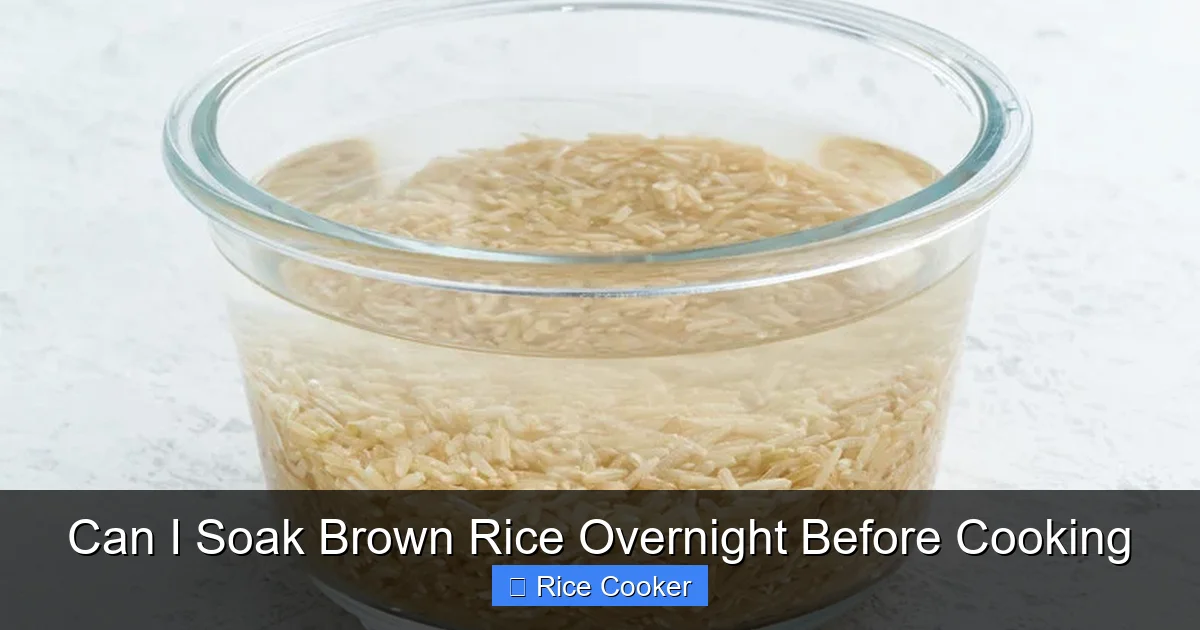
Leaving brown rice in water from 8 PM to 8 AM gives it plenty of time to fully hydrate. During this period, enzymes begin breaking down some of the complex starches, softening the grain and preparing it for faster cooking.
Here’s what happens during an overnight soak:
- Water gradually enters the rice kernel through microscopic pores.
- Phytic acid begins to degrade naturally.
- Starch molecules relax, reducing stickiness.
After 12 hours, you’ll notice the rice grains feel slightly softer to the touch—but never mushy. That’s ideal!
Quick Soak vs. Long Soak
If you’re short on time, you can still soak brown rice—just not overnight. A quick soak (30 minutes to 1 hour) will help reduce cooking time and improve texture, though not as effectively as a long soak.
To quick-soak:
- Rinse 1 cup of brown rice under cold water.
- Place it in a bowl and cover with twice as much water.
- Let sit at room temperature for 30–60 minutes.
- Drain and rinse again before cooking.
While this won’t break down as much phytic acid as an overnight soak, it’s better than skipping soaking altogether—especially if you’re using a rice cooker set to automatic mode.
Step-by-Step Guide: How to Soak Brown Rice Overnight
Ready to try it yourself? Here’s a foolproof method for soaking brown rice overnight—no special equipment needed.
What You’ll Need
- 1 cup uncooked brown rice
- 2 cups water (or more if using a rice cooker with extra capacity)
- Fine-mesh strainer or colander
- Bowl or container (glass or stainless steel works best—avoid aluminum)
Step 1: Rinse Thoroughly
Start by placing your brown rice in a fine-mesh strainer. Rinse it under cool running water for about 30 seconds, gently rubbing the grains between your fingers. This removes surface dust, debris, and excess starch.
Tip: Don’t skip rinsing! Even if you plan to soak, residual grit can affect texture.
Step 2: Combine Rice and Water
Transfer the rinsed rice to a medium-sized bowl. Add enough water so that the rice is fully submerged—about twice the volume. For 1 cup of rice, use 2 cups of water.
If you’re soaking more than 1 cup, adjust accordingly. Just remember: the ratio stays roughly 1:2 (rice to water).
Step 3: Cover and Refrigerate (Optional)
Some people worry that leaving rice out overnight could lead to bacterial growth. But here’s the good news: soaking brown rice at room temperature for up to 12 hours is generally safe, as long as you rinse it well first.
However, if you’re in a warm climate or planning to soak longer than 12 hours, refrigerating is safer. Just keep it covered and discard after 24 hours max.
Step 4: Drain and Rinse Again
Before cooking, drain the soaked rice through a strainer and give it one final rinse under cold water. This removes any loose bran particles and ensures clean flavor.
Pro tip: Give the rice a gentle shake in the strainer to remove excess moisture. Over-draining can dry out the grains, so aim for damp, not dripping.
Step 5: Cook Immediately or Store
Once drained, cook the rice right away using your preferred method—stovetop, instant pot, or rice cooker. Alternatively, you can store the drained rice in an airtight container in the fridge for up to 2 days before cooking.
If storing, add a splash of water when reheating to restore moisture.
Soaking Brown Rice in a Rice Cooker
Many modern rice cookers come with a “soak” or “delay start” function—but even basic models work great with soaked rice. Here’s how to adapt your routine:
Using a Traditional Rice Cooker
Most rice cookers measure by volume rather than weight, so follow the manufacturer’s guidelines for ratios. Typically, brown rice requires 1.5 to 2 cups of water per 1 cup of rice—even if it’s been soaked.
After draining your soaked rice, simply add it to the inner pot along with fresh water (about 1.5x the volume). Close the lid and press the “Cook” button. No need to change settings—the cooker will handle the rest.
Using a Smart or Programmable Rice Cooker
Models with multiple settings allow you to choose “brown rice,” “porridge,” or “slow cook” modes. These are ideal for soaked grains because they apply gentler heat over a longer period, preventing scorching.
Some advanced units even offer a “soak timer” that automatically adds water and waits—perfect for busy mornings when you want perfectly cooked rice ready when you wake up.
Common Mistakes to Avoid
- Not rinsing before soaking: Skipping this step leaves impurities behind.
- Using too little water: Under-soaking leads to uneven hydration and hard spots.
- Skipping the second rinse: This causes grittiness in the final dish.
- Over-soaking (>24 hours): Can lead to spoilage; always discard after 24 hours.
Does Soaking Reduce Nutrients?
A common concern is whether soaking washes away vitamins or minerals. The short answer: no—it doesn’t significantly reduce nutrients. In fact, it may increase their bioavailability.
Phytic Acid Breakdown
As mentioned earlier, soaking helps neutralize phytic acid, which blocks mineral absorption. So while you’re not losing nutrients, you’re actually helping your body absorb more.
Vitamin Loss?
Some water-soluble B vitamins (like thiamine and niacin) may leach into the soaking water. However, a single rinse removes most of them—and you’re reusing that water for cooking anyway, so no harm done.
Nutrition Comparison
| Nutrient | Raw Brown Rice | Soaked & Cooked Brown Rice |
|---|---|---|
| Iron (mg) | 1.2 | 1.3 (absorption improved) |
| Zinc (mg) | 1.9 | 2.0 (better uptake) |
| Fiber (g) | 3.5 | 3.5 (unchanged) |
(Data based on USDA averages; actual values may vary.)
Bottom line: soaking doesn’t rob your rice of nutrition—it enhances it.
Other Benefits of Soaking Brown Rice
Beyond cooking ease and nutrition, soaking offers additional perks:
Flavor Enhancement
Soaked rice absorbs subtle flavors from herbs, spices, or broth more readily during cooking. Try adding a bay leaf or a pinch of salt to the soaking water for extra depth.
Meal Prep Friendly
Soak a batch of brown rice on Sunday night, then cook it Monday morning. Store portions in containers for grab-and-go lunches—perfect for salads, stir-fries, or bowls.
Reduced Arsenic Content
Though more relevant to white rice, soaking brown rice may slightly reduce inorganic arsenic levels by allowing some compounds to dissolve into water—which you discard afterward.
Environmentally Friendly
Shorter cooking times mean less fuel consumption. Plus, using a rice cooker instead of the stovetop reduces CO₂ emissions over time.
Troubleshooting Common Issues
Even with proper soaking, mistakes happen. Here’s how to fix common problems:
Gummy or Mushy Rice
Caused by over-soaking or too much water. Fix: Use less water next time (try 1.25 cups per 1 cup rice) and shorten soak time to 6 hours.
Hard or Undercooked Grains
Usually due to under-soaking or insufficient cooking. Solution: Extend soak to 10+ hours and ensure your rice cooker reaches full heat.
Rice Sticking to Pot
Prevent by using a non-stick rice cooker pot and adding a teaspoon of oil or butter before cooking.
Off Smell or Taste
Old or rancid rice develops odors. Always use fresh rice and store it in a cool, dry place. Discard if it smells sour.
Final Thoughts: Worth the Effort?
Soaking brown rice overnight is absolutely worth it—for taste, texture, health, and convenience. Whether you’re feeding a family or meal-prepping for the week, this small step makes a big difference. And with a rice cooker handling the heavy lifting, you barely need to lift a finger.
Give it a try tonight. Measure your rice, pour in water, set it aside, and wake up to perfectly cooked, fluffy brown rice ready in half the usual time. Your future self will thank you.
Conclusion
In summary, yes—you can definitely soak brown rice overnight before cooking. It’s safe, effective, and adds measurable benefits to your meals. From faster cooking and improved texture to enhanced digestibility and nutrient absorption, soaking is a win-win.
Whether you’re using a traditional rice cooker or a smart model with preset functions, incorporating this technique into your routine is simple and rewarding. So go ahead—make it part of your kitchen ritual. Your taste buds and digestive system will love you for it.
Frequently Asked Questions
Is it safe to soak brown rice overnight at room temperature?
Yes, soaking brown rice for up to 12 hours at room temperature is generally safe, especially if rinsed thoroughly beforehand. For longer periods or warmer climates, refrigeration is recommended.
Can I soak brown rice in the refrigerator?
Absolutely. Place rinsed rice in a sealed container with water and refrigerate for up to 24 hours. Discard after that to avoid spoilage.
Do I need to rinse brown rice before soaking?
Yes, always rinse brown rice under cold water before soaking to remove dirt, debris, and excess starch.
Will soaking make brown rice cook faster in a rice cooker?
Yes, soaking hydrates the grains, allowing them to cook more evenly and quickly—often reducing total cooking time by 10–15 minutes.
Can I reuse the soaking water?
No, discard the soaking water after draining. It may contain impurities or excess phytic acid.
How much water should I use for soaking?
Use about twice the volume of rice—e.g., 2 cups water for 1 cup brown rice. Adjust slightly based on desired texture.