
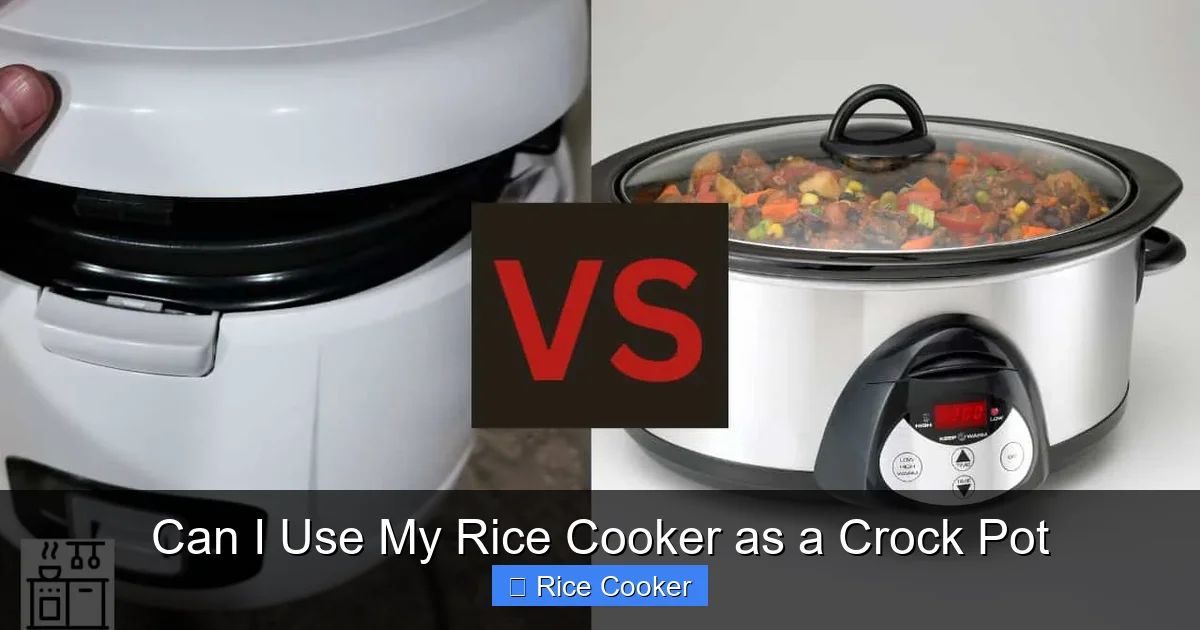
Yes, you can use your rice cooker as a crock pot—but with important caveats. While both appliances cook food slowly using low heat, their designs differ significantly. A rice cooker can handle soups, stews, and even braised meats, but it lacks the slow, consistent heat of a true crock pot. Always monitor temperature and avoid high-sugar or long-simmer recipes to prevent damage or overcooking.
Key Takeaways
- Rice cookers can substitute for crock pots in a pinch, but they aren’t designed for all-day slow cooking like traditional slow cookers.
- They typically offer lower wattage and less precise temperature control, which may affect texture and flavor in some dishes.
- Many modern rice cookers have a “slow cook” or “keep warm” mode, making them more versatile than older models.
- You can make soups, stews, chili, and braises in a rice cooker, but avoid recipes requiring high liquid evaporation or extended searing.
- Monitor cooking time closely—rice cookers heat faster and cool down quickly, increasing the risk of undercooked or overcooked food.
- Cleaning and safety matter more than ever when repurposing appliances, especially if you’re cooking fatty or saucy meals.
- For best results, choose a rice cooker with multiple cooking modes and a sturdy inner pot.
📑 Table of Contents
- Can I Use My Rice Cooker as a Crock Pot? The Truth Behind This Kitchen Hack
- How Do Rice Cookers and Crock Pots Differ?
- When Can You Safely Use a Rice Cooker as a Crock Pot?
- Step-by-Step Guide: Using Your Rice Cooker Like a Crock Pot
- What Not to Cook in a Rice Cooker (Even If You Want To)
- Tips to Maximize Success When Repurposing Your Rice Cooker
- Are There Any Risks?
- Real-Life Examples: Recipes You Can Make
- Conclusion: Should You Replace Your Crock Pot?
Can I Use My Rice Cooker as a Crock Pot? The Truth Behind This Kitchen Hack
Have you ever found yourself staring into your pantry, realizing your crock pot is already being used for something else, and wondering: “Can I use my rice cooker as a crock pot instead?” You’re not alone. With so many kitchen gadgets sitting around, it’s natural to ask whether one appliance can do the job of another—especially when you’re short on time, energy, or space.
A rice cooker and a crock pot both use electricity to cook food over time, but they weren’t made for the same purpose. Still, thanks to advances in technology, many modern rice cookers now include slow-cook functions that bring them closer in functionality to traditional slow cookers. So yes, you can use a rice cooker as a crock pot—but only under the right conditions and with the right expectations.
In this article, we’ll explore everything you need to know about repurposing your rice cooker, from understanding how it works to learning which recipes are safe (and delicious) to try. Whether you’re trying to save money, reduce clutter, or just be more efficient in the kitchen, this guide will help you make smart decisions—without damaging your appliance or ruining your meal.
How Do Rice Cookers and Crock Pots Differ?
Before jumping into recipes, let’s break down the key differences between rice cookers and crock pots. Understanding these distinctions helps explain why one might work as a substitute for the other—and why it might not always be ideal.
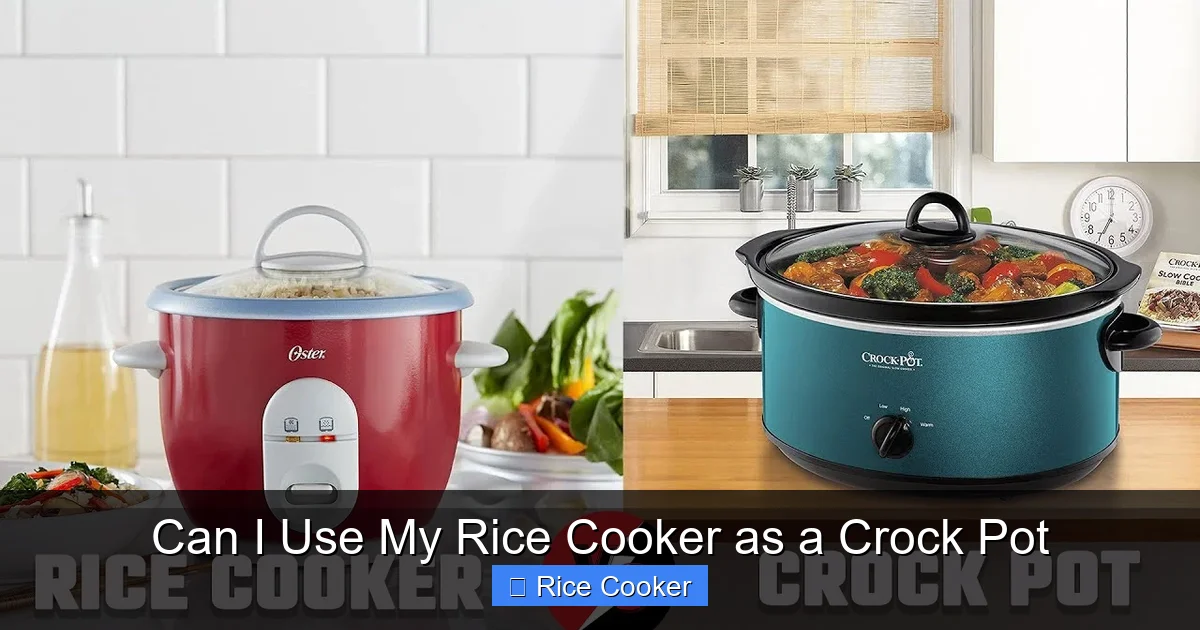
Visual guide about Can I Use My Rice Cooker as a Crock Pot
Image source: i.ytimg.com
Design and Heat Distribution
Crock pots are built to maintain a steady, low temperature for hours. They usually operate at around 200–250°F and have thick walls to insulate heat. This design allows food to simmer gently without drying out or burning.
On the other hand, rice cookers rely on rapid heating and precise temperature regulation. Most standard rice cookers cycle through high heat to boil water, then switch to low or keep-warm mode once boiling stops. Their inner pots are often made of aluminum or non-stick materials, which don’t retain heat as well as ceramic or cast iron.
Temperature Control and Cooking Cycles
A true crock pot offers consistent low-and-slow cooking with minimal fluctuation. It doesn’t turn off unless unplugged—it stays on, keeping food at a gentle simmer.
Rice cookers, by contrast, follow programmed cycles. For example, after cooking rice, they automatically switch to “keep warm,” which maintains food at about 160–170°F. If you’re using it for slow cooking, you may need to manually adjust settings or monitor the process more closely.
Capacity and Size Differences
Slow cookers typically come in sizes ranging from 4 to 8 quarts, perfect for family-sized meals. Most rice cookers range from 3 to 10 cups (about 1.5 to 6 quarts), though larger models exist.
If your rice cooker is smaller than your recipe requires, you might end up overfilling it, which can lead to uneven cooking or spillover during bubbling.
Power Output (Watts)
Crock pots generally use 150–300 watts, while most rice cookers operate between 300–600 watts. Higher wattage means faster heating, but also quicker cooling once power is lost—something to consider if your electricity flickers mid-recipe.
When Can You Safely Use a Rice Cooker as a Crock Pot?
Despite their differences, there are plenty of situations where a rice cooker can successfully replace a crock pot—especially if you plan ahead and choose the right recipes.
Recipes That Work Well
Here are types of dishes that adapt nicely to rice cooker slow cooking:
- Soups and stews: Think chicken noodle soup, beef stew, or vegetable curry. These need long, moist cooking and benefit from tenderizing tough cuts of meat.
- Beans and lentils: Dried beans, chickpeas, and lentils require long soaking and simmering times—perfect for a rice cooker’s extended low-heat cycle.
- Braised dishes: Dishes like pot roast, pulled pork, or coq au vin can be adapted by reducing liquid slightly and monitoring closely.
- Desserts: Some puddings, custards, and rice-based desserts (like mango sticky rice) actually thrive in a rice cooker’s sealed environment.
Just remember: avoid recipes that call for high evaporation, like certain jams or reductions, since rice cookers tend to trap moisture.
Models with Slow-Cook Functions
Not all rice cookers are created equal. Look for models labeled “multi-cooker” or those with dedicated “slow cook” buttons. These often mimic crock pot behavior more closely by offering longer, gentler cycles.
Popular brands like Instant Pot, Zojirushi, and Cuckoo have hybrid models that combine pressure cooking, steaming, and slow cooking—making them excellent alternatives to dedicated slow cookers.
Step-by-Step Guide: Using Your Rice Cooker Like a Crock Pot
Ready to give it a try? Follow this simple process to convert your rice cooker into a makeshift crock pot:
- Gather your ingredients. Chop vegetables, brown meat (optional), and measure liquids carefully. Too much liquid can cause overflow.
- Add oil to the inner pot. A light coating prevents sticking—especially important for proteins.
- Sauté if needed. Some rice cookers have a “saute” function. Use it to sear meat before adding broth or water.
- Add everything else. Include onions, garlic, herbs, and spices. Stir in beans or grains last to avoid mushiness.
- Select the correct mode. Use “Slow Cook” or “Keep Warm” if available. If not, set it to “Cook” and check every hour.
- Cover securely. Ensure the lid fits tightly to retain steam and heat.
- Check periodically. Unlike crock pots, rice cookers can drop temperature quickly. Stir occasionally and taste-test.
Pro tip: Place a towel under the lid to absorb excess condensation and prevent water from dripping back into the food.
What Not to Cook in a Rice Cooker (Even If You Want To)
While rice cookers are surprisingly versatile, there are limits. Avoid these recipes if possible:
High-Sugar Dishes
Jams, jellies, and glazes rely on sugar caramelization and evaporation. In a rice cooker, the lack of airflow means sugars won’t reduce properly, resulting in runny, undercooked spreads.
Meals Requiring High Heat Searing
If a recipe calls for browning meat on the stove first, skip it. The rice cooker’s surface isn’t designed for direct high-heat cooking. Instead, use the sauté function briefly—or skip searing altogether for softer textures.
Dishes Needing Constant Stirring
Stir-fries, risottos, and sauces that require frequent agitation won’t work well. The rice cooker is best for hands-off cooking.
Overfilled Batches
Never fill the inner pot beyond two-thirds full. Liquids expand when heated, and overfilling leads to messy spills and poor heat transfer.
Tips to Maximize Success When Repurposing Your Rice Cooker
Want better results? Try these expert-backed tricks:
- Preheat the pot: Run the rice cooker on high for 1–2 minutes before adding ingredients. This helps distribute heat evenly.
- Use the right amount of liquid: Start with 25% less liquid than a crock pot recipe suggests. Rice cookers trap steam, leading to extra moisture.
- Break up chunks: Cut meat and vegetables into uniform sizes for consistent cooking.
- Layer ingredients wisely: Put denser items (carrots, potatoes) at the bottom; lighter ones (leafy greens) on top near the end.
- Don’t open the lid too often: Each time you lift it, heat escapes. Limit checks to every 30–60 minutes.
- Clean immediately after use: Starchy residues or fats can harden and damage non-stick coatings over time.
Are There Any Risks?
Using a rice cooker as a crock pot isn’t dangerous per se—but it does come with potential downsides:
- Uneven cooking: Smaller batches may cook faster; large ones may stay raw in the center.
- Wear and tear: Constant low-heat use could degrade seals or heating elements faster than intended.
- Flavor limitations: Without browning or reduction, some depth of flavor is lost compared to crock pot cooking.
- Overflow risks: As mentioned, too much liquid plus vigorous bubbling can lead to splatter.
That said, with careful attention, these risks are manageable—and many cooks swear by their rice cooker for everything from oatmeal to chili.
Real-Life Examples: Recipes You Can Make
Let’s look at a few tested recipes that work beautifully in a rice cooker:
Simple Chicken Stew
Ingredients:
1 lb chicken thighs
1 onion, diced
2 carrots, sliced
2 celery stalks
3 cups chicken broth
1 tsp thyme
Salt and pepper to taste
Instructions:
1. Add all ingredients to the rice cooker pot.
2. Close lid and select “Slow Cook” for 2–3 hours, or “Cook” for 1.5 hours if no slow setting.
3. Shred chicken with forks before serving.
Red Lentil Curry
Ingredients:
1 cup red lentils
1 tbsp oil
1 onion, chopped
2 cloves garlic
1 can coconut milk
1 tsp cumin, 1 tsp turmeric
Water as needed
Instructions:
1. Sauté onion and garlic on medium-high for 2 minutes.
2. Add spices, lentils, and coconut milk. Stir.
3. Add water until lentils are submerged by an inch.
4. Cook on “Slow Cook” for 1 hour, checking occasionally.
These examples show how flexible your rice cooker can be—even without a dedicated slow cook mode.
Conclusion: Should You Replace Your Crock Pot?
The short answer: maybe—but only temporarily and with awareness. A rice cooker can handle many slow-cooked meals, especially if it has multiple functions. But it’s not a perfect replacement for a true crock pot in terms of consistency, capacity, or convenience.
If you already own a rice cooker and need to cook something slow today, go for it! Just adjust your expectations and monitor the process. Over time, you’ll learn its quirks and discover new favorite dishes.
However, if you frequently make slow-cooked meals, investing in a quality crock pot makes sense. It’s built for that specific task—and will likely serve you better in the long run.
In the end, the best kitchen strategy is flexibility. Knowing when and how to adapt tools saves time, reduces waste, and opens up creative cooking possibilities.
Frequently Asked Questions
Can a rice cooker replace a slow cooker completely?
Not entirely. While modern rice cookers with slow-cook functions can handle many similar tasks, they lack the continuous low-heat stability and larger capacity of dedicated slow cookers. Use it for occasional meals, not daily replacements.
Will cooking in a rice cooker burn the food?
It’s possible if you overfill, use too much liquid, or don’t monitor temperature. Rice cookers cycle on and off, which can lead to hot spots. Stir occasionally and keep an eye on your dish.
Do I need to preheat my rice cooker before slow cooking?
Yes, especially if your model doesn’t have a dedicated slow-cook mode. Preheating ensures even distribution of heat and helps jumpstart the cooking process.
Can I leave food in a rice cooker all day?
Technically yes—but only if it’s on “Keep Warm” mode. However, USDA guidelines recommend discarding perishable foods left above 40°F for more than 2 hours. For safety, cook fresh each time.
What’s the biggest difference between a rice cooker and a crock pot?
The main difference is temperature control and design purpose. Crock pots maintain steady low heat for hours; rice cookers cycle rapidly and are optimized for grains. This affects texture, flavor development, and reliability.
Is it worth buying a multi-functional rice cooker instead of a crock pot?
If you already have a rice cooker, adding one with slow-cook features gives you more options. But if you rarely cook rice and mostly make soups or stews, a crock pot is likely a better investment.