
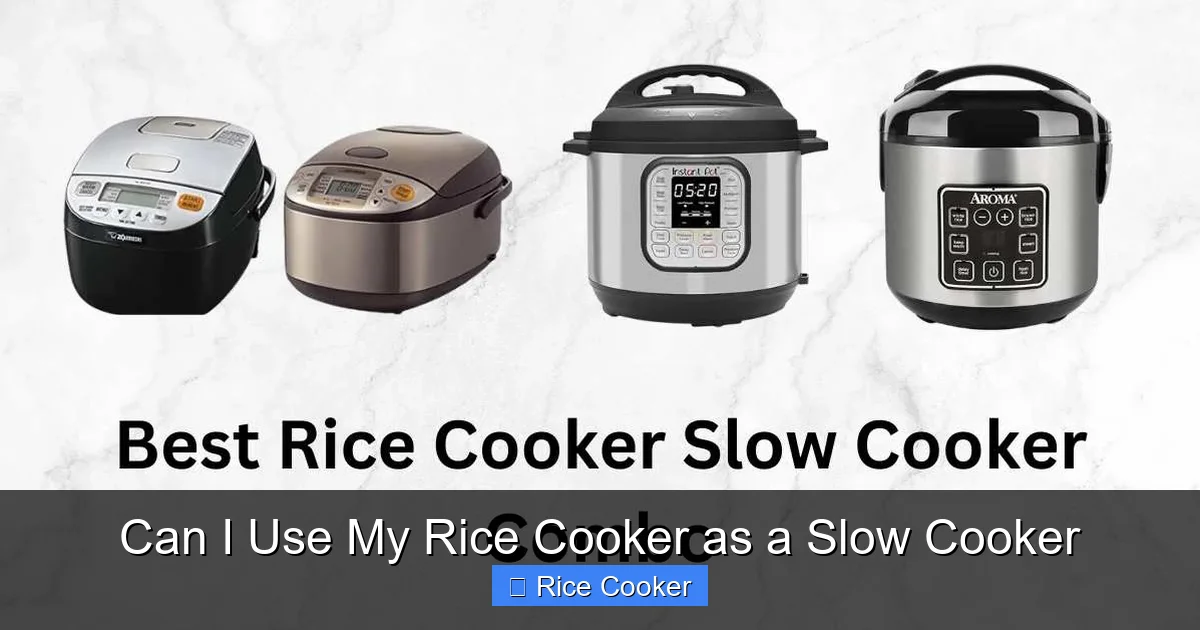
Can you use a rice cooker as a slow cooker? Absolutely—but only if it has a slow cook function. Most basic rice cookers lack the low, steady heat needed for true slow cooking, so results vary. With the right settings and ingredients, you can make soups, stews, and even braised meats. Just don’t expect identical results to a dedicated slow cooker.
Have you ever stared into your pantry, wondering what to make for dinner, and realized you only have a few ingredients left? Maybe you’ve got some leftover chicken, a handful of vegetables, and a bag of lentils—but no time for elaborate prep. Enter the humble rice cooker. It’s known for whipping up fluffy white rice in under 20 minutes, but what if we told you it could do so much more? Yes, you read that right—can you use your rice cooker as a slow cooker? The short answer: sometimes. But the real question is whether it’s worth the trade-offs.
Let’s dive into the science, the practicalities, and the delicious possibilities of turning your trusty rice maker into a versatile kitchen multitasker. Whether you’re a college student on a budget, a busy parent trying to save time, or just someone who loves kitchen hacks, this guide will help you decide if repurposing your rice cooker makes sense—and how to do it safely and effectively.
Key Takeaways
- Not all rice cookers can act as slow cookers: Only models with a slow cook or porridge setting will work reliably for long-cooked meals.
- Heat control is limited: Standard rice cookers cycle between high and low heat, which isn’t ideal for gentle, consistent simmering.
- Safety first: Always monitor food when using a rice cooker for non-rice dishes to avoid overcooking or unsafe temperatures.
- Best recipes to try: Stews, soups, oatmeal, and braised dishes work well; dry grains like rice should still be cooked separately.
- Energy efficiency varies: Rice cookers use less power than ovens but may run longer cycles, so factor in total energy use.
- Cleanup is easy: Most inner pots are nonstick and dishwasher-safe, making them great for one-pot meals.
- Upgrade option: Consider a multi-cooker with both rice and slow cook functions for maximum versatility.
📑 Table of Contents
- Understanding the Difference Between Rice Cookers and Slow Cookers
- Which Rice Cookers Can Act as Slow Cookers?
- Pros and Cons of Using a Rice Cooker as a Slow Cooker
- How to Safely Use Your Rice Cooker as a Slow Cooker
- Delicious Recipes You Can Make in a Rice Cooker
- Tips for Maximizing Performance
- When Not to Use a Rice Cooker as a Slow Cooker
- Should You Buy a Multi-Cooker Instead?
- Final Thoughts: Is It Worth It?
Understanding the Difference Between Rice Cookers and Slow Cookers
Before we get into the “how,” let’s talk about the “why.” Rice cookers and slow cookers are built for different purposes, and their design reflects that. A traditional slow cooker uses low, consistent heat over several hours to gently cook tough cuts of meat and develop deep flavors. Think of it like leaving a pot on the stove all day—slow, steady, and hands-off.
On the other hand, a rice cooker is engineered to bring water to a boil quickly, then maintain a precise temperature just below boiling to steam and cook grains. It doesn’t stay on low heat for hours; instead, it cycles through heating phases—boil, warm, off—based on internal sensors. This means that while both appliances can cook food, they do so in very different ways.
So, can you use a rice cooker as a slow cooker? Technically, yes—but only if your model supports extended low-heat cooking. Many modern rice cookers come with extra functions like “porridge,” “stew,” or even “slow cook.” These settings allow the appliance to maintain a gentler heat for longer periods, mimicking the behavior of a slow cooker. However, older or basic models won’t offer this feature, and attempting to use them for slow cooking can lead to inconsistent results or even safety concerns.
Which Rice Cookers Can Act as Slow Cookers?
Visual guide about Can I Use My Rice Cooker as a Slow Cooker
Image source: ricearray.org
Not every rice cooker is created equal when it comes to versatility. To use your rice cooker as a slow cooker, you’ll need one with specific features. Here’s what to look for:
1. Slow Cook or Stew Function
The most important indicator is the presence of a dedicated slow cook setting. If your rice cooker has buttons labeled “Slow Cook,” “Stew,” or “Porridge,” you’re in luck. These modes allow the appliance to maintain a low, steady temperature (usually around 195°F–200°F) for several hours—perfect for tenderizing meat and building flavor.
For example, models like the Zojirushi NS-ZCC10 or the Panasonic SR-DF101 are known for their advanced functionality, including slow cook options. These aren’t cheap, but they offer the closest experience to a traditional slow cooker.
2. Keep Warm vs. Low Heat
Even if your rice cooker lacks a slow cook button, it might still have a “Keep Warm” mode. While this setting is designed to maintain cooked food at a safe serving temperature (around 140°F), it’s not suitable for active cooking. Using it to simmer a soup or braise meat would result in undercooked food and potential bacterial growth. So, keep warm ≠ slow cook.
3. Timer and Delay Settings
A built-in timer is another useful feature. Some rice cookers allow you to set a delay before cooking begins, which can simulate the “set it and forget it” nature of a slow cooker. For instance, you could prepare ingredients in the morning, set the timer for 6 PM, and come home to a fully cooked meal.
4. Capacity Matters
Small rice cookers (1–2 cups) are impractical for slow cooking unless you’re making individual portions. Medium to large models (4–10 cups) are better suited for family-sized stews or soups. Just remember that the inner pot must be large enough to accommodate liquid without overflowing during simmering.
Pros and Cons of Using a Rice Cooker as a Slow Cooker
Like any kitchen hack, using a rice cooker as a slow cooker comes with advantages and drawbacks. Let’s break them down so you can decide if it’s right for you.
The Benefits
- Energy Efficiency: Rice cookers use less electricity than ovens or stovetops. A typical unit consumes around 300–600 watts, compared to 2000+ watts for an oven.
- Compact Size: If you live in a small apartment or have limited counter space, a rice cooker takes up far less room than a slow cooker.
- Easy Cleanup: Most rice cooker inner pots are made of nonstick material and are dishwasher-safe—no scrubbing required.
- Multi-Functionality: You’re already using it for rice, porridge, and steamed veggies. Adding slow cooking expands its utility without needing extra equipment.
- Consistent Results: Modern digital models maintain precise temperatures, reducing the risk of burning or undercooking.
The Limitations
- Limited Heat Control: Basic models cycle between high and low heat, which can cause uneven cooking or frequent cycling off/on.
- Smaller Capacity: Even a 10-cup rice cooker is smaller than most slow cookers, limiting batch size.
- No Lid Locking Mechanism: Unlike slow cookers, many rice cookers don’t seal tightly, allowing steam to escape and reducing moisture retention.
- Not Ideal for Dry Cooking: Since rice cookers rely on moisture, dishes that require browning or crisping (like seared meats) won’t work well.
- Longer Recovery Time: After opening the lid to stir, a rice cooker takes longer to return to optimal temperature than a slow cooker.
How to Safely Use Your Rice Cooker as a Slow Cooker
If you’ve decided to give it a try, here’s how to do it safely and effectively.
Step 1: Check Your Model’s Capabilities
Consult your user manual or look for labels on the control panel. If there’s no slow cook setting, proceed with caution—or consider upgrading.
Step 2: Use Enough Liquid
Rice cookers need liquid to generate steam and maintain temperature. For slow-cooked dishes, use at least 1–2 cups of broth, water, or sauce per 2 cups of solid ingredients. Too little liquid, and the food may dry out or stick to the bottom.
Step 3: Avoid Overfilling
Never fill the inner pot beyond two-thirds full. When liquids simmer, they expand and can overflow, damaging the heating element or creating a fire hazard.
Step 4: Stir Occasionally
Since rice cookers don’t circulate heat evenly, stir your ingredients every hour or so to prevent scorching and ensure even cooking.
Step 5: Monitor the Temperature
If your model lacks a slow cook function, test the water temperature after 30 minutes. It should hover around 180°F–200°F. If it’s much lower, the heat may be too weak for proper cooking.
Step 6: Don’t Rely Solely on “Keep Warm”
As mentioned earlier, the keep warm setting isn’t for active cooking. Use it only to hold finished food at a safe temperature.
Delicious Recipes You Can Make in a Rice Cooker
Ready to test the waters? Here are five foolproof recipes that showcase the potential of your rice cooker as a slow cooker.
1. Hearty Vegetable Lentil Stew
Combine chopped carrots, celery, onions, garlic, lentils, diced tomatoes, vegetable broth, and herbs in the inner pot. Add a bay leaf and salt. Select the stew setting (or use low heat manually). Cook for 2–3 hours until lentils are tender. Serve with crusty bread.
2. Chicken and Rice Casserole
Sauté chicken thighs in oil (optional), then add rice, chicken broth, frozen peas, and diced potatoes. Season with thyme, salt, and pepper. Cook on stew mode for 1.5–2 hours. The result? Creamy, comforting perfection.
3. Oatmeal with Apples and Cinnamon
This isn’t just for mornings! Combine rolled oats, diced apples, cinnamon, brown sugar, milk, and a pinch of salt. Set on porridge mode for 30–40 minutes. The slow, gentle heat yields a creamy texture without sticking.
4. Pulled Pork Tacos
Brown a pork shoulder (optional), then add apple cider vinegar, soy sauce, garlic powder, onion powder, and enough broth to cover. Cook on low for 3–4 hours until meat shreds easily. Shred and serve in tortillas with slaw.
5. Chickpea and Spinach Curry
Simmer chickpeas, coconut milk, diced tomatoes, spinach, cumin, turmeric, and ginger in the rice cooker. Cook on stew mode for 1–1.5 hours. The result is a fragrant, one-pot meal perfect with naan.
Tips for Maximizing Performance
Want to get the best results? Follow these pro tips:
- Preheat the Pot: Lightly grease the inner pot and warm it slightly before adding ingredients to reduce sticking.
- Layer Ingredients Wisely: Put denser items (potatoes, root veggies) at the bottom and delicate ones (leafy greens) near the end.
- Use a Thermometer: For meats, insert a thermometer to check internal temps—pork should reach 145°F, chicken 165°F.
- Don’t Open the Lid Frequently: Each time you lift the lid, heat escapes. Plan ahead to minimize interruptions.
- Experiment with Times: Start with shorter durations and taste-test. Some ingredients need more time than others.
When Not to Use a Rice Cooker as a Slow Cooker
Despite its versatility, there are times when a rice cooker isn’t the best tool. Avoid using it for:
- Dishes Requiring Browning: Searings, sautés, or caramelization need direct high heat—something a rice cooker can’t provide.
- Large Quantities: More than 6–8 servings may exceed capacity and lead to uneven cooking.
- Recipes Calling for Crispy Texture: Think fried rice or crunchy snacks—rice cookers are for soft, moist cooking.
- Unattended Cooking for Long Periods: While some models have timers, always supervise if you’re unsure of the settings.
Should You Buy a Multi-Cooker Instead?
If you find yourself wanting to use your rice cooker as a slow cooker often, it might be time to invest in a dedicated multi-cooker. Devices like the Instant Pot or Crock-Pot Express combine pressure cooking, slow cooking, rice cooking, steaming, and more—all in one appliance.
These units offer better heat control, larger capacities, and more intuitive programming. They’re pricier upfront, but they eliminate the need for multiple gadgets cluttering your kitchen.
That said, if you already own a reliable rice cooker with slow cook functionality, there’s no urgent need to replace it. Just be mindful of its limitations and plan accordingly.
Final Thoughts: Is It Worth It?
So, can you use your rice cooker as a slow cooker? Yes—but with caveats. If your model supports low-heat cooking, it’s a clever way to save space, reduce energy use, and whip up comforting meals without extra effort. From soups to stews to overnight oats, the possibilities are surprisingly diverse.
However, don’t expect a perfect substitute for a traditional slow cooker. Heat consistency, capacity, and sealing are key differences that affect outcomes. And if you’re serious about slow cooking, a multi-function appliance might be a smarter long-term investment.
At the end of the day, kitchen tools are meant to make life easier—not harder. Whether you stick with your rice cooker or upgrade to a multi-cooker, the goal is simple: delicious, stress-free meals. And honestly, both approaches can deliver that.
Now go ahead—grab your rice cooker, toss in those leftovers, and see what magic happens.
Frequently Asked Questions
Can I use any rice cooker as a slow cooker?
Only rice cookers with a dedicated slow cook, stew, or porridge setting can reliably mimic a slow cooker. Basic models lack the low, steady heat needed for proper slow cooking and should not be used for long-duration meals.
How long does it take to cook a stew in a rice cooker?
With a slow cook function, stews typically take 2–3 hours on low heat. Without it, results may be inconsistent due to cycling between high and low temperatures. Always monitor and stir occasionally.
Is it safe to leave food in a rice cooker overnight?
No. Leaving perishable food in a rice cooker for more than 2 hours at room temperature creates a bacteria growth risk. Use the keep warm setting only briefly, and never for active cooking.
Can I brown meat in a rice cooker?
Not effectively. Rice cookers aren’t designed for high-heat searing. While you can lightly sauté ingredients first, true browning requires direct flame or oven heat.
What’s the difference between keep warm and slow cook?
Keep warm maintains already-cooked food at ~140°F for serving. Slow cook actively simmers food at 180°F–200°F for several hours. Using keep warm to cook food is unsafe and ineffective.
Are rice cookers more energy-efficient than slow cookers?
Yes, generally. A rice cooker uses 300–600 watts, while a slow cooker uses 150–200 watts. However, slow cookers run continuously, so total energy use depends on cooking time and wattage.