
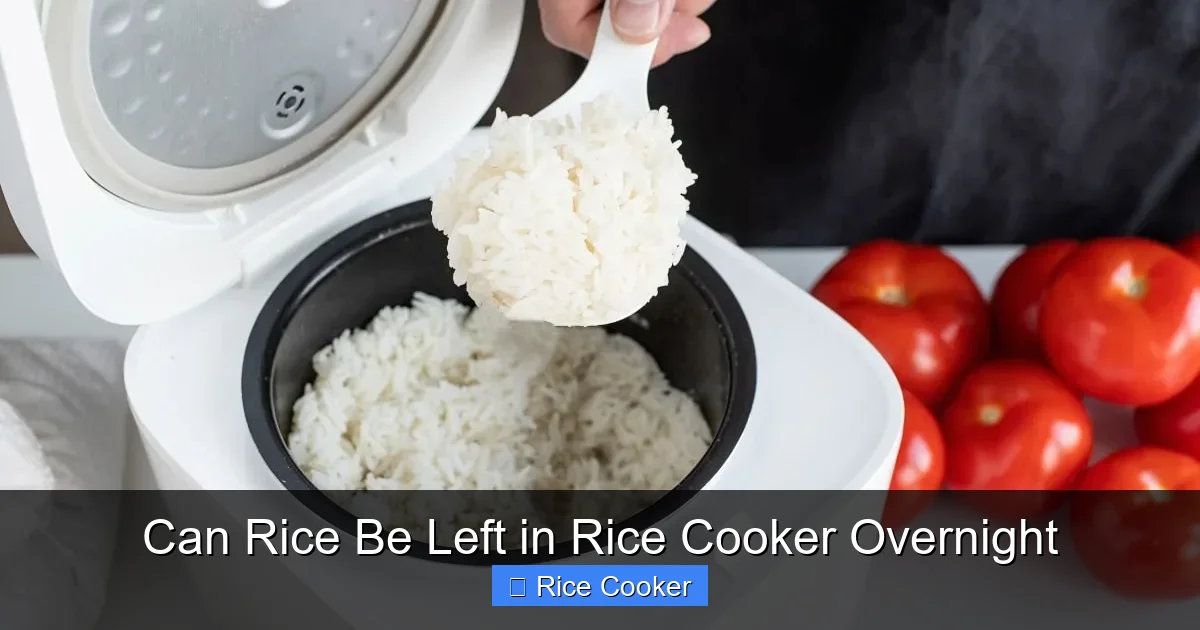
Leaving rice in a rice cooker overnight is generally not safe due to bacterial growth like *Bacillus cereus*, which can cause food poisoning. The rice should be cooled, refrigerated within 2 hours, and reheated thoroughly to ensure safety. While modern rice cookers may seem convenient, they lack proper refrigeration and ventilation needed to keep food safe long-term. Always prioritize food safety over convenience when storing leftovers.
Key Takeaways
- Risk of Bacterial Growth: Cooked rice left at room temperature for too long can harbor harmful bacteria such as *Bacillus cereus*, which produces toxins that cause nausea, vomiting, and diarrhea.
- Proper Cooling & Storage: Rice should be cooled quickly (within 1–2 hours) and stored in airtight containers in the refrigerator or freezer to slow bacterial growth.
- Rice Cooker Limitations: Most rice cookers are not designed for long-term storage; they lack insulation to maintain safe temperatures and may promote condensation, increasing spoilage risk.
- Reheating Matters: Leftover rice must be reheated to at least 165°F (74°C) throughout to kill any potential bacteria. Use a microwave, stovetop, or oven—never leave it on the counter.
- Signs of Spoilage: Discard rice if it smells off, has an unusual texture (sticky or slimy), or shows mold. When in doubt, throw it out.
- Freezing Is Safe: Cooked rice can be frozen for up to 6 months in portion-sized containers, making it a convenient option for meal prep.
- Best Practices: Transfer cooked rice from the rice cooker to shallow, airtight containers to cool faster and reduce contamination risk.
📑 Table of Contents
- Can Rice Be Left in a Rice Cooker Overnight?
- The Science Behind Rice and Bacteria
- Safety Risks of Leaving Rice in a Rice Cooker Overnight
- What Happens if You Eat Rice Left in a Rice Cooker Overnight?
- Safer Alternatives to Leaving Rice in a Rice Cooker
- How to Properly Store and Reheat Rice
- Special Considerations: Rice Cookers with Advanced Features
- Common Myths About Storing Rice
- Conclusion: Prioritize Safety Over Convenience
Can Rice Be Left in a Rice Cooker Overnight?
You’ve just finished dinner, and there’s a pot of perfectly cooked rice still sitting in your rice cooker. Instead of washing it right away, you consider leaving it in the appliance overnight so it’s ready for lunch the next day. It sounds convenient—almost smart. But is it actually safe? The short answer: no, it’s not recommended. While rice cookers are amazing kitchen appliances designed specifically for cooking rice, they aren’t built for long-term food storage.
Cooking rice involves bringing water to a boil and then maintaining that heat until the grains absorb all the liquid. After the cook cycle ends, many models switch to a “keep warm” mode, which maintains the rice at around 165–190°F (74–88°C). This might seem warm enough to prevent bacterial growth, but here’s the catch: once the rice is cooked, it enters what’s called the “danger zone”—the temperature range between 40°F and 140°F (4°C and 60°C), where bacteria multiply rapidly. Leaving rice in the cooker overnight keeps it in this zone for too long, creating ideal conditions for harmful microbes to thrive.
In this article, we’ll dive deep into the science behind why you shouldn’t leave rice in a rice cooker overnight, explore safer alternatives, and provide practical tips to help you store and reheat rice like a pro. Whether you’re meal prepping, dealing with leftovers, or simply curious about food safety, this guide will give you the knowledge you need to make informed decisions in the kitchen.
The Science Behind Rice and Bacteria
Understanding Bacillus Cereus
One of the most common culprits behind foodborne illness linked to improperly stored rice is a bacterium called Bacillus cereus. This hardy microbe is naturally present in soil and can easily end up in uncooked rice. When rice is cooked, the high heat kills most of the bacteria—but not their spores. These spores survive the cooking process and can begin multiplying again if the rice is left at room temperature or in a warm environment.
Visual guide about Can Rice Be Left in Rice Cooker Overnight
Image source: ricearray.org
The real danger comes from the toxins these bacteria produce. Unlike other foodborne pathogens that cause immediate symptoms, Bacillus cereus toxins can remain stable even after reheating. This means eating rice contaminated with these toxins can lead to what’s known as “emetic” (vomiting) or “diarrheal” food poisoning. Symptoms usually appear within 6 to 15 hours after consumption and can last up to 24 hours. For vulnerable individuals—such as children, pregnant women, the elderly, or those with weakened immune systems—this can be particularly risky.
Why Room Temperature Is Dangerous
After cooking, rice begins to cool, but unless it’s actively being refrigerated, it spends a significant amount of time in the temperature danger zone. According to the USDA, perishable foods should not be left in this range for more than two hours (or one hour if the ambient temperature is above 90°F/32°C). A rice cooker’s keep-warm function often hovers between 170–190°F (77–88°C), which may seem safe—but it’s still within the upper end of the danger zone and encourages bacterial reproduction.
Additionally, rice cookers often trap moisture inside the container, leading to condensation. This damp environment promotes mold and yeast growth, further compromising food safety. Even if the rice looks and smells fine, harmful bacteria or their toxins could already be present.
Safety Risks of Leaving Rice in a Rice Cooker Overnight
Increased Risk of Food Poisoning
Leaving cooked rice in a rice cooker overnight significantly increases the risk of foodborne illness. As mentioned earlier, Bacillus cereus spores survive cooking and begin multiplying when rice is kept warm for extended periods. These bacteria don’t change the appearance, smell, or taste of the rice—so you won’t know it’s unsafe just by looking at it.
Visual guide about Can Rice Be Left in Rice Cooker Overnight
Image source: ricearray.org
Studies have shown that rice left at room temperature for more than four hours can contain dangerous levels of bacterial toxins. While some rice cookers have improved insulation and better temperature control, none are designed for long-term storage. The American Academy of Pediatrics and the FDA both recommend against keeping cooked rice at room temperature for more than two hours.
Mold and Yeast Growth
Another concern with leaving rice in a rice cooker overnight is the development of mold and yeast. These microorganisms thrive in moist, warm environments—exactly what a rice cooker provides. Mold can produce mycotoxins, which are harmful even in small amounts and may cause allergic reactions or respiratory issues if inhaled during preparation.
Even if you don’t see visible mold, microscopic spores could be present. Once rice absorbs moisture from the air or from repeated opening of the lid, it becomes a breeding ground for unwanted organisms. This is especially true in humid climates or during warmer seasons when indoor temperatures rise.
Reduced Nutritional Value and Texture
Beyond health concerns, leaving rice in a rice cooker overnight can also affect its quality. Over time, the grains may become sticky, mushy, or develop an off-putting texture due to prolonged exposure to heat and moisture. This not only impacts taste but also reduces the overall nutritional value, as vitamins and minerals degrade when exposed to heat and air.
Starchy starches in rice break down during storage, altering its structure and making it less appealing. If you’re planning to serve the rice later, you’ll likely notice a significant drop in quality compared to freshly cooked rice.
What Happens if You Eat Rice Left in a Rice Cooker Overnight?
If you accidentally eat rice that was left in a rice cooker overnight, don’t panic—but do pay attention to how you feel. In many cases, people who consume contaminated rice experience mild gastrointestinal upset within 6 to 12 hours. Symptoms may include nausea, stomach cramps, vomiting, and diarrhea. These typically resolve on their own within 24 hours without medical intervention.
However, if symptoms persist beyond 24 hours, worsen, or are accompanied by fever, dehydration, or bloody stools, seek medical attention immediately. Infants, young children, pregnant women, older adults, and immunocompromised individuals are at higher risk for severe complications and should consult a healthcare provider promptly.
It’s important to note that reheating rice does not eliminate all risks. While heat destroys live bacteria, it doesn’t break down the toxins produced by Bacillus cereus. Therefore, even if you microwave leftover rice until steaming hot, you may still get sick if the rice was improperly stored.
Safer Alternatives to Leaving Rice in a Rice Cooker
Refrigerate Promptly
The safest and most effective way to store cooked rice is to refrigerate it within two hours of cooking. Here’s how to do it properly:
- Cool Quickly: Spread the rice in a shallow container or tray to speed up cooling. This helps bring the internal temperature down faster, reducing the time spent in the danger zone.
- Use Airtight Containers: Transfer the cooled rice into clean, airtight containers. Glass or BPA-free plastic containers work well. Avoid using metal containers, as they can react with acidic foods.
- Label and Date: Always label your containers with the date so you know when the rice was made. Cooked rice should be consumed within 4–6 days for optimal safety and quality.
Freeze for Long-Term Storage
If you want to keep rice for longer—up to six months—freezing is a great option. Follow these steps:
- Portion Control: Divide the rice into smaller portions (about 1–2 cups each) to make thawing easier and prevent repeated freeze-thaw cycles.
- Use Freezer-Safe Bags or Containers: Place portions in labeled freezer bags or rigid containers. Squeeze out excess air before sealing to prevent freezer burn.
- Thaw Safely: Thaw frozen rice in the refrigerator overnight or use the defrost setting on your microwave. Reheat thoroughly before eating.
Use a Thermos or Insulated Container
If you’re preparing rice ahead of time but don’t have access to a refrigerator, consider using a thermos or insulated food container. These can keep rice warm for several hours without entering the danger zone. Just remember that this is only a temporary solution—refrigeration is still necessary once the rice has cooled.
How to Properly Store and Reheat Rice
Step-by-Step Cooling Process
To minimize bacterial growth, follow these steps when cooling cooked rice:
- Spread Thin Layers: Pour cooked rice onto a baking sheet or large plate instead of letting it sit in the pot. This exposes more surface area to cool faster.
- Stir Occasionally: Gently stir the rice every few minutes to distribute heat evenly and speed up cooling.
- Cover Loosely: Cover the container loosely with a lid or plastic wrap to prevent dust and contaminants while allowing steam to escape.
- Move to Refrigerator: Once the rice reaches room temperature (usually within 30–60 minutes), transfer it to the fridge.
Reheating Tips for Maximum Safety
When you’re ready to enjoy your leftover rice, reheating it correctly is crucial:
- Microwave Method: Place rice in a microwave-safe dish, add a tablespoon of water, cover with a vented lid, and heat in 30-second intervals, stirring in between, until steaming hot throughout.
- Stovetop Method: Heat rice in a saucepan over medium-low heat, adding a splash of water or broth to restore moisture. Stir frequently and heat until hot.
- Oven Method: Spread rice on a baking sheet, cover with foil, and bake at 350°F (175°C) for 10–15 minutes, checking occasionally.
Always check that the center of the rice reaches at least 165°F (74°C). Never reheat rice more than once, as this increases the risk of bacterial contamination.
Special Considerations: Rice Cookers with Advanced Features
Some modern rice cookers come equipped with advanced features like extended keep-warm modes, humidity control, or even smart connectivity. While these innovations improve convenience, they don’t eliminate the fundamental risks associated with long-term storage. Even high-end models are not designed to act as refrigerators or storage units.
For example, certain premium rice cookers claim to keep rice fresh for up to 12 hours. However, food safety experts caution against relying on these functions for extended periods. The best practice remains: cook, cool, and refrigerate.
If your rice cooker has a delay timer, use it only to schedule cooking, not storage. Set the timer to start cooking early morning or late afternoon so the rice finishes just before you plan to serve it.
Common Myths About Storing Rice
Myth 1: “If the Rice Cooker Keeps Warm, It’s Safe”
This is a dangerous misconception. While the keep-warm function maintains heat, it doesn’t guarantee safety. Bacteria multiply quickly in warm, moist environments—regardless of how cozy your rice cooker feels.
Myth 2: “Rinse the Rice Before Storing”
Some people believe rinsing cooked rice before storing prevents spoilage. In reality, rinsing removes excess starch and can make the rice gummy when reheated. It also introduces moisture, which promotes bacterial growth. Only rinse uncooked rice before cooking.
Myth 3: “Leftover Rice Can Sit Out All Day if It Smells Fine”
Aroma isn’t a reliable indicator of safety. Harmful bacteria and their toxins are odorless, colorless, and tasteless. Relying on smell alone can lead to serious illness.
Conclusion: Prioritize Safety Over Convenience
While it’s tempting to leave rice in the rice cooker overnight for easy reheating, doing so puts your health at risk. The dangers of bacterial growth, mold, and toxin production far outweigh the convenience. By following simple guidelines—cooling quickly, refrigerating promptly, and reheating thoroughly—you can safely enjoy leftover rice without compromising your well-being.
Remember, food safety is about more than avoiding spoilage; it’s about protecting yourself and your loved ones from preventable illnesses. Treat your rice cooker as a cooking tool, not a pantry. And when in doubt, always choose the safest option: when can rice be left in rice cooker overnight? Never.
Frequently Asked Questions
Is it okay to leave rice in the rice cooker overnight if I’m using a newer model?
No, even advanced rice cookers are not designed for long-term storage. They lack refrigeration and proper airflow, creating ideal conditions for bacterial growth. Always refrigerate rice within two hours of cooking.
Can I leave rice in the rice cooker for 4–6 hours if I’m not home?
It’s not recommended. While four hours may be borderline acceptable in cooler climates, bacteria can still multiply. For safety, cool and refrigerate rice within two hours, regardless of the rice cooker model.
Does reheating rice kill all bacteria?
Heating kills live bacteria, but it doesn’t destroy the toxins produced by Bacillus cereus. Improperly stored rice can still cause food poisoning even after thorough reheating.
How long can cooked rice stay in the refrigerator?
Cooked rice should be consumed within 4–6 days when stored properly in airtight containers in the refrigerator. Beyond that, the risk of spoilage increases.
Can I freeze rice directly in the rice cooker pot?
No. Metal pots are not ideal for freezing and can retain odors or flavors. Transfer rice to freezer-safe containers or bags before freezing.
What should I do if I suspect my rice is spoiled?
Discard rice that smells off, feels slimy, or shows mold. When in doubt, throw it out. Do not taste a small amount to test—it could already contain harmful toxins.