
Can you use a rice cooker pot on a stove? The answer depends on the material and design of your pot. Aluminum, stainless steel, and non-stick models each have different compatibility rules. While some are safe for stovetop use, others may warp or damage over time. Understanding your pot’s construction helps you avoid accidents and extend its life.
Key Takeaways
- Material Matters: Rice cooker pots made from aluminum, stainless steel, or non-stick coatings behave differently on stoves. Always check the manufacturer’s label before heating.
- Non-Stick Pots Are Fragile: Most non-stick rice cooker pots cannot handle direct flame. They may release harmful fumes or degrade quickly when exposed to high heat.
- Stainless Steel Is Sturdy: If your pot is made of stainless steel with a flat bottom, it’s usually safe for stove use—but avoid overheating and never leave it unattended.
- Aluminum Requires Care: Aluminum pots conduct heat well but can react with acidic foods. Use them cautiously on low to medium heat only.
- Check for Induction Compatibility: Some rice cooker pots are induction-ready, but many are not. Look for a magnetic test or “induction compatible” stamp.
- Safety First: Never use a rice cooker pot on high heat for long periods. Always monitor cooking and ensure proper ventilation.
- Alternative Uses: Even if not meant for stoves, rice cooker pots work great for slow cooking, steaming, or reheating in ovens or microwaves.
📑 Table of Contents
- Introduction: The Everyday Question About Rice Cooker Pots
- Understanding Rice Cooker Pot Materials
- When Can You Safely Use a Rice Cooker Pot on the Stove?
- Common Risks of Using Rice Cooker Pots on Stoves
- How to Test Your Rice Cooker Pot for Stove Use
- Best Practices for Stovetop Use (If Approved)
- Alternatives to Stovetop Cooking with Rice Cooker Pots
- Conclusion: Know Your Tools, Cook Confidently
Introduction: The Everyday Question About Rice Cooker Pots
You just finished a perfect pot of jasmine rice in your trusty rice cooker, and now you’re left with a delicious meal—and a clean pot. But what if you want to use that same pot later for something else, like simmering a soup or frying an egg? That’s where the question arises: can rice cooker pot be used on stove? It seems simple enough, right? After all, both appliances involve cooking food with heat. But appearances can be deceiving.
Rice cooker pots are designed with specific materials and coatings to work best inside their enclosed units. Unlike traditional pots and pans, they often feature specialized interiors, unique handles, or heat-sensitive components. Using one outside the rice cooker—especially on a gas or electric stove—can lead to warping, coating damage, or even safety hazards. So before you toss your leftover curry into the rice cooker pot on the stove, take a moment to understand what makes these pots tick.
In this guide, we’ll break down everything you need to know about using a rice cooker pot on a stove. From material types to safety warnings, we’ll help you make smart decisions so you can keep your kitchen safe and your meals delicious. Whether you’re a busy parent, a college student with limited gear, or someone who loves multitasking in the kitchen, knowing how to use your tools properly pays off every time.
Understanding Rice Cooker Pot Materials
Before deciding whether to use your rice cooker pot on the stove, it’s essential to identify what it’s made of. Most rice cooker pots fall into one of three main categories: aluminum, stainless steel, or non-stick coated. Each material has strengths and weaknesses, especially when exposed to external heat sources like burners or open flames.
Visual guide about Can Rice Cooker Pot Be Used on Stove
Image source: missvickie.com
Aluminum Rice Cooker Pots
Aluminum is lightweight, conducts heat efficiently, and is commonly found in budget-friendly rice cookers. These pots are often lined with a non-stick coating or anodized layer to prevent sticking and corrosion. However, pure aluminum can react with acidic ingredients like tomatoes or vinegar, potentially altering taste and leaching metals.
If your rice cooker pot is made of aluminum, using it on the stove requires caution. Avoid high heat and prolonged exposure. Also, never place it on a hot surface immediately after removing it from cold water—thermal shock can crack the base. For occasional stovetop use (like warming sauces), low to medium heat is acceptable, but always supervise closely.
Stainless Steel Rice Cooker Pots
Stainless steel rice cooker pots are more durable and resistant to scratches and corrosion. Many premium models use tri-ply or multi-layer construction, combining stainless steel with aluminum cores for even heat distribution. These pots are less likely to react with food and can handle higher temperatures than aluminum or non-stick versions.
The key advantage of stainless steel is versatility. If your rice cooker pot has a thick, flat bottom and sturdy handles, it’s likely safe for stovetop use—especially on electric or induction ranges. Just remember to preheat gently and avoid sudden temperature changes. Never use metal utensils directly on the surface unless it’s fully stainless without a coating.
Non-Stick Coated Rice Cooker Pots
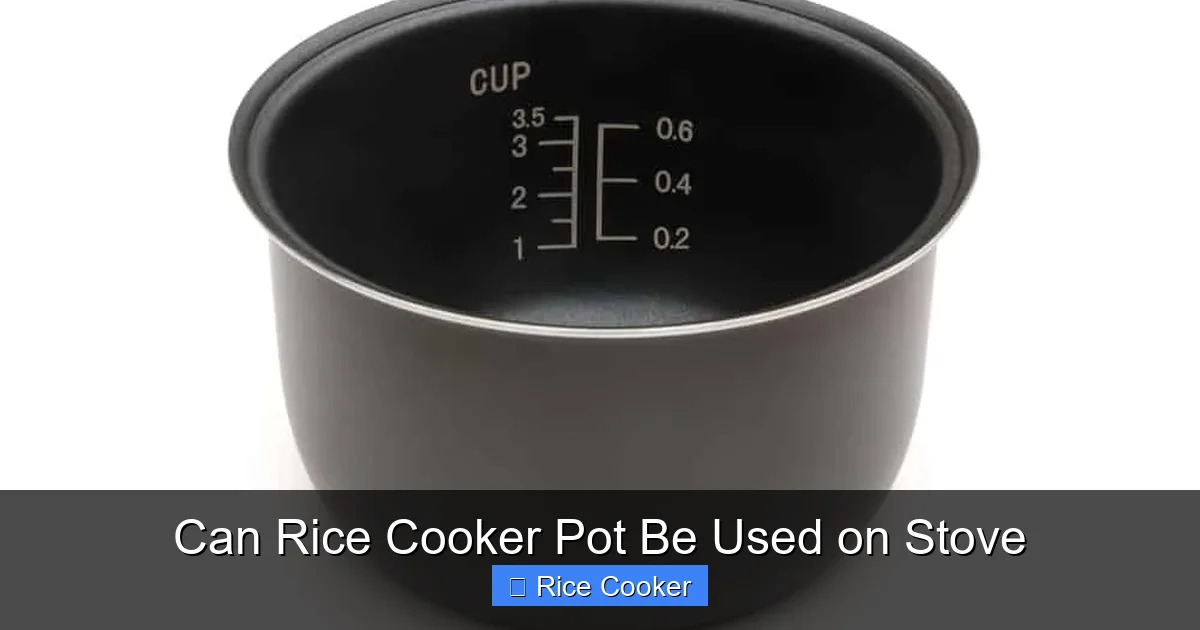
Non-stick rice cooker pots are popular for easy cleanup and gentle cooking. They typically use ceramic, PTFE (Teflon), or PFOA-free coatings. While convenient inside the rice cooker, these coatings degrade rapidly under direct flame or high heat.
Using a non-stick rice cooker pot on a stove is generally not recommended. Heating above 500°F (260°C) can cause toxic fumes to release, posing health risks. Even moderate stovetop heat can scratch or blister the coating, ruining your pot and contaminating food. If you must use it outside the cooker, limit it to very low heat and short durations—and only for non-acidic dishes.
When Can You Safely Use a Rice Cooker Pot on the Stove?
Now that we’ve covered materials, let’s talk about real-world scenarios where using your rice cooker pot on the stove might make sense. Not all situations are equal, and context matters.
Visual guide about Can Rice Cooker Pot Be Used on Stove
Image source: missvickie.com
For Simmering Soups or Sauces
If you need to warm up a soup or reduce a sauce, a stainless steel rice cooker pot can work well—provided it has a wide mouth and stable base. Place it on low to medium heat, stir occasionally, and avoid boiling aggressively. Since rice cooker pots are usually smaller than standard pots, monitor closely to prevent burning.
For Reheating Leftovers
Reheating pasta, beans, or stir-fries in a rice cooker pot on the stove is possible, but again, only if the material allows it. Non-stick versions should be avoided here too. Opt for stainless steel or anodized aluminum pots instead. Use a wooden spoon to stir gently and keep the heat low to prevent scorching.
On Electric or Induction Stoves
Electric stoves provide consistent, even heat, making them safer for rice cooker pots than gas burners. Induction stoves require magnetic-compatible bases, so check if your pot has an induction ring or label. Many modern rice cooker pots are induction-ready, but older models may not be. A quick magnet test—stick a magnet to the base—can help confirm compatibility.
Avoid High-Heat Cooking
Deep frying, searing meats at high temperatures, or caramelizing sugar should never be done in a rice cooker pot. These tasks demand rapid, intense heat that can warp thin bases or melt handles. Stick to gentle cooking methods like simmering, poaching, or warming.
Common Risks of Using Rice Cooker Pots on Stoves
While convenience is tempting, there are several risks associated with repurposing your rice cooker pot on the stove. Ignoring these could lead to costly damage or safety issues.
Coating Degradation
Most rice cooker pots aren’t built to withstand open flames. Non-stick coatings begin breaking down around 400–500°F, releasing potentially harmful chemicals. Over time, this weakens the pot and contaminates food. Even minor scratches from metal utensils can accelerate wear when heated.
Warping and Deformation
Rice cooker pots often have rounded bottoms optimized for internal steam circulation. Placed on a flat stovetop burner, they may not sit evenly, causing hot spots and uneven cooking. Prolonged exposure can warp the base, reducing efficiency and making future use problematic.
Handle Damage
Handles on rice cooker pots are usually designed for lifting inside a closed unit—not for gripping during stovetop use. Plastic or soft-grip handles can melt or deform when near open flames. Always ensure handles stay cool and secure before handling.
Lack of Ventilation
Unlike traditional pots, rice cooker pots often lack vents or spouts for overflow. Boiling liquids like broth or sauces can spill over unexpectedly, especially on stovetops where evaporation is faster. This increases fire risk and cleaning hassle.
How to Test Your Rice Cooker Pot for Stove Use
Not sure if your rice cooker pot can handle the stove? Here’s a simple step-by-step test to evaluate its suitability.
Step 1: Identify the Base Material
Look for markings inside the pot or on the underside. Common labels include “Anodized Aluminum,” “Stainless Steel,” or “Non-Stick Coated.” If unclear, consult the user manual or manufacturer website.
Step 2: Perform the Magnet Test
Place a strong magnet against the bottom of the pot. If it sticks firmly, the pot contains ferromagnetic material (likely stainless steel or cast iron). If it doesn’t stick, it’s probably aluminum or non-magnetic stainless steel. Note: Some stainless steel alloys resist magnets but are still induction-compatible—check labels for confirmation.
Step 3: Inspect for Damage
Check for cracks, peeling coating, or dents. Any sign of wear suggests reduced safety margins. Damaged pots should not be used on stoves, even briefly.
Step 4: Try a Short Low-Heat Test
Add a few tablespoons of water to the pot and heat on low for 2 minutes. Monitor for warping, smoke, or unusual odors. If everything looks normal, it may be safe for light stovetop use.
Best Practices for Stovetop Use (If Approved)
If your tests show your rice cooker pot is suitable for stovetop cooking, follow these guidelines to maximize safety and performance.
- Use Low to Medium Heat Only: Avoid high heat settings. Let the pot warm gradually to prevent thermal shock.
- Preheat Gently: Never rush heating. Allow even distribution of warmth across the base.
- Use Wooden or Silicone Utensils: Protect coatings and avoid scratching.
- Monitor Closely: Stay present while cooking. Remove from heat as soon as food reaches desired consistency.
- Clean Immediately After Use: Residual grease or food particles can harden and become harder to remove.
Also, consider using a trivet or heat diffuser if the pot sits unevenly on the burner. This helps distribute heat more evenly and reduces warping risk.
Alternatives to Stovetop Cooking with Rice Cooker Pots
If you’re hesitant about using your rice cooker pot on the stove, don’t worry—there are other ways to get creative with it!
Oven-Safe Cooking
Many rice cooker pots are oven-safe up to certain temperatures (usually 350°F or lower). Check the manual, but you can bake casseroles, roast vegetables, or even cook puddings using this method. Just transfer the contents carefully to avoid spills.
Microwave Use
For reheating or melting butter, a rice cooker pot works perfectly in the microwave. Its shape fits standard containers, and the material doesn’t interfere with microwaving. Just ensure there’s no metal trim or handles made of non-microwave-safe plastic.
Slow Cooker Integration
Some rice cooker pots fit snugly inside slow cookers. This lets you cook grains, stews, or curries without extra equipment. Just verify size compatibility and heat tolerance before placing it inside.
Portable Camping or RV Use
In outdoor settings, a rice cooker pot doubles as a compact camping pot. With a portable stove or camping burner, you can boil water or cook simple meals—just ensure the fuel source matches the pot’s heat resistance.
Conclusion: Know Your Tools, Cook Confidently
So, back to the original question: can rice cooker pot be used on stove? The honest answer is—sometimes, yes—but with conditions. It all comes down to the material, design, and intended use. Non-stick versions should stay indoors, while stainless steel or anodized aluminum models offer more flexibility under careful supervision.
Rather than guessing, take time to inspect your pot, test its limits, and follow best practices. When in doubt, default to the rice cooker or invest in a dedicated stovetop pan. Safety and longevity go hand in hand.
Remember, a good rice cooker pot is a versatile kitchen asset—whether used in its native environment or adapted thoughtfully elsewhere. By understanding its boundaries, you unlock creativity without compromising health or home. Happy cooking!
Frequently Asked Questions
Is it safe to put a rice cooker pot on the stove?
It depends on the material. Stainless steel and anodized aluminum pots may be safe for low-heat tasks, but non-stick versions should not be heated on stoves due to coating breakdown and toxic fume risks.
Can I use my rice cooker pot for boiling water on the stove?
Only if it’s made of stainless steel or anodized aluminum with a flat bottom. Avoid non-stick pots and monitor closely to prevent overflow or warping.
Will a rice cooker pot work on induction stoves?
Possibly—if it has a magnetic base. Perform the magnet test or look for an “induction compatible” label. Many modern rice cooker pots are designed for this purpose.
What happens if I heat a non-stick rice cooker pot on the stove?
The coating may degrade, releasing harmful fumes and creating a sticky residue. Over time, the pot becomes unsafe for food contact and loses effectiveness.
Can I fry eggs in a rice cooker pot on the stove?
Yes, but only in stainless steel or anodized aluminum models. Use low heat, add a little oil, and avoid metal spatulas to prevent scratching.
Are rice cooker pots dishwasher safe when used on the stove?
Most are, but repeated stovetop use can damage coatings or handles. Hand washing is gentler and extends lifespan, especially after non-stick exposure.