
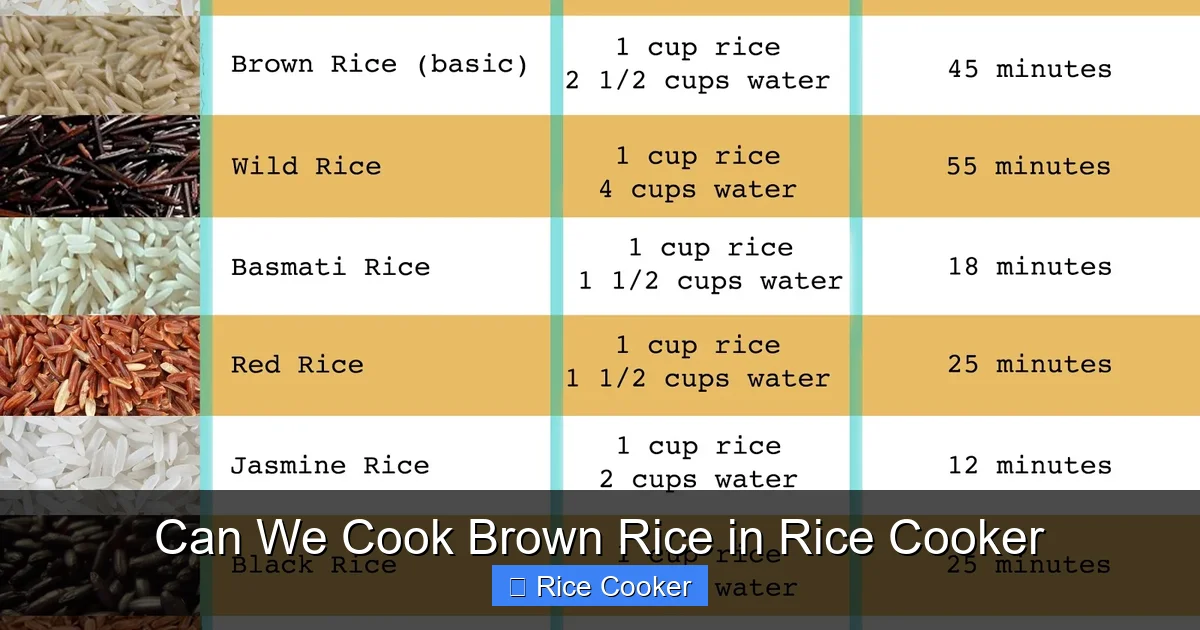
Can we cook brown rice in a rice cooker? Absolutely! Unlike white rice, brown rice has a tougher outer layer, so it needs more water and a longer cooking time—but modern rice cookers handle it beautifully. With the right ratio of water and a few helpful tips, your rice cooker will deliver nutritious, flavorful brown rice every single time.
Key Takeaways
- Brown rice cooks well in most rice cookers: Standard, fuzzy logic, and smart rice cookers all support brown rice settings.
- Water ratio is key: Brown rice requires about 1.5 to 1.75 cups of water per cup of uncooked rice.
- Pre-soaking helps: Soaking brown rice for 30 minutes to an hour improves texture and reduces cooking time.
- Cooking time increases: Brown rice takes 45–60 minutes, much longer than white rice’s 20–30 minutes.
- Fluffing matters: Let the rice rest for 10 minutes after cooking, then fluff gently with a fork.
- Cleaning is important: Brown rice starch can stick to inner pots—clean promptly and use non-abrasive tools.
- Experiment with flavors: Add broth, herbs, or spices during cooking for extra taste without extra effort.
Key Takeaways
- Understanding can we cook brown rice in rice cooker: Provides essential knowledge
📑 Table of Contents
- Can We Cook Brown Rice in Rice Cooker? The Answer Is Yes!
- Why Brown Rice Needs Special Treatment
- Choosing the Right Rice Cooker for Brown Rice
- Perfect Water Ratios for Brown Rice
- Soaking: The Secret to Tender Brown Rice
- Step-by-Step Guide: Cooking Brown Rice in a Rice Cooker
- Flavoring Your Brown Rice Without Extra Effort
- Storage and Reheating Tips
- Is Brown Rice Worth the Extra Effort?
- Final Thoughts: Mastering Brown Rice Has Never Been Easier
Can We Cook Brown Rice in Rice Cooker? The Answer Is Yes!
You’ve probably seen white rice disappear into your rice cooker with ease—just add rice, water, press a button, and wait. But what about brown rice? That nuttier, chewier, more nutritious cousin of white rice—can it work in the same machine?
The short answer: yes, absolutely! Most modern rice cookers—whether basic models or high-tech smart devices—are designed to handle brown rice. In fact, many come with a dedicated “brown rice” setting that adjusts time and temperature automatically. But even if yours doesn’t have that option, you can still cook delicious, fluffy brown rice using standard settings with a few tweaks.
In this article, we’ll walk you through everything you need to know about cooking brown rice in a rice cooker: from understanding why it’s different from white rice, to choosing the right cooker, measuring water, soaking techniques, and even flavoring your rice. Whether you’re new to brown rice or just looking to improve your technique, you’ll find practical tips and real-world examples to make every batch perfect.
Why Brown Rice Needs Special Treatment
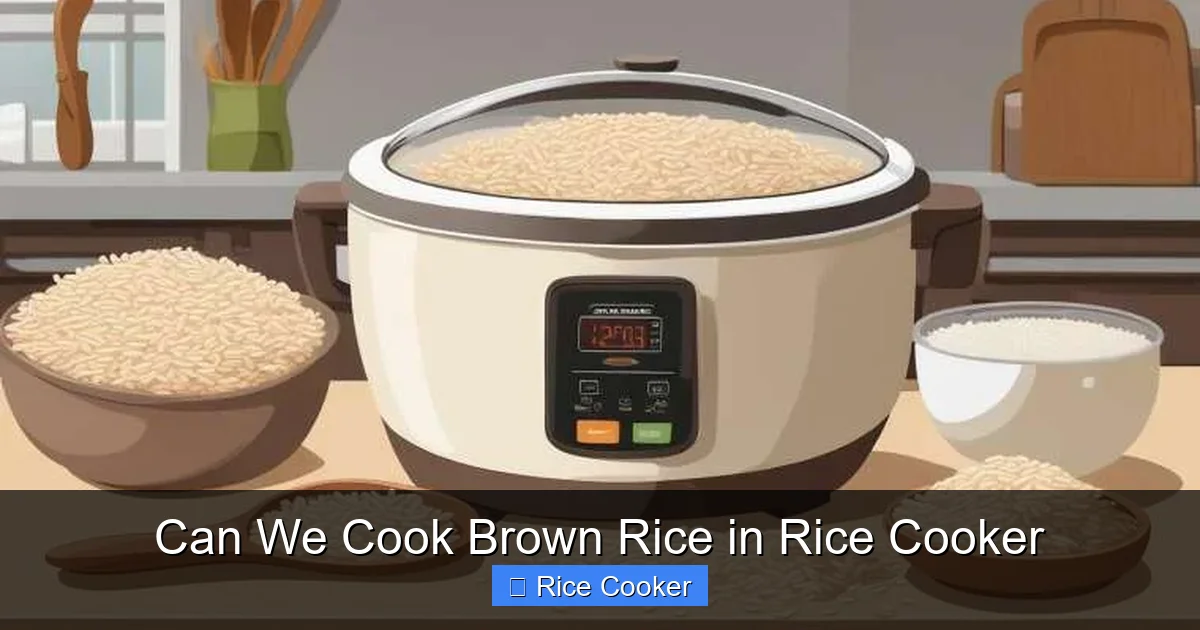
Visual guide about Can We Cook Brown Rice in Rice Cooker
Image source: ricearray.org
Before diving into the how-to, let’s talk about the why. Brown rice differs from white rice in one crucial way: its outer bran and germ layers remain intact. These layers give brown rice its rich flavor, higher fiber, and more nutrients—but they also make it denser and harder to cook evenly.
White rice has been polished to remove the bran layer, making it softer and quicker to absorb water and cook through. Brown rice, on the other hand, holds onto that protective shell, which means:
– It absorbs more water
– It needs longer soaking or steaming time
– It requires gentler heat to prevent burning at the bottom
– It benefits from a slower, more gradual cooking process
This is where a good rice cooker shines. Unlike boiling rice on the stovetop (where heat can fluctuate and cause hot spots), a rice cooker maintains consistent temperatures and switches off once the rice is done—preventing overcooking or drying out.
The Science Behind the Setting
Most rice cookers use either a simple thermostat or advanced fuzzy logic sensors. Fuzzy logic models can detect moisture levels, adjust timing, and even release steam to mimic traditional simmering methods. When you select the “brown rice” setting, the cooker typically:
– Increases water volume by 20–30%
– Extends cooking time by 20–40 minutes
– Uses lower heat initially to allow proper absorption
– Monitors internal temperature to avoid scorching
Even older or simpler rice cookers can still produce decent brown rice if you follow the right water ratio and method. It may just take a bit more attention during prep.
Choosing the Right Rice Cooker for Brown Rice
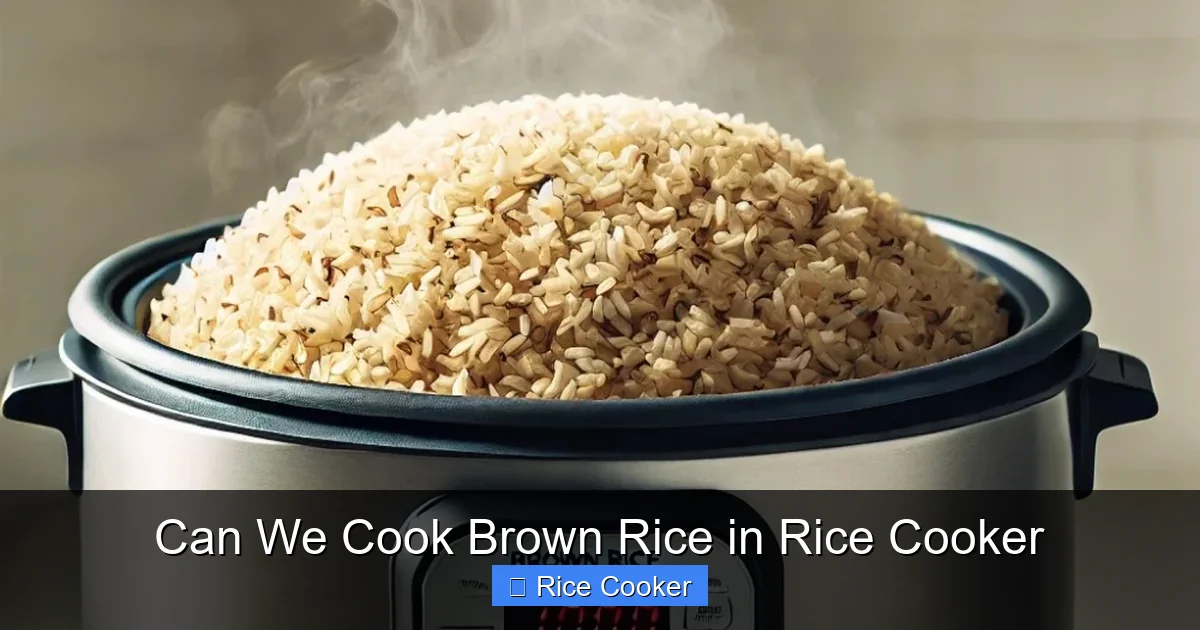
Visual guide about Can We Cook Brown Rice in Rice Cooker
Image source: housearctic.com
Not all rice cookers are created equal when it comes to handling brown rice. Here’s what to look for:
Built-In Brown Rice Settings
If your goal is consistently great brown rice, consider investing in a rice cooker with a dedicated brown rice program. Brands like Zojirushi, Panasonic, and Cuckoo offer models with optimized settings specifically for whole grains. These machines often include:
– Longer soak phases
– Extended steaming cycles
– Precise temperature control
– Automatic keep-warm functions
For example, the Zojirushi Neuro Fuzzy IC-YCC series uses fuzzy logic to monitor rice condition and adjusts cooking accordingly—perfect for stubborn brown rice.
Capacity Matters
Brown rice expands less than white rice but still needs room to breathe. A 3-cup or 5-cup capacity is ideal for families or meal prepping. Larger units (like 10-cup models) can work, but you’ll want to avoid overfilling, especially if you’re new to cooking brown rice.
Non-Stick vs. Stainless Steel Pans
Most rice cookers come with a non-stick inner pot. While convenient, brown rice starch can cling to these surfaces. Some premium models use stainless steel or ceramic-coated pans that resist sticking better and are easier to clean.
Pro tip: If your pot starts to discolor or get sticky after cooking brown rice multiple times, consider replacing the insert or using a silicone baking mat underneath to protect the surface.
Perfect Water Ratios for Brown Rice
One of the biggest mistakes beginners make with brown rice is using too little water. Because brown rice has a hard shell, it takes longer to soften—and undercooked rice is tough and chewy.
Here’s a reliable starting point:
| Rice Type | Water Ratio (per 1 cup rice) |
|—————–|——————————|
| White Rice | 1.5 cups |
| Brown Rice | 1.75–2 cups |
So for 1 cup of uncooked brown rice, use between 1¾ and 2 cups of water. Many recipes call for 2 cups, but 1¾ often gives a better texture—slightly firmer but not dry.
How to Measure Accurately
Use a clear measuring cup or a kitchen scale for precision. Level off the rice with a straight edge (like a knife) so you’re not packing it down. Wet rice can lead to inaccurate measurements, so rinse first if needed.
Adjusting for Altitude and Humidity
At high altitudes, water boils at lower temperatures, which can affect absorption. You may need slightly more water (add ¼ cup extra per 1,000 feet above sea level). Conversely, in very humid climates, reduce water by ¼ cup to avoid mushy rice.
Soaking: The Secret to Tender Brown Rice
Soaking isn’t required, but it makes a huge difference. Here’s why:
– Softens the bran layer
– Speeds up cooking time
– Reduces stickiness
– Improves digestibility
Simple Soak Method
1. Rinse 1 cup of brown rice under cold running water until the water runs clear.
2. Place rice in a bowl and cover with 2–2¼ cups of warm water.
3. Soak for 30 minutes to 1 hour (overnight soaking works too!).
4. Drain and proceed with cooking.
After soaking, you can reduce the water slightly—try using 1½ cups instead of 2 for a firmer result.
No-Soak Alternative
If you’re short on time, skip soaking and just increase cooking time by 10–15 minutes. Your rice won’t be as fluffy, but it will still be edible and nutritious.
Step-by-Step Guide: Cooking Brown Rice in a Rice Cooker
Ready to try it yourself? Follow this foolproof method:
What You’ll Need
– 1 cup uncooked brown rice
– 1¾ to 2 cups water (or broth for flavor)
– Rice cooker with inner pot
– Measuring cup
– Fine-mesh strainer (optional, for rinsing)
Instructions
- Rinse the rice: Place rice in a strainer and rinse under cold water for 30 seconds to remove excess starch. This prevents clumping.
- Add water: Pour rinsed rice into the inner pot, then add 1¾ to 2 cups of water (adjust based on desired texture).
- Start cooking: Close the lid, plug in the cooker, and select the “Brown Rice” setting if available. If not, use the regular “Cook” or “White Rice” setting.
- Wait patiently: Cooking usually takes 45–60 minutes. Avoid opening the lid during this time.
- Rest: Once the cycle ends, let the rice sit for 10 minutes with the lid closed. This allows steam to redistribute moisture evenly.
- Fluff gently: Use a fork to fluff the rice—don’t stir vigorously, or you’ll mash it.
Troubleshooting Common Issues
- Gummy rice: Too much water or overcooking. Next time, reduce water by ¼ cup and don’t open the lid early.
- Hard or chalky rice: Undercooked or insufficient water. Increase water slightly or extend soak time.
- Burned bottom: Heat too high or poor-quality pan. Stir halfway through (only if your model allows it), or reduce heat manually if possible.
Flavoring Your Brown Rice Without Extra Effort
Plain brown rice is delicious—but adding subtle flavors makes it even better. Since rice cookers seal during cooking, you can infuse taste easily:
Broth Instead of Water
Replace half or all of the water with vegetable, chicken, or mushroom broth. This adds depth without changing texture.
Herbs and Spices
Add a bay leaf, teaspoon of turmeric, pinch of cumin, or a sprig of thyme during the soak or early in cooking. Remove herb stems before serving.
Olive Oil or Ghee
Stir in 1 teaspoon of oil or ghee after rinsing and before adding water. This helps separate grains and adds richness.
Frozen Vegetables
Add peas, carrots, or corn during the last 10 minutes of cooking for a complete grain bowl.
Storage and Reheating Tips
Cooked brown rice keeps well and tastes great the next day—even better than fresh sometimes!
Refrigeration
Store in an airtight container for up to 5 days. Cool completely before refrigerating to prevent bacterial growth.
Freezing
Portion into freezer-safe bags or containers. Frozen brown rice lasts up to 6 months. Thaw overnight in the fridge before reheating.
Reheating Safely
Microwave with a splash of water to prevent drying out. Or steam over boiling water for 5–7 minutes until warmed through.
Fluffy Again?
Cold brown rice can become dense. To revive it, place in a bowl, cover with damp paper towels, and microwave for 1–2 minutes. Fluff immediately.
Is Brown Rice Worth the Extra Effort?
Absolutely. Brown rice offers:
– More fiber (helps digestion)
– Higher protein content
– Essential minerals like magnesium and zinc
– Sustained energy release due to low glycemic index
While it takes longer to cook and prepare, the nutritional payoff is significant. Plus, with a rice cooker, the process becomes hands-off and predictable.
For busy people, meal prepping a large batch of brown rice on Sunday ensures healthy lunches all week. Pair it with beans, roasted veggies, and a drizzle of tahini for a satisfying, balanced meal.
Final Thoughts: Mastering Brown Rice Has Never Been Easier
Cooking brown rice in a rice cooker doesn’t have to be complicated. Yes, it demands a bit more attention than white rice—more water, optional soaking, longer cook times—but the results are worth it. Modern rice cookers are built to handle the challenge, and with a few simple adjustments, you’ll never go back to stovetop-only methods.
Remember: consistency comes with practice. Don’t be discouraged if your first batch isn’t perfect. Adjust water ratios, experiment with flavors, and pay attention to how your specific machine behaves. Soon enough, you’ll have fluffy, golden-brown rice ready at the push of a button.
Whether you’re feeding a family, meal-prepping for the week, or simply craving something healthier than white rice, your rice cooker is ready to rise to the occasion. So go ahead—grab that bag of brown rice, measure your water, and let your appliance do the heavy lifting. You’ve got this!
Frequently Asked Questions
Can all rice cookers cook brown rice?
Most modern rice cookers—especially those with fuzzy logic or multi-grain settings—can cook brown rice well. Older or basic models may require manual adjustment of water and time, but they still work with careful attention.
How much water do I use for brown rice in a rice cooker?
Use 1¾ to 2 cups of water for every 1 cup of uncooked brown rice. Start with 1¾ cups for firmer rice or 2 cups for softer, creamier results.
Do I need to soak brown rice before cooking?
Soaking is optional but recommended. Soak for 30–60 minutes to improve texture, reduce cooking time, and make the rice easier to digest.
Why is my brown rice always gummy or mushy?
Gummy rice usually means too much water or overcooking. Try reducing water by ¼ cup and avoid opening the lid during cooking. Letting it rest afterward helps firm it up.
Can I cook other grains in my rice cooker?
Yes! Quinoa, barley, millet, and wild rice can all be cooked in a rice cooker with adjusted water ratios and timing. Check individual grain instructions for best results.
How long does brown rice take to cook in a rice cooker?
Brown rice typically takes 45 to 60 minutes in a rice cooker, depending on the model and whether you soaked it beforehand. Always check the manufacturer’s guidelines.