
Can rice stay in a rice cooker overnight? While it’s technically possible, it’s not recommended due to bacterial growth risks like *Bacillus cereus*. For short-term storage, transfer cooked rice to an airtight container within 1 hour of cooking and refrigerate promptly. Always reheat thoroughly to kill bacteria. This article covers safe handling, storage methods, and reheating tips to keep your meals both convenient and secure.

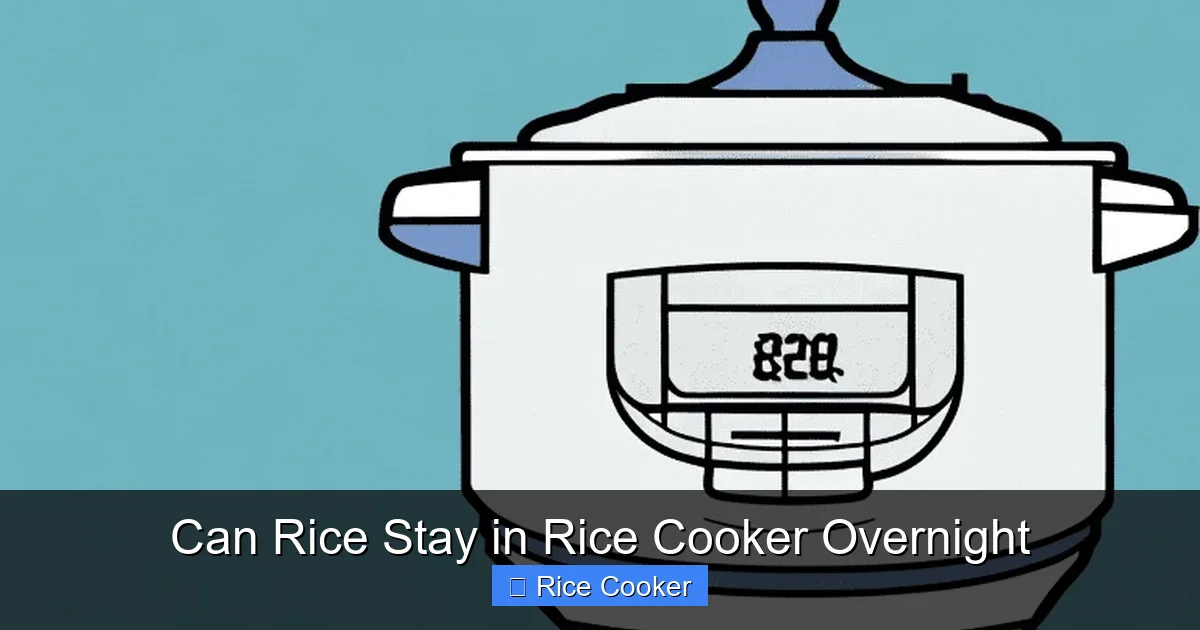
A typical electric rice cooker ready for use
## Introduction
You’ve just finished a delicious dinner, and there’s still some rice left over. Instead of cleaning the pot, you wonder: can rice stay in the rice cooker overnight? It sounds convenient—why take the time to transfer it? But convenience isn’t always safe when it comes to food. The truth is, leaving rice in the rice cooker after it’s done cooking creates an environment where bacteria can multiply rapidly.
Rice contains spores of *Bacillus cereus*, a bacterium that survives cooking and becomes active again when rice is kept warm or at room temperature. These spores can produce toxins that cause nausea, vomiting, and diarrhea—often referred to as “fried rice syndrome.” So while your rice cooker might seem like a perfect holding spot, it’s actually one of the worst places to leave cooked rice unattended.
In this article, we’ll explore everything you need to know about storing rice safely, the risks of leaving it in the cooker overnight, and best practices for reheating and enjoying leftovers without getting sick.
—
## Why You Shouldn’t Leave Rice in the Rice Cooker Overnight
### The Danger of Warm, Moist Environments
After rice finishes cooking, the rice cooker automatically switches to “keep warm” mode. While this feature is great for serving hot rice right away, it’s not designed for long-term food storage. The internal temperature typically stays between 130°F and 140°F (54°C–60°C), which is ideal for bacterial growth.
*Bacillus cereus* thrives in moist, warm environments—exactly what’s created inside your rice cooker once the rice is done. These bacteria don’t spoil the taste immediately, so you might eat rice that looks and smells fine but still makes you sick.
### How Long Is Too Long?
Even if you turn off the rice cooker before bed, residual heat keeps the rice warm for several hours. That’s enough time for bacteria to multiply to dangerous levels. Health experts recommend never letting cooked rice sit at room temperature for more than two hours—and that includes being left in a warm appliance like a rice cooker.
### What About the Keep-Warm Setting?
Most modern rice cookers have a “keep warm” function that maintains rice at a safe serving temperature. However, this setting is meant only for short periods—usually up to 12 hours at most. Even then, the American Academy of Pediatrics warns against relying on keep-warm settings for infants or young children due to higher risk.
Leaving rice in the cooker overnight means it spends 8+ hours in that danger zone. That’s far too long.
—
## Safe Ways to Store Cooked Rice
### Cool It Quickly
The first rule of food safety is cooling fast. After rice finishes cooking, remove it from the heat source immediately. Spread it out in a wide, shallow dish or divide it into smaller portions. This helps release heat quickly and prevents the formation of condensation, which can encourage bacterial growth.
Never cover hot rice tightly—it traps steam and slows cooling.
### Use Airtight Containers
Once cooled to room temperature (within 1 hour), transfer rice to airtight containers. Glass or BPA-free plastic containers work well. Make sure they’re clean and dry before use.
Storing rice in small amounts allows it to cool faster and reheat evenly later.
### Refrigerate Promptly
Place the covered containers in the refrigerator within one hour of cooking. Cooked rice can be safely stored in the fridge for up to 4 days.
Avoid stacking containers too high in the fridge to ensure proper airflow around each one.
### Freezing for Long-Term Storage
If you won’t eat the rice within 4 days, freeze it. Portion it into freezer-safe bags or containers, removing as much air as possible. Frozen rice stays safe indefinitely, though quality may decrease after 3–6 months.
Thaw frozen rice in the refrigerator overnight or reheat directly from frozen using the microwave.
—
## How to Reheat Rice Safely
### Microwave Method
The fastest way to reheat rice is the microwave. Place the rice in a microwave-safe bowl, add a tablespoon of water to prevent drying, cover loosely with a damp paper towel, and heat in 30-second intervals until steaming hot throughout.
Always stir between intervals to distribute heat evenly.
### Stovetop Reheating
For stovetop reheating, bring a small amount of water or broth to a simmer in a saucepan. Add the rice, cover, and let it steam for 5–10 minutes, stirring occasionally.
This method gives better texture control and avoids mushiness.
### Oven Option
You can also reheat rice in the oven. Spread it on a baking sheet lined with parchment, drizzle with a bit of oil or butter, and heat at 350°F (175°C) for 10–15 minutes, flipping halfway through.
This works best for larger batches.
### Temperature Check
No matter the method, always ensure the rice reaches at least 165°F (74°C) internally. Use a food thermometer inserted into the center of the largest portion.
—
## Signs Your Rice Has Gone Bad
### Visual Cues
Look out for mold, discoloration, or an oily sheen on the surface. If the rice looks fuzzy or has white spots, throw it away.
### Smell Test
Fresh cooked rice has a mild, slightly starchy scent. Sour, rancid, or ammonia-like odors are red flags.
### Texture Changes
If the rice feels slimy or sticky instead of fluffy, it’s likely spoiled. Also avoid rice that separates into hard clumps when stirred.
### Taste (If Unsure)
Taste a tiny amount first. If it tastes off—bitter, metallic, or overly salty—don’t finish eating it.
When in doubt, discard the rice. Foodborne illness is no joke.
—
## Tips for Handling Rice Left in the Cooker During the Day
Sometimes life happens—you get busy, forget to move the rice, or run late. If you accidentally leave rice in the rice cooker during the day, assess the situation:
– **If it’s been less than 2 hours:** You can transfer it to the fridge immediately.
– **If it’s been 2–4 hours:** Smell and look carefully. If it seems okay, reheat thoroughly and consume within 24 hours.
– **If it’s been more than 4 hours:** When in doubt, throw it out.
Don’t rely on the rice cooker’s timer or light. Those don’t indicate safety—only that cooking is complete.
—
## Can You Save Rice From a Previous Meal?
Yes! Leftover rice from a previous day is perfectly safe if handled correctly. Just make sure:
– It was refrigerated within 1 hour of cooking.
– It hasn’t exceeded 4 days in the fridge.
– It was reheated to full internal temperature.
Many people enjoy fried rice made with day-old rice—the grains hold their shape better and absorb flavors nicely.
Just remember: old rice isn’t automatically unsafe, but it must be treated as such.
—
## Best Practices for Rice Safety
Here are some quick tips to keep your rice safe every time:
– **Cool fast:** Use shallow containers and stir frequently.
– **Store soon:** Get rice into the fridge within 1 hour.
– **Label containers:** Write the date so you know how long it’s been stored.
– **Reheat fully:** Always bring rice back to a rolling boil or 165°F.
– **Avoid cross-contamination:** Use clean utensils when scooping rice from shared containers.
Following these steps reduces risk significantly and lets you enjoy rice leftovers without worry.
—
## Conclusion
So, can rice stay in a rice cooker overnight? Technically yes—but it’s not safe. The combination of warmth, moisture, and time creates perfect conditions for harmful bacteria to grow. Instead, always remove rice from the cooker once done, cool it quickly, and store it in the refrigerator or freezer.
By following simple food safety guidelines, you can enjoy delicious, leftover rice without putting your health at risk. Convenience matters, but not at the expense of safety. With proper handling, you can savor every grain—whether it’s fresh from the cooker or warmed up from last night’s leftovers.
Remember: when it comes to rice, when in doubt, throw it out. Your body will thank you.
—
Key Takeaways
- Bacterial Growth Risk: Rice left in the rice cooker overnight can develop harmful bacteria like *Bacillus cereus*, which causes food poisoning.
- Safe Storage Duration: Cooked rice should be cooled and stored in the refrigerator within 1 hour of cooking for maximum safety.
- Refrigeration Is Key: Never leave rice sitting at room temperature for more than 2 hours (1 hour if over 90°F / 32°C).
- Proper Reheating Matters: Always reheat rice to at least 165°F (74°C) to destroy potential bacteria.
- Use Airtight Containers: Store rice in shallow, airtight containers to speed cooling and prevent contamination.
- Check for Spoilage Signs: Discard rice if it smells sour, feels slimy, or shows unusual colors or mold.
- Convenience vs. Safety: While convenient, leaving rice in the cooker overnight increases health risks—better to reheat or discard.
Frequently Asked Questions
Is it safe to leave cooked rice in the rice cooker overnight?
No, it’s not safe. Leaving rice in the cooker overnight allows bacteria like *Bacillus cereus* to grow, which can cause food poisoning. The warm, moist environment promotes rapid bacterial multiplication.
How long can cooked rice be left out at room temperature?
Cooked rice should not be left at room temperature for more than 2 hours—or 1 hour if the temperature is above 90°F (32°C). Beyond that, bacteria can reach dangerous levels.
Can I reheat rice that was left in the rice cooker for 6 hours?
If it’s been more than 2 hours, check for spoilage signs like smell, texture, or mold. If everything looks and smells normal, reheat thoroughly to 165°F. But if unsure, discard it to avoid illness.
Does the type of rice affect safety?
No, all types of rice—white, brown, jasmine, basmati—carry the same risk if improperly stored. Brown rice has more nutrients and oils, so it spoils slightly faster, but both require the same handling.
Can I freeze rice that’s been in the rice cooker?
Only if it’s been cooled and transferred to a container within 1 hour. Don’t freeze hot rice—it can create condensation and promote bacterial growth. Cool it completely first.
Why does my rice taste funny even if it looks fine?
*Bacillus cereus* produces enterotoxins that aren’t destroyed by reheating. These toxins can cause vomiting or diarrhea even if the rice doesn’t smell or look bad—this is why appearance isn’t a reliable indicator of safety.