
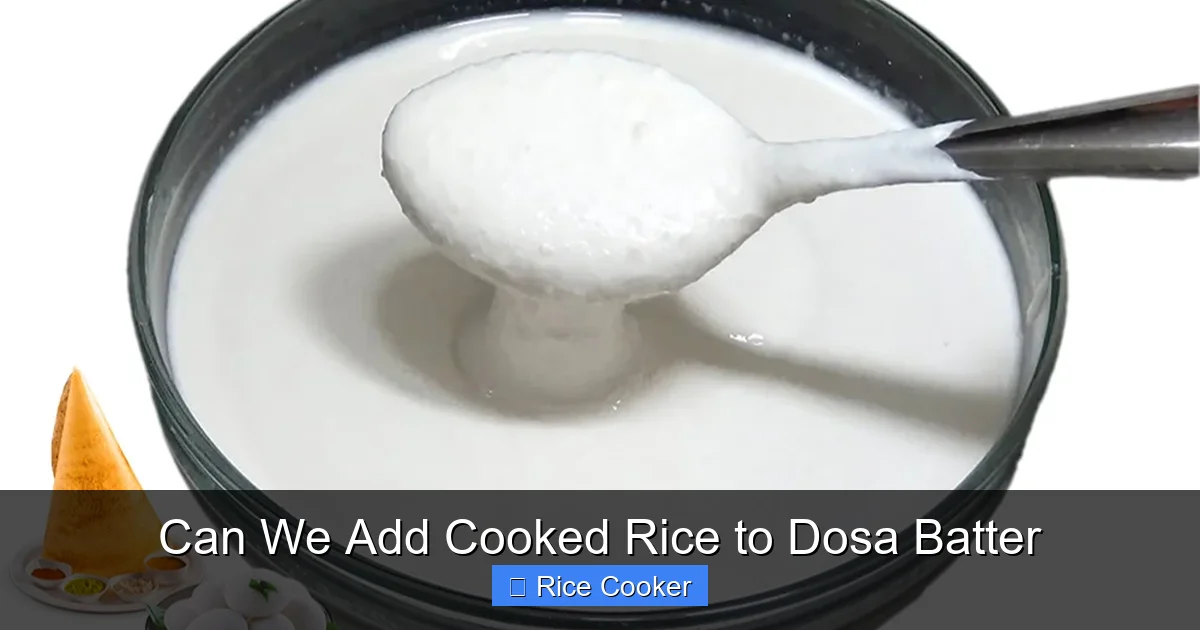
Can we add cooked rice to dosa batter? Absolutely yes! Adding cooked rice to your dosa batter creates a lighter, fluffier dosa with improved digestibility and a subtly sweeter taste. This simple tweak not only speeds up preparation but also makes the batter easier to ferment naturally.
While traditional dosa uses raw soaked rice and lentils, using leftover cooked rice can still yield delicious results—especially when combined with fresh ingredients and proper fermentation. Whether you’re short on time or looking for a creative kitchen hack, incorporating cooked rice into your dosa mix is a smart, practical choice that works surprisingly well.
Key Takeaways
- Understanding can we add cooked rice to dosa batter: Provides essential knowledge
📑 Table of Contents
- Introduction: The Age-Old Art of Dosa and a Modern Twist
- The Science Behind Traditional vs. Cooked Rice Dosas
- Why Use Cooked Rice in Dosa Batter?
- How to Make Dosa Batter With Cooked Rice: Step-by-Step Guide
- Troubleshooting Common Issues
- Creative Variations Using Cooked Rice
- Storage Tips for Maximum Freshness
- Frequently Asked Questions About Adding Cooked Rice to Dosa Batter
Introduction: The Age-Old Art of Dosa and a Modern Twist
There’s something deeply satisfying about biting into a perfectly crisp, golden-brown dosa—its delicate crunch giving way to a soft, spongy interior, all fragrant from ghee and spices. Originating from South India, dosa has become beloved worldwide, cherished for its versatility, quick cooking time, and health benefits. Traditionally, dosas are made by grinding soaked rice (usually parboiled or idli rice) and urad dal into a smooth batter, which then ferments overnight to develop that signature lightness and tang.
But what if your day doesn’t allow for overnight soaking? Or maybe you have leftover cooked rice from dinner and want to put it to good use? That’s where things get interesting—and delicious. Can we add cooked rice to dosa batter? The short answer is yes, and today we’re diving deep into why, how, and when you should consider this clever kitchen shortcut.
Adding cooked rice to dosa batter isn’t just a modern fad—it’s rooted in practicality and resourcefulness. In busy households, restaurants, or even when preparing large batches ahead of time, using leftover rice can save precious time without sacrificing flavor or texture too much. Plus, it reduces food waste, which is always a win!
In this comprehensive guide, we’ll explore everything you need to know about blending cooked rice into your dosa recipe. From understanding the science behind fermentation to troubleshooting common issues like flat or dense dosas, we’ve got you covered. Whether you’re a seasoned cook or a curious beginner, these insights will help you master this easy yet effective variation.
The Science Behind Traditional vs. Cooked Rice Dosas
Before jumping into the “how-to,” let’s unpack why raw rice works so well in classic dosa batter—and how cooked rice changes the game.
When raw rice and urad dal soak overnight, their starches begin breaking down through enzymatic activity. This process releases sugars that feed wild yeast and bacteria present in the environment, leading to natural fermentation. As the microorganisms multiply, they produce carbon dioxide bubbles trapped within the batter, giving the final dosa its characteristic light, airy structure.
Cooked rice, however, has already undergone partial starch gelatinization during boiling. Its cellular structure is softer, and some enzymes may have been deactivated by heat. So, does that mean cooked rice won’t ferment? Not necessarily—but it behaves differently.
The key lies in blending and rehydration. When you grind cooked rice with fresh urad dal and water, the dal compensates for the lack of active amylase enzymes in the rice. The dal itself contains enough protein and starch to support fermentation, especially if left at room temperature for several hours. Think of it as a team effort: the dal brings the microbial activity, while the cooked rice contributes bulk, moisture, and a unique mouthfeel.
That said, because cooked rice lacks the full potential of raw soaking, dosas might be slightly denser or less crisp. But with adjustments—like reducing oil during cooking or extending fermentation slightly—you can achieve excellent results every time.
Why Use Cooked Rice in Dosa Batter?
So, why bother experimenting with cooked rice? Here are five compelling reasons:
1. Saves Time and Effort
Overnight soaking is one of the biggest hurdles for new dosa makers. With cooked rice, you skip that step entirely. Simply cool your leftover rice, blend it with fresh ingredients, and let the batter rest. It’s ideal for impromptu meals or when you’re pressed for time.
2. Reduces Food Waste
Leftover rice is often repurposed—into fried rice, pulao, or even desserts. Why not turn it into fluffy dosas? This method gives new life to yesterday’s meal while minimizing kitchen waste.
3. Adds Mild Flavor Complexity
Cooked rice—especially if seasoned with turmeric, salt, or herbs earlier—can infuse subtle earthy notes into the batter. This creates a more nuanced flavor profile compared to plain raw rice batter.
4. Easier Digestion
Germinated or cooked grains are generally gentler on the stomach than raw ones. If you’ve ever felt bloated after eating traditional dosas, trying cooked rice might offer relief without compromising enjoyment.
5. Works Great With Rice Cookers
Since the article falls under the “Rice Cooker” category, it’s worth noting that most people cook rice using electric rice cookers—a convenient appliance designed precisely for this purpose. Using rice from such cookers ensures consistent texture, which translates nicely into dosa batter consistency.
How to Make Dosa Batter With Cooked Rice: Step-by-Step Guide
Ready to try it yourself? Follow this foolproof method for delicious, restaurant-quality dosas using cooked rice.
Gather Your Ingredients
You’ll need:
– 1 cup cooked white or brown rice (cooled completely)
– 1/2 cup urad dal (split black gram), preferably soaked for 4–6 hours (optional but recommended)
– 1/2 tsp fenugreek seeds (trigonella foenum-graecum) – boosts fermentation
– Salt to taste
– Water (adjust as needed)
Note: You don’t need to soak the cooked rice—just make sure it’s not warm when adding to the grinder.
Prepare the Grains
If you’re using fresh urad dal, soak it briefly before combining with rice. For best results, rinse both ingredients thoroughly to remove dust or impurities.
Blend Into a Smooth Paste
Add the cooled cooked rice, urad dal, fenugreek seeds, and salt to a wet grinder or high-speed blender. Add water gradually until you reach a pancake-thin consistency (think idli batter thickness). Blend for 8–10 minutes—longer if using a blender, shorter with a traditional stone grinder.
Tip: Don’t overheat the mixture during blending; cool water helps maintain batter quality.
Ferment Properly
Transfer the batter to a clean, wide-mouthed container. Cover loosely with a damp cloth or lid and keep at room temperature (70°F–85°F / 21°C–30°C) for 6–12 hours. Longer fermentation yields tangier, fluffier dosas. Refrigerate if waiting longer than 12 hours.
Cook Like Usual
Once fermented, stir the batter gently. Heat a non-stick tawa, grease lightly with ghee or oil, and pour a ladleful. Spread quickly in a circular motion for thin dosas, or leave thick for medu vada-style. Cook until edges lift easily and base turns crisp.
Troubleshooting Common Issues
Even with perfect technique, sometimes things go awry. Here’s how to fix them:
Batter Too Thick?
Add small amounts of water and blend again. Over-thick batter leads to thick, chewy dosas.
Dosas Too Dense or Flat?
This usually means insufficient fermentation. Try fermenting longer next time—or check if your kitchen is too cold. Warm environments accelerate fermentation.
Batter Smells Sour or Moldy?
Discard immediately. This indicates contamination or spoiled ingredients. Always use clean utensils and containers.
Dosas Sticking to Tawa?
Preheat your pan well and ensure it’s not too oily. A light smear of oil prevents sticking without making dosas greasy.
Batter Separates After Sitting?
Stir once or twice during fermentation to redistribute moisture. Some separation is normal, but excessive pooling suggests over-blending.
Creative Variations Using Cooked Rice
Once you’ve mastered the basics, experiment! Try these fun twists:
Ragi-Cooked Rice Combo
Mix millet-fortified cooked rice (like ragi) with regular rice for added protein and calcium. Perfect for gluten-free diets.
Herbed or Spiced Rice Batter
Season your rice with cumin, coriander, or curry leaves before cooking. These aromatics carry through into the batter, enhancing flavor.
Mixed Grain Dosas
Combine cooked quinoa, barley, or oats with rice for extra fiber and texture diversity.
Sweet Savory Hybrid
For dessert dosas, use jaggery-glazed cooked rice with coconut milk and cardamom. Serve with banana slices!
Storage Tips for Maximum Freshness
Want to prepare batter in advance? Here’s how to store it safely:
– Store unfermented batter in an airtight container at room temperature for up to 6 hours.
– Once fermented, refrigerate for up to 48 hours. Bring to room temperature before use.
– Never freeze raw batter—it loses texture upon thawing.
– Always smell-test before cooking. If it smells off, discard.
Frequently Asked Questions About Adding Cooked Rice to Dosa Batter
Will adding cooked rice affect the crispness of dosas?
It may reduce crispness slightly since cooked rice doesn’t develop the same starch network as raw soaked rice. However, proper frying technique and adequate fermentation can still yield crispy dosas.

Visual guide about Can We Add Cooked Rice to Dosa Batter
Image source: 5.imimg.com

Visual guide about Can We Add Cooked Rice to Dosa Batter
Image source: idlibykilo.com
Can I use any type of cooked rice?
White basmati, jasmine, or regular long-grain rice work best. Avoid sticky short-grain varieties like sushi rice, which can make batter too gluey.
Do I still need to soak urad dal?
Yes—soaking urad dal for at least 4 hours helps activate enzymes and ensures smoother blending. It also supports better fermentation.
How long does the batter last with cooked rice?
Unfermented batter lasts 6–8 hours at room temperature. Fermented batter keeps 1–2 days in the fridge. Always check for sour odor before use.
Can kids or seniors eat cooked rice dosas?
Absolutely! The softened texture makes them easier to chew and digest—ideal for those with sensitive digestion or dental concerns.
Is this method suitable for commercial kitchens?
Many Indian restaurants use pre-cooked rice blends for efficiency. Just ensure strict hygiene, proper cooling, and timely fermentation to maintain quality.
Frequently Asked Questions
What is can we add cooked rice to dosa batter?
can we add cooked rice to dosa batter is an important topic with many practical applications.