
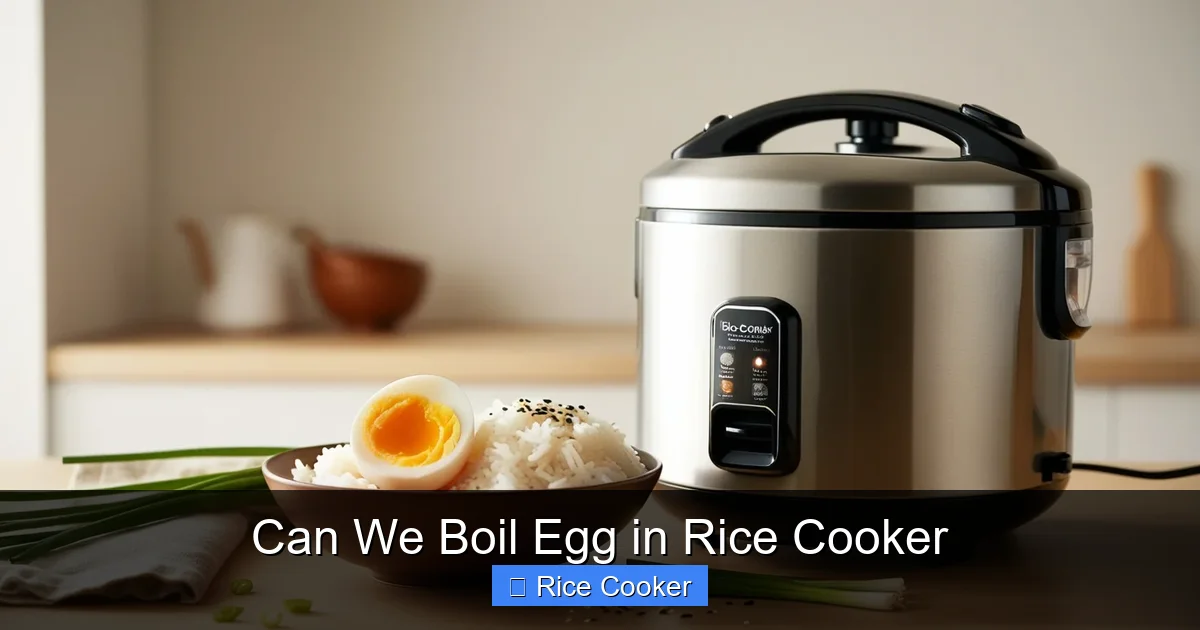
Can you boil eggs in a rice cooker? Absolutely! Using your rice cooker to boil eggs is simple, efficient, and requires no extra pots or pans. With just water and a little timing, you can make perfectly cooked eggs in minutes—whether soft-boiled, medium, or hard-boiled.
This clever kitchen hack is ideal for meal prep, quick breakfasts, or when you want fluffy omelets later. Plus, it frees up your stove and reduces cleanup. In this article, we’ll walk you through everything you need to know: from setup and timing to troubleshooting common issues.
Key Takeaways
- Yes, boiling eggs in a rice cooker works: It’s a safe and effective method that uses the appliance’s steam and heat to cook eggs evenly.
- Minimal preparation needed: You only need eggs, water, and your rice cooker—no special tools required.
- Customizable doneness: Adjust cooking time to control texture—soft, medium, or hard-boiled eggs are all possible.
- Saves time and energy: Boil multiple eggs at once while your rice cooker prepares other meals.
- Easy cleanup: One pot, fewer dishes—perfect for busy households.
- Safety first: Use caution with hot surfaces and lids; always let eggs cool before handling.
- Great for meal prep: Hard-boiled eggs store well and make excellent snacks or salad toppers.
📑 Table of Contents
- Can We Boil Egg in Rice Cooker? The Ultimate Guide
- Why Use a Rice Cooker to Boil Eggs?
- Step-by-Step: How to Boil Eggs in a Rice Cooker
- Pro Tips for Perfect Rice Cooker Eggs
- Common Mistakes & How to Avoid Them
- Beyond Basic Boiling: Creative Uses for Rice Cooker Eggs
- Is It Safe to Boil Eggs in a Rice Cooker?
- Frequently Asked Questions
- Final Thoughts: Why Every Home Cook Should Try This
Can We Boil Egg in Rice Cooker? The Ultimate Guide
Imagine this: you’re rushing to get ready for work, your kids are hungry, and you still need breakfast. You reach for your rice cooker—already set to cook oatmeal or quinoa—and suddenly remember an idea that might save the day. Can we boil egg in rice cooker? The answer is a resounding yes!
Boiling eggs in a rice cooker isn’t just possible—it’s one of those clever kitchen hacks that feels like magic when it works. No more juggling pots on the stovetop, no messy splatters, and best of all: consistent results every single time. Whether you’re making soft-boiled eggs for dipping toast or hard-boiled ones for salads, your rice cooker can handle it.
In this complete guide, we’ll show you exactly how to do it step by step, explain why it works so well, share pro tips for perfect eggs every time, and even cover what to do if things go wrong. By the end, you’ll be calling your rice cooker your new breakfast BFF.
Why Use a Rice Cooker to Boil Eggs?
You might wonder: why bother boiling eggs in a rice cooker instead of using the stove? Let’s break down the benefits.
Visual guide about Can We Boil Egg in Rice Cooker
Image source: toolsofkitchen.com
Energy Efficiency
Rice cookers use less electricity than stovetops. Since they generate heat through induction or conduction rather than open flame, they convert more energy into actual cooking power. That means faster heating and lower bills over time—especially helpful if you’re boiling multiple eggs daily.
Consistent Heat Distribution
Rice cookers maintain steady temperatures throughout the cooking cycle. Unlike boiling water on the stove—which can fluctuate with burner size or heat settings—your rice cooker keeps things even. This consistency leads to uniform egg whites and yolks without hot spots or undercooked centers.
Hands-Off Convenience
Once you add water and turn it on, there’s nothing else to monitor. While your oats simmer or your rice finishes, your eggs cook quietly in the same vessel. Perfect for multitasking parents, students, or anyone who hates standing over a pot.
Less Mess
No bubbling water overflowing onto the stove. No scrubbing burnt-on egg residue from a saucepan. A rice cooker lid seals tightly, trapping steam inside and keeping splatters contained. Cleanup is as simple as rinsing one bowl.
Scalable Cooking
Whether you need two eggs for lunch or twenty for a party platter, most modern rice cookers can accommodate dozens at once. Just adjust water levels accordingly. Compare that to stove-top boiling, where overcrowding causes uneven cooking.
Step-by-Step: How to Boil Eggs in a Rice Cooker
Ready to give it a try? Here’s a foolproof method that guarantees success—even for beginners.
Visual guide about Can We Boil Egg in Rice Cooker
Image source: toolsofkitchen.com
Gather Your Supplies
- Fresh eggs (room temperature works best)
- A standard rice cooker with a removable inner pot
- Clean water
- Tongs or slotted spoon (optional but helpful)
- A timer (phone works fine)
Prepare the Rice Cooker
Start by placing the inner pot into your rice cooker base. If your model has a non-stick coating, avoid metal utensils—they could scratch it. Fill the pot halfway with cold tap water. For every egg, add about 1–1.5 inches (2.5–4 cm) of water depth. Too little? Eggs may stick or crack. Too much? It wastes time heating excess liquid.
Add the Eggs Gently
Crack each egg directly into the water—don’t drop them hard, as cracks weaken the shell. Space them evenly so they aren’t touching. If your pot is small, stagger rows or use a steamer basket (more on that soon). Pro tip: Room-temperature eggs prevent cracking due to thermal shock.
Cook According to Desired Doneness
| Egg Type | Water Level | Cooking Time |
|---|---|---|
| Soft-Boiled | Cover eggs completely | 6–7 minutes |
| Medium | Same as above | 9–10 minutes |
| Hard-Boiled | Same as above | 12–15 minutes |
Place the lid on securely and press “Cook” or manual mode. Most rice cookers default to white rice settings (~20–30 mins), so you’ll need to monitor closely. Once the timer ends, immediately remove the pot using oven mitts—the steam will keep cooking the eggs if left alone too long.
Cool & Peel
Transfer eggs to an ice bath (or cold running water) for 5–10 minutes. This stops residual heat from overcooking the yolk and makes peeling easier. Crack shells gently between fingers and roll under your palm before pulling off in pieces.
Pro Tips for Perfect Rice Cooker Eggs
Want flawless results every time? Try these expert tricks.
Use a Steamer Basket (Optional)
If your rice cooker comes with a perforated insert, place it above the water level instead of submerging eggs directly. This lifts them slightly, reduces risk of cracking, and allows steam to circulate freely. Ideal for delicate soft-boiled eggs.
Don’t Overcrowd
Too many eggs crammed into one pot create turbulence, leading to uneven cooking or cracked shells. Stick to 6–8 large eggs max per standard 3-cup pot. Larger models (5+ cups) can handle more.
Check Water Levels Carefully
Low water = dry heat = scorched eggs. High water = longer cook times and wasted energy. Aim for just enough to fully cover eggs by ½ inch (1 cm).
Let Them Rest After Cooking
Even after removing from heat, eggs continue cooking internally. Let them sit in their own hot water for 2–3 minutes post-timer to achieve desired firmness.
Store Properly
Peeled hard-boiled eggs last up to one week in the fridge. Unpeeled? Up to three weeks. Keep them in airtight containers to prevent odor absorption.
Common Mistakes & How to Avoid Them
New to this method? You might run into hiccups. Here’s how to fix them.
Mistake: Eggs Cracking During Cooking
Cause: Cold eggs dropped into hot water or overcrowded pot.
Fix: Always use room-temp eggs. Add them gently. Don’t stack too many.
Mistake: Rubber-Yolk Yolks
Cause: Overcooking beyond 15 minutes or letting eggs sit in hot water too long.
Fix: Stick to recommended times. Ice bath right after cooking halts the process.
Mistake: Sticky Residue
Cause: Protein sticking to non-stick coating or old buildup.
Fix: Soak pot in warm soapy water. Never scrape with metal. For stubborn bits, use baking soda paste.
Mistake: Inconsistent Texture
Cause: Uneven water distribution or inconsistent heat source.
Fix: Stir water gently before adding eggs. Ensure your rice cooker heats evenly (test with a thermometer if unsure).
Beyond Basic Boiling: Creative Uses for Rice Cooker Eggs
Once you master basic boiling, expand your skills!
Poached Eggs
Whisk 2 eggs with a splash of vinegar. Pour mixture into simmering water in the rice cooker pot. Cover and cook for 5–6 minutes until whites set but yolks remain runny. Great for English muffins!
Steamed Egg Custard
Beat 2 eggs + ¼ cup milk + pinch of salt. Strain into ramekins placed in steamer basket over simmering water. Steam 15–20 minutes until set. Creamy dessert or breakfast treat.
Egg Drop Soup
Simmer broth in inner pot. Slowly whisk beaten eggs into boiling liquid. Let cook 30 seconds until strands form. Garnish with green onions.
Fried Eggs (Indirect Method)
Add oil to pot, heat gently. Crack egg into center. Cover and cook 4–5 minutes for sunny-side-up. Flip carefully and repeat for over-easy.
Is It Safe to Boil Eggs in a Rice Cooker?
Absolutely—but with precautions.
Rice cookers are designed for wet-heat cooking, so submerging eggs poses no electrical hazard. Just ensure the inner pot isn’t cracked and the lid seals properly. Never operate without water unless following specific recipes (like frying).
Also, always use oven mitts when handling the hot pot. Steam burns are real and painful. And never leave unattended while boiling—overheating can damage your appliance.
Finally, clean promptly after use. Leftover proteins can harden and become difficult to remove.
Frequently Asked Questions
Can I boil eggs in a rice cooker without cracking them?
Yes! Use room-temperature eggs, add them gently, and avoid overcrowding. A steamer basket also helps minimize contact with boiling water.
How long does it take to boil eggs in a rice cooker?
Approximately 6–15 minutes depending on desired doneness: soft-boiled (6–7 min), medium (9–10 min), hard-boiled (12–15 min).
Can I boil multiple eggs at once?
Yes, up to 6–8 large eggs fit comfortably in most standard rice cooker pots. Larger models can handle more.
Do I need to add salt or vinegar?
Not necessary, but a teaspoon of vinegar can help prevent cracking. Salt doesn’t affect texture significantly.
What if my rice cooker doesn’t have a timer?
Use a kitchen timer or phone stopwatch. Manual models require close monitoring—start checking around 10 minutes.
Can I reheat boiled eggs in the rice cooker?
It’s not recommended. Reheating alters texture and increases bacterial risk. Store cooled eggs in the fridge and eat within a week.
Final Thoughts: Why Every Home Cook Should Try This
Boiling eggs in a rice cooker isn’t just a shortcut—it’s a smarter way to cook. It saves time, reduces mess, conserves energy, and delivers reliable results. Whether you’re feeding a family, prepping lunches, or experimenting with brunch ideas, this trick fits seamlessly into your routine.
Plus, once you see how easy it is, you’ll start thinking creatively: steamed dumplings, poached fish, even custards—all in one versatile appliance. And let’s be honest, watching your rice cooker hum along while doing two jobs at once feels oddly satisfying.
So next time you’re craving a perfect hard-boiled egg, skip the stove. Grab your rice cooker, follow these steps, and enjoy tender whites and creamy yolks—without lifting a finger. Your future self (and your kitchen counter) will thank you.
Frequently Asked Questions
Can I boil eggs in a rice cooker without cracking them?
Yes! Use room-temperature eggs, add them gently, and avoid overcrowding. A steamer basket also helps minimize contact with boiling water.
How long does it take to boil eggs in a rice cooker?
Approximately 6–15 minutes depending on desired doneness: soft-boiled (6–7 min), medium (9–10 min), hard-boiled (12–15 min).
Can I boil multiple eggs at once?
Yes, up to 6–8 large eggs fit comfortably in most standard rice cooker pots. Larger models can handle more.
Do I need to add salt or vinegar?
Not necessary, but a teaspoon of vinegar can help prevent cracking. Salt doesn’t affect texture significantly.
What if my rice cooker doesn’t have a timer?
Use a kitchen timer or phone stopwatch. Manual models require close monitoring—start checking around 10 minutes.
Can I reheat boiled eggs in the rice cooker?
It’s not recommended. Reheating alters texture and increases bacterial risk. Store cooled eggs in the fridge and eat within a week.