
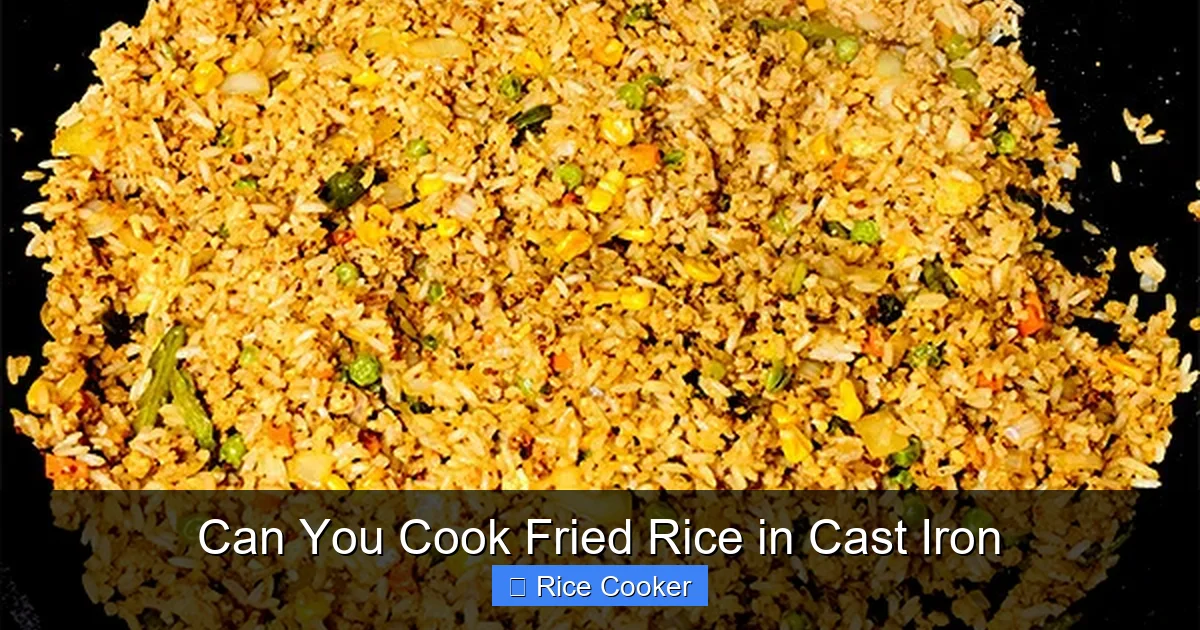
Can you cook fried rice in cast iron skillet? Absolutely! This classic cooking surface delivers perfect heat control and nonstick performance that makes stir-frying a breeze. From golden-brown edges to evenly cooked grains, using cast iron takes your fried rice game up several notches.
## Can You Cook Fried Rice in Cast Iron? Absolutely—Here’s Why It Works
If you’ve ever stood over a wok or nonstick skillet wondering whether there’s a better way to make fried rice at home, let me stop you right there: **yes, you can (and should) cook fried rice in cast iron**. In fact, many home chefs swear by it—not just because it gives you that restaurant-quality sear, but because cast iron brings out flavors in a way that few other cookware pieces can match.
Fried rice isn’t just leftover rice tossed with soy sauce and veggies—it’s an art form. The key lies in getting each grain perfectly separated, lightly caramelized, and infused with savory depth. And when you use a heavy-duty cast iron skillet, you unlock a whole new level of control over texture and taste.
In this guide, we’ll walk through everything you need to know: from choosing the right pan to mastering the technique, cleaning tips, and even recipe variations. Whether you’re a beginner looking to upgrade your kitchen tools or a seasoned cook wanting to refine your method, stick around—you’re about to become a cast iron fried rice master.
—
## Why Cast Iron Is Perfect for Fried Rice
Before we dive into recipes or steps, let’s talk about *why* cast iron is such a great choice for frying rice.
Unlike thin aluminum pans or nonstick coatings that wear out over time, cast iron develops a natural nonstick patina through seasoning. That means once your skillet is properly prepared, it becomes incredibly easy to move rice around without worrying about clumping or tearing. Plus, cast iron heats up slowly but holds onto heat like no other material. This steady warmth ensures that every inch of your rice cooks evenly—no more soggy bottoms or burnt edges.
Another huge advantage? **Even heat distribution**. When you stir-fry in a cast iron pan, the consistent temperature across the surface prevents hotspots where ingredients might burn while others stay undercooked. And because cast iron gets hotter than most alternatives, you get that beautiful Maillard reaction—the chemical process that turns food golden brown and adds rich, complex flavors.
But don’t take my word for it. Try making fried rice on stainless steel versus cast iron, and you’ll notice the difference almost immediately: the cast iron version tends to have more color, better texture, and deeper umami notes.
—
## Choosing the Right Cast Iron Skillet
Not all cast iron skillets are created equal—especially when it comes to fried rice. Here’s what to look for:
### Size Matters
Go for a **10- to 12-inch skillet** if you’re cooking for two to four people. Too small, and you’ll be constantly scraping rice off the sides; too large, and you won’t get enough contact with the heat to develop that crispiness.
### Weight & Thickness
Thicker cast iron (like Dutch ovens) is great for braising or baking, but for stir-frying, you want something lighter yet sturdy. Look for skillets between 1/4” to 3/8” thick—these offer good responsiveness without being unwieldy.
### Handle Design
A single long handle helps with tossing, but make sure it stays cool enough to grip safely. Some models come with helper handles on the opposite side, which is handy if you’re moving the pan around frequently during cooking.
### Preseasoned vs. Raw Iron
Many modern cast iron skillets are preseasoned, meaning they come with a light layer of oil already baked in. While convenient, you may still want to re-season occasionally—especially after heavy use like high-heat frying.
—
## Essential Ingredients for Great Cast Iron Fried Rice
The magic of fried rice starts with quality ingredients—but honestly, you don’t need anything fancy. Here’s the basics:
– **Rice**: Day-old jasmine, basmati, or even regular long-grain white rice works best. Avoid sticky short-grain varieties unless you plan to rinse and dry them thoroughly.
– **Oil**: Neutral oils like vegetable, canola, or peanut oil are ideal for high-heat cooking.
– **Eggs**: Scrambled or beaten and cooked into custardy curds.
– **Protein**: Shrimp, chicken, beef, tofu—whatever floats your boat.
– **Veggies**: Onions, carrots, peas, bell peppers, mushrooms… get creative!
– **Sauce**: Soy sauce, oyster sauce, sesame oil, and sometimes hoisin or fish sauce.
Optional add-ins include green onions, garlic, ginger, chili flakes, or even a splash of rice vinegar for brightness.
—
## Step-by-Step Guide: How to Make Fried Rice in Cast Iron
Ready to fire up that skillet? Follow these steps for foolproof results every time.
### Step 1: Prep Your Rice
Start with **cold, dry rice**. If you’ve got leftover rice straight from the fridge, that’s perfect. Spread it out on a plate or tray and let it air-dry for 10–15 minutes if it feels damp. Damp rice = mushy rice.
### Step 2: Heat the Pan Properly
Place your clean, dry cast iron skillet on medium-high heat. Let it sit for 2–3 minutes until it’s smoking slightly. Then add 1–2 tablespoons of oil (depending on how much rice you’re cooking). Swirl to coat the entire surface.
> **Tip**: Never rush this step! A cold pan leads to steamed rice instead of fried rice.
### Step 3: Cook Protein First
Add your protein and cook until nearly done—this ensures it finishes cooking before the rice goes in. For shrimp or chicken, about 60–90 seconds per side is usually enough.
### Step 4: Scramble Eggs
Push everything to one side of the pan, pour in beaten eggs, and scramble them until just set. Break them into small curds and mix back into the rest of the ingredients.
### Step 5: Add Veggies and Rice
Toss in your chopped veggies and let them sweat for 1–2 minutes. Then add the rice in small batches, pressing down gently with a spatula to separate clumps. Keep stirring constantly to avoid scorching.
### Step 6: Season Generously
Now’s the moment to add your sauce. Drizzle soy sauce, oyster sauce, and a pinch of sugar over the top. Toss everything together and cook for another minute or two until heated through and glossy.
### Step 7: Finish with Flavor Boosters
Stir in a splash of sesame oil, chopped green onions, and maybe some grated ginger or garlic paste for extra aroma. Taste and adjust salt or sweetness as needed.
—
## Common Mistakes to Avoid
Even experienced cooks slip up now and then. Here are the biggest pitfalls—and how to dodge them:
– **Using fresh rice**: Freshly cooked rice is too moist. Always use day-old rice that’s been refrigerated overnight.
– **Skipping preheat**: Cold pans steam the rice instead of frying it.
– **Overcrowding**: Too much rice in the pan raises the temperature too low, leading to sogginess.
– **High heat all the time**: While cast iron can handle high temps, keep it at medium unless you’re specifically going for charred bits.
– **Not cleaning properly**: Residue builds up fast. Wash promptly with warm water and a soft brush—no soap unless absolutely necessary.
—
## Cleaning and Maintaining Your Cast Iron After Fried Rice
One of the best things about cast iron is its durability—but only if you treat it right. After making fried rice, here’s how to care for your skillet:
1. **Let it cool completely** before washing. Hot-to-cold shock can warp the metal.
2. **Scrape off any stuck-on bits** with a wooden spoon or stiff brush.
3. **Wash with warm water only**. Avoid dish soap if possible—it strips away the seasoning.
4. **Dry immediately and thoroughly** over low heat or with a towel.
5. **Apply a thin layer of oil** while still slightly warm to preserve the nonstick surface.
With proper care, your cast iron skillet will last decades—and keep getting better with each use.
—
## Variations: Beyond the Basics
Once you’ve nailed the classic version, try these twists:
– **Korean-style bibimbap fried rice**: Add gochujang, kimchi, and marinated bulgogi.
– **Thai-inspired**: Use fish sauce, lime juice, fresh basil, and julienned carrots.
– **Vegetarian power bowl**: Load up on broccoli, snap peas, and tofu with tamari and maple syrup glaze.
– **Seafood medley**: Mix in scallops, squid, and mussels with lemon zest and parsley.
Each variation highlights how versatile cast iron really is—it adapts beautifully to bold flavors and global cuisines.
—
## Final Thoughts: Why Every Home Chef Needs a Good Cast Iron Skillet
So, can you cook fried rice in cast iron? The answer is a resounding **yes**—and it might just change the way you approach stir-fries forever.
Beyond fried rice, this one piece of cookware can handle everything from searing steaks to baking cornbread to sautéing vegetables. Its unmatched heat retention, versatility, and longevity make it worth the investment. Plus, when you cook directly in the pan, cleanup is minimal, and the flavors develop more deeply than they would in a nonstick or stainless steel setup.
Whether you’re meal-prepping lunches, impressing dinner guests, or simply craving a comforting bowl of fried rice, a well-seasoned cast iron skillet is your secret weapon. So next time you open your fridge to find leftover rice, grab that skillet—your taste buds will thank you.
—
Key Takeaways
- Cast iron is ideal for frying rice because it distributes heat evenly and retains it well—perfect for achieving that coveted crispy texture on the outside while keeping the inside fluffy.
- Proper seasoning prevents sticking. A well-seasoned cast iron skillet creates a natural nonstick surface that’s essential when tossing hot rice without breaking apart.
- Preheating matters. Just like with other stir-fry dishes, letting your cast iron get hot before adding oil ensures even cooking and prevents cold spots that lead to uneven browning.
- Use the right type of rice. Leftover day-old jasmine or basmati rice works best since it’s drier than freshly cooked rice, reducing the risk of mushiness.
- Control heat levels carefully. Cast iron holds heat longer than stainless steel, so medium-low to medium heat is usually best to avoid burning the sauce or charring ingredients too quickly.
- Clean-up is simple. After cooking, let the pan cool slightly, then scrape off residue and wash with warm water—never use harsh detergents or soak the pan fully.
- Add protein and veggies early for optimal texture—they need more time to cook than rice, especially if you’re aiming for tender-crisp vegetables and juicy meat.
Frequently Asked Questions
Is cast iron nonstick for fried rice?
A well-seasoned cast iron skillet acts very similarly to nonstick cookware, creating a natural barrier that prevents rice from sticking. However, it requires proper maintenance and doesn’t have the same chemical coating as commercial nonstick surfaces.
Do I need to spray oil on cast iron before frying rice?
While cast iron has a nonstick surface once seasoned, adding a thin layer of oil helps prevent sticking during high-heat cooking and enhances browning. Use neutral oils like vegetable or peanut for best results.
Can I reuse leftover fried rice in cast iron?
Absolutely! Reheat leftover fried rice in cast iron over medium heat, stirring frequently. Add a splash of water or broth if it seems dry, and finish with a drizzle of sesame oil.
How do I stop my fried rice from getting mushy in cast iron?
Mushy rice usually comes from using fresh, wet rice or overcrowding the pan. Always use day-old, dried rice and cook in small batches to maintain high heat.
What size cast iron skillet is best for fried rice?
A 10- to 12-inch skillet works best for 2–4 servings. It provides enough surface area to toss ingredients easily without spreading too thin and losing heat.
Can I make vegetarian fried rice in cast iron?
Yes! Vegetarian fried rice thrives in cast iron. Use tofu, tempeh, or seitan as protein, and load up on colorful veggies. Season with tamari instead of soy sauce for a gluten-free option.