
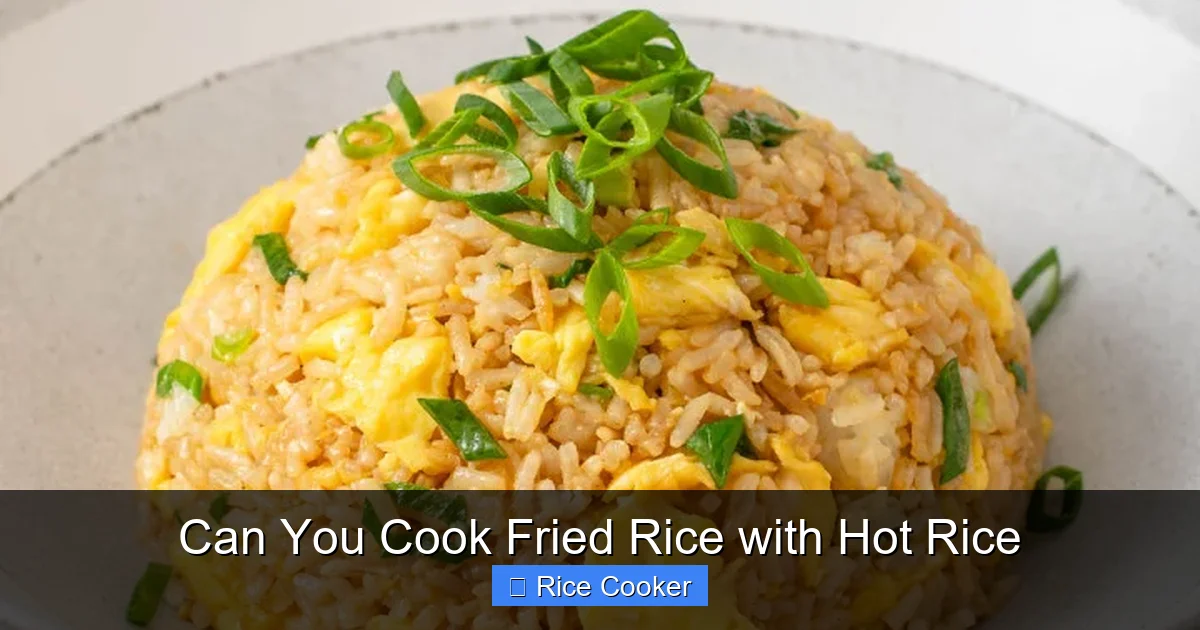
You can definitely cook fried rice with hot rice, and many home cooks actually prefer it that way. Hot rice absorbs flavors better and creates a more cohesive dish, though it requires a few adjustments to avoid clumping. With the right technique—like letting it cool slightly or fluffing it gently—you’ll get delicious, restaurant-quality fried rice every time.
# Can You Cook Fried Rice with Hot Rice?
Ever opened your fridge, stared at a container of leftover rice, and thought, *”Perfect—time for fried rice!”* But then you hesitate: is the rice too hot? Will it turn into a soggy mess? Or worse—will it stick to the pan like glue?
Let’s clear this up once and for all: **yes, you absolutely can cook fried rice with hot rice**—and in fact, many chefs and home cooks swear by it. While cold rice is traditional in some Asian kitchens (especially in Chinese stir-fries), hot rice isn’t just acceptable—it can actually give you a superior result if handled properly. The key lies not in whether the rice is hot or cold, but in *how* you manage its moisture and texture.
In this complete guide, we’ll walk through everything you need to know about making fantastic fried rice using hot rice straight from the rice cooker. From science-backed tips to pro-level tricks, you’ll learn why hot rice might be your secret weapon—and how to avoid common pitfalls along the way.
—
## Why People Think Cold Rice Is Better
Before we dive into the benefits of hot rice, let’s address the elephant in the room: why does everyone say cold rice makes better fried rice?
The myth likely stems from traditional Chinese cooking methods, where leftover rice is cooled overnight. This allows excess starch to recrystallize, creating grains that are drier, fluffier, and less sticky when stir-fried. Cooled rice also releases more amylose—a type of starch—which prevents clumping and gives fried rice its signature bite.
But here’s the thing: modern rice cookers and instant pots produce rice that’s already been through a precise steaming process, removing much of the excess moisture upfront. And honestly? For most home kitchens, the difference between hot and cold rice isn’t as dramatic as people claim—especially if you use the right techniques.
So instead of worrying about temperature, focus on what matters most: grain separation, oil distribution, and flavor infusion.
—
## The Science Behind Fried Rice: Starch vs. Moisture
To truly understand why hot rice can work—or fail—we need to look at the chemistry.
Rice contains two main types of starch: **amylose** and **amylopectin**. Amylose is long-chain starch that resists gelatinization (sticking together), while amylopectin breaks down easily under heat, creating stickiness.
When rice is cooked, water penetrates the grain, causing starch to swell and gelatinize. If you eat it immediately, those starches are soft and moist. But if you let it cool, some of that amylose recrystallizes (becomes resistant again), giving the rice a firmer, looser structure.
However, **hot rice still has enough residual moisture** to help bind ingredients during stir-frying. That moisture acts like a natural glue, helping veggies, proteins, and sauces cling together without needing extra oil or cornstarch slurry.
That said, too much moisture = sogginess. So the trick is balance.
—
## How to Prepare Hot Rice for Stir-Frying
Even if your rice is piping hot from the rice cooker, you don’t have to panic. Here’s how to prep it safely:
### Step 1: Let It Breathe (Just a Little)
Don’t toss hot rice directly into a cold pan. Instead, spread it out on a clean plate or tray and let it sit for **5–10 minutes**. This allows surface moisture to evaporate slightly, reducing steam buildup inside the pan later.
> 💡 Pro tip: Use a fork to gently fluff the rice while it cools. This increases airflow and prevents clumping.
### Step 2: Avoid Overhandling
Resist the urge to mash or compact the rice. Gentle fluffing is enough. Overworking hot rice can break apart individual grains, leading to mushy fried rice.
### Step 3: Choose the Right Portion Size
Use about **2 cups of hot rice per person**. Too little? Your rice will dry out. Too much? It’ll steam instead of sear.
—
## Essential Tools for Perfect Fried Rice
You don’t need fancy equipment—just these basics:
– **Non-stick skillet or carbon steel wok**: Prevents sticking and distributes heat evenly.
– **Sharp spatula or wooden spoon**: Allows quick, gentle tossing without crushing grains.
– **Measuring spoons & small bowl**: For precise seasoning.
– **Optional: Rice paddle or fork**: To break up clumps before cooking.
If you’re serious about fried rice, invest in a **well-seasoned carbon steel wok**. Its high heat retention mimics professional kitchen conditions and gives you that coveted smoky wok hei flavor.
—
## Step-by-Step: Making Fried Rice with Hot Rice
Ready to cook? Follow this foolproof method:
### Ingredients (Serves 2)
– 2 cups hot cooked white rice (jasmine or basmati work best)
– 2 tbsp neutral oil (vegetable, canola, or peanut)
– 2 large eggs
– ½ cup diced carrots
– ½ cup frozen peas
– 3 green onions, sliced
– 2 cloves garlic, minced
– 2 tbsp soy sauce (low-sodium preferred)
– 1 tsp sesame oil
– Salt to taste
### Instructions
#### 1. Prep Your Veggies and Heat Oil
Mince garlic, dice carrots, slice green onions. Heat oil in a large skillet over **medium-high heat**. You want it shimmering but not smoking.
#### 2. Scramble the Eggs First
Push vegetables to one side of the pan. Crack eggs into the empty space and scramble until just set (~30 seconds). Remove eggs and set aside.
> 🔥 Tip: Don’t overcook eggs—they’ll continue cooking off-heat.
#### 3. Sauté Aromatics
Add garlic to the same spot where you cooked eggs. Stir for 30 seconds until fragrant—don’t burn it!
#### 4. Toss in Vegetables
Add carrots and peas. Stir-fry for 2–3 minutes until tender-crisp.
#### 5. Bring in the Rice
Now add your hot rice. Use a fork to break up any clumps. Spread it evenly across the pan.
#### 6. Season and Combine
Sprinkle soy sauce and salt over the rice. Drizzle sesame oil. Toss everything together for 2–3 minutes until heated through and slightly crispy at the edges.
#### 7. Return Eggs and Greens
Add scrambled eggs back in. Toss in green onions. Cook 30 more seconds.
Serve immediately while hot and steamy!
—
## Common Mistakes (And How to Fix Them)
Even experienced cooks slip up. Here’s what to watch out for:
### Mistake #1: Using Mushy or Overcooked Rice
If your rice came from a rice cooker that oversteams, it may be gummy. Fix this by spreading it on a tray and letting it air-dry 10 minutes before frying.
### Mistake #2: Pan Too Cold
Low heat causes rice to absorb moisture instead of releasing it. Always preheat your pan thoroughly.
### Mistake #3: Skipping the Egg Step
Eggs add protein, richness, and help bind flavors. Omitting them leads to bland, separate components.
### Mistake #4: Overcrowding the Pan
Too much rice = steaming instead of frying. Work in batches if needed.
—
## Flavor Hacks to Elevate Your Fried Rice
Want restaurant-level results? Try these upgrades:
– **Add shrimp, chicken, or tofu** for protein.
– **Use oyster sauce or hoisin** alongside soy sauce for depth.
– **Toast rice briefly** before adding liquid ingredients—this adds nutty flavor.
– **Finish with a squeeze of lime** for brightness.
– **Garnish with crushed peanuts or cilantro**.
Experimentation is part of the fun!
—
## Leftovers: What Happens After You Cook?
Great news: leftover fried rice reheats beautifully. Just microwave with a splash of water or steam it briefly to restore moisture. Avoid microwaving without covering—it dries out quickly.
Store in an airtight container for up to 4 days. Freezing works too—portion into freezer bags for easy grab-and-go meals.
—
## Is Hot Rice Really Better Than Cold?
Here’s the honest truth: **it depends on your goals**.
– **Cold rice** = better texture control, traditional method, less risk of sogginess.
– **Hot rice** = faster prep, richer flavor integration, easier binding.
For busy weeknights, hot rice is your friend. For special occasions or when texture matters most, cold rice wins.
Most importantly: **use rice within 24 hours** of cooking. Older rice becomes stale and harder to fry.
—
## Final Thoughts: Embrace the Hot Rice Revolution
Cooking fried rice with hot rice isn’t just possible—it’s practical, delicious, and beginner-friendly. Forget rigid rules about temperature; focus instead on technique, timing, and respect for your ingredients.
Next time you pull leftover rice from the fridge, don’t second-guess yourself. Grab your pan, crack some eggs, and start stir-frying. You might just discover your new favorite way to enjoy rice.
Remember: the best fried rice comes from confidence—not perfection. So fluff that hot rice, trust your instincts, and dig in!
—
Key Takeaways
- Hot rice works great for fried rice: It has more moisture, which helps bind ingredients together and enhances flavor absorption.
- Prevent sticking by cooling slightly: Let hot rice rest for 5–10 minutes before cooking to reduce steam and clumping.
- Use the right pan and oil temperature: A non-stick skillet or wok heated to medium-high ensures even cooking without burning.
- Add eggs early for creamy texture: Scramble eggs first, then push them aside while stir-frying other ingredients.
- Don’t overcook—keep it quick: Fried rice cooks fast; aim for 3–5 minutes after adding everything to maintain texture.
- Season as you go: Add soy sauce, sesame oil, or salt gradually during stir-frying for balanced flavor.
- Restaurant-style results are possible at home: With practice, hot rice fried rice can rival takeout versions.
Frequently Asked Questions
Can you use day-old rice for fried rice?
Yes! Day-old rice is ideal because it’s drier and less sticky than fresh rice. If using hot rice, let it cool slightly first to prevent clumping.
Why does my fried rice stick to the pan?
Sticking usually happens when the pan isn’t hot enough or there’s not enough oil. Always preheat your skillet and use a generous amount of oil.
Should I rinse my rice before frying?
No. Rinsing removes surface starch that helps prevent sticking. Since fried rice relies on that starch for cohesion, skip rinsing unless your rice is super sticky.
Can I freeze fried rice?
Absolutely. Let it cool completely, portion into containers, and freeze for up to 2 months. Thaw overnight and reheat with a splash of water.
What’s the difference between Chinese and American fried rice?
Chinese fried rice uses cold rice, fewer eggs, and focuses on savory umami flavors. American versions often include more meat, cheese, and sweet elements like pineapple.
How do I make fried rice without a stove?
You can reheat rice in the oven or microwave with a damp paper towel. Then mix with pre-cooked protein and veggies in a bowl—though it won’t have the same crispy texture as stove-top frying.