
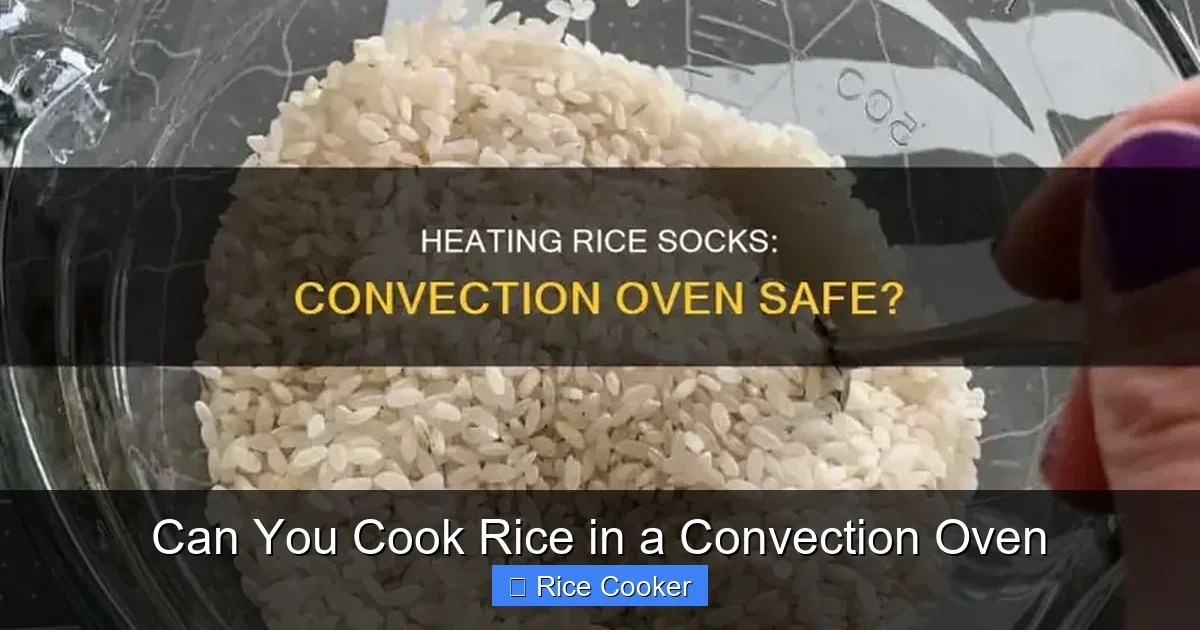
You absolutely can cook rice in a convection oven, but it requires careful attention to heat distribution, moisture control, and timing. Unlike traditional stovetop methods, convection ovens circulate hot air, which can dry out or overcook rice if not monitored. With the right adjustments—like using a lid, reducing temperature slightly, and checking frequently—you can achieve tender, fluffy results. Whether you’re preparing a large batch for meal prep or just want to free up your stove, this method works. Just remember: convection cooking demands more vigilance than standard oven baking.
Key Takeaways
- Understanding can you cook rice in a convection oven: Provides essential knowledge
📑 Table of Contents
- Can You Cook Rice in a Convection Oven? The Ultimate Guide
- Understanding How Convection Ovens Work
- Best Types of Rice for Convection Oven Cooking
- Essential Equipment for Convection Rice Cooking
- Step-by-Step: How to Cook Perfect Rice in a Convection Oven
- Common Mistakes and How to Fix Them
- Tips for Flavorful Convection-Roasted Rice
- Frequently Asked Questions
- Final Thoughts: Is It Worth It?
Can You Cook Rice in a Convection Oven? The Ultimate Guide
If you’ve ever stood over a simmering pot of rice on the stove—watching the clock, stirring occasionally, hoping it doesn’t stick—you know why rice cookers became such a kitchen staple. But what if your stove’s already full? Or maybe you’re prepping a big holiday feast and need to maximize your oven space? That’s where the idea of cooking rice in a convection oven comes in.
At first glance, it seems simple: just toss rice and water into an oven-safe dish and bake. But convection ovens work differently than standard models—they use a fan to circulate hot air around food, speeding up cooking times while promoting browning and crispiness. This airflow can be great for roasting chicken or baking cookies, but it poses challenges when trying to create something delicate like perfectly cooked rice.
In this article, we’ll walk through everything you need to know about making rice in a convection oven—from choosing the right grains and cookware to adjusting recipes and avoiding common pitfalls. By the end, you’ll feel confident turning your oven into a rice-making powerhouse.
Understanding How Convection Ovens Work
The Science Behind Convection Cooking
Unlike conventional ovens that rely on radiant heat rising from below (or sometimes both top and bottom elements), convection ovens add a built-in fan that blows heated air across the interior. This constant movement transfers heat more evenly and efficiently to food surfaces.
Visual guide about Can You Cook Rice in a Convection Oven
Image source: familydinners.com
This process reduces overall cooking time by roughly 20–25%, which sounds amazing—until you realize that rice relies heavily on gentle, consistent heat and trapped steam to soften its starches without turning mushy or burnt. Too much direct, fast-moving air can scorch the surface before the center cooks through, or worse—dry it out completely.
Why Rice Needs Special Care in a Convection Oven
Rice is essentially a starch-based grain that swells when it absorbs water and gelatinizes at specific temperatures. In a pot on the stove, this happens slowly thanks to residual heat after boiling stops. In contrast, convection ovens deliver intense, direct heat unless carefully managed.
Without proper containment (like a lid or foil), moisture escapes quickly due to the circulating air. This leads to undercooked kernels stuck to the bottom of the pan or a crust forming before the inside softens. So while yes—you can cook rice in a convection oven, it’s not as forgiving as other methods.
Best Types of Rice for Convection Oven Cooking
Short-Grain Varieties Are Your Best Bet
When experimenting with convection cooking, opt for short-grain rice such as:
Visual guide about Can You Cook Rice in a Convection Oven
Image source: kitchenmince.com
- Jasmine – Aromatic, slightly sticky, ideal for Thai-style dishes
- Sushi rice – High amylopectin content keeps it clingy and moist
- Bomba or Calasanz – Spanish short-grain, excellent absorption properties
These types retain their structure better under indirect, moist heat compared to long-grain options like basmati or American long-grain, which tend to become fluffy but fragile and may break apart during handling or prolonged exposure to dry air.
Avoid Long-Grain and Wild Rice for Beginners
If you’re new to convection cooking, steer clear of:
- Basmati – Tends to separate and lose fragrance when overheated
- Brown or wild rice – Require longer soaking and higher moisture levels; prone to cracking or uneven texture
While possible with extended cooking times, these varieties are riskier and demand extra monitoring. Save them for seasoned experimentation once you’ve mastered the basics.
Essential Equipment for Convection Rice Cooking
Choose the Right Pan or Pot
Not all baking sheets or casserole dishes are created equal when it comes to retaining steam. For best results, use:
- Dutch ovens – Heavy, thick walls distribute heat evenly; tight-fitting lids seal in moisture
- Heavy-bottomed roasting pans – Look for ones with domed lids or the ability to cover tightly with aluminum foil
- Oven-safe ceramic or glass containers – Ensure they’re labeled “oven-safe” and can handle sudden temperature changes
A shallow pan works better than deep ones because it allows more surface area to contact steam, accelerating gelatinization. Avoid non-stick coated pans unless they’re specifically designed for high-heat convection use.
Lids Are Non-Negotiable
Even if your recipe says “uncovered,” resist temptation! Leaving rice uncovered in a convection oven is like leaving soup boiling on high—it’ll evaporate way too fast. Always cover with:
- A lid that fits snugly
- Tightly wrapped aluminum foil (if no lid available)
- Silicone oven mitts or towels draped over the rim (less effective but better than nothing)
Steam builds pressure under the lid, creating a microclimate similar to a rice cooker’s inner chamber. Without it, your rice becomes dry, hard, and flavorless.
Step-by-Step: How to Cook Perfect Rice in a Convection Oven
Ingredients & Ratios
Start with the classic ratio: 1 cup rice : 1.5 cups water. Adjust based on grain type:
- Jasmine/sushi: 1:1.25
- Arborio (risotto-style): 1:2.5 (but note—this needs stirring)
For every cup of rice, add ¼ teaspoon salt and optionally a pat of butter or splash of oil to enhance texture and prevent sticking.
Preparation Steps
- Rinse the rice thoroughly under cold running water until the water runs clear. This removes excess starch and prevents gummy results.
- Soak (optional but recommended): Let short-grain rice sit in water for 20–30 minutes. This helps kernels expand uniformly.
- Drain well before transferring to your oven-safe container.
- Add water, salt, and fat—mix gently.
- Cover immediately with lid or foil.
Convection Oven Settings & Timing
Set your convection oven to **375°F (190°C)**—lower than typical stovetop boiling temps to account for rapid moisture loss. Bake for **25–30 minutes**, checking at the 20-minute mark.
After removing from the oven, let it rest under the lid for 10 minutes. This final steaming phase completes the cooking process and fluffs the grains naturally—no fluffing required!
Common Mistakes and How to Fix Them
Overcooked or Burnt Bottom Layer
This usually happens when:
- The pan conducts heat too well (e.g., thin metal)
- No lid is used
- Temperature is too high
- Bay leaf
- Cinnamon stick
- Slivered almonds or cashews
- Vegetable or chicken broth instead of water
- Chicken thighs + carrots + jasmine rice
- Shrimp stir-fry base with converted rice
Fix: Use a lighter-colored or enameled pan to reduce heat absorption. Lower temp by 25°F if needed. Stir once halfway through if allowed by your vessel.
Dry, Crunchy Rice
Caused by excessive evaporation—often due to uncovered cooking or insufficient starting liquid.
Fix: Increase water by 10–15%. Cover tightly. Consider placing a small oven-safe dish filled with water inside the oven to boost ambient humidity.
Uneven Texture (Some Stuck Together, Others Separate)
Indicates poor heat distribution or inconsistent hydration.
Fix: Preheat your pan (empty) for 5 minutes before adding ingredients. Rotate the pan 180° after 15 minutes to promote even browning/cooking.
Tips for Flavorful Convection-Roasted Rice
Add Aromatics During Cooking
Enhance flavor without extra steps:
Just remove solids before serving—they won’t dissolve and could be unpleasant in texture.
Try One-Pan Meals
Combine rice with proteins and veggies for efficient multitasking:
Ensure liquids total match rice’s needs. Vegetables release water—factor that in.
Frequently Asked Questions
Can I use any type of rice in a convection oven?
While technically possible, short-grain varieties like jasmine or sushi rice work best due to their ability to retain moisture and structure under convection heat. Long-grain and brown rice require more finesse and longer times, increasing chances of failure.
Do I really need to cover the rice while cooking?
Absolutely. Uncovered rice in a convection oven dries out rapidly. Steam is essential for gelatinizing starches evenly. Even if your recipe doesn’t specify covering, do it—your rice will thank you.
How do I know if my convection oven temperature is accurate?
Use an oven thermometer placed in the center rack. If readings differ by more than ±25°F, calibrate your oven per manufacturer instructions or adjust recipes accordingly (e.g., lower temp if too hot).
Can I cook rice directly on the oven rack?
Only if using a broiler pan with a drip tray underneath to catch splatters. Otherwise, place the cooking vessel on the middle rack—never on the bottom where radiant heat is strongest.
What’s the biggest advantage of convection oven rice?
It frees up your stovetop! Great for meal prepping, entertaining, or multi-dish meals where you need simultaneous cooking without crowding burners.
Is convection oven rice as nutritious as stovetop?
Yes—nutrient loss depends on cooking method, not appliance type. Both yield fully hydrated, digestible rice. Just avoid charring, which creates harmful compounds.
Final Thoughts: Is It Worth It?
Cooking rice in a convection oven isn’t revolutionary—it’s a clever workaround for busy kitchens. It won’t replace your trusty rice cooker for everyday meals (those machines are still unmatched for consistency), but it’s a reliable backup when needed. With attention to detail—lid usage, temperature control, and timing—you can produce restaurant-quality rice right in your own oven.
Give it a try with a simple jasmine rice recipe next time you have guests coming over or want to make fried rice the next day. You might just surprise yourself (and your taste buds)!
Frequently Asked Questions
What is can you cook rice in a convection oven?
can you cook rice in a convection oven is an important topic with many practical applications.