
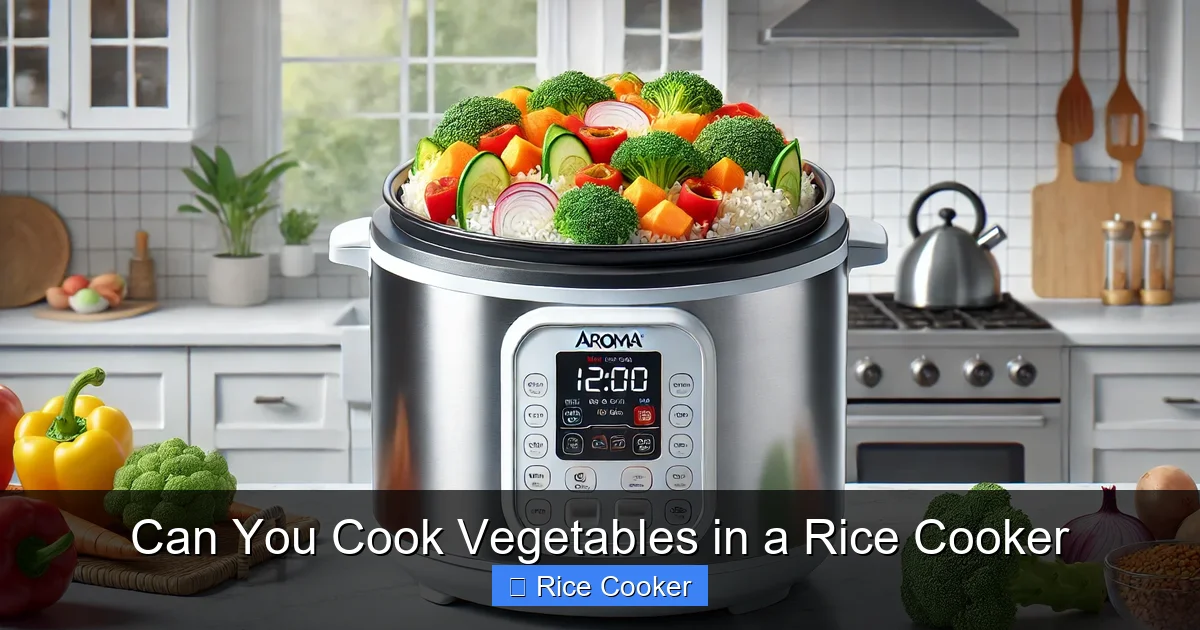
You absolutely can cook vegetables in a rice cooker—it’s one of the easiest and most convenient kitchen hacks for busy people. Whether you’re steaming broccoli, sautéing mushrooms, or simmering roasted veggies, your rice cooker can do it all with minimal effort.
Can You Cook Vegetables in a Rice Cooker?
Have you ever looked at your rice cooker and wondered, “Wait… can I actually use this for more than just rice?” The answer is a resounding yes—and it might just change how you think about meal prep forever. While rice cookers were originally designed to cook grains like white rice, brown rice, quinoa, and barley, modern models come with multiple settings that allow you to do so much more. One of the most practical and underused features? Cooking vegetables.
Whether you’re trying to eat healthier, save time, or reduce clutter on your stove, learning how to cook vegetables in a rice cooker opens up a world of possibilities. From steaming tender broccoli to sautéing flavorful mushrooms, your rice cooker can become the unsung hero of your kitchen. Plus, it’s perfect for people who live in small spaces, don’t have a stove, or simply want a low-effort way to prepare nutritious meals.
In this complete guide, we’ll walk you through everything you need to know about cooking vegetables in a rice cooker—what works best, what doesn’t, and how to get the most out of your appliance. By the end, you’ll be ready to ditch the microwave and start making delicious, wholesome vegetable dishes with ease.
Why Cooking Vegetables in a Rice Cooker Makes Sense
Before we dive into recipes and techniques, let’s talk about why this method is so smart. First off, rice cookers are designed to maintain consistent temperatures. They heat water evenly and keep things warm once cooking is done—perfect for veggies that need gentle, steady cooking. Unlike a stovetop, where heat can fluctuate and require constant attention, a rice cooker does the work for you.
Second, many rice cookers come with a built-in steamer basket or multiple cooking modes (like “steam,” “slow cook,” or “keep warm”). This means you can cook rice and vegetables at the same time—no extra pots, no extra steps. For example, toss some carrots and green beans into the steamer tray while your jasmine rice cooks in the main pot. Done in under 30 minutes, and dinner is ready.
And let’s not forget convenience. If you’re short on time or energy, a rice cooker is your best friend. Just add water, toss in your ingredients, press a button, and go. No stirring, no watching, no babysitting. It’s the ultimate multitasker.
Types of Rice Cookers That Work Best for Vegetables
Not all rice cookers are created equal when it comes to cooking vegetables. Some are basic models with only a “cook” function, while others come with advanced features like fuzzy logic, induction heating, or multiple preset programs. Here’s how to choose the right one:
Basic Rice Cookers: These usually have a single “cook” button and a “keep warm” function. They’re great for simple steaming tasks like blanching spinach or cooking asparagus. Just add water and your veggies to the inner pot (or use a steamer basket), set the timer, and let it do its thing.
Multi-Function Rice Cookers: These often include settings like “steam,” “sauté,” “slow cook,” and “porridge.” A sauté function lets you brown onions or garlic before adding liquid—ideal for making vegetable soups or stews. The slow cook setting is perfect for tougher root vegetables like sweet potatoes or carrots that need longer, gentler cooking.
Induction Heating Models: These high-end rice cookers heat more precisely and quickly, which is great for delicate veggies like zucchini or broccoli that can easily turn mushy if overcooked.
Steamer Basket Compatibility: If your rice cooker doesn’t come with a steamer basket, you can buy one separately. Look for a universal model that fits standard inner pots. This allows you to cook rice and veggies simultaneously without mixing flavors.
No matter which type you own, the key is to match the cooking method to your vegetable. Delicate greens like kale or bok choy need quick steaming, while heartier veggies like cauliflower or potatoes benefit from longer cooking times.
How to Steam Vegetables in a Rice Cooker
Steaming is one of the healthiest ways to cook vegetables—it preserves nutrients, color, and texture without adding fat. And it’s incredibly easy in a rice cooker.
Here’s how:
Add 1–2 cups of water to the inner pot. Too much water can dilute flavors, too little may cause burning—start with 1 cup and adjust as needed.
Place a steamer basket inside (if you have one) or use a heatproof bowl lined with parchment paper.
Arrange your vegetables in a single layer for even cooking. Cut them into uniform sizes so they cook at the same rate.
Close the lid and set the rice cooker to “Steam” mode (if available). If not, use the “Cook” function and let it cycle through.
Once the cycle ends, let the pressure release naturally for 5 minutes before opening the lid. This helps prevent overcooking.
Remove the veggies and season as desired—salt, pepper, lemon juice, or a drizzle of olive oil work wonders.
Pro tip: For extra flavor, add herbs like thyme or bay leaves to the water while steaming.
Popular vegetables that shine when steamed in a rice cooker include broccoli, Brussels sprouts, asparagus, green beans, and carrots. Try combining them into a colorful medley for a vibrant side dish.
Sautéing Vegetables in a Rice Cooker
While traditional sautéing happens on a stovetop with oil and constant stirring, many modern rice cookers now include a “sauté” function. This lets you brown and cook vegetables with a bit of oil—just like you would in a pan.
Here’s how to do it:
Turn on the sauté function (usually found under “Menu” or “Function” buttons).
Add 1–2 tablespoons of oil to the inner pot and let it heat for 30 seconds.
Add chopped onions, garlic, mushrooms, or bell peppers and stir occasionally until softened and slightly golden.
Add harder vegetables like zucchini or eggplant and continue cooking until tender.
Switch off the sauté function and switch to “Cook” or “Steam” to finish cooking with added liquid if needed.
Note: Not all rice cookers have a sauté function, so check your manual first. If yours doesn’t, you can still mimic sautéing by heating the pot dry, adding oil, and cooking briefly before adding water and switching to steam mode.
This method is great for building flavor bases for soups, stews, or grain bowls. For example, sauté diced tomatoes, onions, and garlic, then add vegetable broth and beans to create a hearty chili—all in one pot.
Boiling and Simmering Vegetables
Some vegetables, like peas, corn, or leafy greens, cook faster when boiled rather than steamed. While rice cookers aren’t typically used for boiling large volumes of water (like a stockpot), they can handle smaller batches perfectly.
To boil vegetables in your rice cooker:
Add 2–3 cups of water to the inner pot.
Bring to a boil using the “Cook” function.
Drop in your vegetables (e.g., spinach, kale, or green beans) and let them cook for 2–4 minutes.
Drain quickly using a colander or slotted spoon to stop the cooking process—this keeps them bright green and crisp-tender.
For simmering, add vegetables to the pot with a bit of broth, tomato sauce, or coconut milk. Let them cook gently under the “Keep Warm” or “Slow Cook” setting until tender. This works especially well for making dahl (lentil stew) or roasted veggie ragù.
Roasting-Inspired Vegetable Dishes
You might be surprised, but you can achieve roasted vegetable textures and flavors in a rice cooker—especially with hardy veggies like potatoes, carrots, and cauliflower.
Here’s a simple method:
Cut vegetables into even-sized pieces and toss with olive oil, salt, pepper, and your favorite spices (paprika, rosemary, or cumin work great).
Add them to the inner pot (no steamer basket needed).
Set the rice cooker to “Cook” and let it run for 20–25 minutes.
Stir halfway through to ensure even browning.
Once done, transfer to a baking sheet and broil for 2–3 minutes for a crispy top—optional but delicious.
This technique mimics the Maillard reaction (browning) without needing an oven. It’s perfect for meal prep: roast a big batch of veggies on Sunday and reheat throughout the week.
Cooking Legumes and Grains Together
One of the best uses for a rice cooker is combining vegetables with legumes and grains for balanced, plant-based meals. For instance, cook lentils with diced tomatoes, carrots, and celery while rice simmers alongside. The result? A complete protein-rich meal in one pot.
Try these combos:
Quinoa + black beans + corn + bell peppers
Brown rice + chickpeas + kale + turmeric
Farro + mushrooms + spinach + garlic
These dishes are not only nutritious but also incredibly filling. Since the rice cooker maintains consistent heat, everything cooks evenly without sticking or burning.
Tips for Perfect Vegetable Cooking in a Rice Cooker
Even though rice cookers are user-friendly, a few tricks can make all the difference:
Use the Right Amount of Water: Too little = dryness; too much = sogginess. Start with 1 cup of water for steaming and adjust based on your model and veggie type.
Cut Veggies Uniformly: Smaller pieces cook faster and more evenly. Avoid mixing very thick and thin slices in the same batch.
Don’t Overcrowd the Pot: Leave space for steam to circulate. If needed, cook in batches.
Clean Immediately After Use: Starchy residue (from sweet potatoes, for example) can harden and stick if left. Rinse the pot while it’s still warm.
Experiment with Flavor Additions: Herbs, spices, citrus zest, or a splash of vinegar can elevate plain steamed veggies.
Avoid High-Moisture Veggies When Mixing: Tomatoes, cucumbers, and lettuce release too much water and can dilute flavors or make the pot soggy.
Common Mistakes to Avoid
Overcooking: Vegetables lose nutrients and texture when boiled or steamed too long. Check them frequently after the recommended time.
Using the Wrong Setting: Don’t assume all functions work the same. Read your manual to understand what each mode does.
Ignoring the Keep-Warm Feature: Once cooked, switch to “Keep Warm” instead of leaving it on “Cook” to prevent drying out.
Skipping the Steamer Basket: Without it, rice and veggies may mix. Use a separate vessel or steamer insert to keep flavors distinct.
Creative Recipes Using Your Rice Cooker
Now that you know the basics, here are three easy, delicious recipes to try today:
1. Rainbow Veggie Medley
Ingredients:
1 cup broccoli florets
1 cup sliced carrots
1 cup snap peas
1 cup baby zucchini
1 cup water
Salt and pepper to taste
Instructions:
Add water to the inner pot.
Place veggies in a steamer basket in order of cooking time (longest first: carrots, then broccoli, then peas and zucchini).
Cover and cook on “Steam” mode for 10–12 minutes.
Season and serve with a squeeze of lime.
2. Sautéed Mushroom & Onion Bowl
Ingredients:
1 tbsp olive oil
1 onion, sliced
8 oz mushrooms, sliced
2 cloves garlic, minced
1 tsp thyme
1 cup cooked brown rice
Salt and pepper
Instructions:
Heat oil in the inner pot using “Sauté” mode.
Add onions and mushrooms; cook until soft and golden.
Stir in garlic and thyme; cook 1 minute.
Mix in cooked rice and heat through. Serve warm.
3. Lentil & Vegetable Stew
Ingredients:
1 cup red lentils
1 diced carrot
1 diced potato
1 diced bell pepper
1 cup vegetable broth
1 tsp cumin
1/2 tsp paprika
Instructions:
Combine all ingredients in the rice cooker pot.
Set to “Cook” and let simmer for 20–25 minutes, or until lentils are tender.
Adjust seasoning and serve with crusty bread.
These recipes showcase how versatile your rice cooker can be—whether you’re aiming for speed, nutrition, or flavor.
Conclusion
So, can you cook vegetables in a rice cooker? Absolutely. In fact, doing so might just transform your approach to healthy eating and meal prep. With the right techniques and a little creativity, your rice cooker becomes a powerful tool for preparing nutritious, delicious vegetable dishes—without the fuss.
From steaming tender greens to sautéing aromatic mushrooms, and even roasting hearty root vegetables, the possibilities are endless. Plus, cooking rice and veggies together saves time, energy, and cleanup. It’s a win-win for busy lifestyles and eco-conscious cooks alike.
Next time you reach for your rice cooker, remember: it’s not just for grains. Embrace the versatility, experiment with new flavors, and enjoy the simplicity of hands-off cooking. Your body (and taste buds) will thank you.
Key Takeaways
- Rice cookers are versatile: Beyond cooking rice, they can steam, boil, sauté, and even slow-cook vegetables using their built-in functions.
- No extra equipment needed: Use the inner pot or add a steamer basket for hands-free vegetable cooking without a stovetop.
- Healthy and nutritious: Steaming preserves vitamins and minerals better than boiling or frying, making your veggies more nutrient-dense.
- Saves time and energy: Cook rice and veggies simultaneously, reducing overall meal prep time and energy use.
- Great for meal prep: Batch-cook vegetables at the start of the week for quick, healthy additions to salads, bowls, or stir-fries.
- Works with various veggies: From leafy greens and cruciferous veggies to root vegetables and legumes, almost any vegetable can be cooked in a rice cooker.
- Easy cleanup: Non-stick inner pots make cleaning up after cooking vegetables simple and hassle-free.
Frequently Asked Questions
Can you cook frozen vegetables in a rice cooker?
Yes, you can cook frozen vegetables in a rice cooker, but add a bit more water since they release moisture. Increase cooking time by 2–3 minutes and avoid overcooking to preserve texture.
Do you need a steamer basket to cook vegetables in a rice cooker?
Not always. You can cook directly in the inner pot if you’re making soups or stews. But a steamer basket prevents rice and veggies from mixing and ensures even cooking.
What vegetables should not be cooked in a rice cooker?
High-moisture vegetables like cucumbers, lettuce, or raw tomatoes can make the pot soggy. Also, avoid overly delicate veggies like fresh herbs unless finely chopped and cooked briefly.
How do you prevent vegetables from getting soggy in a rice cooker?
Use the right amount of water, avoid overcrowding, and drain excess liquid after cooking. Steaming is better than boiling for maintaining crispness.
Can you cook meat and vegetables together in a rice cooker?
Yes, but only if your model has a “sauté” or “meat” setting. Brown meat first, then add veggies and liquid. Ensure the pot is large enough and monitor cooking time closely.
Is cooking vegetables in a rice cooker healthier than boiling or frying?
Steaming in a rice cooker often preserves more nutrients than boiling (which leaches vitamins into water) and is healthier than frying (which adds extra fat). It’s a great middle ground.