
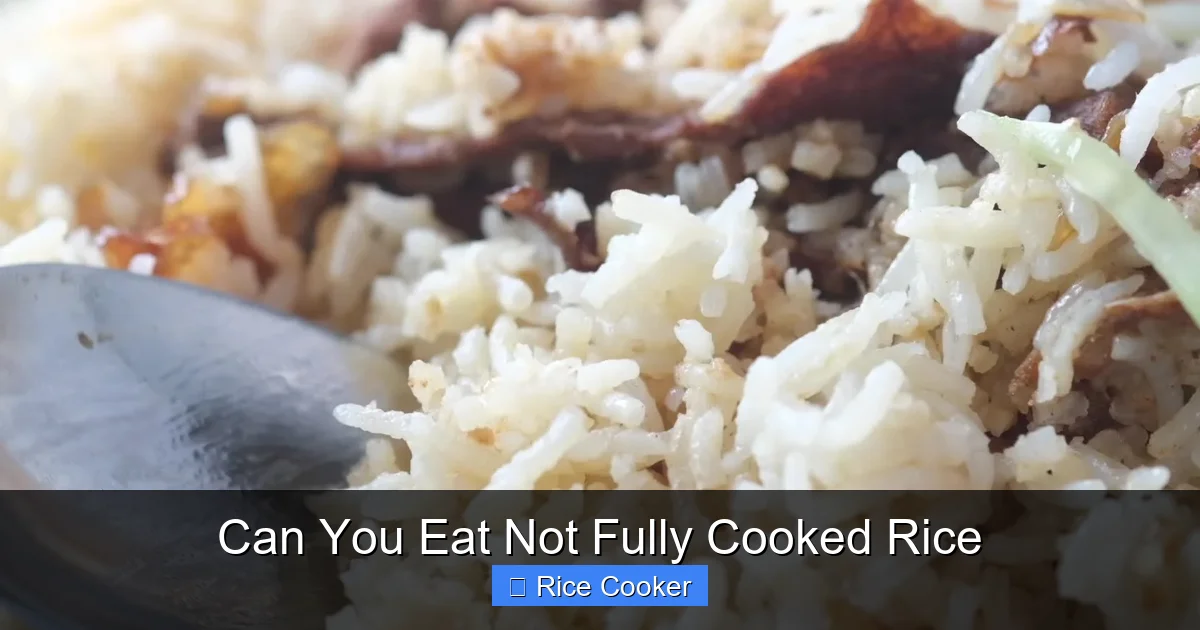
Can you eat not fully cooked rice? While it might seem harmless, consuming undercooked rice can lead to food poisoning due to bacteria like *Bacillus cereus*. The starch in uncooked rice hardens when cooled, creating ideal conditions for these bacteria to grow and produce toxins. In this article, we’ll explore the science behind undercooked rice, its health risks, and practical tips to ensure your meals are both delicious and safe.
# Can You Eat Not Fully Cooked Rice?
Have you ever bitten into a grainy, chewy mouthful of rice only to realize it’s still hard in the middle? Maybe you grabbed leftover takeout without checking if the rice was fully done, or perhaps you were in a hurry and skipped the final simmer. If so, you’ve probably wondered: **can you eat not fully cooked rice**?
At first glance, it might seem like no big deal—after all, rice is just rice. But here’s the truth: eating undercooked rice isn’t just about texture; it could mean swallowing tiny spores that turn into dangerous bacteria once they hit your stomach. In this deep dive, we’ll unpack everything you need to know about undercooked rice—from why it happens to how to fix it safely. Whether you’re using a trusty rice cooker or boiling water on the stove, understanding the ins and outs will keep your meals tasty *and* safe.
## Why Does Rice Need to Be Fully Cooked?
Rice is more than just carbohydrates—it’s a complex carbohydrate called starch wrapped up in tough outer layers. These layers must break down completely during cooking so the grains soften and become palatable. When rice is undercooked, those starches remain tightly packed, giving it a gummy or chalky bite.
But beyond texture, there’s another hidden reason why **fully cooked rice** is non-negotiable for food safety. Every grain of rice—whether brown, white, jasmine, or basmati—carries tiny dormant spores of *Bacillus cereus*. These aren’t harmful until they get cozy: specifically, in warm, moist environments where they multiply rapidly and release toxins that cause illness.
So even if your rice looks mostly done, if it hasn’t reached an internal temperature of at least 165°F (74°C), those spores might still be active. And unlike meat or poultry, rice doesn’t have natural antimicrobial properties—making it especially vulnerable to contamination during improper storage or reheating.
## Common Signs That Your Rice Is Undercooked
Spotting undercooked rice isn’t always easy—especially if you’re relying on visual cues alone. Here’s what to look (and feel) for:
– **Hard centers:** A clear sign is finding small, firm kernels in the middle of your bowl.
– **Gummy or sticky texture:** Paradoxically, some undercooked rice can clump together instead of fluffing up.
– **Graininess:** If you notice gritty bits between your teeth, chances are the starch hasn’t fully gelatinized.
– **Unpleasant chew:** Think of biting through rubber bands or chewing gum—that’s the sensation of resistant starch resisting digestion.
If you suspect your rice is undercooked, don’t panic yet. Sometimes adding a splash of hot water and returning it to the heat for 5–10 minutes can salvage the dish. But if the grains are still rock-hard after reheating, it’s best to discard them.
## The Hidden Dangers of Eating Undercooked Rice
Now let’s talk about what happens inside your body when you swallow those stubborn little grains. While occasional bites of undercooked rice won’t land you in the ER, consistently consuming it increases your risk of foodborne illness—particularly from *Bacillus cereus*.
This bacterium is unique because it forms heat-resistant spores that survive normal cooking temperatures. Once cooked rice cools below 140°F (60°C), those spores wake up, reproduce, and produce two types of toxins:
1. **Emetic toxin:** Causes violent vomiting within 30 minutes to 6 hours.
2. **Diarrhetic toxin:** Leads to diarrhea and stomach cramps 6–15 hours later.
Unlike salmonella or E. coli, *B. cereus* toxins aren’t destroyed by reheating—which means even perfectly reheated leftover rice can make you sick if it sat out too long before refrigeration.
### Real-Life Consequences
Consider Maria, a busy mom who reheated her leftover fried rice for lunch. She microwaved it for two minutes, assuming that would kill any bacteria. Within an hour, she was doubled over with severe nausea and dehydration. Tests confirmed *Bacillus cereus* infection. Her doctor explained that the emetic toxin had already formed during improper cooling the night before—and reheating didn’t reverse it.
Stories like Maria’s aren’t rare. According to the CDC, *B. cereus* causes thousands of foodborne illnesses annually in the U.S., many linked to rice-based dishes.
## How to Tell If Rice Has Gone Bad (Even If It Looks Fine)
Here’s a sobering thought: spoiled rice often looks, smells, and tastes perfectly normal. That’s why trusting your senses alone is risky. Bacteria don’t change the appearance of rice—but they *do* change its safety.
That said, here are some red flags to watch for:
– **Sour smell:** Fresh rice shouldn’t emit any odor. If it smells tangy or fermented, toss it.
– **Mold spots:** Visible fuzzy patches mean microbial takeover—don’t risk it.
– **Unusual texture:** Slimy coating or excessive stickiness indicates bacterial activity.
Remember: **visual freshness ≠ actual safety**. When in doubt, throw it out.
## Safe Handling Practices for Rice
Prevention is far easier than treatment. By following simple steps, you can enjoy rice without worry:
### 1. Measure Accurately
Too much water can leave rice soggy; too little makes it rock-hard. Use a 1:2 ratio (rice to water) for most varieties, adjusting slightly based on grain type (e.g., brown rice needs more water).
### 2. Let It Rest After Cooking
After turning off the heat, let rice sit covered for 5–10 minutes. This allows residual steam to finish hydrating the grains evenly.
### 3. Cool Quickly & Refrigerate Promptly
Never leave cooked rice sitting at room temperature for more than 1 hour. Spread it in shallow containers to speed cooling.
### 4. Reheat Thoroughly
Always reheat rice to 165°F (74°C) throughout. Stir frequently to ensure even heating.
### 5. Store Properly
Use airtight containers and label dates. Consume refrigerated rice within 3–4 days; freeze for longer storage (up to 6 months).
## Can You Fix Undercooked Rice?
Sometimes life gets busy, and dinner plans change fast. What if you realize halfway through eating that your rice is still chewy? Can you salvage it?
Yes—but only if the rice was recently cooked and hasn’t been sitting around. Here’s how:
1. Return the pot to medium heat.
2. Add 1–2 tablespoons of water per cup of rice.
3. Cover tightly and simmer for 5–10 minutes, stirring occasionally.
4. Check for tenderness. If still firm, repeat until done.
**Important note:** If the rice has been stored at room temperature for over 1 hour, do not attempt to rewarm it. Discard immediately to avoid illness.
## Special Cases: When Undercooked Rice Is Intentionally Used
You might think, “Okay, but what about sushi? Isn’t raw rice used in sushi?” Great question! In traditional Japanese cuisine, sushi rice is never raw—it’s always steamed until tender. However, the vinegared seasoning applied afterward creates an acidic environment that inhibits bacterial growth.
Similarly, risotto uses short-grain rice cooked al dente (slightly firm) for creamy texture. Again, this rice is fully hydrated—just not mushy. Both dishes prioritize proper cooking followed by safe handling.
So while certain cuisines embrace “undercooked” textures, they never compromise on basic food safety principles.
## Choosing the Right Tools: Rice Cookers vs. Stovetop Methods
If you want consistent results every time, consider investing in a quality rice cooker. Modern models use sensors to detect when water absorption is complete, automatically switching to “warm” mode without overcooking. They also maintain steady temperatures—unlike stovetops, which fluctuate and can lead to uneven hydration.
That said, experienced cooks can achieve perfect rice on the stove too. Just remember:
– Use a heavy-bottomed pot with tight-fitting lid.
– Bring water to a boil first, then add rinsed rice.
– Reduce heat immediately and cover tightly.
Whichever method you choose, patience pays off. Rushing the process invites disaster—both in texture and safety.
## Nutritional Impact of Undercooked vs. Fully Cooked Rice
Beyond food safety, how does cooking affect rice’s nutrition? Surprisingly, fully cooked rice is easier to digest and unlocks more nutrients. The gelatinization of starch during cooking improves bioavailability of minerals like iron and zinc.
Conversely, undercooked rice contains higher levels of resistant starch—a type of fiber that resists digestion in the small intestine. While beneficial in moderation, excess resistant starch can cause bloating, gas, or digestive discomfort in sensitive individuals.
For optimal nutrition and comfort, aim for consistently well-cooked grains.
## Cultural Perspectives on Rice Preparation
Globally, rice preparation varies widely—and so do attitudes toward doneness. In parts of Asia, slightly firmer rice is preferred; in Latin America, softer textures dominate. Yet across cultures, one constant remains: fully cooked rice is safer.
Take Thai cuisine, for example. Khao pad (fried rice) uses day-old rice because the slight dryness prevents sogginess. But that rice was cooked thoroughly days earlier—never raw or half-done.
Understanding cultural context helps appreciate diversity while reinforcing universal safety standards.
## What to Do If You Feel Sick After Eating Rice
If you suspect you’ve gotten ill from undercooked or improperly stored rice, here’s what to do:
1. **Stay hydrated:** Sip water, electrolyte drinks, or broth to replace lost fluids.
2. **Rest:** Give your body time to recover.
3. **Monitor symptoms:** Seek medical help if vomiting lasts more than 24 hours, you can’t keep fluids down, or you show signs of dehydration (dry mouth, dizziness).
4. **Report outbreaks:** Contact your local health department if multiple people ate from the same batch and fell ill.
Most cases resolve within 24–48 hours, but vigilance protects everyone’s health.
## Final Thoughts: Safety First, Flavor Always
To answer the original question clearly: **no, you should not eat not fully cooked rice**—not because it’s inherently toxic, but because of the real risk of bacterial contamination. Texture aside, consuming undercooked rice jeopardizes your well-being.
With today’s knowledge, you can confidently prepare, store, and serve rice knowing exactly how to avoid pitfalls. Whether you’re whipping up a quick stir-fry or hosting a dinner party, remember: good food starts with safe practices.
And hey—if your rice turns out a bit chewy next time, don’t stress. Adjust your technique, invest in a reliable rice cooker, or simply give it another minute on the heat. Because when it comes to rice, perfection isn’t just about taste. It’s about staying healthy, one grain at a time.
Key Takeaways
- Undercooked rice can cause foodborne illness: Raw or partially cooked rice may contain spores of Bacillus cereus, which thrive in moist, cool environments and produce harmful toxins.
- Rice absorbs water slowly: Unlike pasta, rice needs consistent heat and time to absorb all moisture evenly—rushing the process leads to a hard, chewy texture and potential bacterial growth.
- Cooking method matters: Using a rice cooker ensures precise timing and temperature control, reducing the risk of undercooking compared to stovetop methods.
- Proper storage is critical: Leftover rice should be refrigerated within 1 hour and reheated to 165°F (74°C) to kill any surviving bacteria.
- Symptoms include nausea and vomiting: If you experience gastrointestinal distress after eating undercooked rice, seek medical advice—especially if symptoms persist.
- Some dishes tolerate rare rice: Certain cuisines (like sushi or risotto) use short-grain rice intentionally uncooked or partially cooked for texture, but they follow strict safety protocols.
- Reheating doesn’t guarantee safety: Simply microwaving cold rice won’t eliminate toxins produced by Bacillus cereus; thorough cooking is essential.
Frequently Asked Questions
Is it okay to eat slightly undercooked rice once?
Occasionally biting into slightly undercooked rice likely won’t cause harm, as stomach acid usually kills bacteria. However, consistently consuming undercooked rice increases your risk of *Bacillus cereus* infection. To stay safe, always aim for fully cooked grains.
How long can undercooked rice sit before it becomes unsafe?
Undercooked rice that hasn’t been cooled properly can become unsafe within 2 hours at room temperature. Bacteria multiply rapidly between 40°F and 140°F (4°C–60°C). For best results, refrigerate cooked rice within 1 hour of preparation.
Can you microwave undercooked rice to finish cooking it?
Yes, you can microwave undercooked rice if it was recently cooked and hasn’t been sitting out. Add a tablespoon of water per cup, cover, and heat in 1-minute intervals until tender. Never reheat rice that’s been stored improperly.
Does rinsing rice remove harmful bacteria?
Rinsing removes surface starch and impurities but doesn’t eliminate *Bacillus cereus* spores, which are microscopic and embedded within the grain. Cooking and proper storage are far more effective at ensuring safety.
Why does my rice cooker sometimes leave some grains hard?
This can happen due to incorrect water ratios, low-quality rice, or an aging rice cooker lacking consistent heat distribution. Try measuring ingredients precisely and cleaning the inner pot regularly for better performance.
Are instant rice products safer than regular rice?
Instant rice undergoes partial pre-cooking and drying, which reduces bacterial load but doesn’t guarantee immunity from contamination during storage or reheating. Always follow package instructions and treat it like regular rice in terms of handling practices.