
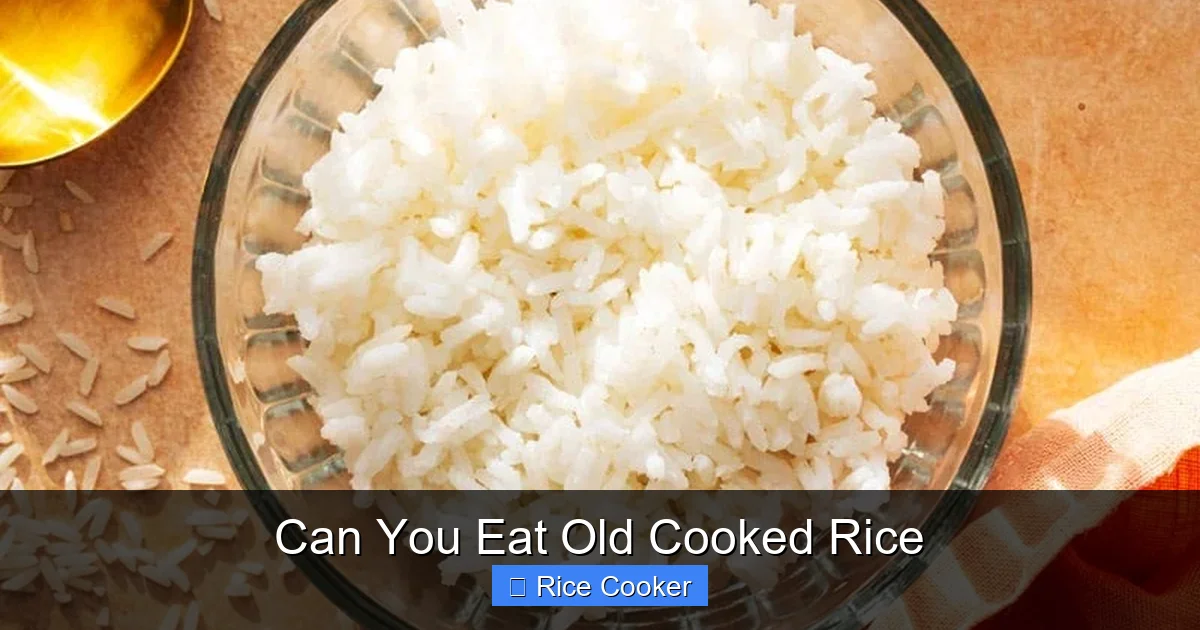
Yes, you can eat old cooked rice—but only if it’s been stored properly. When refrigerated within two hours of cooking, leftover rice is generally safe for several days. The real danger comes from bacteria like Bacillus cereus, which can grow even in cold temperatures and cause food poisoning if rice sits out too long.
Key Takeaways
- Proper storage is key: Cool cooked rice within 2 hours and refrigerate at or below 40°F (4°C) to slow bacterial growth.
- Bacillus cereus risk: This common bacterium survives cooking and can multiply in improperly cooled rice, leading to vomiting or diarrhea.
- Reheating kills most germs: Thoroughly heating rice to 165°F (74°C) destroys existing spores, making reheated rice safe to eat.
- Watch for spoilage signs: Mold, sliminess, off smells, or unusual texture are clear indicators that rice should be discarded.
- Freezing extends shelf life: Frozen rice can stay safe for up to 6 months when stored in airtight containers or freezer bags.
- Don’t rely on smell alone: Many harmful bacteria don’t produce noticeable odors, so visual and textural cues matter more.
- Use rice cookers wisely: Modern rice cookers with keep-warm functions can help prevent temperature danger zones if used correctly.
📑 Table of Contents
- Can You Eat Old Cooked Rice? The Truth About Leftovers and Food Safety
- Why Cooked Rice Can Be Dangerous
- How Long Is Cooked Rice Safe to Eat?
- Signs That Old Cooked Rice Has Gone Bad
- Best Practices for Storing Cooked Rice
- How Rice Cookers Improve Food Safety
- Instant Rice vs. Long-Grain Rice: Which Is Safer?
- Common Myths About Eating Old Cooked Rice
- Conclusion: Enjoy Your Leftovers Safely
Can You Eat Old Cooked Rice? The Truth About Leftovers and Food Safety
You’ve just finished a delicious stir-fry or fried rice dinner, and there’s still some leftovers in the container. Instead of tossing it, you pop it in the fridge for tomorrow’s lunch. But now comes the big question: can you eat old cooked rice? It’s one of the most common kitchen dilemmas—especially among busy families, meal prep enthusiasts, and college students living off instant meals.
The short answer is yes… but with important caveats. While cooked rice isn’t inherently dangerous like raw meat or dairy, it carries a unique risk due to a specific type of bacteria called Bacillus cereus. This microbe produces heat-resistant spores that survive normal cooking and can grow rapidly if rice is left at room temperature or not cooled quickly enough. So whether you’re using an electric rice cooker, a pot on the stove, or even instant rice packets, understanding how to handle cooked rice makes all the difference between a satisfying second helping and a stomachache.
In this complete guide, we’ll walk through everything you need to know about eating old cooked rice—from proper storage techniques to recognizing spoilage signs, and even how modern rice cookers can help keep your leftovers safer. By the end, you’ll feel confident every time you reach for that container of yesterday’s rice.
—
Why Cooked Rice Can Be Dangerous
Visual guide about Can You Eat Old Cooked Rice
Image source: wildbirdscoop.com
Unlike other starchy foods, cooked rice has a hidden vulnerability. During cooking, the high heat typically destroys harmful bacteria—including those responsible for foodborne illnesses. However, here’s where things get tricky: cooked rice contains spores of Bacillus cereus, a bacterium commonly found in soil and grains. These spores aren’t killed by standard cooking temperatures; instead, they lie dormant until conditions become favorable.
When rice is left to cool slowly at room temperature—say, sitting uncovered on the counter after dinner—the environment becomes perfect for spore germination. Within hours, these spores transform into active bacteria that multiply quickly, especially in the “danger zone” between 40°F and 140°F (4°C to 60°C). Even refrigeration slows but doesn’t stop this process entirely, meaning that rice stored improperly for too long can still pose serious health risks.
What makes Bacillus cereus particularly sneaky is its dual toxin production:
– **Emetic toxin** causes nausea and vomiting within 1–6 hours (think “vomiting sickness”).
– **Enterotoxin** leads to diarrhea and cramps 6–15 hours later (known as “diarrheal syndrome”).
Both symptoms resemble food poisoning from other sources, making it easy to blame the wrong culprit. And because these toxins aren’t destroyed by reheating, simply microwaving leftover rice won’t eliminate the risk unless the rice was cooled and refrigerated properly in the first place.
So while eating old cooked rice might seem harmless, skipping safety steps increases your chances of getting sick. Let’s explore how to avoid that outcome.
—
How Long Is Cooked Rice Safe to Eat?
Visual guide about Can You Eat Old Cooked Rice
Image source: i.ytimg.com
Knowing how long cooked rice stays good is essential for both taste and safety. The U.S. Department of Agriculture (USDA) recommends consuming refrigerated cooked rice within 3 to 4 days. This timeframe accounts for gradual bacterial growth even under refrigeration. Beyond four days, the likelihood of contamination rises significantly, even if the rice looks and smells fine.
But what about freezing? When stored correctly in airtight containers or freezer-safe bags, cooked rice can remain safe for up to 6 months. Just remember to label containers with the date and thaw thoroughly before reheating. Frozen rice may lose some texture—it often becomes softer or slightly mushy—but it remains edible and nutritious.
Now, let’s break down the timeline:
| Storage Method | Maximum Safe Duration |
|—————-|———————–|
| Refrigerated | 3–4 days |
| Frozen | Up to 6 months |
| Room Temperature | Not recommended (danger zone) |
This table gives you a quick reference, but always trust your senses alongside the clock. Visual inspection, smell, and touch provide critical clues that expiration dates alone can’t offer.
—
Signs That Old Cooked Rice Has Gone Bad
Even if your rice passed the 3–4 day mark, it might still be safe to eat—but only if you catch spoilage early. Unfortunately, many people rely solely on smell to judge freshness, which is risky. Many harmful bacteria, including Bacillus cereus, don’t produce foul odors, so relying on scent alone can lead to mistakes.
Instead, look for these telltale signs of spoiled rice:
– **Mold growth**: White, green, black, or fuzzy spots indicate fungal contamination. Discard immediately.
– **Slimy texture**: If the rice feels sticky or tacky instead of dry and grainy, bacteria have likely multiplied.
– **Off smell**: While some cooked rice develops a faint sour note over time, anything strong, rotten, or fishy means trouble.
– **Unusual color**: Darkening, browning, or grayish hues suggest oxidation or bacterial activity.
– **Cloudy liquid**: If excess water separates and looks cloudy, it may harbor harmful microbes.
If you notice any of these, don’t take a chance—throw the rice away. Better safe than sorry when it comes to food safety.
—
Best Practices for Storing Cooked Rice
Proper handling before refrigeration makes all the difference. Follow these steps to maximize safety and preserve quality:
Cool Quickly
Never let cooked rice sit uncovered on the counter for more than two hours—ideally, cool it within 90 minutes. Use shallow containers to speed up cooling. A large bowl of hot rice takes too long to drop below 140°F, keeping it in the danger zone where bacteria thrive.
Refrigerate Promptly
Once cooled, store rice in clean, airtight containers. Glass or BPA-free plastic works well. Label each container with the date so you track how long it’s been stored. Avoid overcrowding your fridge; proper airflow helps maintain consistent cold temperatures.
Freeze for Long-Term Storage
For meals planned weeks ahead, freeze portions in quart-sized freezer bags or rigid containers. Press out excess air before sealing to prevent freezer burn. Stack flat to save space and allow even thawing.
Reheating Safely
Always reheat rice thoroughly until steaming hot throughout. Microwave in 30-second intervals, stirring between cycles, or boil in water for 2–3 minutes. Never reheat rice more than once—each cycle increases bacterial load.
By following these practices, you reduce the risk of illness and enjoy flavorful, safe leftovers every time.
—
How Rice Cookers Improve Food Safety
Modern electric rice cookers offer more than convenience—they play a crucial role in preventing foodborne illness. Unlike stovetop methods that require constant monitoring, rice cookers automate the entire process: measuring water, heating to boiling, then switching to simmer mode automatically. This precision minimizes the chance of undercooking, which can leave pockets of raw starch vulnerable to bacterial growth.
Many advanced models include features specifically designed for safety and efficiency:
– **Keep-warm function**: Maintains rice at a steady 140–160°F (60–71°C) without cycling on/off, reducing time spent in the danger zone.
– **Insulated inner pots**: Help retain heat evenly and cool faster after cooking.
– **Timer settings**: Allow users to delay start times, ensuring rice is ready exactly when needed—no more last-minute scrambles.
While the keep-warm feature isn’t meant for extended holding (typically 1–2 hours max), it’s far safer than leaving rice on a hot plate or burner for hours. Always transfer rice to the fridge within two hours, even if the cooker says “warm.”
Additionally, cleaning your rice cooker regularly prevents cross-contamination. Wash the inner pot, lid, and measuring cup after each use, especially if you’ve handled raw meat nearby.
Using a quality rice cooker simplifies safe rice preparation and reduces human error—a major factor in food safety.
—
Instant Rice vs. Long-Grain Rice: Which Is Safer?
You might assume all types of rice behave similarly when cooked, but differences exist—especially between instant rice and traditional long-grain varieties. Instant rice undergoes a different processing method: it’s precooked, dried, and packaged. This means it cooks faster but also has a higher surface-area-to-volume ratio, potentially increasing exposure to airborne contaminants during manufacturing.
However, commercially prepared instant rice is generally safe due to strict food safety regulations. Most brands undergo additional sterilization processes, and packaging is sealed to prevent recontamination. Still, once opened, instant rice follows the same storage rules as regular cooked rice: refrigerate within two hours and consume within 3–4 days.
Long-grain rice, whether jasmine, basmati, or American short grain, offers similar safety profiles when handled correctly. The key is consistent adherence to cooling and storage guidelines—not the rice type itself.
That said, brown rice presents unique considerations. Because bran layers contain natural oils, brown rice goes rancid faster than white rice. Store it in the fridge or freezer, and always check for a bitter, off-flavor before eating.
In summary, neither instant nor long-grain rice is inherently riskier—but improper handling affects them equally. Choose whichever fits your lifestyle, then follow best practices for safety.
—
Common Myths About Eating Old Cooked Rice
Misinformation spreads fast in online forums and social media. Let’s debunk some popular myths:
Myth #1: “Rice always makes you sick if eaten the next day.”
False. Many people eat leftover rice daily without issue—if stored properly. The danger arises from improper cooling or prolonged room-temperature exposure, not age alone.
Myth #2: “Boiling rice kills all bacteria.”
Partially true—boiling destroys active bacteria—but Bacillus cereus spores survive boiling and can regrow if rice cools slowly. Reheating kills existing bacteria, but only if done thoroughly.
Myth #3: “You can taste when rice is unsafe.”
Dangerous assumption. As mentioned earlier, many harmful bacteria don’t alter taste or odor. Trust appearance and texture more than smell.
Myth #4: “Freezing ruins rice completely.”
Overstated. While frozen rice may soften, it remains safe and nutritious. Texture changes are normal and acceptable.
By understanding these truths, you’ll make informed decisions and avoid unnecessary panic.
—
Conclusion: Enjoy Your Leftovers Safely
So, back to the original question: can you eat old cooked rice? Absolutely—when handled correctly. With proper cooling, prompt refrigeration, and careful reheating, your leftovers can remain delicious and safe for days. Modern rice cookers simplify this process, offering reliable automation that reduces human error.
Remember, food safety isn’t about perfection—it’s about consistency. Keep those containers shallow, cool rice fast, and trust your eyes and hands over your nose. Freeze extras for future meals, and always label containers with dates.
Whether you’re packing lunches for work, feeding a hungry family, or just saving yourself from takeout guilt, knowing how to handle cooked rice empowers you to eat smarter and healthier. Next time you scoop out a portion of yesterday’s fried rice, do it with confidence—you’ve got the knowledge to do it right.
Frequently Asked Questions
Is it safe to eat rice that’s been sitting out overnight?
No, rice left at room temperature for more than two hours enters the “danger zone” where Bacillus cereus bacteria multiply rapidly. Always refrigerate cooked rice within two hours of cooking to prevent food poisoning.
Can reheating old rice kill all bacteria?
Thorough reheating to steaming hot (165°F/74°C) kills most bacteria, but it won’t destroy toxins produced by Bacillus cereus. That’s why proper cooling and storage before refrigeration are essential.
How can I tell if my rice has gone bad?
Look for mold, slimy texture, unusual colors, or strong off-odors. Many harmful bacteria don’t produce smells, so visual and tactile cues are more reliable than relying on scent alone.
Does the type of rice affect safety?
All types—instant, jasmine, basmati, brown—follow the same safety rules. Brown rice may go rancid faster due to natural oils, so store it in the fridge or freezer for longer freshness.
Can I eat rice that’s been in the fridge for a week?
Generally no. The USDA recommends using refrigerated cooked rice within 3–4 days. After a week, bacterial growth increases significantly, raising the risk of foodborne illness.
Are rice cookers better for food safety?
Yes! Automatic rice cookers reduce human error by precisely controlling cooking temps and timing. Their keep-warm functions help maintain safe temperatures briefly, though rice should still be refrigerated within two hours.