
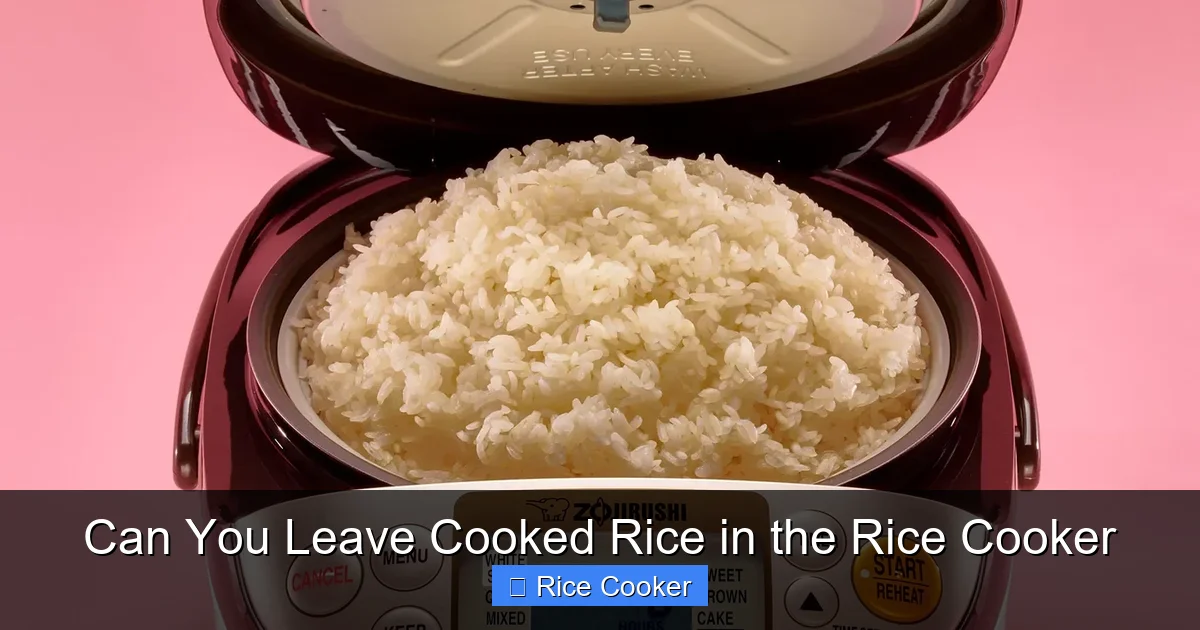
Leaving cooked rice in the rice cooker overnight is not recommended due to bacterial growth risks like Bacillus cereus. While modern rice cookers have keep-warm functions, they don’t eliminate bacteria—just slow their spread. For safety, cool rice quickly, store it properly in the fridge within two hours, and reheat thoroughly before eating.
Key Takeaways
- Safety First: Cooked rice left in a rice cooker at room temperature for more than 2 hours can develop harmful bacteria.
- Keep-Warm Isn’t Enough: The warm setting on most rice cookers maintains heat but doesn’t sterilize or kill bacteria that may already be present.
- Cool Quickly: To reduce bacterial growth, refrigerate cooked rice within 2 hours of cooking—ideally within 1 hour for best safety.
- Reheat Thoroughly: Always reheat rice until steaming hot throughout (at least 165°F/74°C) to destroy any potential toxins.
- Storage Matters: Store leftover rice in shallow containers to speed cooling and prevent spoilage.
- Use Fresh Rice: If possible, make only as much rice as you need for one meal to avoid leftovers altogether.
- Check for Signs of Spoilage: Discard rice if it smells off, has a slimy texture, or shows mold—don’t risk foodborne illness.
[FEATURED_IMAGE_PLACEHOLDER]
Introduction: The Convenience vs. Safety Dilemma
Have you ever cooked a big batch of rice, only to find yourself staring at an open rice cooker late at night, wondering, “Can I just leave this here overnight?” It’s tempting—especially when you’re tired, busy, or simply don’t want to deal with extra cleanup. After all, the rice cooker keeps things warm, right? But convenience shouldn’t come at the cost of food safety. Understanding what happens when you leave cooked rice in the rice cooker is crucial to protecting your health.
Rice, especially white rice, is a common source of food poisoning when mishandled. This is because it contains spores from a bacterium called Bacillus cereus, which can survive normal cooking temperatures. When cooked rice sits at room temperature—even in a warm rice cooker—these spores can multiply and produce toxins that cause vomiting or diarrhea. So while your rice cooker might seem like a cozy little storage unit, it’s actually playing host to microscopic dangers if used improperly.
In this article, we’ll break down everything you need to know about leaving cooked rice in your rice cooker—from food science to practical kitchen hacks. Whether you’re meal prepping for the week or just trying to save time after dinner, you’ll learn how to balance convenience with safety so your next bowl of rice is both delicious and safe to eat.
The Science Behind Cooked Rice and Bacterial Growth
Why Is Cooked Rice a Bacteria Magnet?
Raw rice contains tiny spores of Bacillus cereus—a hardy bacterium that thrives in starch-rich environments. These spores are odorless, tasteless, and invisible, so they pose no risk during cooking. However, once rice is cooked, the moisture and warmth create ideal conditions for the spores to germinate into active bacteria. Unlike many other foodborne pathogens, B. cereus can continue growing even in cooler environments, making improper storage a major concern.
When rice cools slowly—especially in a closed container like a rice cooker—it enters the “danger zone” between 40°F (4°C) and 140°F (60°C), where bacteria multiply rapidly. Even if your rice cooker’s keep-warm function maintains a temperature around 190–210°F (88–99°C), this isn’t enough to stop bacterial growth entirely. In fact, studies show that B. cereus can still reproduce at temperatures up to 115°F (46°C), meaning prolonged exposure to warm settings increases risk over time.
This is why experts recommend never letting cooked rice sit at room temperature for more than two hours. The longer it stays in the danger zone, the higher the chance of toxin buildup—even if the rice looks and smells fine.
How Long Can You Safely Keep Rice Warm?
Most modern rice cookers feature a “keep-warm” mode that holds rice at a consistent temperature after cooking. This setting typically runs between 140–170°F (60–77°C), depending on the model. While this keeps rice warm and prevents it from drying out, it does not kill bacteria—only slows their growth.
According to the U.S. Department of Agriculture (USDA), cooked rice should not remain in the keep-warm setting for more than 10–12 hours. Beyond that, bacterial counts can rise significantly. For example, if you cook rice at noon and leave it in the cooker overnight (about 10+ hours), you’re entering the danger zone. Even shorter durations (4–6 hours) may be risky if the ambient kitchen temperature is high.
Here’s a quick reference guide based on time and temperature:
- Up to 2 hours: Safe at room temperature (but not ideal)
- 2–4 hours: Risk increases; better to refrigerate
- 4–10 hours: High risk of bacterial growth
- Over 10 hours: Unsafe—discard immediately
Remember: “Safe” doesn’t mean “tasty.” Rice left too long in a warm environment can also become dry, clumpy, or develop off-flavors.
Risks of Leaving Cooked Rice in the Rice Cooker Overnight
Bacterial Toxin Production
The primary danger of leaving cooked rice in a rice cooker overnight is the production of enterotoxins by Bacillus cereus. These toxins cause two types of food poisoning: emetic (vomiting) and diarrheal. Emetic toxins are particularly concerning because they’re heat-stable—meaning reheating won’t destroy them. So even if you boil leftover rice, it could still make you sick.
Unlike some bacteria that die when food is reheated, B. cereus* toxins survive cooking. That’s why the key isn’t just reheating rice—it’s preventing contamination in the first place through proper cooling and storage.
Dryness and Texture Changes
Even if your rice hasn’t spoiled, leaving it in a closed rice cooker for hours can lead to texture issues. The built-in heating element may continue to evaporate moisture, causing the rice to become dry, hard, or crumbly. This affects both taste and digestibility.
Additionally, condensation inside the lid can mix back into the rice, creating a slightly soggy or mushy consistency—not exactly what you want for fluffy jasmine rice or perfect sushi!
Cross-Contamination Risks
If you’ve used the rice cooker to cook different types of grains or legumes (like quinoa or lentils), leaving rice behind could allow cross-contamination. Similarly, if raw meat juices dripped into the cooker earlier (which is rare but possible), bacteria could linger even after washing.
Always ensure your rice cooker is cleaned thoroughly between uses. Residue from previous meals can harbor bacteria that transfer to fresh batches.
Best Practices for Storing Leftover Cooked Rice
Cool It Fast: The 2-Hour Rule
The golden rule for safe rice storage is the 2-hour window. According to the FDA and USDA, perishable foods—including cooked rice—should not be left at room temperature for more than two hours. If your kitchen is above 90°F (32°C), that drops to just one hour.
To cool rice quickly:
- Pour it into shallow stainless steel or glass containers (stainless steel conducts heat better than plastic).
- Stir occasionally to release trapped steam and distribute cold air.
- Place the container in an ice bath (a large bowl filled with ice water) for faster chilling.
Aim to get the internal temperature below 40°F (4°C) within 90 minutes.
Refrigerate Promptly
Once cooled, transfer the rice to airtight containers and refrigerate immediately. Use containers no deeper than 2 inches to ensure even cooling. Label them with the date—leftover rice is best eaten within 3–4 days.
Freezing is also an option. Portion rice into freezer-safe bags or containers, squeeze out excess air, and freeze for up to 6 months. Thaw overnight in the fridge before reheating.
Proper Reheating Techniques
When you’re ready to enjoy your leftovers, reheat thoroughly:
- Microwave: Add a splash of water, cover loosely, and heat in 30-second intervals until steaming hot throughout.
- Stovetop: Place rice in a saucepan with a bit of broth or oil. Heat over medium, stirring frequently until hot.
- Avoid: Reheating in the microwave without covering—this causes uneven heating and leaves cold spots where bacteria thrive.
Never reheat rice more than once. Each time you cool and reheat it, you increase the risk of contamination.
Are Some Rice Cookers Safer Than Others?
Smart Features and Safety Settings
Newer rice cookers often include advanced features like rapid-cooling modes, humidity controls, or auto-shutoff timers. Some high-end models even have sensors that detect when rice has been kept too long and alert users via app notifications. While these aren’t foolproof, they add layers of protection.
However, most standard rice cookers lack these technologies. They rely solely on basic heating elements and insulation. So regardless of brand or price, human behavior plays a bigger role in safety than machine capabilities.
Cleanliness Is Key
Even the safest rice cooker becomes dangerous if it’s not cleaned regularly. Crumbs, spills, and mineral deposits from hard water can harbor bacteria. After each use, wipe the inner pot, lid, and exterior with warm, soapy water. Avoid submerging electrical components.
For deep cleaning, follow the manufacturer’s instructions. Some pots are dishwasher-safe, others require hand-washing. Never use abrasive scrubbers that scratch surfaces—scratches trap food particles and bacteria.
Common Myths About Rice Storage Debunked
Myth: “If It Smells Fine, It’s Safe”
False. Bacillus cereus toxins don’t affect smell, taste, or appearance. You can eat contaminated rice and still feel ill later. Always err on the side of caution.
Myth: “The Keep-Warm Setting Kills Bacteria”
No. The keep-warm function maintains warmth but doesn’t reach temperatures high enough to sterilize. It only slows bacterial growth—not stop it.
Myth: “Rice Becomes Safer the Next Day”
Not true. While some people believe older rice tastes better, it actually increases health risks. Freshly cooked rice is safer than aged leftovers.
Myth: “Cooked Rice Can Sit All Night Without Issues”
Only if refrigerated promptly. Leaving it in a warm environment—even in a sealed cooker—is unsafe after two hours.
What to Do If You Accidentally Left Rice Too Long
Signs Your Rice Has Gone Bad
Before discarding rice, check for obvious signs:
- Off smell (like ammonia or rotten eggs)
- Unusual color (grayish or green patches)
- Slime or unusual texture
- Mold (fuzzy spots)
If you see any of these, throw it out immediately—do not taste-test.
When to Throw It Out
If rice was left in the rice cooker for:
- More than 2 hours at room temperature: Discard
- More than 10–12 hours in keep-warm mode: Discard
- Any time it shows signs of spoilage: Discard
Better safe than sorry. Food poisoning symptoms (nausea, vomiting, stomach cramps) usually appear within 6–15 hours after eating contaminated rice.
Preventing Future Mistakes
To avoid this situation:
- Set a timer when cooking rice so you remember to remove it.
- Use smaller portions for easier portion control.
- Keep a note near your stove reminding you of the 2-hour rule.
- Invest in a digital thermometer to check internal temps.
Small habits make a big difference in food safety.
Conclusion: Balance Convenience With Caution
So, can you leave cooked rice in the rice cooker? Technically, yes—for a short time. But for your health and the quality of your meal, it’s strongly discouraged. The risks of bacterial growth, toxin production, and poor texture far outweigh the convenience of keeping rice warm overnight.
The bottom line? Cool fast, store smart, and reheat safely. Treat your rice cooker like any other kitchen appliance—not a storage locker. By following simple steps like using shallow containers, refrigerating within two hours, and reheating thoroughly, you can enjoy delicious, safe rice every time.
Next time you cook rice, think beyond the next meal. Consider how much you’ll realistically eat. Meal prep wisely, store properly, and trust your instincts. Your stomach will thank you.
FAQs
Can you leave cooked rice in the rice cooker overnight?
No, it’s not safe. Cooked rice should not be left in a rice cooker overnight because bacteria like Bacillus cereus can grow rapidly in the “danger zone” (40–140°F). Even with the keep-warm function, the temperature isn’t high enough to kill bacteria—only slow their growth. For safety, always refrigerate cooked rice within two hours.
How long can cooked rice stay in a rice cooker?
Cooked rice should not remain in a rice cooker for more than 2–4 hours at room temperature, and ideally less than 10–12 hours in the keep-warm setting. After 2 hours outside the refrigerator, the risk of bacterial contamination increases significantly. For best results, remove rice from the cooker and store it properly.
Is it safe to eat rice that’s been sitting in a rice cooker for 6 hours?
Generally, no. If the rice was left at room temperature or in the keep-warm mode for 6 hours, it may contain harmful bacteria. The longer rice sits in the danger zone (40–140°F), the higher the risk. When in doubt, discard it—better safe than sorry.
Can reheating rice kill bacteria?
Reheating can kill live bacteria, but it won’t destroy toxins produced by Bacillus cereus, which are heat-stable. That’s why proper storage and cooling are more important than reheating. Always ensure rice reaches an internal temperature of at least 165°F (74°C) when reheating, and never reheat rice more than once.
What’s the best way to store leftover rice?
The best method is to cool rice quickly using shallow containers and an ice bath, then refrigerate within 2 hours. Store in airtight containers or bags, label with the date, and consume within 3–4 days. Freezing extends shelf life up to 6 months. Avoid leaving rice in the rice cooker or countertop for extended periods.
Does type of rice matter when storing leftovers?
All types of cooked rice—white, brown, jasmine, basmati, etc.—carry the same bacterial risks. Brown rice has more fiber and nutrients, which can support faster spoilage if stored improperly, but both white and brown rice should follow the same safety rules: cool fast, refrigerate promptly, and reheat thoroughly.
This is a comprehensive guide about can you leave cooked rice in the rice cooker.
Key Takeaways
- Understanding can you leave cooked rice in the rice cooker: Provides essential knowledge
Frequently Asked Questions
What is can you leave cooked rice in the rice cooker?
can you leave cooked rice in the rice cooker is an important topic with many practical applications.