
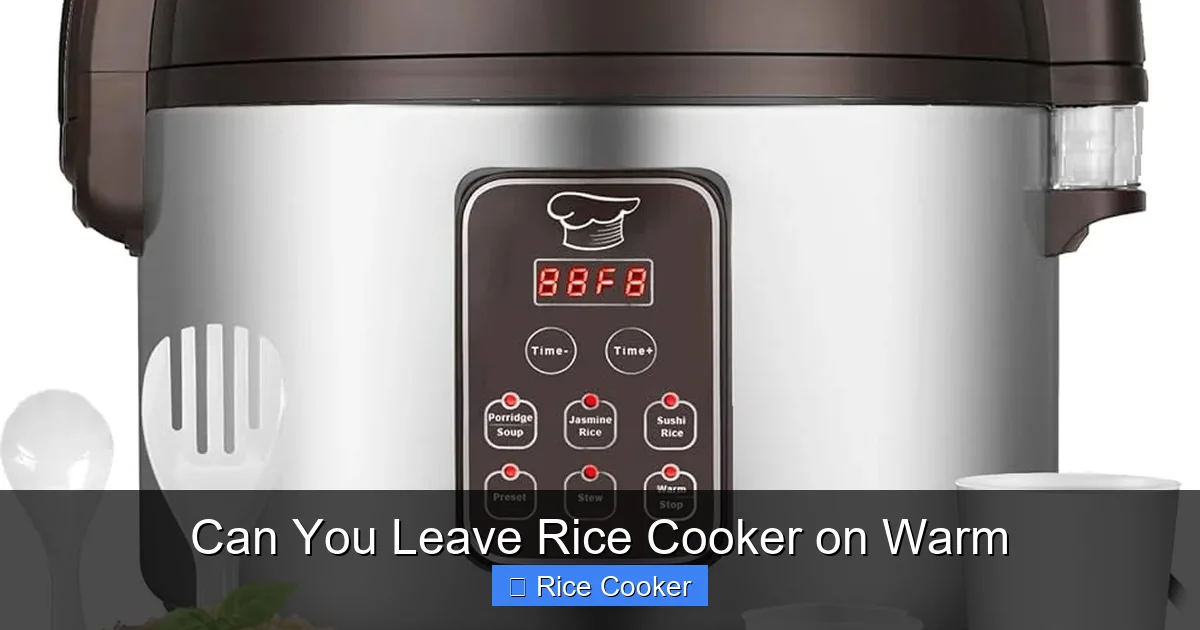
Leaving your rice cooker on the “warm” setting is generally safe—but only when used correctly. Most modern rice cookers are built with safety features that prevent overheating, but prolonged use isn’t always ideal. For best results and longevity, follow manufacturer guidelines and avoid leaving rice on warm for more than a few hours.
Key Takeaways
- Most rice cookers have a built-in warm function: This feature maintains cooked food at a safe temperature (around 140–170°F) after cooking is complete.
- Leaving rice on warm is usually safe for short periods: The warm setting is designed for holding food, not long-term storage.
- Extended use increases food safety risks: Rice can harbor bacteria like Bacillus cereus, which grows even at warm temperatures.
- Check your manual for specifics: Not all models handle the warm function the same way—some may turn off automatically.
- Use the warm setting responsibly: Avoid using it to reheat rice; instead, store leftovers promptly in the fridge.
- Clean your rice cooker regularly: Residue buildup can affect performance and safety during warm cycles.
- Consider alternatives for longer holds: Use insulated containers or slow cookers for meals held beyond 2 hours.
📑 Table of Contents
- Can You Leave Rice Cooker on Warm? Here’s What You Need to Know
- How the Warm Setting Works in Rice Cookers
- Safety First: Risks of Leaving Rice Cooker on Warm Too Long
- When Is It Safe to Leave Your Rice Cooker on Warm?
- Tips for Using the Warm Setting Responsibly
- Common Myths About Rice Cookers and the Warm Setting
- How to Store Rice Properly After Cooking
- Choosing the Right Rice Cooker for Your Needs
- Final Thoughts: Should You Leave Your Rice Cooker on Warm?
Can You Leave Rice Cooker on Warm? Here’s What You Need to Know
If you’ve ever cooked a big batch of rice and wondered whether you can just leave the rice cooker on the “warm” setting overnight, you’re not alone. It’s a common question—especially for busy families, meal preppers, or anyone who likes to cook ahead. But before you plug in and walk away, let’s break down what actually happens when you leave your rice cooker on warm, whether it’s safe, and how to do it the right way.
Modern rice cookers come with a handy “warm” function, typically located near the bottom of the control panel. When activated, this setting kicks in after the cooking cycle finishes. Its job? To keep your rice from cooling down too quickly. Think of it like a gentle hug for your meal—holding it at just the right temperature so it doesn’t get soggy or cold. But here’s the catch: while the warm setting is convenient, it wasn’t made for marathon sessions. Understanding its limits helps you use it safely and avoid potential food safety issues or appliance damage.
In this article, we’ll explore everything you need to know about leaving your rice cooker on warm—from how the technology works to practical tips for doing it safely. Whether you’re prepping for a potluck, saving time on dinner, or just curious about your kitchen gadget, we’ve got you covered. Let’s dive in!
How the Warm Setting Works in Rice Cookers
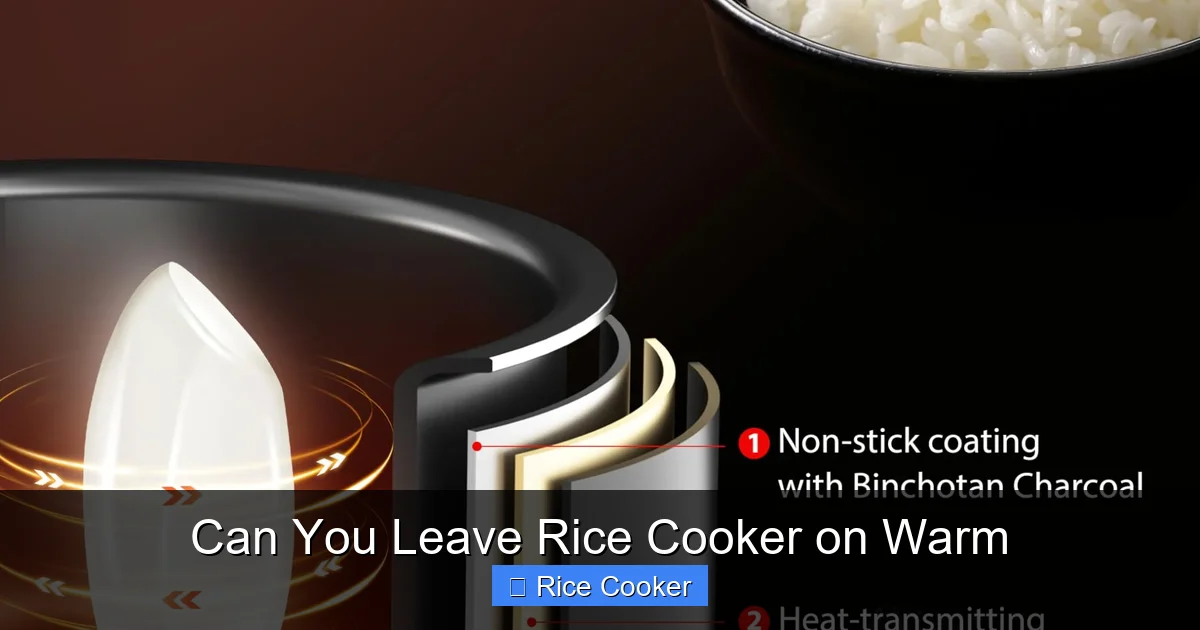
Before deciding to leave your rice cooker on warm, it’s important to understand what that setting actually does. Most rice cookers use a combination of heat sensors and timers to manage the cooking process. Once the internal temperature reaches a certain point—usually around 212°F (100°C)—the water turns to steam, and the rice absorbs moisture and cooks through. At that point, the cooker shifts from heating mode to warm mode.
Visual guide about Can You Leave Rice Cooker on Warm
Image source: m.media-amazon.com
The Science Behind the Warm Function
The warm setting operates at a much lower temperature than the cooking phase—typically between 140°F and 170°F (60°C to 77°C). This range is hot enough to keep food from spoiling quickly but not hot enough to continue cooking grains or starchy foods. In fact, staying in this zone for too long can actually encourage bacterial growth, especially in foods like rice, which are prone to containing spores of Bacillus cereus.
Some advanced models even include a feature called “auto shut-off” after a set period—often 12 to 24 hours—which cuts power to the warm function to prevent overuse. Others may cycle the heating element on and off intermittently to maintain temperature without constant energy draw. Always check your user manual to see how your specific model handles the warm setting.
Why Manufacturers Include the Warm Feature
Rice cookers are designed for convenience. The warm function lets you delay serving without sacrificing quality. Imagine cooking a large pot of jasmine rice for a family gathering, only to realize everyone is running late. Instead of reheating, you can pop the lid and let the rice stay warm until guests arrive. That’s the beauty of this feature—it saves time and reduces waste.
However, it’s not meant to replace proper food storage. If you’re planning to eat the rice later in the day, it’s better to cool it quickly and refrigerate it. The warm setting is best used for immediate service or short-term holding (under 2 hours).
Safety First: Risks of Leaving Rice Cooker on Warm Too Long
While the warm setting is useful, it comes with responsibilities. One of the biggest concerns is food safety. Rice—and other starchy foods—can contain heat-resistant bacteria spores. These don’t die when cooked but can multiply rapidly in the danger zone (between 40°F and 140°F). Once rice is cooled below 140°F, those spores start growing again.
Visual guide about Can You Leave Rice Cooker on Warm
Image source: cleverkitchengear.com
The Danger Zone Explained
The USDA defines the “danger zone” as temperatures between 40°F and 140°F, where bacteria multiply most quickly. Even though the warm setting keeps rice above 140°F, it doesn’t eliminate the risk entirely. Prolonged exposure—say, 4 hours or more—can allow bacteria to reach unsafe levels. Symptoms of food poisoning from contaminated rice include nausea, vomiting, and diarrhea.
What Happens When You Overuse the Warm Setting?
If you leave your rice cooker on warm for extended periods—like overnight or for 6+ hours—you increase the chances of:
- Bacterial growth: Especially in moist environments like cooked rice.
- Food quality decline: Rice may become mushy or develop off-flavors.
- Energy waste: Keeping the unit powered unnecessarily uses electricity.
- Potential fire hazard: Though rare, faulty elements or residue buildup can pose risks.
That said, occasional short-term use (under 2 hours) is perfectly fine. Just don’t make it a habit unless absolutely necessary.
When Is It Safe to Leave Your Rice Cooker on Warm?
So, when can you leave your rice cooker on warm without worry? The short answer: for short durations, yes—but with caveats. Here’s how to determine if it’s safe in your situation.
Safe Usage Guidelines
1. Duration Matters: The general rule is to use the warm setting for no more than 2 hours. After that, move the rice to a cooler environment. If you’re serving immediately, there’s no issue—just turn it off once everyone’s done eating.
2. Freshly Cooked Rice Only: Never put cold or leftover rice back into the cooker and switch to warm. The cold center will sit in the danger zone while the outer layers reheat unevenly.
3. Check the Manual: Some brands, like Zojirushi or Cuisinart, have different warm cycle behaviors. For example, Zojirushi models often auto-shut off after 12 hours, while others may require manual monitoring.
Practical Examples
- Scenario 1: You cooked rice at noon for a dinner party at 6 PM. You could leave the cooker on warm—but it’s safer to store it in an airtight container in the fridge by 2 PM.
- Scenario 2: You’re making a quick lunch and want to serve it in 30 minutes. Turn on warm after cooking—perfectly safe.
- Scenario 3: You forgot to turn off the warm setting overnight. Discard the rice immediately—don’t taste test.
Remember: convenience shouldn’t compromise safety. When in doubt, err on the side of caution.
Tips for Using the Warm Setting Responsibly
Want to use your rice cooker’s warm function without guilt? Follow these simple tips to stay safe and preserve food quality.
1. Monitor the Time
Set a timer if needed. A kitchen timer or phone alarm can remind you to turn off the warm setting after 1–2 hours. Many people overlook this step, thinking the machine will handle it—but not all models do.
2. Keep the Lid On
Leaving the lid closed helps retain heat and moisture, preventing rice from drying out. However, don’t seal it too tightly—steam needs to escape slightly to avoid pressure buildup.
3. Avoid Opening Frequently
Every time you open the lid, cold air enters, dropping the internal temperature. Try to minimize interruptions, especially during long holding periods.
4. Clean Regularly
Dirt, rice starch, or mineral deposits can build up inside the cooker. Over time, this affects heating efficiency and can create hot spots. Wipe the interior and heating plate weekly with a damp cloth and mild detergent.
5. Use Quality Rice
Not all rice types behave the same under warm settings. Short-grain rice (like sushi or arborio) tends to hold texture better than long-grain varieties. Brown rice, due to its higher oil content, may go rancid faster if left too long.
6. Consider Alternatives
If you need to hold food for longer than 2 hours, transfer it to a slow cooker on low, a thermal carafe, or an insulated container. These options are safer and more energy-efficient for extended holding.
Common Myths About Rice Cookers and the Warm Setting
There’s a lot of misinformation out there about rice cookers. Let’s clear up some myths.
Myth 1: “The Warm Setting Reheats Rice”
False. The warm setting doesn’t reheat food—it just maintains existing temperature. Reheating requires bringing food back up to 165°F throughout. If you need to reheat rice, do it on the stove or microwave, not the warm setting.
Myth 2: “You Can Safely Leave Rice on Warm All Day”
False. While some models auto-shut off, others don’t. Even with auto-off, the initial holding period still poses risks. Bacteria can grow before the cycle ends. Always treat rice as potentially hazardous after 2 hours at room temperature or warmer.
Myth 3: “All Rice Cookers Are the Same”
False. Features vary widely. Some have fuzzy logic (smart sensors), others rely on simple thermostats. Always read the manual for your specific model—especially if you plan to use the warm function frequently.
How to Store Rice Properly After Cooking
If you’re not serving rice immediately, proper storage is key. Here’s the best practice:
- Cool Quickly: Spread rice in a shallow container within 1 hour of cooking to speed cooling.
- Refrigerate Promptly: Store in airtight containers in the fridge within 2 hours (or 1 hour if above 90°F outside).
- Reheat Thoroughly: Before eating, bring rice to a rolling boil or heat to 165°F internally.
- Use Within 3–4 Days: Leftover rice should be consumed within 4 days for optimal safety and taste.
Never leave rice sitting on the counter for more than 2 hours—even if it feels warm.
Choosing the Right Rice Cooker for Your Needs
If you find yourself needing the warm function often, consider upgrading to a model with better features. Look for:
- Auto shut-off: Prevents overuse.
- Fuzzy logic: Adjusts cooking time and temperature based on rice type.
- Keep-warm timer: Lets you set how long the warm function stays active.
- Non-stick inner pot: Easier to clean and less likely to burn residue.
Top-rated brands like Zojirushi, Panasonic, and Tiger offer reliable warm functions with safety features. Read reviews and compare models before buying.
Final Thoughts: Should You Leave Your Rice Cooker on Warm?
The bottom line? Yes, you can leave your rice cooker on warm—but only under the right conditions. Use it for short-term holding (under 2 hours), never for reheating, and always monitor usage. Prioritize food safety over convenience, and remember that the warm setting is a tool, not a substitute for proper storage.
Your rice cooker is a fantastic kitchen ally, but like any appliance, it has limits. By understanding how it works and using it wisely, you’ll enjoy perfectly cooked rice every time—without risking your health or damaging your machine.
Next time you’re prepping a big meal, think twice before walking away. A little awareness goes a long way in keeping your kitchen safe, efficient, and stress-free.
Frequently Asked Questions
Is it okay to leave the rice cooker on warm all night?
It’s not recommended. Most rice cookers aren’t designed for overnight use, and bacteria can grow in rice left at warm temperatures for more than 2 hours. Even if your model has an auto shut-off, it’s safer to store rice in the refrigerator.
How long can rice stay on warm in a rice cooker?
Rice should not stay on warm for more than 2 hours. After that, it enters the danger zone where bacteria multiply rapidly. For longer holding, transfer rice to a cooler environment.
Can I reheat rice using the warm setting?
No, the warm setting only maintains temperature—it doesn’t reheat food. To safely reheat rice, use the stove, oven, or microwave until it reaches 165°F throughout.
Do all rice cookers have a warm function?
Most modern rice cookers do, but basic models may lack it. Always check your user manual to confirm whether your unit has a warm setting and how it operates.
What happens if I leave my rice cooker on warm too long?
Prolonged use can lead to bacterial growth, especially in rice. It may also cause the rice to dry out, become mushy, or develop off-flavors. In rare cases, residue buildup could pose a fire risk.
Can leaving rice cooker on warm damage the appliance?
Occasional short-term use won’t damage your rice cooker. However, continuous operation without breaks may shorten the lifespan of the heating element or internal components over time.