
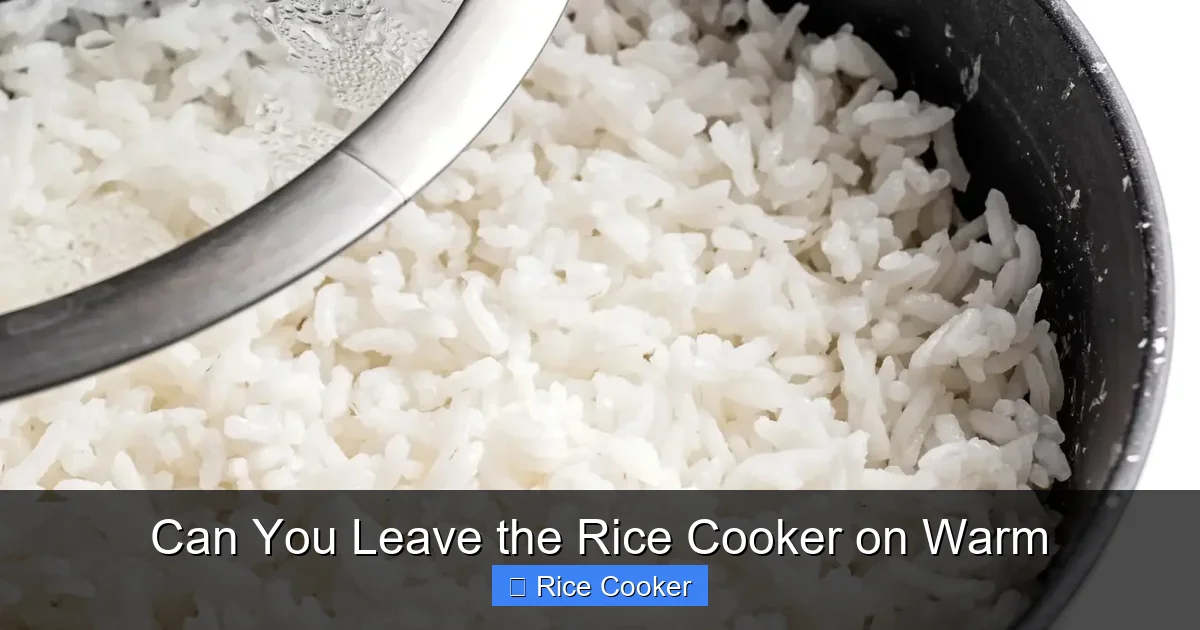
Leaving your rice cooker on the “warm” setting is generally safe for a few hours, but not indefinitely. Most modern rice cookers are designed with built-in safety features to prevent overheating or fire hazards. However, prolonged use may affect food quality and reduce the appliance’s lifespan. For best results and peace of mind, follow manufacturer guidelines and avoid leaving rice on warm for more than 10–12 hours.
Key Takeaways
- Safety First: Rice cookers have thermal fuses and auto-shutoff mechanisms that activate if temperatures get too high, making short-term warmth safe.
- Time Limitations: The “warm” function is ideal for keeping rice at serving temperature (around 160°F) for up to 10–12 hours, but not beyond.
- Food Safety Matters: Leaving cooked rice at room temperature for more than 2 hours increases the risk of bacterial growth, especially Bacillus cereus.
- Appliance Longevity: Frequent or extended use of the warm setting can wear out internal components and shorten your rice cooker’s life.
- Energy Efficiency: Keeping the rice cooker plugged in unnecessarily consumes electricity and may trip circuits over time.
- Quality Decline: Over time, rice left on warm becomes dry, sticky, or develops an off smell due to moisture loss and texture changes.
- Alternatives Exist: Use insulated containers or refrigerate leftovers promptly to maintain freshness without relying on the warm function.
[FEATURED_IMAGE_PLACEHOLDER]
Can You Leave the Rice Cooker on Warm?
You just finished cooking a perfect pot of jasmine rice, and now you’re wondering: “Should I leave my rice cooker on warm?” Whether you’re hosting a dinner party, prepping for meal prep, or simply want to keep your rice hot until everyone’s ready to eat, this question comes up often. After all, the “warm” setting sounds convenient—why not just let it do the work?
But before you plug in and walk away, it’s important to understand what really happens when you leave your rice cooker on warm. Is it safe? Will your rice stay tasty? And more importantly, should you even rely on this feature regularly?
In this guide, we’ll break down everything you need to know about using the warm setting on your rice cooker—from safety and science to practical tips for everyday use. We’ll also explore alternatives, answer common myths, and help you make smart decisions so your rice stays delicious and your kitchen stays safe.
So grab a bowl, and let’s dive into the science, safety, and simplicity of leaving your rice cooker on warm!
How the Warm Function Works
The “warm” function on most rice cookers isn’t meant to cook food—it’s meant to maintain temperature. Once your rice is fully cooked, the rice cooker switches from heating to warming mode, which keeps the inner pot at a consistent, low heat (typically around 160°F or 71°C). This prevents the rice from cooling down too quickly and helps preserve its texture and moisture for a while.
Inside your rice cooker, there’s a thermostat and sometimes a thermal fuse that monitor the temperature. When the pot drops below the set point, the element kicks back on briefly to reheat it. But once it reaches the target temperature, the element turns off again. This cycle repeats as needed to maintain warmth.
Modern models, especially those with fuzzy logic or microprocessors, are smarter. They adjust heating patterns based on the type of grain, amount of water, and even ambient conditions. Some even include sensors to detect when the pot is empty or if something’s wrong, adding an extra layer of protection.
This design means that, technically, you *can* leave your rice cooker on warm—but only under certain conditions. Let’s talk about what those are.
Is It Safe to Leave the Rice Cooker on Warm?
Yes, it is generally safe to leave your rice cooker on the warm setting—for a limited time. Manufacturers build in safety features like thermal fuses and automatic shut-off mechanisms to prevent overheating or fire. These components kick in if the internal temperature gets dangerously high, cutting power before anything goes wrong.
However, safety doesn’t mean unlimited use. The warm function is engineered to handle brief periods of inactivity, not hours-long neglect. If you leave your rice cooker on warm overnight or while you’re away for a full day, you risk several issues:
– Overheating: Even with safeguards, prolonged cycling of the heating element can strain the system.
– Fire Hazard: Dust buildup, crumbs, or spills inside the unit can ignite if the element runs too long.
– Electrical Issues: Plugging in appliances continuously increases the chance of circuit overload, especially in older homes.
That said, short-term use—say, keeping rice warm for a family dinner that starts late—is perfectly fine and commonly recommended by appliance experts. Just remember: convenience shouldn’t override caution.
The Science Behind Food Safety on Warm
When rice is cooked, it contains starches and moisture—perfect breeding ground for bacteria if left unrefrigerated. The danger zone for bacterial growth is between 40°F and 140°F (4°C and 60°C). Once rice cools past 140°F, it enters this zone, where harmful microbes like *Bacillus cereus* can multiply rapidly.
By keeping rice on warm (at ~160°F), you’re actually above the danger zone, which slows bacterial growth significantly. That’s why the USDA and food safety organizations allow cooked food to be kept hot for several hours—as long as it stays above 140°F.
But here’s the catch: rice cookers aren’t always reliable at maintaining that exact temperature over many hours. The warm setting fluctuates, and if the rice cools slightly, you lose that protective buffer. So while it’s *technically* safer than letting rice sit at room temperature, it’s not foolproof.
For maximum safety, limit warm-mode use to no more than 10–12 hours, and never leave rice on warm for longer than necessary.
How Long Can You Safely Leave Rice on Warm?
Most manufacturers recommend using the warm setting for up to 10 hours, though some say 8 hours max. Realistically, however, the ideal window is 2–6 hours—long enough to serve a delayed meal, but short enough to minimize risks.
Here’s a simple breakdown:
– 0–2 hours: Perfect. Rice is hot, moist, and safe.
– 2–6 hours: Still good, but monitor for dryness or off smells.
– 6–10 hours: Risk increases; bacteria can begin growing if temperature dips.
– 10+ hours: Not recommended. Discard rice or transfer to refrigerator.
If you’re using your rice cooker to keep a pot of soup or stew warm during a gathering, that’s usually fine for 3–4 hours. But if you’re leaving it on all night, consider switching to the off position and reheating gently later.
Also, note that the longer rice sits on warm, the drier and stickier it becomes. Moisture evaporates slowly but steadily, altering the texture. So even if it’s still safe to eat, it might not taste as good.
What Happens if You Leave It On Too Long?
Letting your rice cooker run on warm for days or weeks is a recipe for trouble. Here’s what could go wrong:
– Burned Rice: The element may overheat, scorching the bottom of the pot.
– Smoke or Odor: Burning plastic parts or insulation can release unpleasant fumes.
– Component Failure: Repeated thermal stress damages thermostats, wiring, or the heating plate.
– Fire Risk: Accumulated grease, dust, or crumbs near the heating element can catch fire.
Even if your rice cooker doesn’t explode (which is rare), it won’t last forever—and replacing a $30 appliance because you forgot to unplug it feels unnecessary.
Instead, treat the warm setting like a temporary solution: useful, but not permanent.
Best Practices for Using the Warm Setting
Want to use your rice cooker’s warm function wisely and safely? Follow these tips:
1. Don’t Preheat the Warm Setting
Some people turn on the warm function *before* cooking, thinking it helps keep rice warm faster. This is unnecessary and inefficient. The warm setting is only activated after cooking completes. Trying to force it earlier wastes energy and may confuse the appliance.
2. Keep the Lid Closed
Every time you open the lid, steam escapes, and the rice loses heat. Closing the lid traps moisture and maintains temperature better. If possible, use a tight-fitting lid or cover the pot with foil to reduce evaporation.
3. Stir Occasionally (Gently)
Stirring redistributes heat and prevents the rice from sticking to the bottom. But don’t stir too much—overdoing it breaks apart grains and changes texture. A light mix every hour is plenty.
4. Check Temperature Periodically
Use a food thermometer to ensure the rice stays above 140°F. If it drops, turn the warm setting on again. This is especially important during long events or cold weather.
5. Clean After Each Use
Residue inside the pot can harden and burn if left unattended. Wipe the interior and exterior after every use to prevent buildup.
6. Unplug When Not in Use
Safety first! If you’re not actively monitoring the rice, unplug the cooker. Modern models don’t draw much power when idle, but it’s still better than risking a small fire or wasted electricity.
Alternatives to Leaving Rice on Warm
While the warm setting works in a pinch, there are smarter ways to keep rice hot without relying on your rice cooker:
Insulated Containers
Transfer cooked rice to a thermally insulated container like a rice bowl with a lid, vacuum flask, or thermos. These retain heat for 4–6 hours and are perfect for meal prep or potlucks.
Warming Drawer (in ovens)
Many ovens have a “warm” or “hold” setting that keeps food at 170°F–180°F—safer than rice cooker warm modes. Place a baking sheet underneath the rice dish to catch drips.
Double Boiler Method
Use a double boiler with simmering water to gently reheat rice without drying it out. This gives you more control over temperature and texture.
Refrigerate Promptly
For leftovers, store rice in airtight containers within 2 hours of cooking. Reheat thoroughly before eating. This is far safer than long-term warming.
Portion Control
Cook only what you’ll eat soon. Smaller batches reduce waste and eliminate the need for extended warming.
Myths About Rice Cooker Warm Settings
Let’s clear up some common misconceptions:
Myth #1: “It’s Fine to Leave It On All Night”
False. While modern rice cookers have safety features, nothing lasts forever. Prolonged use risks damage, inefficiency, and potential hazards.
Myth #2: “Warm Mode Cooks Rice Slowly”
No—the warm setting doesn’t cook rice. It only maintains temperature. Cooking happens during the main cycle.
Myth #3: “You Can Use Warm Mode to Sterilize Water”
Technically, yes—water heated to 160°F kills some germs, but it’s not boiling. For true sterilization, bring water to a rolling boil.
Myth #4: “All Rice Cookers Are the Same”
Nope. Basic models lack advanced sensors, while premium ones offer precise temperature control, delay timers, and keep-warm algorithms. Always check your manual.
Myth #5: “Leftover Rice Is Always Safe”
Not necessarily. Rice can harbor spores that survive cooking. Reheating doesn’t always destroy toxins—only fresh, properly stored rice is safe.
Choosing the Right Rice Cooker
Not all rice cookers are created equal—especially when it comes to the warm function. Here’s what to look for:
Thermal Safety Features
Look for models with thermal fuses, auto-shutoff, and child lock. These prevent overheating and accidental burns.
Keep-Warm Duration
Some high-end models (like Zojirushi or Tiger) offer 12–24 hour keep-warm cycles with precise temperature control. These are great for busy families.
Timer Functions
A programmable timer lets you set when cooking starts and ends—ideal for meal prep. Some even switch to warm mode automatically.
Non-Stick Coating
Makes cleaning easier and prevents rice from sticking during long warm periods.
Size Appropriately
Don’t buy a 10-cup cooker if you only cook 2 cups. Smaller pots retain heat better and reduce energy waste.
Read Reviews
Check user feedback on reliability, ease of cleaning, and performance on warm mode. Brands like Cuckoo, Panasonic, and Instant Pot also offer solid options.
Final Thoughts: Should You Leave Your Rice Cooker on Warm?
So, can you leave the rice cooker on warm? Yes—but only temporarily. For quick delays in serving or small gatherings, it’s a handy feature. But don’t make it a habit. Relying on warm mode for hours or days risks food safety, appliance damage, and poor-quality rice.
Instead, think smart: plan ahead, use insulated containers, and refrigerate leftovers promptly. Your rice will taste better, and your kitchen will stay safer.
Remember, your rice cooker is a tool—not a babysitter. Treat it with respect, and it’ll serve you well for years. And when in doubt, unplug it. Better safe than sorry.
Now go enjoy that perfectly cooked rice—without guilt or worry!
FAQs
Is it safe to leave rice on warm for 8 hours?
It’s generally safe for up to 8 hours if the rice remains above 140°F, but food safety experts recommend discarding rice left at room temperature for more than 2 hours. The warm setting helps, but temperature fluctuations increase risk over time. For best results, limit warm-mode use to 6 hours or less.
Can leaving the rice cooker on warm cause a fire?
While rare, it’s possible if the appliance overheats due to mechanical failure, blockages, or prolonged use without monitoring. Modern rice cookers have thermal fuses to prevent fires, but leaving them on unattended for long periods increases risk. Always unplug when not in use.
Why does rice get dry when left on warm?
Moisture slowly evaporates from the surface of the rice when exposed to heat. Without stirring or a sealed environment, the top layer dries out while the bottom stays moist—leading to uneven texture. Using a lid or transferring to an insulated container helps retain moisture.
Does the warm setting save electricity?
No—keeping the rice cooker on warm constantly consumes power, even if the element cycles on and off. Unplugging it when not in use saves energy and reduces wear. One study showed that leaving appliances plugged in wastes up to 10% of household electricity annually.
Can I reheat refrigerated rice in the rice cooker?
Yes, but add a splash of water to restore moisture. Set the cooker to “cook” or use the “reheat” function if available. Never use the warm setting to reheat—it doesn’t provide enough heat to safely warm cold food.
Are electric rice cookers dangerous if left on warm?
They’re generally safe due to built-in safety mechanisms like thermal cutoffs and auto-shutoff. However, older models or poorly maintained units may pose risks. Regular cleaning and following the manufacturer’s guidelines minimize dangers. Never leave unattended for more than 10 hours.
This is a comprehensive guide about can you leave the rice cooker on warm.
Key Takeaways
- Understanding can you leave the rice cooker on warm: Provides essential knowledge
Frequently Asked Questions
What is can you leave the rice cooker on warm?
can you leave the rice cooker on warm is an important topic with many practical applications.