
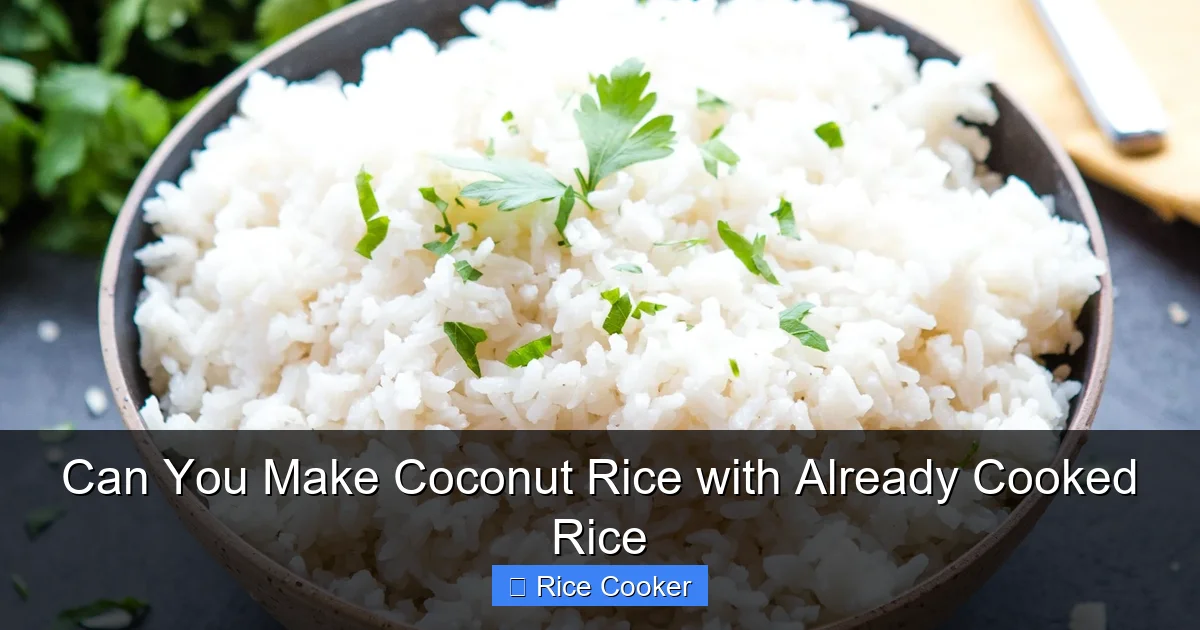
Can you make coconut rice with already cooked rice? Absolutely! With just a few simple steps, you can turn plain leftover rice into a delicious, creamy coconut rice in minutes. Whether you’re using white rice, jasmine rice, or brown rice, this method works with any type and requires no extra cooking equipment beyond a pot or rice cooker. It’s a time-saving hack that adds bold flavor to your meals without starting from scratch.
Key Takeaways
- Yes, it’s possible: You can absolutely make coconut rice using pre-cooked rice—no need to re-boil grains.
- Flavor infusion method: The key is adding coconut milk, water, and seasonings to the warm rice and letting it absorb the flavors.
- Texture matters: For best results, use day-old rice or rice cooled slightly after cooking to prevent mushiness.
- Rice cooker friendly: Most rice cookers can be used to reheat and infuse flavor without burning the rice.
- Customizable: Add vegetables, herbs, spices, or protein to elevate your coconut rice into a full meal.
- Storage tip: Leftover coconut rice keeps well in the fridge for up to 4 days and tastes even better the next day.
- Quick and easy: This method cuts down prep time by over 50% compared to cooking rice from dry grains.
📑 Table of Contents
- Introduction: Why Coconut Rice Deserves a Spot in Your Kitchen
- Understanding Coconut Rice: What Makes It So Irresistible?
- The Science Behind Flavor Absorption in Pre-Cooked Rice
- What You’ll Need: Ingredients and Equipment
- Step-by-Step Guide: How to Make Coconut Rice with Already Cooked Rice
- Pro Tips for Perfect Coconut Rice Every Time
- Variations and Creative Twists on Classic Coconut Rice
- Common Mistakes to Avoid When Using Leftover Rice
- Storage and Reheating Tips
- Conclusion: Why This Hack Belongs in Every Kitchen
Introduction: Why Coconut Rice Deserves a Spot in Your Kitchen
Coconut rice is one of those dishes that feels both comforting and exotic—creamy, fragrant, and subtly sweet with a hint of nuttiness. Made with coconut milk and seasoned rice, it pairs beautifully with curries, grilled meats, or even eaten on its own as a flavorful side. But what happens when you don’t have time to start from scratch? That’s where the magic of using already cooked rice comes in.
If you’ve ever found yourself staring at a container of leftover rice wondering what to do with it, you’re not alone. Instead of tossing it out or eating it cold, why not transform it into something delicious? Making coconut rice with already cooked rice isn’t just possible—it’s easier than you think. All you need are a few pantry staples and your trusty rice cooker (or a regular pot). In this guide, we’ll walk you through everything you need to know, from the science behind flavor absorption to pro tips for perfect texture every time.
Whether you’re meal prepping for the week, hosting a dinner party, or simply craving comfort food fast, this method will save you time without sacrificing taste. Let’s dive into how to make incredible coconut rice from rice that’s already done.
Understanding Coconut Rice: What Makes It So Irresistible?

Visual guide about Can You Make Coconut Rice with Already Cooked Rice
Image source: shungrill.com
Before we jump into the “how-to,” let’s talk about why coconut rice is such a crowd-pleaser. At its core, coconut rice is more than just rice and coconut milk—it’s a marriage of textures and aromas. When rice absorbs coconut milk during cooking (or soaking), it becomes tender yet fluffy, with a rich, velvety mouthfeel. The natural sugars in coconut milk caramelize slightly when heated, adding a subtle sweetness that balances savory dishes perfectly.
Traditionally, coconut rice is made by cooking fresh rice with coconut milk and water in a 1:1 ratio. The grains soak up all that creamy goodness, becoming infused with flavor. But here’s the secret: that same process works wonders with leftover rice. Because the grains are already cooked, they just need time to absorb the coconut milk and spices. Think of it like steeping tea—you don’t boil the leaves again; you just add hot water and let them bloom.
This method also helps reduce food waste. Instead of letting perfectly good rice go bad, you can repurpose it into something new and exciting. Plus, using leftover rice means you skip the first step of boiling, cutting your total time in half. So yes—making coconut rice with already cooked rice is not only possible but practical and delicious.
The Science Behind Flavor Absorption in Pre-Cooked Rice

Visual guide about Can You Make Coconut Rice with Already Cooked Rice
Image source: i.pinimg.com
You might wonder: does pre-cooked rice really absorb flavor as well as fresh rice? The short answer is yes—especially if you follow the right technique. When rice cools after cooking, its starch gelatinizes and forms a semi-solid matrix. This structure actually helps trap flavors, making it ideal for infusions.
When you add coconut milk and spices to warm or room-temperature rice and let it sit, the liquid slowly seeps into each grain. The warmth encourages evaporation, which concentrates the flavors, while the cooling phase allows deeper penetration. This is similar to how rice pudding gets richer overnight in the fridge.
Another advantage of using leftover rice is that it tends to be drier than freshly cooked rice, so it absorbs liquids more evenly. Freshly steamed rice can become clumpy or overly wet when you add coconut milk, but leftover rice has just enough moisture to stay loose and fluffy.
To maximize flavor absorption, avoid overheating. Gentle warming over low heat (or even just letting it sit covered) ensures the rice doesn’t stick or burn. Patience pays off—flavors develop best when allowed to mellow rather than rush.
What You’ll Need: Ingredients and Equipment
Making coconut rice with already cooked rice is a breeze because most of the ingredients are common kitchen staples. Here’s what you’ll need:
Ingredients:
- Already cooked rice – 2 cups (preferably day-old or slightly cooled)
- Coconut milk – 1 cup (full-fat gives the creamiest result; light works too)
- Water or vegetable broth – ½ cup (optional, for adjusting consistency)
- Salt – ½ teaspoon (adjust to taste)
- Optional add-ins: Sugar (1 tsp for sweetness), lime juice (1 tbsp for brightness), turmeric (¼ tsp for color), or shredded coconut
Equipment:
- Rice cooker (most models work fine—see below for instructions)
- Pot with lid (if not using a rice cooker)
- Spatula or wooden spoon
- Measuring cups and spoons
For best results, use jasmine or basmati rice—they hold their shape well after reheating. Brown rice can work too, though it may require a bit more liquid due to its denser texture.
Step-by-Step Guide: How to Make Coconut Rice with Already Cooked Rice
Follow these simple steps to transform leftover rice into creamy coconut rice:
1. Prepare Your Rice
Start with 2 cups of already cooked rice. If it’s been refrigerated, bring it to room temperature first. Cold rice can cause uneven heating, so avoid adding it directly from the fridge to hot liquid.
2. Combine Ingredients in the Rice Cooker
Add the rice to your rice cooker insert. Pour in 1 cup of coconut milk and ½ cup of water or broth. Sprinkle in salt and any optional spices or sweeteners.
3. Mix Gently
Use a spatula to mix everything together. Don’t stir aggressively—just fold the rice until it’s evenly coated. Overmixing can break apart the grains.
4. Cook on Warm or Simmer Setting
Most rice cookers don’t have a “simmer” function, so switch it to the “Keep Warm” setting after the initial cycle. If your rice cooker has a “Soup” or “Slow Cook” mode, use that instead. Heat on low for 10–15 minutes, stirring occasionally.
5. Let It Rest
Turn off the heat and cover the rice cooker with a clean towel or lid to trap steam. Let it sit for 5–10 minutes. This resting period allows the rice to absorb the remaining liquid and develop full flavor.
6. Fluff and Serve
Fluff the rice gently with a fork before serving. Taste and adjust seasoning if needed—add a squeeze of lime or a pinch more salt to brighten the flavor.
Pro Tips for Perfect Coconut Rice Every Time
Even though you’re using leftover rice, a few small tweaks can make a big difference in taste and texture:
- Don’t overcook: Once the rice starts steaming, reduce heat immediately. Burnt rice ruins the whole dish.
- Add flavor gradually: Stir in lemon juice or herbs after cooking to preserve their aroma.
- Toast the rice (optional): For deeper flavor, sauté the leftover rice in a dry pan for 2–3 minutes before adding coconut milk.
- Use canned coconut milk: Shake the can well before opening to distribute the cream evenly.
- Double the batch: Coconut rice freezes well—store portions in airtight containers for up to 3 months.
These tricks help you avoid common pitfalls like mushy rice or bland flavor. Remember: the goal isn’t to re-cook the rice—just to infuse it with richness.
Variations and Creative Twists on Classic Coconut Rice
Once you master the basics, get creative! Coconut rice is incredibly versatile. Try these ideas to keep things interesting:
Thai-Inspired Coconut Rice
Add 1 tsp of fish sauce, ½ tsp of sugar, and a splash of lime juice. Garnish with crushed peanuts and fresh cilantro.
Spiced Golden Coconut Rice
Stir in ¼ tsp of ground turmeric and a pinch of black pepper. Serve with mango slices for a tropical twist.
Vegetable-Packed Version
Mix in steamed peas, carrots, or corn before adding coconut milk. Perfect as a meatless main dish.
Protein Boost
Fold in cooked shrimp, chicken, or tofu after the rice finishes. Top with sliced scallions.
Dessert Coconut Rice
Sweeten with maple syrup or brown sugar, then top with toasted coconut flakes and banana slices.
Each variation takes only minutes to prepare and turns a simple side into a standout dish.
Common Mistakes to Avoid When Using Leftover Rice
Even experienced cooks can run into issues when working with leftover rice. Here’s how to dodge the pitfalls:
- Using too much liquid: Too much coconut milk leads to soggy rice. Start with 1:1 ratio and adjust later.
- Heating on high heat: This causes scorching and uneven texture. Always use low or medium heat.
- Skipping the resting step: Rushing prevents proper flavor absorption. Give it 5–10 minutes off the heat.
- Not tasting as you go: Adjust salt, sweetness, or acidity mid-process for balanced flavor.
- Using fresh, sticky rice: Sticky rice (like sushi rice) doesn’t absorb liquids as well. Stick to long-grain varieties.
By avoiding these errors, your coconut rice will be light, fragrant, and never gluey.
Storage and Reheating Tips
Leftover coconut rice keeps beautifully. Store it in an airtight container in the refrigerator for up to 4 days. When ready to eat, reheat gently in a saucepan with a splash of water or coconut milk to restore creaminess. Microwave in 30-second bursts, stirring between intervals.
For freezing, portion into ice cube trays or small containers. Frozen coconut rice lasts up to 3 months. Thaw overnight in the fridge and reheat on low heat.
Conclusion: Why This Hack Belongs in Every Kitchen
Making coconut rice with already cooked rice isn’t just a shortcut—it’s a smart, sustainable way to enjoy one of Southeast Asia’s most beloved dishes. By leveraging leftovers, you save time, reduce waste, and unlock a world of flavor with minimal effort. Whether you’re using a rice cooker or a stovetop pot, the process remains simple and consistent.
This method proves that great food doesn’t always require starting from scratch. Sometimes, the best meals come from what’s already in your fridge. Next time you have leftover rice, don’t hesitate—turn it into coconut rice. Your taste buds (and your schedule) will thank you.
Frequently Asked Questions
Can I make coconut rice in a rice cooker with leftover rice?
Yes! Simply add your leftover rice, coconut milk, water, and salt to the rice cooker insert. Switch to “Keep Warm” or “Simmer” mode for 10–15 minutes, then let it rest. No need to re-cook the rice—just infuse it with flavor.
Will the rice become mushy if I use leftover rice?
Not if you follow the right technique. Use day-old, slightly cooled rice and avoid overheating. Gentle warming and proper resting prevent mushiness and keep the grains separate.
How much coconut milk should I use per cup of rice?
A good rule of thumb is 1 cup of coconut milk for every 2 cups of rice, plus ½ cup of water or broth. Adjust based on desired creaminess—start with less and add more as needed.
Can I add spices or vegetables to the coconut rice?
Absolutely! Turmeric, ginger, garlic, peas, carrots, or shredded coconut all blend well. Add them before or after heating, depending on how intense you want the flavor to be.
Is it okay to use any type of cooked rice for this recipe?
Long-grain varieties like jasmine, basmati, or American long-grain work best. Avoid sticky rice types like sushi or glutinous rice, as they don’t absorb liquids evenly.
How long does homemade coconut rice last in the fridge?
Stored properly in an airtight container, coconut rice stays fresh for up to 4 days in the refrigerator. It can also be frozen for up to 3 months.