

Yes, you can absolutely make hard boiled eggs in a rice cooker — and it’s faster, cleaner, and surprisingly foolproof. With just water and your trusty appliance, you can cook up to a dozen eggs in under 25 minutes without any guesswork. This method delivers consistent results every time, with tender whites and creamy centers, making it a game-changer for meal prep, camping trips, or busy mornings.
Making hard boiled eggs used to mean standing over a pot of bubbling water, hoping you didn’t overcook them. But what if you told you could skip the stovetop entirely and still get perfectly cooked eggs? Yes, you read that right — you can make hard boiled eggs in a rice cooker. It’s not just possible, it’s one of the most reliable, low-effort ways to cook eggs for meal prep, snacks, or camping trips. Whether you’re a busy parent, a college student, or someone who just hates cleaning pots, this method might become your new favorite kitchen hack.
The beauty of using a rice cooker lies in its precision. Unlike boiling on the stove — where temperature fluctuates and timing is guesswork — a rice cooker maintains steady heat and automatically shuts off when done. That means no more overcooked, rubbery egg whites or greenish yolks from prolonged exposure to heat. Instead, you get tender whites, creamy yellow yolks, and minimal fuss. Plus, since the eggs sit in water, they cook gently and evenly — no hot spots, no cracking. And the best part? You can cook up to 12 eggs at once, all in one go.
In this guide, we’ll walk you through exactly how to make hard boiled eggs in a rice cooker, why it works so well, and how to tweak the process for different needs — whether you want soft, medium, or extra-hard yolks. We’ll also cover common mistakes to avoid, tips for peeling, and even how to repurpose your leftover egg shells. By the end, you’ll wonder why you ever boiled eggs the old-fashioned way.
Key Takeaways
- It’s possible and easy: Using a rice cooker to boil eggs is simple, requiring only water and basic timing — no stovetop supervision needed.
- Consistent results: The controlled heat of a rice cooker ensures even cooking, reducing the risk of rubbery or undercooked eggs.
- Time-saving method: Most rice cookers cook eggs in 18–25 minutes, beating traditional stove-top methods that often take longer and require attention.
- Great for batch cooking: You can cook large quantities at once — perfect for meal prep, school lunches, or feeding a family.
- Minimal cleanup: Skip the pot, lid, and scrubbing — just rinse the inner pot and wipe the exterior.
- Works with most models: Whether you have a basic white rice cooker or a smart multi-cooker, this trick works across brands like Zojirushi, Instant Pot, or Cuisinart.
- Egg quality matters: Use older eggs (7–10 days old) for easier peeling and better texture — fresh eggs tend to crack more during boiling.
Quick Answers to Common Questions
Can you make hard boiled eggs in a rice cooker?
Yes! Simply add eggs and cold water to your rice cooker, set it to “Cook,” and let it do the work. Most models cook 6–12 eggs in 18–25 minutes.
How long does it take to boil eggs in a rice cooker?
Typically 18–25 minutes, depending on the number of eggs and model. A general rule is 10 minutes per egg, but rice cookers are faster due to consistent heat.
Do eggs peel easier in a rice cooker?
Often yes. The gentle, even cooking reduces cracking, and the ice bath helps separate the membrane from the white, making peeling smoother.
Can you boil eggs in a rice cooker without an egg setting?
Absolutely. Even basic rice cookers work. Just use the “Cook” or “Boil” function — no special setting required.
Are rice cooker eggs as good as stove-top eggs?
Many find them superior — less risk of overcooking, easier peeling, and hands-off convenience. Texture varies slightly, but most prefer the tenderness.
📑 Table of Contents
- The Science Behind Rice Cooker Eggs
- What You’ll Need: A Simple List
- Step-by-Step Guide: How to Make Hard Boiled Eggs in a Rice Cooker
- Tips for Perfect Rice Cooker Eggs Every Time
- Common Mistakes and How to Avoid Them
- Beyond Hard Boiled: Other Egg Styles in a Rice Cooker
- Cleaning and Maintenance Tips
- Environmental and Practical Benefits
- Real-Life Success Stories
The Science Behind Rice Cooker Eggs
So why does this work? Let’s break it down. When you add eggs to boiling water, the intense heat causes proteins in the egg to denature rapidly, squeezing out moisture and turning the whites firm. But too much heat or too long a cook time leads to rubberiness. A rice cooker, however, uses indirect steam and regulated heat — similar to how it cooks rice — to gently coax the proteins into setting without shocking the egg.
The rice cooker’s heating element sits at the bottom, warming water until it reaches a simmer. As the water heats, steam builds, but the internal pressure doesn’t spike like in a pressure cooker. This gentle environment allows the egg to cook slowly from the outside in. Because there’s no rolling boil, the eggs aren’t agitated or cracked by sudden temperature changes. That’s why rice cooker eggs tend to peel so easily — the shell stays intact, and the membrane separates cleanly from the white.
Another advantage is consistency. On the stove, you’re relying on your eyes and ears to detect when the water boils or when the timer goes off. But rice cookers are programmable — many have built-in timers or keep-warm functions. Some even let you set a delay, so your eggs are ready when you wake up. For people who value predictability (like meal preppers), this is a huge win.
What You’ll Need: A Simple List
Visual guide about Can You Make Hard Boiled Eggs in a Rice Cooker
Image source: thecreativebite.com
You don’t need fancy equipment or specialty tools. In fact, you probably already have everything on this list:
- A standard rice cooker with an inner pot — any brand works, from Zojirushi to Instant Pot.
- Fresh or slightly aged eggs — ideally 7–10 days old for easier peeling.
- Water — enough to fully submerge the eggs when placed upright.
- A bowl of ice water — for cooling and peeling (optional but recommended).
That’s it. No racks, no baskets, no special liners. Just your rice cooker, some eggs, and water. If you have a rice cooker with a steaming basket, even better — you can elevate the eggs slightly, but it’s not necessary. The water alone does the job.
Choosing the Right Rice Cooker
While most rice cookers work, some features make the process smoother:
- Models with a “Keep Warm” function help maintain temperature after cooking — useful if you’re not eating right away.
- Fuzzy logic rice cookers (like those from Panasonic or Zojirushi) adjust heat based on moisture and grain type — they’re great for eggs too.
- Multi-cookers with egg settings (like Instant Pot’s egg function) are ideal, but even basic models get the job done.
- Use older eggs: Eggs 7–10 days old peel more easily because the pH increases slightly, loosening the membrane from the white.
- Don’t overfill: Leave room in the pot for water to expand when heated. Overfilling can cause overflow or uneven cooking.
- Check water level: If your rice cooker has a small capacity, add water gradually while testing the egg placement.
- Try the steaming rack: Elevate eggs slightly with a steamer basket to reduce contact with the pot bottom, minimizing browning.
- Experiment with timing: For soft-boiled, reduce cook time to 12–15 minutes. For extra-hard, go up to 30 minutes.
- Let the inner pot cool before washing.
- Wipe the exterior with a damp cloth.
- For sticky residue, soak the pot in warm, soapy water for 10 minutes.
- Avoid abrasive scrubbers — they can damage non-stick coatings.
Even a $20 budget rice cooker will work — the magic isn’t in the price tag, but in the method.
Step-by-Step Guide: How to Make Hard Boiled Eggs in a Rice Cooker
Visual guide about Can You Make Hard Boiled Eggs in a Rice Cooker
Image source: i.ytimg.com
Ready to try it? Here’s the simplest, most foolproof way:
Step 1: Prepare Your Eggs
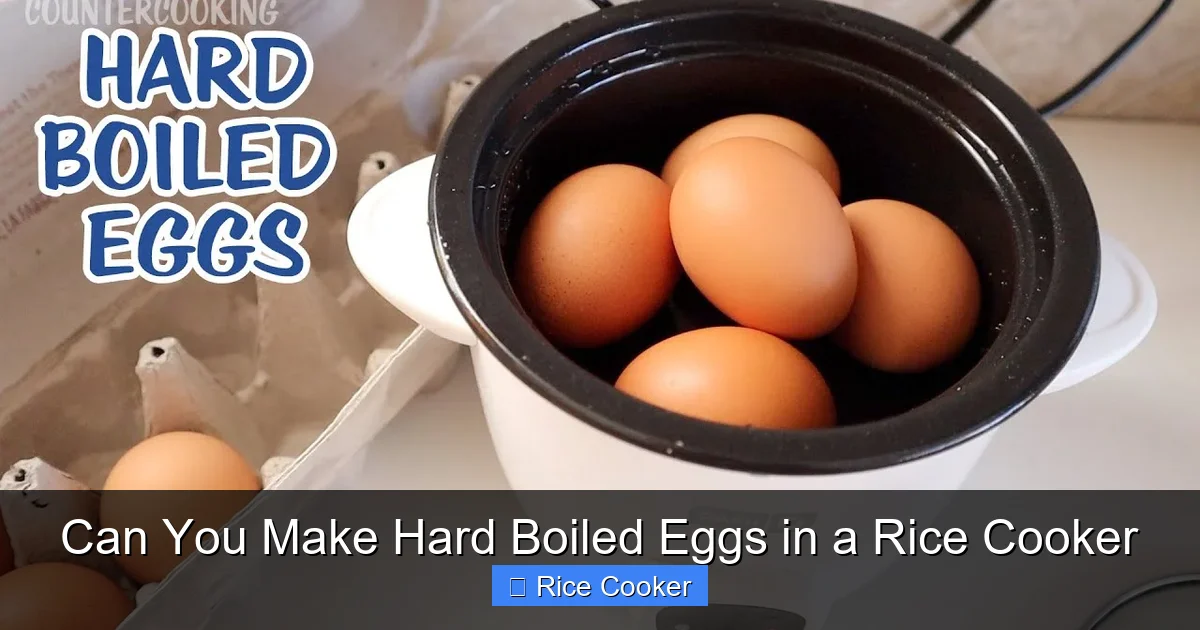
Start with room-temperature eggs. Cold eggs are more likely to crack when exposed to sudden heat. Gently place them in the inner pot of your rice cooker. Don’t stack them — give each egg space to prevent cracking. A good rule of thumb: use 1 inch of water per egg. For 6 eggs, fill the pot halfway; for 12, add more water but ensure all eggs are submerged.
Step 2: Add Water
Pour cold water into the inner pot until the eggs are covered by about an inch. Don’t use hot water — it can cause uneven heating and increase cracking risk.
Step 3: Start Cooking
Close the lid and turn the rice cooker on. Most rice cookers default to “Cook” mode, which mimics boiling. Let it run until the cycle completes — usually 18–25 minutes, depending on the model and number of eggs. You’ll hear a beep or see a light change when done.
Step 4: Ice Bath (Optional but Helpful)
As soon as the cooker shuts off, carefully remove the eggs with tongs or a slotted spoon. Transfer them to a bowl of ice water for at least 5 minutes. This stops the cooking process and makes peeling easier.
Step 5: Peel and Enjoy
Tap the eggs gently on a counter, roll them, and peel under running water for smooth results. Now you’ve got perfect, restaurant-quality hard boiled eggs.
Tips for Perfect Rice Cooker Eggs Every Time
Want to level up your egg game? Try these pro tips:
One user shared on Reddit that she makes 18 eggs weekly this way — she even adds a splash of vinegar to the water, which helps prevent cracking and aids peeling.
Common Mistakes and How to Avoid Them
Even with the best method, mistakes happen. Here’s how to dodge them:
Mistake: Eggs cracking during cooking
Cause: Cold eggs or rapid temperature change.
Fix: Always use room-temperature eggs and cold water. Also, avoid shaking the pot once it starts heating.
Mistake: Rubberier yolks
Cause: Overcooking or using too much heat.
Fix: Stick to 18–22 minutes. Green rings around yolks? They’re harmless but indicate sulfur exposure from overcooking.
Mistake: Sticking shells
Cause: Undercooled eggs or very fresh eggs.
Fix: Always do an ice bath. For super-fresh eggs, consider adding baking soda (1 tsp per quart of water) to raise pH — but use sparingly.
Mistake: Inconsistent doneness
Cause: Uneven egg sizes or poor water coverage.
Fix: Use similar-sized eggs and ensure full submersion. Stirring water gently halfway can help.
Beyond Hard Boiled: Other Egg Styles in a Rice Cooker
Why stop at hard boiled? Your rice cooker can do more:
Soft-Boiled Eggs
Perfect for dipping toast. Reduce cook time to 12–15 minutes. Yolks should be runny.
Deviled Eggs
Hard boil first, then mix yolks with mayo, mustard, and seasonings. Chill before serving.
Scrambled Eggs
Whisk eggs with milk, salt, and pepper. Pour into the inner pot, cover, and cook on “Steam” or “Cook” for 10–12 minutes, stirring halfway.
Poached Eggs
Drop eggs into simmering water in the pot. Cover and cook for 6–8 minutes for runny yolks.
Cleaning and Maintenance Tips
After making eggs, cleaning is simple:
Pro tip: Place a paper towel in the bottom of the pot before cooking to catch any splatters. Makes cleanup even easier.
Environmental and Practical Benefits
Using a rice cooker for eggs isn’t just convenient — it’s eco-friendly too. Less energy than keeping a pot on the stove, fewer dishes to wash, and less water waste compared to boiling large batches. Plus, you’re reducing plastic packaging if you buy bulk eggs.
For families, schools, or meal prep warriors, this method saves time and reduces stress. Imagine waking up to perfectly cooked eggs every morning — no babysitting the stove, no burnt fingers, no last-minute scramble.
Real-Life Success Stories
Sarah, a mom of three, says: “I used to burn eggs trying to boil them for school lunches. Now I make 24 at once in my rice cooker. They come out perfect, and I’m done in 20 minutes.”
Mark, a college student, adds: “I live in a dorm with no stove. My rice cooker does everything — rice, soup, eggs, even steamed veggies. It’s my lifeline.”
These testimonials show how versatile and accessible this method truly is.
Frequently Asked Questions
Can you make hard boiled eggs in a rice cooker?
Yes, it’s a simple and effective method. Add eggs and cold water to the rice cooker, close the lid, and let it cook for 18–25 minutes. The result is consistently cooked, tender eggs with minimal effort.
How many eggs can you boil in a rice cooker at once?
Most rice cookers can handle 6–12 eggs comfortably, depending on size. Avoid overcrowding to ensure even cooking and prevent cracking.
Do you need to add anything to the water besides eggs?
No, plain cold water is sufficient. However, adding a teaspoon of vinegar or baking soda can reduce cracking and improve peeling.
Can you make soft-boiled eggs in a rice cooker?
Yes! Reduce cook time to 12–15 minutes for runny yolks. Remove eggs immediately and place in ice water to stop cooking.
Is it safe to leave eggs in the rice cooker after cooking?
Yes, especially if your model has a “Keep Warm” function. Keep eggs covered for up to 1 hour — they’ll stay warm without overcooking.
Why are my rice cooker eggs difficult to peel?
Usually caused by very fresh eggs or insufficient cooling. Try using eggs 7–10 days old and always do an ice bath right after cooking.