
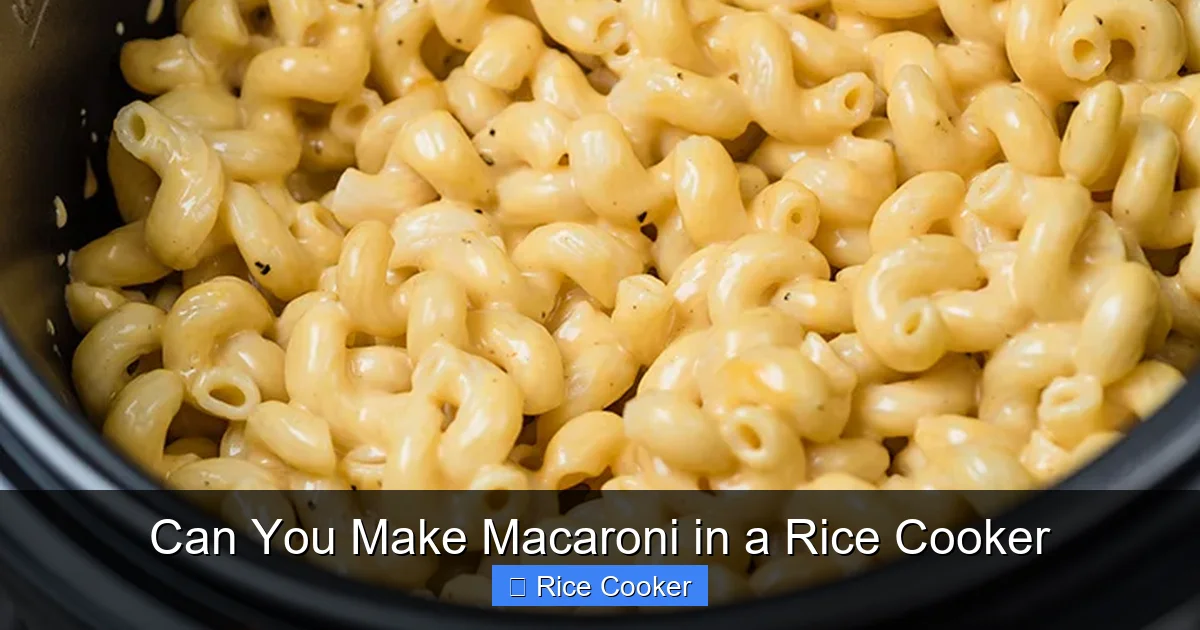
Yes, you can absolutely make macaroni in a rice cooker! It’s a fast, hands-off way to cook pasta that saves time and uses just one pot. With the right technique, your macaroni comes out tender, not mushy—perfect for creamy sauces or quick dinners.
Key Takeaways
- Rice cookers work well for pasta: The sealed environment and precise heat help cook macaroni evenly without overcooking.
- Use the right ratio: Stick to about 1 cup of dry macaroni per 2 cups of water for best results.
- Add salt and oil: Salt enhances flavor; a splash of oil prevents sticking (though it’s optional).
- Don’t overfill: Leave space at the top of the rice cooker to avoid overflow during cooking.
- Drain and rinse: Drain excess water after the cycle ends and rinse briefly to stop cooking.
- Experiment with shapes: Elbow macaroni works great, but small shells or rotini also cook well.
- Save time: Cooking macaroni in a rice cooker takes less than 20 minutes total, including prep.
📑 Table of Contents
- Can You Make Macaroni in a Rice Cooker?
- Why Use a Rice Cooker for Pasta?
- Step-by-Step Guide: How to Make Macaroni in a Rice Cooker
- Tips for Perfect Macaroni in a Rice Cooker
- Common Mistakes to Avoid
- Variations and Creative Uses
- How Long Does It Take?
- Is It Safe? Debunking Myths About Rice Cookers and Pasta
- Final Thoughts: Should You Try It?
Can You Make Macaroni in a Rice Cooker?
Have you ever been craving a bowl of creamy mac and cheese or a quick pasta dinner, only to realize you don’t have a stovetop? Or maybe you’re just tired of standing over a pot of boiling water? If so, you’re in luck—because yes, you can absolutely make macaroni in a rice cooker! It’s one of those kitchen hacks that feels almost too good to be true, but it really works. In fact, many home cooks swear by this method for its simplicity, speed, and consistent results.
A rice cooker is designed to cook grains like rice by maintaining steady heat and absorbing excess moisture—so why not try it with pasta? Unlike boiling on the stove, where pasta can stick to the bottom or absorb too much water, the rice cooker’s sealed lid traps steam and keeps everything contained. This means your macaroni cooks evenly and stays separated, resulting in perfectly al dente noodles every time. Plus, it frees up your stove and gives you more counter space. Whether you’re making a last-minute side dish or feeding a hungry family, cooking macaroni in a rice cooker is a smart, efficient choice.
Why Use a Rice Cooker for Pasta?
You might be wondering: Why would anyone use a rice cooker for something that’s usually boiled? Well, there are several advantages to this method that go beyond just convenience. First, rice cookers are built for hands-off cooking. Once you add the ingredients and press start, you can walk away and do other things—no need to stir, watch the pot, or worry about burning. That’s especially helpful when you’re multitasking or hosting guests.
Visual guide about Can You Make Macaroni in a Rice Cooker
Image source: iheartvegetables.com
Another benefit is consistency. Rice cookers maintain a steady internal temperature, which helps pasta cook more evenly than in a rolling boil. When you boil pasta on the stove, hot spots can cause some noodles to turn to mush while others remain hard. But in a rice cooker, the heat is distributed gently and uniformly, so every piece of macaroni gets cooked just right. And because the lid is sealed, evaporation is minimal—meaning your pasta doesn’t dry out or become soggy.
Let’s not forget time savings. Boiling pasta usually takes 8–12 minutes, but with a rice cooker, the entire process—from measuring to finished pasta—can take under 20 minutes. That includes rinsing and draining! This makes it ideal for busy weeknights when you want a hot meal ready fast.
The Science Behind Cooking Pasta in a Rice Cooker
At first glance, using a rice cooker for pasta might seem like an unconventional move, but there’s actually some science behind why it works. Rice cookers operate using thermal sensors that detect moisture levels inside. When they sense enough water has evaporated, the machine switches from heating to warming mode—this is called the “keep warm” phase. For pasta, this timing is crucial.
When you add macaroni to the rice cooker with the correct amount of water, the machine heats the liquid until it reaches boiling point. As the water evaporates, the sensor detects the drop in moisture and shuts off the heating element. This means the pasta stops cooking as soon as it’s done—preventing overcooking. On the stove, you have to manually remove the pot once the timer goes off, but the rice cooker does this automatically. That’s why macaroni cooked in a rice cooker often turns out firmer and more toothsome compared to stovetop versions.
Also, the lack of direct flame reduces the risk of scorching or sticking. On the stove, pasta tends to clump together at the bottom unless you stir constantly. In a rice cooker, the gentle heat and enclosed environment keep things moving freely. Just be sure to use a non-stick model or one with a ceramic coating for easier cleanup.
Step-by-Step Guide: How to Make Macaroni in a Rice Cooker
Ready to give it a try? Follow these simple steps to make perfect macaroni in your rice cooker. Don’t worry—it’s easier than you think!
Visual guide about Can You Make Macaroni in a Rice Cooker
Image source: tastingtable.com
What You’ll Need
- 1 cup uncooked elbow macaroni (or your favorite small pasta shape)
- 2 cups water (use filtered or softened water if possible)
- Salt (about ½ teaspoon)
- Optional: 1 tablespoon olive oil or butter
- Non-stick rice cooker with a removable inner pot
- Tongs or fork for stirring
Step 1: Prepare the Inner Pot
Start by placing the inner pot into your rice cooker. If your pot has a non-stick coating, you’re all set. For older models without a removable insert, you may need to line the bowl with parchment paper to prevent sticking. Lightly grease the bottom with oil if needed—this helps prevent the pasta from clinging.
Step 2: Add Water and Salt
Pour 2 cups of cold water into the inner pot. Then add ½ teaspoon of salt. Stir to dissolve the salt completely. Adding salt early ensures even flavor distribution throughout the pasta.
Step 3: Add the Macaroni
Carefully place the dry macaroni into the water. Gently push it down so it’s fully submerged. If any pieces float to the top, tuck them underneath with a spoon or spatula. This helps ensure even cooking.
Step 4: Optional – Add Oil or Butter
This step is optional but recommended. Add 1 tablespoon of olive oil or butter. While oil doesn’t significantly affect taste (the salt does most of the work), it adds richness and helps keep the pasta from sticking together. It also makes the finished dish slightly creamier.
Step 5: Close the Lid and Start Cooking
Secure the lid tightly and plug in the rice cooker. Press the “Cook” button. Most rice cookers will heat the water to boiling and then switch to “Warm” mode automatically. This usually takes around 12–15 minutes.
Step 6: Check for Doneness
After the cycle ends, open the lid carefully—steam may escape. Test a strand of macaroni by biting into it. It should be tender but still firm (al dente). If it’s too soft, your pasta was overcooked. If it’s still chewy, you can let it sit for another minute or two with the lid closed.
Step 7: Drain and Rinse
Once done, drain the pasta immediately using a colander or strainer. Rinse briefly under cold running water to stop the cooking process and remove excess starch. This also helps prevent the pasta from becoming gummy when mixed with sauce later.
Step 8: Serve Immediately
Transfer the rinsed macaroni back to the inner pot or a serving bowl. Toss with your favorite sauce—cheese, tomato, pesto, or Alfredo—and enjoy!
Tips for Perfect Macaroni in a Rice Cooker
Even though making macaroni in a rice cooker is straightforward, a few small tweaks can make all the difference. Here are some pro tips to help you get consistently great results.
Use the Right Amount of Water
The golden rule is 2 cups of water for every 1 cup of dry macaroni. Too little water leads to dry, hard pasta; too much creates a soupy mess. Some newer rice cookers have measurement lines inside—take advantage of those! If yours doesn’t, use a standard measuring cup.
Don’t Overfill
Leave at least 1 inch of space between the water surface and the rim of the inner pot. Otherwise, water can boil over during the heating phase, causing a mess and possibly damaging your appliance.
Stir Once Midway Through
About halfway through cooking (around 6–8 minutes), lift the lid and gently stir the pasta with tongs or a fork. This prevents clumping and ensures even heat distribution. Just don’t open the lid too often—every time you lift it, you lose heat and steam.
Choose the Right Pasta Shape
Small-to-medium pasta shapes like elbows, rotini, penne, and shells work best in a rice cooker. Large shapes like spaghetti or linguine may not cook evenly. Avoid long noodles entirely—they tangle easily and won’t fit well.
Adjust for Altitude
If you live at high altitude (above 3,000 feet), water boils at a lower temperature, which can affect cooking time. You may need to increase the water slightly (up to 2¼ cups) or extend cooking time by 2–3 minutes. Keep an eye on the pasta near the end.
Keep the Lid Closed
Resist the urge to peek! Opening the lid lets steam escape, slowing down the cooking process and potentially leading to uneven results. Only open it to stir once during cooking, and always close it immediately after.
Clean Your Rice Cooker Promptly
Pasta starch can leave residue inside your rice cooker, especially if you skip rinsing. After each use, wash the inner pot with warm, soapy water and a soft sponge. Dry thoroughly before storing.
Common Mistakes to Avoid
Like any cooking method, there are pitfalls to watch out for when making macaroni in a rice cooker. Learning from common mistakes will save you time and frustration.
Mistake #1: Using Too Much or Too Little Water
This is the biggest culprit. Too much water results in weak, waterlogged pasta. Too little leaves you with dry, unpalatable noodles. Stick to the 2:1 ratio and measure carefully.
Mistake #2: Not Rinsing After Cooking
Skipping the rinse allows the pasta to continue cooking from residual heat and starch buildup. This can make it gluey when you mix in sauce. Always drain and rinse promptly.
Mistake #3: Opening the Lid Frequently
Every time you open the lid, you lose heat and delay cooking. Try to limit lid openings to once during the process (for stirring) and never during the final minutes.
Mistake #4: Using the Wrong Pasta Shape
Large or long pasta shapes don’t cook well in a rice cooker. They can’t move freely in the small bowl, leading to uneven texture. Stick to small, uniform shapes.
Mistake #5: Forgetting to Salt
Pasta without salt tastes bland. Even though you’ll add sauce later, salting the water gives the noodles a better foundation. Aim for about ½ teaspoon per cup of pasta.
Mistake #6: Ignoring the Keep-Warm Mode
Don’t leave macaroni sitting in the rice cooker for hours on “Warm” mode. The prolonged exposure to heat can make it mushy. Cook it fresh and serve immediately.
Variations and Creative Uses
Cooking macaroni in a rice cooker isn’t just for plain elbow pasta. You can customize it in dozens of ways to suit your taste or dietary needs.
Make Creamy Mac and Cheese
After draining the macaroni, return it to the pot with 1 cup of shredded cheddar cheese and ½ cup milk or heavy cream. Turn on the rice cooker to “Warm” and stir until the sauce thickens. This creates a rich, velvety mac and cheese in under 5 minutes.
Add Vegetables
For extra nutrition, toss in frozen peas, corn, or diced carrots along with the pasta. They’ll steam alongside the macaroni and absorb flavors beautifully. Just add them with the dry ingredients—they’ll cook through in the same time.
Try Whole Grain or Gluten-Free Options
Many whole grain or gluten-free pastas cook faster than regular pasta. Reduce water slightly (to 1¾ cups) and check for doneness earlier. Brands like Ancient Harvest or Barilla offer great alternatives that hold up well in a rice cooker.
Infuse Flavor with Herbs and Spices
Add dried oregano, garlic powder, or red pepper flakes when you put in the salt. These seasonings infuse the pasta itself, so every bite is flavorful. You can also add fresh herbs like basil or parsley after draining.
Make Baked Ziti
Cook ziti or penne in the rice cooker, then mix with marinara sauce and mozzarella. Transfer to a baking dish and broil for 3–5 minutes until bubbly and golden. No need to boil—just assemble and bake!
Prepare for Meal Prep
Cook a large batch of macaroni at the beginning of the week. Portion it into containers, store in the fridge, and reheat with a splash of water or broth. It keeps well for up to 4 days and reheats quickly on the stove.
How Long Does It Take?
The entire process—from adding ingredients to finished pasta—takes approximately 18–20 minutes. Here’s the breakdown:
- Preparation: 3–5 minutes (measuring, adding ingredients)
- Cooking time: 12–15 minutes (including heating and switching to warm)
- Draining & rinsing: 2–3 minutes
- Total: ~20 minutes
This is significantly faster than traditional methods, especially if you’re making multiple sides or cooking for a crowd.
Is It Safe? Debunking Myths About Rice Cookers and Pasta
Some people worry that using a rice cooker for pasta could damage the appliance or pose health risks. Let’s clear up those concerns.
First, most modern rice cookers are designed to handle various grains and even proteins. While manufacturers recommend using them primarily for rice, there’s no evidence that cooking pasta causes harm. Just avoid putting metal utensils directly into the hot inner pot, as this can scratch non-stick coatings.
Second, there’s no danger of bacterial growth when cooking macaroni properly. The high heat kills germs, and the short cooking time minimizes the chance of spoilage. As long as you clean the inner pot afterward and store leftovers safely, you’re good to go.
Finally, some worry that pasta starch affects the rice cooker’s sensor. While starch can leave residue, regular cleaning (especially rinsing the pot while hot) prevents buildup. It won’t impair function—just keep it tidy.
Final Thoughts: Should You Try It?
So, can you make macaroni in a rice cooker? Absolutely. Is it worth it? For most home cooks, yes—especially if you value speed, simplicity, and consistency. It’s a clever kitchen hack that turns an everyday appliance into a versatile tool. Whether you’re making a quick side dish, prepping for a party, or just want to free up your stove, this method delivers reliable results with minimal effort.
Plus, once you master the basics, you can experiment with flavors, shapes, and sauces to create restaurant-quality meals at home. From creamy mac and cheese to veggie-packed pasta bowls, the possibilities are endless. And the best part? You don’t need special equipment—just a trusty rice cooker and a few pantry staples.
Give it a try tonight. Measure out your pasta, add water, salt, and maybe a splash of oil, and let your rice cooker do the rest. Before you know it, you’ll have perfectly cooked macaroni ready to pair with whatever sauce you love. Who knew such a small appliance could make such a big difference?
Frequently Asked Questions
Can I make other types of pasta in a rice cooker?
Yes, small to medium pasta shapes like rotini, penne, shells, and ziti work well. Avoid long noodles like spaghetti or angel hair, as they tangle and don’t cook evenly.
Do I need to pre-soak the macaroni?
Nope! Unlike some grains, pasta doesn’t require soaking. Just add it dry to the water—it will absorb moisture during cooking.
Will the macaroni stick together?
Not if you rinse it after cooking. A little oil or butter helps, but rinsing removes excess starch that causes clumping.
Can I cook macaroni and vegetables together?
Absolutely! Add frozen or fresh veggies like peas, carrots, or broccoli with the pasta. They’ll steam alongside and stay crisp-tender.
How do I prevent overflow?
Never fill the inner pot above the max line. Leave at least 1 inch of space between the water surface and the rim.
Can I leave macaroni in the rice cooker overnight?
No—never leave cooked pasta in the “Warm” mode for extended periods. It becomes mushy and unsafe due to bacterial growth. Cook fresh and serve promptly.