
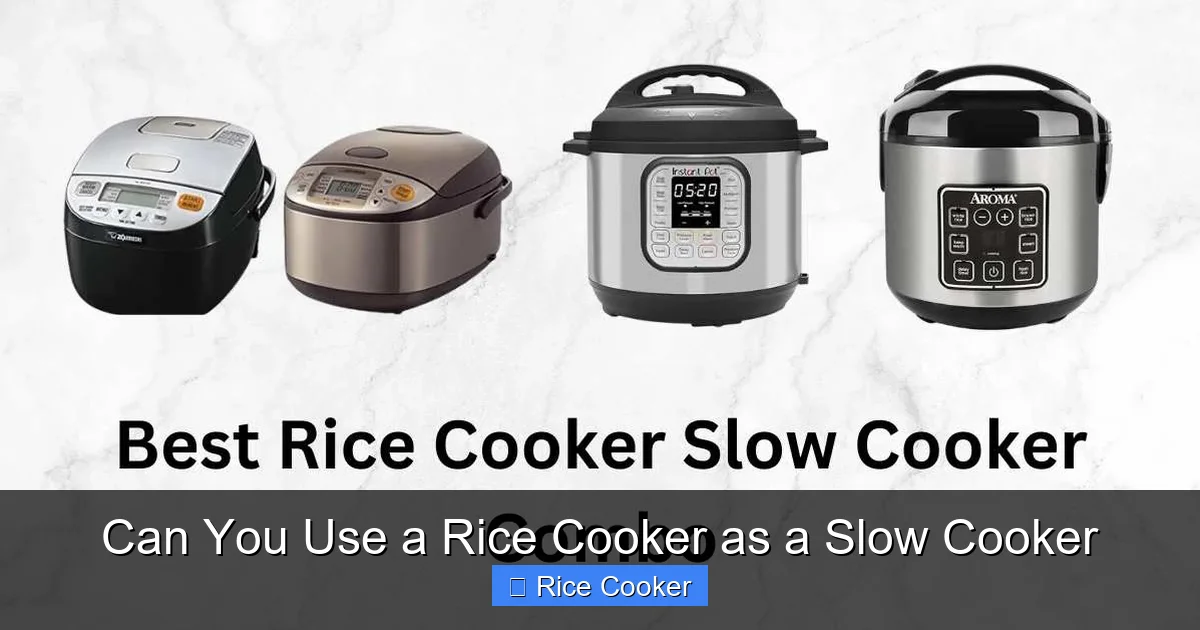
You can absolutely use a rice cooker as a slow cooker, though with some important caveats. While both appliances use heat to cook food, they operate differently—and not all rice cookers are suited for long, low-temperature cooking. Understanding your machine’s capabilities, temperature settings, and safety features is key to making the most of this clever kitchen hack.
Key Takeaways
- Not all rice cookers are designed for slow cooking. Standard models lack the low, steady heat needed for tenderizing tough cuts of meat or developing deep flavors over several hours.
- Programmable rice cookers with warm functions offer more flexibility. Some modern units allow extended cooking times and maintain safe internal temperatures, making them closer to true slow cookers.
- Using a rice cooker as a slow cooker requires caution. Prolonged exposure to high heat can dry out foods or damage non-stick coatings if used beyond recommended durations.
- Best uses include soups, stews, grains, and steamed dishes. These methods align better with a rice cooker’s strengths—even if it’s not technically a slow cooker.
- Safety comes first. Always monitor cooking times and never leave unattended for hours unless your model explicitly supports it.
- It’s a space- and energy-saving alternative. For small batches or quick meals, repurposing a rice cooker avoids needing multiple appliances.
- Upgrade when possible. If you love slow cooking, consider investing in a dedicated slow cooker or a multi-cooker with both functions.
Quick Answers to Common Questions
Can a basic rice cooker be used as a slow cooker?
Not effectively. Basic models lack the temperature control and extended cooking cycles needed for true slow cooking. They’re better suited for reheating or keeping food warm.
How long can I safely cook food in a rice cooker?
Most rice cookers are designed for 20–45 minutes of active cooking. Beyond that, switch to “warm” mode. Never leave perishable food in a rice cooker for more than 2–3 hours without monitoring.
Do I need to add more liquid when slow cooking in a rice cooker?
Yes. Rice cookers evaporate liquid faster than slow cookers. Increase broth or water by 10–20% and check periodically to prevent drying out.
Are hybrid rice cookers good substitutes for slow cookers?
Absolutely. Models like the Instant Pot or Zojirushi with dedicated slow-cook functions offer much closer performance to traditional slow cookers.
Can I cook beans overnight in a rice cooker?
Yes, especially if soaked first. Add beans, water, and salt, then set to “cook” or “warm.” Allow 6–8 hours total. Check occasionally and add water as needed.
📑 Table of Contents
- Can You Use a Rice Cooker as a Slow Cooker? Let’s Break It Down
- Understanding the Difference Between a Rice Cooker and a Slow Cooker
- Types of Rice Cookers and Their Capabilities
- When Can You Actually Use a Rice Cooker Like a Slow Cooker?
- Safety Tips and Best Practices
- Recipe Ideas: What to Make in Your Rice Cooker
- Pros and Cons of Using a Rice Cooker as a Slow Cooker
- Should You Buy a Dedicated Slow Cooker Instead?
- Final Thoughts: Is It Worth It?
Can You Use a Rice Cooker as a Slow Cooker? Let’s Break It Down
Imagine coming home after a long day at work, dropping your bag, and realizing dinner still needs to be made. You don’t want to spend two hours simmering a pot on the stove, but you also don’t have time to run to the store. Enter the humble rice cooker—a kitchen staple in millions of households worldwide. But here’s the real question: can you use a rice cooker as a slow cooker?
The short answer? Yes, sometimes—but it depends on the type of rice cooker you own and what you’re trying to cook. Most people think of rice cookers only for fluffy jasmine rice or oatmeal, but these little machines are far more versatile than they appear. With a bit of know-how, you can turn your rice cooker into a makeshift slow cooker for soups, stews, braised meats, and even desserts. However, there are limitations—especially when it comes to temperature control and cooking duration.
In this comprehensive guide, we’ll explore everything you need to know about using a rice cooker as a slow cooker. We’ll cover the differences between the two appliances, which types of rice cookers work best, safe practices, recipe ideas, and when it makes sense (or doesn’t) to skip buying a slow cooker altogether.
Understanding the Difference Between a Rice Cooker and a Slow Cooker
Before we dive into the “how,” let’s talk about the “why.” Why would anyone even ask this question? After all, both appliances cook food using heat—so aren’t they basically the same thing?
Visual guide about Can You Use a Rice Cooker as a Slow Cooker
Image source: ricearray.org
Not quite. While both devices use electricity to generate warmth, their core design and purpose differ significantly. A traditional slow cooker is built for low-and-slow cooking. It operates at temperatures between 170°F and 280°F (77°C to 138°C), allowing collagen in tough cuts of meat to break down slowly into gelatin. This process takes hours—sometimes up to eight—but results in melt-in-your-mouth tenderness.
A rice cooker, on the other hand, is optimized for rapid, high-heat cooking. Most standard models reach boiling temperatures quickly to cook rice grains evenly, then switch to a “warm” setting once done. The average rice cooker cycles through heating phases within 20–45 minutes, depending on the grain. That means it’s not designed to stay at a consistent low temperature for extended periods.
So why do people even try it? Well, convenience plays a big role. Many homes already have a rice cooker, so using it for multiple tasks saves counter space and energy. Plus, rice cookers often have insulated inner pots that retain heat well—making them surprisingly effective for certain recipes.
Types of Rice Cookers and Their Capabilities
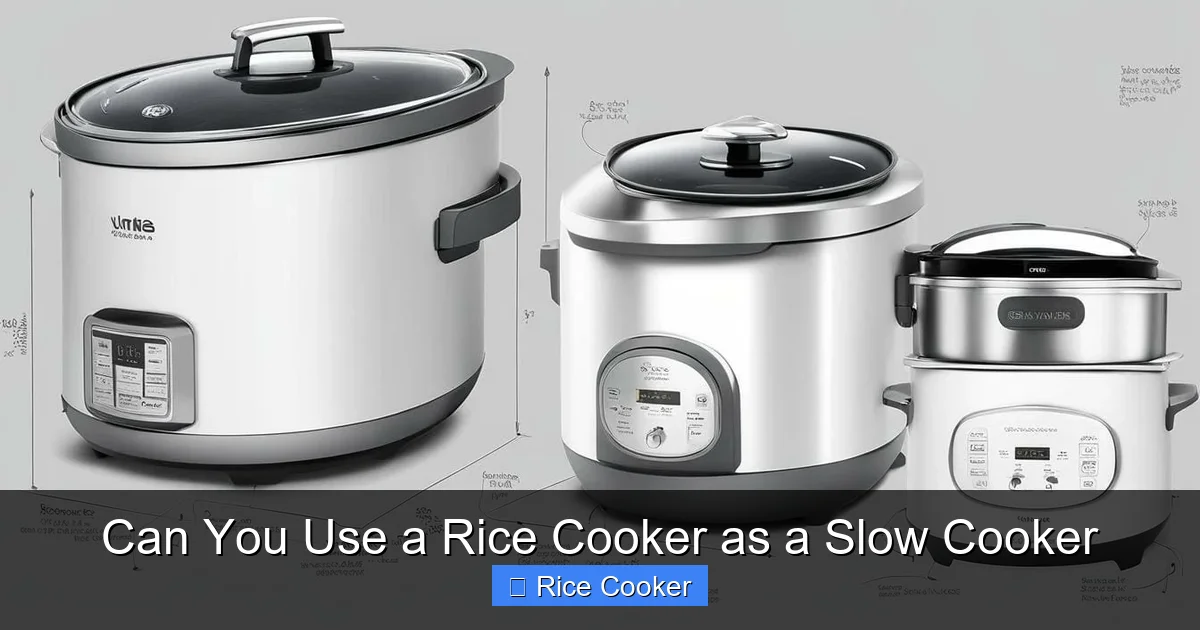
Not every rice cooker is created equal. The ability to function as a slow cooker largely depends on the model you own. Let’s look at the main categories:
Visual guide about Can You Use a Rice Cooker as a Slow Cooker
Image source: ricearray.org
Basic Rice Cookers (Non-Programmable)
These are the simplest models—often found in dorm rooms or student apartments. They usually have two settings: “Cook” and “Warm.” Once the cooking cycle ends, they switch to warming mode. Because they don’t offer adjustable timers or temperature controls, they’re not ideal for slow cooking.
If you’re using one of these, you can technically keep food hot for hours—but you can’t actually *cook* it slowly. So while you might reheat soup or keep chili warm, you won’t get the deep flavor development that defines slow-cooked meals.
Programmable Rice Cookers
This is where things get interesting. Programmable models allow you to set start and end times—meaning you can put ingredients in before leaving for work and come back to a finished meal. Some even offer specialized settings like “porridge,” “soup,” or “steam.”
While many programmable rice cookers still don’t provide true slow-cooking temperatures, their ability to maintain warmth for hours makes them much more useful than basic versions. Look for models with a “keep-warm” function that runs continuously without cycling off.
Multi-Cookers and Hybrid Models
Some modern appliances blur the line between rice cookers and slow cookers. Brands like Zojirushi, Instant Pot, and Cuckoo offer hybrid machines that combine steaming, pressure cooking, sautéing, and slow cooking in one unit.
For example, the Instant Pot Duo Crisp has a dedicated slow-cook function, while the Zojirushi Neuro Fuzzy includes a “warm” mode that maintains 140°F—close to ideal slow-cooking temps. These are essentially mini multi-cookers that happen to look like rice cookers.
When Can You Actually Use a Rice Cooker Like a Slow Cooker?
Even if your rice cooker isn’t labeled as a slow cooker, there are situations where it works surprisingly well. Here’s when it’s worth giving it a shot:
For Short-Term Simmering or Braising
If you need to cook something for 30 minutes to an hour—like a simple beef stew or vegetable curry—your rice cooker might handle it. Just add liquid, set it to “cook,” and stir occasionally. Once done, switch to “warm” to finish the job gently.
Keep in mind: this isn’t true slow cooking, but it can work in a pinch. Avoid using it for dishes that require constant stirring or frequent checking.
For Keeping Food Warm Over Time
Rice cookers excel at holding food at a safe serving temperature. If you’ve already cooked a batch of chili or pulled pork using another method, transferring it to the rice cooker’s warm setting will keep it hot until guests arrive.
However, the USDA recommends keeping perishable foods above 140°F. Many rice cookers dip below this once the initial cycle ends, so monitor it closely if you’re serving food later in the day.
For Cooking Grains, Beans, and Legumes
Long-cooked grains like quinoa, barley, or lentils benefit from moist, steady heat—something rice cookers are great at. Soaking beans overnight and then cooking them in a rice cooker for 6–8 hours can yield perfectly tender results.
This is one area where a rice cooker truly shines as a slow cooker substitute. Just remember to check periodically and add water if needed.
Safety Tips and Best Practices
Using a rice cooker as a slow cooker isn’t inherently dangerous—but it does require awareness. Follow these guidelines to avoid accidents or ruined meals:
- Never exceed recommended cooking times. Even if your pot looks fine, prolonged high heat can degrade non-stick coatings or dry out proteins.
- Use appropriate cookware. Only use the inner pot that came with your rice cooker. Don’t substitute with metal utensils or incompatible inserts.
- Add enough liquid. Unlike slow cookers, rice cookers tend to evaporate moisture faster. Add extra broth or water for soups and stews.
- Monitor during the first hour. Keep an eye on your food until you understand how your specific model behaves.
- Avoid cross-contamination. Don’t use the same pot for raw meat and then immediately cook rice without washing it thoroughly.
Recipe Ideas: What to Make in Your Rice Cooker
Ready to test the waters? Try these beginner-friendly recipes that play to your rice cooker’s strengths:
Simple Chicken and Rice Soup
Combine diced chicken, rice, carrots, celery, onion, garlic, thyme, bay leaf, and broth in the rice cooker. Set to “cook” for 30–40 minutes, then stir and let sit on “warm” for another 20 minutes. Season with salt and pepper.
One-Pot Beef Stew
Sear beef cubes (optional), add them with potatoes, carrots, onions, tomato paste, red wine, and beef stock. Cook on “soup” or “cook” setting for 45 minutes. Switch to “warm” and simmer uncovered for 30 more minutes.
Overnight Oats or Steel-Cut Oats
Mix rolled oats with milk, cinnamon, and a touch of honey. Add water to reach desired consistency. Cook on “porridge” or “cook” for 30–45 minutes. Top with fruit and nuts.
Pros and Cons of Using a Rice Cooker as a Slow Cooker
Let’s weigh the benefits against the drawbacks:
Pros
- Space-saving: One appliance replaces two.
- Energy-efficient: Uses less power than running both a stove and slow cooker.
- Easy cleanup: Non-stick pots are dishwasher-safe.
- Consistent results: No guesswork with timing or temperature.
Cons
- Limited temperature control: Most models can’t sustain true slow-cook temps.
Shorter cooking windows: Not suitable for 6+ hour meals. - Risk of drying out: High heat can scorch or toughen meats.
- Not all models support it: Basic ones lack necessary features.
Should You Buy a Dedicated Slow Cooker Instead?
If you find yourself frequently cooking large batches or preparing complex braises, a dedicated slow cooker is worth the investment. They’re built specifically for low-and-slow cooking, offering better value over time.
But if you only need occasional use or already own a reliable programmable rice cooker, you might never feel the need to buy another appliance. It really depends on your cooking habits.
Final Thoughts: Is It Worth It?
So, can you use a rice cooker as a slow cooker? Absolutely—but with realistic expectations. It’s not a perfect replacement, but it’s a handy backup for quick soups, grains, and warming leftovers. For serious slow cookers who rely on it daily, though, a dedicated machine will give you superior results.
At the end of the day, kitchen appliances should serve your lifestyle—not the other way around. Whether you’re whipping up a weeknight chili or experimenting with overnight oats, your rice cooker can be a surprisingly capable sidekick. Just remember to read the manual, respect its limits, and always prioritize food safety.
Frequently Asked Questions
Is it safe to leave food in a rice cooker for hours?
Only if your model has a continuous “warm” function that maintains at least 140°F. Otherwise, bacteria can grow rapidly. Always check your manual and monitor temperature if unsure.
What’s the biggest difference between a rice cooker and a slow cooker?
A slow cooker operates at lower temperatures over longer periods, ideal for tenderizing meats. A rice cooker uses higher heat briefly and isn’t designed for extended low-temperature cooking.
Can I make pulled pork in a rice cooker?
Technically yes, but it’s not recommended. The high heat and short cycle won’t break down tough cuts properly. A dedicated slow cooker is better suited for this.
Will my rice cooker burn food if I leave it too long?
Possibly. Without automatic shutoff after cooking, some models may continue heating or cycle unpredictably. Always supervise initially and avoid leaving it unattended for hours.
Are there any foods that work well in both appliances?
Yes! Soups, stews, oatmeal, risotto, and steamed vegetables are excellent candidates. Both appliances handle moist, slow-heated cooking well.
How do I clean a rice cooker used for savory dishes?
Always rinse the inner pot immediately after use. Wash with warm, soapy water—most parts are dishwasher-safe. Never submerge the base or cord in water.