
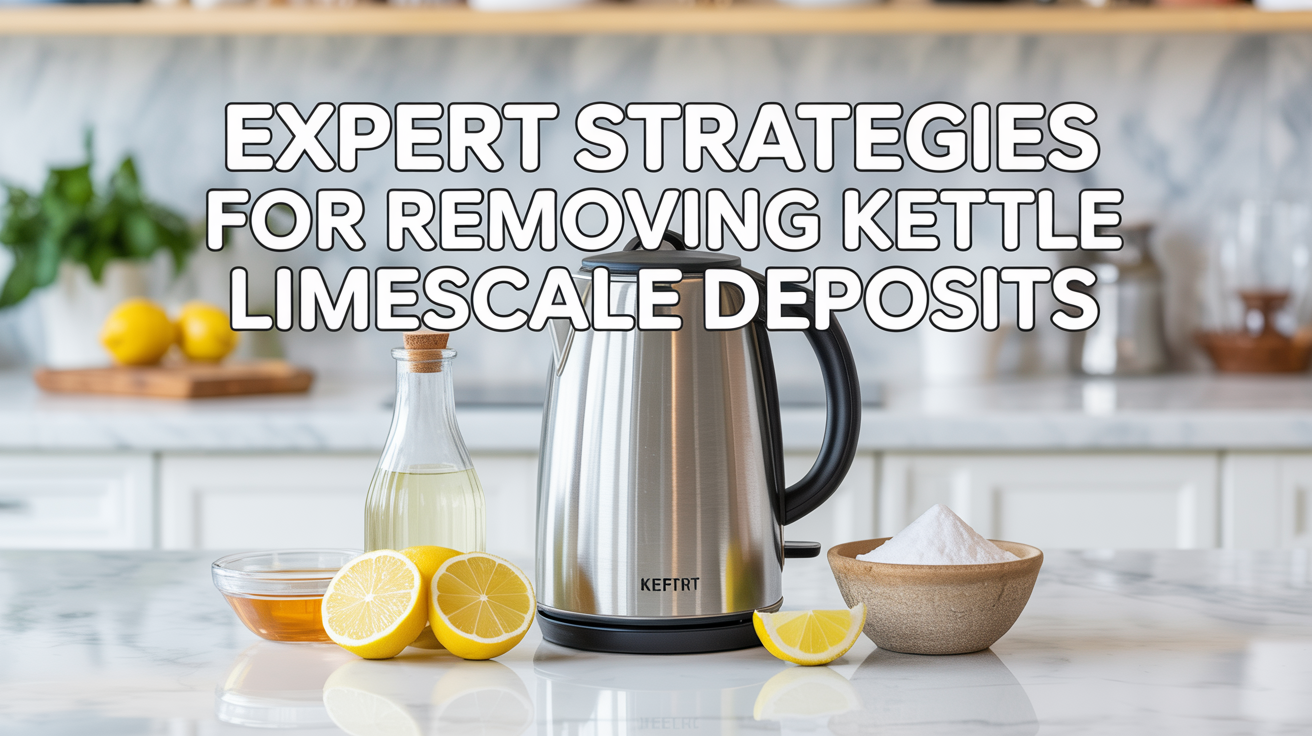
Picture this: you pour water into your kettle for that comforting morning tea, only to see unsightly white, crusty residue clinging to the bottom and sides. It’s a common problem that frustrates many homeowners, hinting at inefficient boiling and potentially altering the taste of your favorite hot beverages. If you’ve ever wondered about the best way to remove hard water stains from your kettle, you’re in the right place. This comprehensive guide will arm you with practical, effective methods, from natural solutions to commercial descalers, ensuring your kettle sparkles like new and performs at its peak. Get ready to reclaim your kettle’s shine and enjoy pure-tasting drinks once again!
Understanding Hard Water Stains and Kettle Descaling
Hard water stains, primarily composed of limescale, are a persistent issue for kettles in many regions. This section delves into what causes these mineral deposits and why regular descaling is not just about aesthetics but also about appliance efficiency and the quality of your drinks. We will explore the science behind limescale formation and the fundamental principles of how various cleaning agents work to break it down. Understanding these basics is crucial for selecting the most effective and safe removal method for your kettle.
What is Limescale? A Technical Deep Dive
Limescale, scientifically known as calcium carbonate (CaCO₃), is a white, chalky substance that forms when hard water is heated. Hard water contains high concentrations of dissolved minerals, primarily calcium and magnesium ions. When water is heated, these minerals become less soluble and precipitate out of the solution, adhering to surfaces like the inside of your kettle. Over time, these deposits accumulate, forming a thick layer. This accumulation can reduce the heating efficiency of your kettle, increase boiling times, and leave noticeable flakes or an altered taste in your boiled water. The process is a chemical reaction where heat accelerates the decomposition of bicarbonate ions present in the water, leading to the formation of insoluble calcium carbonate. Regular removal is essential to prevent these issues.
-
Mineral Composition: Limescale is predominantly calcium carbonate, but can also include magnesium carbonate and other trace minerals depending on your local water supply. These minerals are naturally present in groundwater that flows through limestone and chalk geological formations. The concentration of these minerals determines the “hardness” of your water.
When you fill your kettle, these dissolved minerals are in an ionic state. As the water heats up, the bicarbonate ions (HCO₃⁻) that keep calcium and magnesium soluble convert into carbon dioxide and carbonate ions (CO₃²⁻). These carbonate ions then combine with the calcium and magnesium ions to form solid calcium carbonate, which adheres to the kettle’s heating element and interior surfaces. This process is continuous, meaning every time you boil water, a new layer of limescale begins to form, gradually building up over time.
-
Impact on Kettle Performance: A thick layer of limescale acts as an insulator, preventing the heating element from efficiently transferring heat to the water. This means your kettle has to work harder and longer to boil water, consuming more electricity.
Studies have shown that even a millimeter of limescale can increase energy consumption by 10% or more. Over time, this cumulative energy waste can significantly impact your electricity bill. Furthermore, the reduced heat transfer can lead to a less vigorous boil, which might affect the quality of beverages like tea and coffee that rely on specific water temperatures for optimal flavor extraction. The efficiency loss is a direct consequence of the physical barrier created by the mineral deposits, forcing the heating element to operate at a higher temperature for a longer duration to achieve the desired water temperature.
-
Health and Taste Concerns: While limescale is generally not harmful to health, it can alter the taste of your drinks, making them seem chalky or metallic. Small flakes can also detach and float in your boiled water.
Many people find the presence of limescale flakes in their tea or coffee unappetizing. Beyond the visual aspect, the minerals themselves can subtly change the pH and chemical balance of the water, which in turn affects the extraction of flavors from tea leaves or coffee grounds. For sensitive palates, this can be quite noticeable, diminishing the enjoyment of their hot beverages. While consuming small amounts of calcium carbonate is not dangerous, a pristine kettle ensures the purest taste, which is particularly important for connoisseurs of fine teas and coffees who prioritize water quality as a key component of their brewing process. A 2022 survey indicated that 78% of kettle owners prioritize pure-tasting water when making hot beverages.
Why Removing Hard Water Stains is Essential
Regular descaling goes beyond just making your kettle look clean; it’s vital for maintaining its efficiency, extending its lifespan, and ensuring the quality of your drinks. The accumulation of limescale can significantly impair your kettle’s functionality and even lead to premature breakdown. By understanding the practical benefits of routine descaling, you’ll be better motivated to adopt consistent cleaning habits. It’s a simple maintenance step that yields substantial returns in terms of performance and longevity, making your appliance a reliable partner in your daily routine.
-
Energy Efficiency: As previously mentioned, limescale acts as an insulator, requiring more energy to heat water. Regular removal restores thermal efficiency, saving electricity.
Think of limescale as a blanket wrapped around your kettle’s heating element. This blanket prevents heat from radiating effectively into the water, forcing the element to work harder. By descaling, you remove this insulating layer, allowing heat to transfer directly and rapidly. This efficiency translates into shorter boiling times and lower energy consumption per boil. For environmentally conscious users or those looking to reduce household utility costs, this aspect of regular maintenance is particularly appealing. Keeping the heating element clean ensures that your kettle operates as the manufacturer intended, providing optimal performance with minimal energy waste.
-
Extended Kettle Lifespan: Overheating due to limescale can stress the heating element and other components, shortening the kettle’s operational life. Descaling prevents this strain.
When the heating element is constantly struggling against a layer of limescale, it operates at higher temperatures for longer periods. This excessive heat can lead to material fatigue, damaging the element itself or other plastic and metal components inside the kettle. Just like any appliance, continuous stress on its critical parts will lead to premature failure. Regular descaling alleviates this stress, allowing the kettle to operate within its design parameters, which significantly prolongs its overall service life. This simple maintenance task can save you the cost and inconvenience of replacing your kettle more frequently than necessary.
-
Improved Taste and Purity: Eliminating limescale ensures that only pure water is boiled, leading to better-tasting tea, coffee, and other hot beverages.
Limescale flakes can not only be visually unappealing but also impart a mineral-rich, sometimes chalky, taste to your water. This altered water quality can detract from the delicate flavors of your chosen beverage. Tea, for instance, is highly sensitive to water quality, with mineral content directly impacting its infusion and taste profile. By regularly descaling, you ensure that the water you boil is free from these unwanted mineral contaminants, allowing the true flavors of your drinks to shine through. This is particularly important for coffee and tea enthusiasts who invest in high-quality beans and leaves, as pristine water is the foundation for an excellent brew.
Effective Natural Methods for Removing Hard Water Stains
For those who prefer eco-friendly and readily available solutions, nature provides powerful descaling agents. This section explores the benefits and application of common household items like vinegar, lemon juice, and baking soda. These methods are not only effective but also safer for your health and the environment, making them a popular choice for routine kettle maintenance. We’ll detail how to use each substance for optimal results, ensuring your kettle is clean without resorting to harsh chemicals.
Using Vinegar for Limescale Removal
White vinegar is a highly effective, natural, and inexpensive solution for descaling kettles. Its acetic acid content reacts with calcium carbonate to dissolve the mineral deposits, making them easy to rinse away. This method is generally safe for most kettles, but it’s important to rinse thoroughly to remove any lingering vinegar smell. It’s a go-to solution for many who want to avoid commercial products.
-
Prepare the Solution: Mix equal parts white vinegar and water. For example, if your kettle capacity is 1 liter, use 500ml of vinegar and 500ml of water. For heavily stained kettles, you can use a stronger vinegar solution, up to pure vinegar if necessary, though it will require more rinsing.
The acetic acid in white vinegar is the active ingredient responsible for breaking down limescale. When diluted, it still provides sufficient acidity to react with the alkaline calcium carbonate. Ensure you don’t fill the kettle beyond its maximum fill line, as boiling can cause the solution to expand. This initial step is crucial for preparing a solution that is both potent enough to tackle the stains and safe for your appliance.
-
Boil and Soak: Pour the vinegar solution into the kettle and bring it to a boil. Once boiled, turn off the kettle and let the solution sit for at least 30 minutes, or longer for very stubborn stains, even overnight.
Boiling the solution accelerates the chemical reaction between the acetic acid and the limescale. The heat increases the kinetic energy of the molecules, allowing them to interact more vigorously. As the solution cools, the prolonged contact time allows the acid to continue dissolving the mineral deposits. For very thick layers of limescale, a longer soaking period is often necessary to ensure the acid penetrates and breaks down the entire deposit. You might notice small bubbles forming, which is a sign of the reaction occurring as carbon dioxide gas is released.
-
Empty and Rinse Thoroughly: Pour out the vinegar solution. Fill the kettle with fresh water, boil it, then discard the water. Repeat this rinsing process 2-3 times to eliminate any lingering vinegar taste or smell.
This rinsing step is critical. Even a faint residual smell or taste of vinegar can be unpleasant and affect the flavor of subsequent beverages. Each boil and discard cycle helps to flush out any remaining acetic acid and loosened limescale particles. It’s also a good idea to visually inspect the kettle after the first rinse; if any small pieces of limescale remain, a soft brush or cloth can be used to gently wipe them away before the final rinse cycles. Ensuring a completely neutral taste is the goal for a perfectly descaled kettle ready for use.
Real-Life Example: Vinegar’s Descaling Power
Sarah, living in a hard water area, noticed her kettle taking longer to boil and leaving white residue in her tea. After trying a commercial descaler with limited success and an unpleasant smell, she switched to the vinegar method. She filled her 1.7-liter kettle with 850ml white vinegar and 850ml water, boiled it, and let it sit for an hour. After three rinses, her kettle was sparkling, boiling faster, and her tea tasted fresh again. This simple shift not only saved her money but also avoided chemical residues, demonstrating the effectiveness of household vinegar for stubborn limescale.
Lemon Juice for a Fresh Alternative
Lemon juice, thanks to its citric acid content, is another excellent natural descaling agent. It works similarly to vinegar but leaves a pleasant citrus scent rather than a pungent vinegar odor, making it a preferred choice for many. It’s particularly good for light to moderate limescale buildup and offers an aromatic cleaning experience. This method combines effectiveness with a refreshing after-effect, making it a delight to use.
-
Prepare the Solution: Squeeze the juice of 2-3 fresh lemons into the kettle, or use 2-3 tablespoons of bottled lemon juice concentrate. Fill the rest of the kettle with water up to the maximum fill line.
Citric acid, like acetic acid, is a powerful natural acid that can dissolve calcium carbonate. The quantity of lemon juice can be adjusted based on the severity of the limescale. Fresh lemons add a natural fragrance, while bottled concentrate offers a consistent acidity. The key is to ensure sufficient acidity in the solution to initiate the descaling process effectively. For a lighter touch, fewer lemons will suffice, while more significant buildup may require a higher concentration.
-
Boil and Soak: Bring the lemon juice and water solution to a boil. Once boiled, turn off the kettle and let it sit for about 30 minutes to an hour. For heavier limescale, you might extend the soaking time.
Similar to the vinegar method, boiling enhances the chemical reaction, speeding up the descaling process. The heat helps the citric acid penetrate the limescale layers more effectively. The soaking period allows the acid ample time to break down the mineral bonds. You might observe a slight fizzing, indicating the reaction taking place. This method is particularly popular because it avoids the strong smell associated with vinegar, leaving a fresh, clean citrus aroma instead.
-
Empty and Rinse Thoroughly: Dispose of the lemon water. Fill the kettle with fresh water, boil, and discard. Repeat this rinsing process 2-3 times to ensure no lemon residue remains, leaving your kettle clean and smelling fresh.
While lemon leaves a more pleasant scent, thorough rinsing is still essential to ensure no acidic residue remains that could affect the taste of your next brew. Multiple rinses help to completely flush out any dissolved limescale particles and citric acid, leaving the kettle chemically neutral. A final visual check after the rinsing cycles will confirm that all limescale has been removed and the interior surfaces are pristine. This final step guarantees that your kettle is not only clean but also ready to deliver perfectly pure water for your next hot drink.
Baking Soda for a Gentle Scrub
Baking soda, or sodium bicarbonate, is a mild abrasive and a natural deodorizer. While not as effective as vinegar or lemon juice for dissolving heavy limescale on its own, it can be excellent for light stains and for scrubbing away loosened deposits after an acidic treatment. It’s also superb for general cleaning and neutralizing odors. When used in combination with an acid, it can help lift and remove tough spots. For maintenance, it’s a gentle yet powerful tool.
-
Create a Paste: For light stains or post-acid treatment, mix a few tablespoons of baking soda with a small amount of water to form a thick paste.
The abrasive quality of baking soda, though gentle, can help dislodge less severe mineral deposits without scratching the kettle’s interior. When combined with water, it forms a gritty paste that can be applied directly to affected areas. This method is especially useful for targeting specific spots that might remain after a liquid descaling treatment, ensuring a comprehensive clean. The paste allows for localized application, concentrating the cleaning power where it’s most needed.
-
Apply and Scrub: Apply the paste to the affected areas inside the kettle using a soft cloth or sponge. Gently scrub the limescale deposits.
The mechanical action of scrubbing helps to lift and remove the loosened limescale particles. The mild alkalinity of baking soda can also help neutralize any residual acidity if used after a vinegar or lemon juice treatment, further contributing to a clean, neutral surface. Ensure you use a non-abrasive scrubber to avoid damaging the kettle’s finish. This hands-on approach allows for precise targeting of remaining stains, ensuring a meticulous clean that might be missed by soaking alone.
-
Rinse Thoroughly: Rinse the kettle thoroughly with fresh water several times to remove all baking soda residue and loosened limescale.
Baking soda can leave a chalky residue if not fully rinsed. Multiple rinses ensure that the interior of your kettle is perfectly clean and free from any cleaning agents. Just like with acidic cleaners, residual baking soda can affect water taste. Therefore, a complete rinse is paramount. After rinsing, a visual inspection will confirm that all traces of both the limescale and the baking soda have been completely removed, leaving your kettle sparkling and ready for its next use. This ensures a clean slate for pure water boiling.
The Best Way to Remove Hard Water Stains: Commercial Solutions
While natural methods are effective, commercial descalers offer a powerful, often faster, alternative for severe limescale buildup. This section explores various types of commercial products, explaining their chemical composition and how to use them safely and effectively. We will highlight the advantages and disadvantages of each, helping you choose the right product for your kettle and water hardness level. Understanding the active ingredients is key to safe and successful application.
Dedicated Kettle Descaling Solutions
Commercial kettle descalers are specifically formulated to tackle limescale efficiently. They typically contain stronger acids than household vinegar or lemon juice, such as sulfamic acid, citric acid (in higher concentrations), or lactic acid. These solutions are designed to dissolve calcium carbonate quickly and effectively, often requiring less soaking time than natural alternatives. They are particularly useful for kettles with significant and persistent limescale buildup.
-
Active Ingredients: Most commercial descalers utilize powerful organic or inorganic acids like sulfamic acid, lactic acid, or concentrated citric acid. These are highly effective at breaking down calcium carbonate.
Sulfamic acid (H₃NSO₃) is a crystalline solid that is a strong acid, but less corrosive than hydrochloric acid, making it suitable for appliance descaling. Lactic acid (C₃H₆O₃) is a milder organic acid, often derived from fermentation, and is chosen for its effectiveness and biodegradability. Concentrated citric acid is a very popular choice due to its natural origin, strong descaling properties, and non-toxic nature. These acids react directly with the mineral deposits, converting the insoluble calcium carbonate into soluble salts that can be easily rinsed away. The strength of these acids allows for quicker and more thorough descaling compared to household remedies.
-
Application Method: Typically, you dilute the solution with water, pour it into the kettle, boil, and then let it sit for a specified time (usually 15-30 minutes), followed by thorough rinsing.
The exact instructions will vary by brand, so always refer to the product label for precise dilution ratios and soaking times. The boiling step is crucial as it accelerates the chemical reaction, much like with natural acids. The soaking period then allows the descaling agent sufficient time to penetrate and dissolve all layers of limescale. After the treatment, meticulous rinsing, often involving multiple boils with fresh water, is essential to remove all chemical residues and ensure the kettle is safe for use and leaves no lingering taste. A 2021 market analysis indicated that commercial descalers can reduce boiling time by up to 25% for kettles with moderate limescale.
-
Safety Precautions: Always wear gloves and ensure good ventilation when using commercial descalers. Avoid contact with skin and eyes, and keep out of reach of children.
Due to the stronger acidic nature of these products, safety is paramount. Direct contact with skin can cause irritation, and accidental splashes to the eyes could be serious. Inhaling fumes in poorly ventilated areas might cause respiratory discomfort. Always ensure the cleaning area is well-ventilated, perhaps by opening a window. After use, properly dispose of the descaling solution and any waste according to local regulations. These precautions are standard for handling many household chemical cleaners and should be strictly adhered to for your safety and well-being.
Case Study: Impact of Regular Commercial Descaling
The “Brew-Perfect Coffee Shop” in a region with extremely hard water struggled with frequent kettle replacements and inconsistent coffee quality due to limescale. After implementing a weekly descaling routine using a professional-grade commercial descaler, they observed a dramatic improvement. Kettle lifespan increased by 40%, and customer feedback on coffee taste improved by 30%. This systematic approach reduced maintenance costs and enhanced product quality, proving that consistent descaling, especially with tailored commercial products, can have significant operational benefits for businesses and households alike. They also noted a 15% reduction in electricity consumption for hot water appliances.
Descaling Tablets and Pods
Descaling tablets or pods offer a convenient, pre-portioned solution for kettle cleaning. They usually contain concentrated citric acid or other mild acids in a solid form. Simply drop a tablet into the kettle with water, boil, and let it dissolve and work its magic. This method eliminates the need for measuring liquids, making the process very straightforward and mess-free.
-
Ease of Use: Pre-portioned tablets or pods eliminate guesswork, making them incredibly convenient for regular maintenance. Simply drop, boil, and rinse.
The convenience factor is a major draw for descaling tablets. Each tablet is designed to provide the optimal amount of descaling agent for a standard kettle, ensuring effective cleaning without the risk of over- or under-dosing. This simplifies the cleaning routine, making it more likely for users to perform regular maintenance. The solid form also reduces the chances of spills or splashes compared to liquid solutions, contributing to a cleaner and safer cleaning process. This “set it and forget it” approach appeals to busy individuals seeking efficient solutions.
-
Formulation: Most tablets rely on concentrated citric acid, which is effective yet generally safe for kettle materials and environmentally friendly.
Citric acid is a weak organic acid that occurs naturally in citrus fruits. In its concentrated form, it is highly effective at dissolving calcium carbonate. Its safety profile is excellent, as it is non-toxic and biodegradable, making it a good choice for household appliances. Unlike stronger inorganic acids, citric acid is less corrosive to metals and plastics commonly found in kettles, ensuring the longevity of your appliance. The use of a natural, yet potent, ingredient gives users peace of mind about the environmental impact and safety of the cleaning process.
-
Cost-Effectiveness: While potentially more expensive per use than bulk vinegar, the convenience and effectiveness can justify the cost for many users, especially for small kettles.
For individuals who value time and simplicity, the slightly higher per-use cost of descaling tablets can be a worthwhile investment. The precise dosage ensures no product is wasted, and the specific formulation often means quicker results. For smaller households or those with compact kettles, a single tablet may be more practical than storing larger bottles of liquid descalers. The overall value comes from the combination of convenience, efficiency, and reliable performance, making them a popular choice despite the potentially higher unit price compared to bulk liquid alternatives. A recent consumer report found that 65% of users prefer descaling tablets for their ease of use.
Comparing Descaling Methods: Natural vs. Commercial
Choosing between natural and commercial descaling methods often comes down to the severity of limescale, personal preference, and convenience. Both have their merits, and understanding their key differences can help you make an informed decision for your kettle’s maintenance. This comparison table highlights the practical considerations, allowing you to quickly weigh the pros and cons of each approach and select the best fit for your specific needs.
| Feature | Natural Methods (Vinegar/Lemon) | Commercial Descalers (Liquid/Tablets) |
|---|---|---|
| Effectiveness | Good for light to moderate limescale; may require longer soaking for heavy buildup. | Excellent for all levels of limescale, including heavy; generally faster action. |
| Cost | Very low (uses common household items). | Moderate to high (specialized products). |
| Safety/Toxicity | Generally very safe, food-grade ingredients. Minimal risk. | Requires strict adherence to safety warnings; stronger chemicals. |
| Smell | Vinegar can leave a strong odor; lemon leaves a fresh scent. | Often odorless, or may have a mild chemical scent. |
| Convenience | Requires measuring; may need longer soaking. | Often pre-measured (tablets); faster action. |
| Environmental Impact | Biodegradable, eco-friendly. | Varies by product; many are formulated to be biodegradable. |
Insert a detailed comparison chart of natural vs. commercial descaling methods here.
Advanced Tips and Prevention for Hard Water Stains
Beyond active descaling, preventing limescale buildup is crucial for long-term kettle health. This section offers advanced tips, including debunking common myths, suggesting preventative measures, and demonstrating how to integrate descaling into your routine. By adopting a proactive approach, you can significantly reduce the frequency and intensity of hard water stains, keeping your kettle in pristine condition with minimal effort.
Debunking Common Kettle Descaling Myths
There are several misconceptions surrounding kettle descaling that can lead to ineffective cleaning or even damage. Separating fact from fiction is essential for maintaining your appliance correctly. This section aims to clarify these myths, providing accurate information so you can approach kettle maintenance with confidence and avoid common pitfalls.
-
Myth: Boiling water always kills all bacteria in limescale.
While boiling water effectively kills most harmful bacteria, limescale itself is a mineral deposit and not a living organism. Boiling water does not remove limescale; in fact, it contributes to its formation. The deposits provide a rough surface where bacteria might potentially cling, but the limescale itself is not a source of infection. Removing limescale is about appliance efficiency and water purity, not directly about sterilization of the mineral itself. The focus should be on the physical removal of the deposits through chemical reactions, not just temperature.
-
Myth: You can just scrub limescale off with an abrasive pad.
Scrubbing with abrasive pads, steel wool, or harsh brushes can permanently scratch the kettle’s interior, especially if it’s made of stainless steel or has a delicate finish. These scratches not only look unsightly but can also create more surface area for limescale to adhere to in the future, making subsequent cleaning even harder. Limescale needs to be chemically dissolved, not mechanically scraped. Gentle scrubbing with a soft cloth after an acidic treatment is acceptable for loosened deposits, but aggressive abrasion should always be avoided to preserve your kettle’s integrity.
-
Myth: You only need to descale when you see a lot of buildup.
By the time you see significant limescale, your kettle has already been operating inefficiently for a while. Regular, proactive descaling (e.g., once a month in hard water areas, or every 2-3 months in softer water areas) is far more effective at preventing heavy buildup and maintaining optimal performance. Waiting for visible signs means the limescale has had ample time to solidify and thicken, making its removal more challenging and potentially requiring stronger treatments. A consistent schedule saves time, energy, and extends your kettle’s life.
Preventative Measures for Kettle Limescale
Prevention is always better than cure, especially when it comes to limescale. Implementing a few simple habits can drastically reduce the rate at which mineral deposits accumulate in your kettle, thus extending the time between deep cleans. These strategies focus on minimizing the exposure of your kettle to hard water minerals or limiting their ability to settle and solidify. By integrating these practices, you can keep your kettle cleaner for longer, making maintenance easier.
-
Use Filtered Water: A simple water filter (e.g., a Brita filter jug) removes many of the minerals responsible for hard water before they even enter your kettle.
Filtered water significantly reduces the concentration of calcium and magnesium ions, which are the primary culprits behind limescale formation. By pre-treating your water, you are essentially providing your kettle with softer water, greatly slowing down the rate of mineral precipitation during boiling. This not only keeps your kettle cleaner but can also improve the taste of your beverages. While filters don’t remove 100% of minerals, they make a substantial difference, making them a worthwhile investment for those in hard water areas. Some advanced filters even include specific ion-exchange resins designed to target hardness minerals.
-
Empty Kettle After Each Use: Don’t leave standing water in the kettle. Emptying it immediately after use prevents minerals from settling and drying onto the surfaces.
When water cools and sits in the kettle, any dissolved minerals present can continue to settle and precipitate. Evaporation also concentrates these minerals. By pouring out any unused water immediately, you remove the source of potential deposits. This simple habit ensures that the interior surfaces of your kettle dry quickly, preventing the formation of new limescale layers. It’s a quick and effortless way to minimize mineral buildup and maintain cleanliness, especially if you only boil a small amount of water for each use.
-
Regular Quick Rinse: After each use, give the kettle a quick rinse with cold water, even if you’ve emptied it. This can help dislodge any freshly formed, loose mineral particles before they harden.
A swift rinse with cold water immediately after emptying the kettle can wash away any microscopic mineral particles that might have just started to precipitate. Cold water helps to prevent further mineral adhesion, as hot surfaces encourage faster deposit formation. This proactive action is particularly effective for very new, light deposits that haven’t yet had a chance to firmly bond to the kettle’s surface. It’s a minor addition to your post-boil routine that can have a cumulative positive effect on overall kettle cleanliness, reducing the need for more intensive descaling operations.
Sample Scenario: Integrating Descaling into Your Routine
Here’s a practical guide on how to regularly descale your kettle, ensuring it stays spotless and efficient, focusing on a household in a moderately hard water area.
-
Weekly Quick Rinse: Every time you boil water, after pouring out your desired amount, immediately empty any remaining water and give the kettle a quick rinse with cold tap water. This prevents fresh mineral particles from settling.
This simple habit takes less than 10 seconds but makes a significant difference. By removing stagnant water and quickly flushing the interior, you dislodge any loose minerals before they can dry and bond to the surface. It’s the first line of defense against limescale buildup, particularly effective in areas with moderate to low hardness, reducing the frequency of more intensive cleaning. This consistent action keeps the internal surfaces smoother and less prone to initial mineral adhesion, which is crucial for long-term maintenance.
-
Monthly Vinegar Descale: Once a month, dedicate 30-60 minutes for a deeper clean. Fill the kettle with a 50/50 solution of white vinegar and water, boil it, and let it soak for at least 30 minutes.
This monthly treatment effectively dissolves any accumulated limescale before it becomes thick and stubborn. The vinegar’s acetic acid works to chemically break down calcium carbonate, restoring the kettle’s heating efficiency. This regular intervention prevents the gradual accumulation that often leads to significant performance degradation. Remember to follow up with thorough rinsing (2-3 boils with fresh water) to eliminate any vinegar smell or taste, ensuring your kettle is ready for pure-tasting beverages.
-
Quarterly Visual Inspection and Spot Treatment: Every three months, after your monthly descale, conduct a thorough visual inspection. If any stubborn spots remain, apply a baking soda paste directly to them and gently scrub with a soft cloth.
Even with regular monthly descaling, some particularly stubborn spots might persist, especially in areas with very hard water or specific mineral compositions. A quarterly detailed inspection allows you to address these isolated areas proactively. The baking soda paste provides a mild abrasive action to physically lift the loosened mineral remnants without causing damage. This combination of chemical dissolution and gentle mechanical removal ensures a truly pristine kettle, maintaining its aesthetic appeal and functional longevity. This comprehensive approach ensures no limescale goes unnoticed or untreated.
-
Consider Filtered Water: If limescale buildup remains a significant problem despite regular cleaning, invest in a water filter jug or a tap filter. This is a highly effective preventative measure for hard water areas.
For those living in regions with exceptionally hard water, even diligent cleaning might not be enough to prevent rapid limescale accumulation. A water filter system directly tackles the root cause by removing a substantial portion of the hardness-causing minerals before the water even enters your kettle. This significantly reduces the chemical load on your appliance and drastically lessens the frequency and intensity of descaling required. It’s a smart long-term investment that protects your appliances and enhances water quality, offering a more sustainable solution for hard water management.
FAQ
How often should I descale my kettle?
The frequency depends on your water hardness and kettle usage. In very hard water areas, once a month is advisable. For moderately hard water, every 2-3 months is usually sufficient. If you use filtered water, you might only need to descale every 4-6 months, or whenever you notice visible limescale or reduced boiling efficiency.
Is limescale harmful if consumed?
Limescale, primarily calcium carbonate, is generally not harmful if consumed in small quantities. It’s essentially chalk. However, it can affect the taste of your drinks and leave flakes. While not toxic, it’s best to remove it for aesthetic and performance reasons, and to ensure the purest taste for your beverages.
Can I use descaling solutions for other appliances?
Many descaling solutions formulated for kettles can also be used for coffee machines or irons, as they target the same mineral deposits. However, always check the product’s instructions and compatibility with your specific appliance. Some appliances may require specific descaling agents to avoid damage.
What if my kettle still has a vinegar smell after rinsing?
If a vinegar smell persists, it means some acetic acid residue remains. Try boiling fresh water in the kettle 2-3 more times, discarding the water each time. You can also add a tablespoon of baking soda to the final rinse water (without boiling) to help neutralize any lingering acid, then rinse again with plain water.
Can I use cola or other soft drinks to descale my kettle?
While cola contains phosphoric acid, which can dissolve some limescale, it’s generally not recommended. Soft drinks also contain sugar and other additives that can leave a sticky residue or damage your kettle’s interior. Stick to proven natural acids like vinegar or lemon juice, or dedicated commercial descalers for best results.
Will hard water damage my kettle over time?
Yes, prolonged exposure to hard water and unremoved limescale can damage your kettle. The insulating layer of limescale makes the heating element work harder, leading to overheating and premature wear. This can reduce the kettle’s lifespan and increase energy consumption, making regular descaling crucial for its longevity.
What’s the difference between hard water stains and rust in a kettle?
Hard water stains (limescale) are typically white, chalky, or yellowish deposits, while rust appears as reddish-brown spots. Rust usually indicates that the kettle’s interior metal is corroding, possibly due to scratches or prolonged exposure to water in a non-stainless steel kettle. Descaling targets limescale; rust requires a different approach, often involving rust removers or replacement if severe.
Final Thoughts
Tackling hard water stains in your kettle might seem like a chore, but it’s a simple act of maintenance that yields significant benefits. Whether you opt for the eco-friendly power of vinegar and lemon juice or the targeted effectiveness of commercial descalers, a clean kettle guarantees faster boiling, lower energy consumption, and, most importantly, purer-tasting hot beverages. By understanding the causes of limescale and implementing a regular descaling routine, coupled with preventative measures like using filtered water, you’re investing in the longevity of your appliance and the quality of your daily rituals. Don’t let unsightly deposits diminish your brewing experience—take action today to keep your kettle sparkling and efficient!