
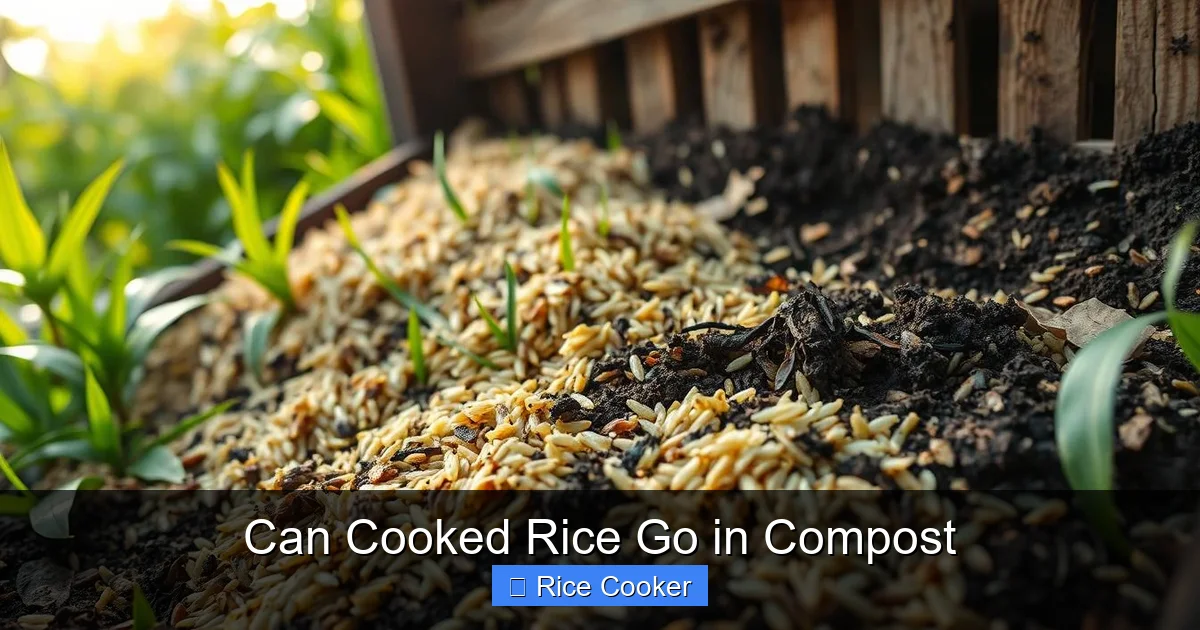
Can cooked rice go in compost? Absolutely—cooked rice is a great organic material that breaks down easily and adds valuable nutrients to your compost pile. However, it’s important to add it in moderation and balance it with other compost materials to avoid issues like odor or pests. With the right approach, using leftover rice in compost supports sustainable gardening and reduces food waste.
Key Takeaways
- Cooked rice is compostable: Unlike raw rice, cooked rice breaks down quickly in a compost system, adding carbon-rich “brown” material and essential nutrients.
- Balance is key: To prevent odors and attract pests, always mix cooked rice with green (nitrogen-rich) and brown (carbon-rich) materials in proper ratios.
- Avoid large quantities at once: Adding too much cooked rice at one time can slow decomposition and create anaerobic conditions that lead to unpleasant smells.
- No need to rinse before composting: Leftover sauces or seasonings on cooked rice are fine—they decompose naturally and won’t harm your compost.
- Use in hot compost systems: Active, high-temperature compost piles break down cooked rice faster and more efficiently than cold or slow compost methods.
- Supports sustainability: Composting cooked rice helps reduce landfill waste and turns kitchen scraps into rich soil amendment for your garden.
📑 Table of Contents
- Can Cooked Rice Go in Compost? A Complete Guide to Turning Kitchen Scraps Into Garden Gold
- Why Cooked Rice Belongs in Your Compost Bin
- What Makes Raw Rice Different?
- How to Compost Cooked Rice: Step-by-Step Tips
- Benefits of Composting Cooked Rice
- Practical Examples: Real-World Composting Scenarios
- Common Concerns About Composting Cooked Rice
- Alternatives to Traditional Composting
- Final Thoughts: Yes, You Can Compost Cooked Rice!
Can Cooked Rice Go in Compost? A Complete Guide to Turning Kitchen Scraps Into Garden Gold
We’ve all been there—you just finished cooking a big pot of rice, and now you’re staring at a bowl full of leftovers. Do you toss it in the trash? Freeze it for later? Or… could you be doing something better? If you’re into gardening or sustainability, you might be wondering: can cooked rice go in compost? The short answer is yes—but not without some important considerations. In this detailed guide, we’ll walk you through everything you need to know about composting cooked rice, from why it works to how to do it safely and effectively.
Composting is one of the most rewarding ways to give back to the earth. It transforms everyday kitchen scraps into nutrient-dense soil that feeds plants, improves water retention, and reduces your environmental footprint. But not every food item plays nicely in a compost bin. Some can attract pests, create odors, or even kill beneficial microbes. So where does cooked rice fit in?
Let’s dive into the science, the practical tips, and the best practices so you can confidently compost your rice—whether you’re using a backyard bin, an indoor tumbler, or a community compost program.
Why Cooked Rice Belongs in Your Compost Bin
Visual guide about Can Cooked Rice Go in Compost
Image source: metrocookingdallas.com
Cooked rice is essentially a carbohydrate-rich organic material. After cooking, the starches in rice become more accessible to microorganisms, which means they break down faster than raw grains. This makes cooked rice an excellent “green” or “brown” addition—depending on how you use it—in your compost pile.
But what exactly makes it suitable for composting?
First, rice is made up primarily of carbohydrates, proteins, and small amounts of fiber. These components are biodegradable and serve as energy sources for decomposers like bacteria and fungi. When these microorganisms feed on the rice, they convert it into humus—a stable, dark, crumbly substance that enriches soil structure.
Second, cooked rice has higher moisture content than raw rice, which helps maintain the damp environment that active compost needs. Moisture is crucial because microbial activity slows down in dry conditions. However, too much moisture without enough airflow can lead to anaerobic conditions and bad smells—so balance is key.
Finally, composting cooked rice supports circular living. Instead of sending food waste to landfills where it produces methane (a potent greenhouse gas), composting turns it into usable soil. This reduces your carbon footprint and keeps valuable nutrients cycling through ecosystems.
What Makes Raw Rice Different?
You might be tempted to toss raw rice into your compost bin after spilling a bag or finding unopened packets. But here’s the catch: raw rice does not belong in compost. Why?
Raw rice contains intact starch granules wrapped in a hard outer shell. These resist breakdown by microbes, meaning they can persist in compost for months—or even years. While they won’t hurt your compost, they won’t contribute much either. In fact, if you accidentally add raw rice, don’t panic—just bury it deep within the pile where heat and moisture can eventually soften it.
Another reason to avoid raw rice: it can clump together when wet, creating dense pockets that trap air and slow decomposition. This leads to uneven composting and potential mold growth.
So remember: only cooked rice should go into your compost bin. If you’ve already added raw rice, remove it before it causes problems.
How to Compost Cooked Rice: Step-by-Step Tips
Adding cooked rice to your compost doesn’t require special tools or techniques—but following a few simple steps ensures success.
1. Start with a Healthy Compost Base
Before tossing in any food scraps, make sure your compost bin has a good mix of materials. Aim for a ratio of roughly 3 parts “browns” (carbon-rich items like dried leaves, cardboard, or shredded paper) to 1 part “greens” (nitrogen-rich items like vegetable peels, coffee grounds, or yes—cooked rice).
If your pile is mostly browns, adding cooked rice will introduce needed nitrogen. If it’s too green already, balance it out by layering rice with dry leaves or straw.
2. Chop or Crumble the Rice
Smaller pieces decompose faster. Use a fork or your hands to break up clumps of cooked rice before adding them to the bin. This increases surface area and speeds up microbial action.
3. Layer Strategically
Don’t dump a whole bowl of rice onto the top of your pile. Instead, sprinkle it evenly across the middle layers. Bury it under at least 4–6 inches of other compost materials. This prevents odors from escaping and deters animals from digging it up.
4. Maintain Moisture and Airflow
After adding rice, lightly mist the pile if it seems dry. Then turn the pile weekly to introduce oxygen. Aerobic microbes thrive when they have access to air—this keeps the process efficient and odor-free.
5. Monitor Temperature
Active compost piles reach temperatures between 120°F and 160°F (49°C to 71°C). If your pile isn’t heating up, it may lack nitrogen or moisture. Add more greens (like rice) or water, then stir thoroughly.
6. Avoid Common Mistakes
– Don’t add rice with meat, dairy, or oily sauces unless your compost system is designed for high-risk organics.
– Never use moldy rice—it can spread pathogens.
– Skip rice seasoned with garlic, onions, or spices in excess; while small amounts are fine, heavy seasoning can disrupt microbial balance.
With consistent care, your compost will transform cooked rice into dark, fertile soil within 2–6 months.
Benefits of Composting Cooked Rice
Beyond reducing waste, composting cooked rice offers several tangible benefits for your garden and environment.
Nutrient-Rich Soil Amendment
As rice decomposes, it releases nitrogen, potassium, and trace minerals into the compost. These nutrients support healthy plant growth, especially for leafy greens, tomatoes, and herbs. Unlike synthetic fertilizers, composted rice improves soil texture and encourages beneficial soil organisms.
Improved Water Retention
The fibrous remnants of rice help bind soil particles together, increasing porosity and water-holding capacity. This means less frequent watering and healthier roots during dry spells.
Carbon Sequestration
When organic matter like rice breaks down in compost rather than landfills, it captures atmospheric carbon in stable forms. This contributes to climate mitigation efforts by keeping carbon out of the atmosphere.
Odor Control
When properly managed, composting rice doesn’t produce foul smells. In fact, the natural enzymes in rice can even neutralize ammonia from other green materials, balancing the pile’s aroma.
Cost Savings
By composting instead of buying commercial fertilizer, you save money while nourishing your garden sustainably.
Practical Examples: Real-World Composting Scenarios
Let’s look at how different households handle cooked rice in their compost routines.
Example 1: Urban Apartment Gardener
Maria lives in a city apartment with no yard but grows herbs on her balcony. She uses a countertop compost bin connected to a municipal pickup service. Every time she cooks rice, she scoops the cooled leftovers into her bin. Because her system processes waste quickly, she doesn’t worry about pests. She also adds fruit scraps and eggshells—all accepted in her program.
Example 2: Rural Family Homestead
The Johnsons have a large compost pile behind their farmhouse. They cook rice weekly and save all leftovers. To prevent raccoons from sniffing around, they bury each batch under a foot of wood chips and grass clippings. Their compost heats up fast, and their vegetable garden thrives on the finished product.
Example 3: College Student Dorm Room
Alex eats instant rice often and wonders if he can compost it. Since dorms rarely allow open composting, Alex checks with his campus sustainability office. He learns they accept sealed containers of non-greasy food waste. He pours cooled instant rice into a small plastic tub, seals it tightly, and drops it off weekly. No mess, no smell—just peace of mind.
These examples show that whether you live in a tiny studio or a sprawling homestead, cooked rice can find a home in your compost system.
Common Concerns About Composting Cooked Rice
Even though cooked rice is generally safe and beneficial, people often have questions. Let’s address the most common concerns.
Will Pests Come Around My Compost?
Cooked rice itself won’t attract pests—but if it’s mixed with meat, fish, or oily foods, it becomes a magnet for rodents and insects. Always keep your compost free of animal products unless you’re using a closed, industrial-grade system.
To deter pests:
– Bury food scraps deep within the pile.
– Cover bins with breathable fabric or mesh.
– Turn the pile regularly to disrupt pest habitats.
Does Seasoned Rice Cause Problems?
Lightly seasoned rice (with salt, pepper, or soy sauce) is fine in small amounts. Heavy doses of garlic, onion, or curry paste aren’t ideal—they can inhibit microbial growth. If you’re unsure, stick to plain rice or rice with mild sauces.
Can Moldy Rice Be Composted?
Mold indicates spoilage, which may mean harmful bacteria are present. It’s safest to discard moldy rice in the regular trash. If your compost pile gets very hot (>140°F), however, some pathogens may be killed—still, err on the side of caution.
Is Instant Rice Different?
Instant rice behaves the same as long-cook rice—it’s fully cooked and ready to decompose. Just ensure it’s cooled before adding to avoid raising the pile temperature too much.
What About Rice with Meat or Eggs?
Avoid composting rice that’s mixed with meat, seafood, or egg dishes (like fried rice). These items attract pests and promote anaerobic decay. Save those for proper bio-waste disposal systems.
Alternatives to Traditional Composting
If you don’t have space or access to a compost bin, don’t worry—there are other eco-friendly options for cooked rice.
Animal Feed (Check Local Laws)
Some farmers accept cooked rice as supplemental feed for chickens or ducks. Always confirm with local regulations first—some areas restrict feeding cooked grains due to contamination risks.
Direct Soil Application (In Moderation)
You can bury small amounts of cooled, plain rice directly in garden beds. Spread it thinly and cover with mulch. This works best in raised beds or container gardens where you control moisture and airflow.
Community Programs
Many cities offer drop-off sites for organic waste. Check if your municipality accepts cooked rice in curbside or neighborhood composting initiatives.
Final Thoughts: Yes, You Can Compost Cooked Rice!
So, to answer the question once and for all: yes, cooked rice can go in compost, and doing so is smart, sustainable, and beneficial. By turning your kitchen scraps into garden gold, you’re closing the loop on food waste and nurturing healthier soil for future generations.
Remember: balance, coverage, and attention to detail are your best allies. Mix rice with other compostables, bury it well, and keep your pile aerated. With these simple steps, you’ll enjoy rich, crumbly compost that feeds your plants and delights your senses.
Whether you’re a seasoned gardener or just starting your green journey, embracing composting habits like this one makes a real difference. Next time you have leftover rice, think twice—then grab your compost bin. Your garden will thank you.
Frequently Asked Questions
Can I compost instant rice?
Yes, instant rice is perfectly fine for composting since it’s already cooked and breaks down easily. Just cool it before adding to your pile and follow standard composting guidelines.
Should I rinse cooked rice before composting?
No, rinsing isn’t necessary. Any leftover sauce or seasoning on the rice will decompose naturally and won’t harm your compost. Rinsing just wastes water and removes nutrients that belong in the bin.
How much cooked rice should I add at once?
Limit additions to about 1–2 cups per week per standard compost bin. Too much at once can overload the system, slow decomposition, and cause odors. Always mix with brown materials.
Will cooked rice attract rats or insects?
Unlikely if buried properly and kept away from animal products. Cover rice under at least 6 inches of compost or mulch, and avoid adding greasy or protein-heavy foods.
Can I compost rice with curry or other sauces?
Small amounts of mildly seasoned rice are okay, but avoid heavily spiced or oily dishes. Strong flavors like garlic, ginger, or chili can disrupt microbial balance in your compost.
How long does it take for cooked rice to decompose?
In a hot, active compost pile, cooked rice typically breaks down within 1–3 weeks. In slower, cooler systems, it may take longer—up to 8 weeks or more.