
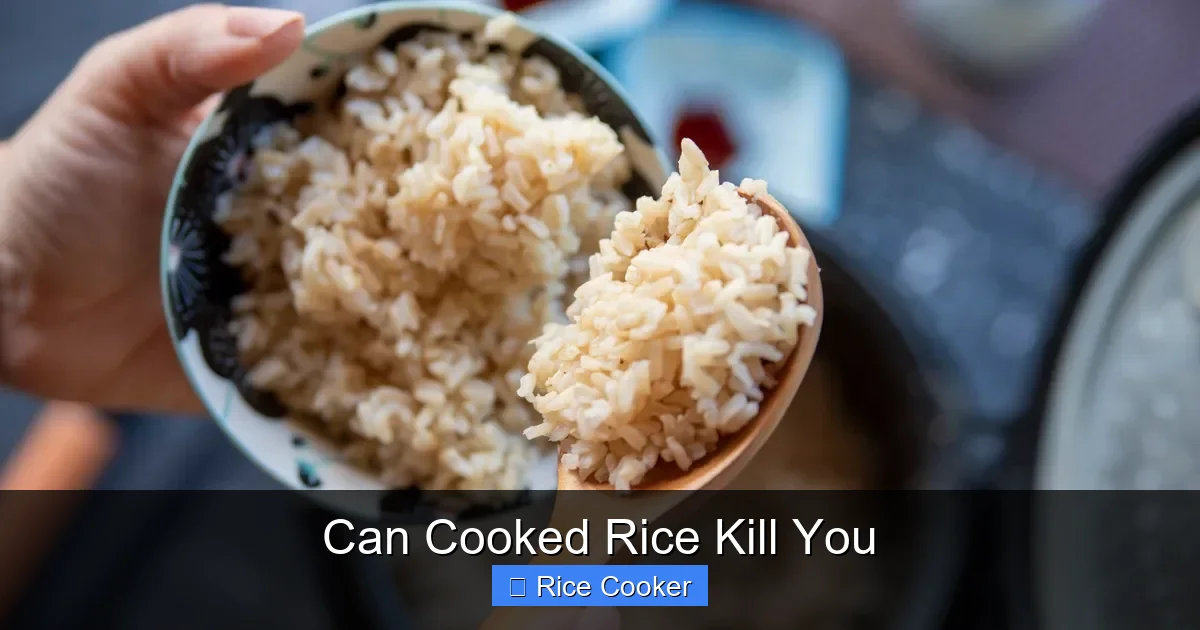
No, cooked rice cannot kill you—unless it’s mishandled. The real danger comes from Bacillus cereus, a bacteria that can survive cooking and multiply in improperly stored rice. With simple steps like cooling rice quickly and refrigerating it within two hours, you can enjoy safe, delicious meals every time.
Key Takeaways
- Rice isn’t inherently dangerous: Cooked rice itself is safe to eat when handled properly.
- Bacillus cereus is the culprit: This spore-forming bacteria can grow in leftover rice if stored incorrectly, leading to food poisoning.
- Cooking kills most bacteria: Rice is boiled at high temperatures, which destroys harmful microbes—but only while hot.
- Proper storage is critical: Refrigerate rice within two hours and consume leftovers within 3–4 days.
- Reheating matters: Always reheat rice to 165°F (74°C) to ensure safety.
- Use airtight containers: Store rice in shallow, covered containers to cool faster and reduce bacterial growth.
- Symptoms of rice poisoning: Nausea, vomiting, diarrhea, and stomach cramps usually appear within 6–15 hours.
📑 Table of Contents
- Introduction: Is Your Dinner Plate a Hidden Danger?
- What Makes Cooked Rice Potentially Dangerous?
- Can You Die From Eating Leftover Rice?
- How to Safely Handle and Store Cooked Rice
- How to Reheat Rice Without Risk
- Common Myths About Rice and Food Safety
- Real-Life Examples and Case Studies
- Conclusion: Safe Rice, Happy Meals
Introduction: Is Your Dinner Plate a Hidden Danger?
Rice is one of the world’s most beloved foods. Whether it’s fluffy white rice, aromatic jasmine, or hearty brown rice, it pairs with everything from stir-fries to curries. But lately, you might have heard whispers in online forums: *”Can cooked rice kill you?”* It sounds dramatic, right? But it’s not just fear-mongering. There’s a real risk—if you’re not careful.
The truth is, plain cooked rice won’t kill you. However, if it’s been sitting out too long or reheated improperly, it can become a breeding ground for bacteria. And one of the sneakiest culprits? *Bacillus cereus*. This common bacterium is everywhere—in soil, dust, and yes, even in your kitchen. The scary part? It can survive normal cooking temperatures, wait patiently until rice cools, then multiply rapidly in warm environments.
So no, your dinner bowl of rice isn’t a death trap—just a potential health hazard if basic food safety rules are ignored. In this article, we’ll explore exactly what makes rice dangerous, how to prevent it, and what to do if you suspect food poisoning. Let’s dive in.
What Makes Cooked Rice Potentially Dangerous?
Visual guide about Can Cooked Rice Kill You
Image source: canyoupreserve.com
You might be surprised to learn that rice isn’t inherently toxic. In fact, it’s packed with nutrients like carbohydrates, fiber (especially brown rice), and small amounts of protein and vitamins. But here’s the twist: rice is also an ideal environment for certain bacteria to thrive—especially after cooking.
The Role of Bacillus Cereus
*Bacillus cereus* is a spore-forming bacterium found in soil, water, and even on raw grains. These spores are incredibly tough. They can survive boiling temperatures, which is why they often make their way into cooked rice without being killed.
Once rice is cooked, the starch acts like a cozy bed for these spores. If the rice is left to sit at room temperature (especially between 40°F and 140°F, known as the “danger zone”), the spores can wake up and start multiplying. Within 8 to 16 hours, they produce toxins that cause food poisoning.
There are two main types of illness caused by *B. cereus*:
– **Emetic toxin poisoning**: Causes nausea and vomiting (like a quick-acting version of staphylococcal food poisoning).
– **Diarrhetic toxin poisoning**: Leads to watery diarrhea and abdominal cramps.
Both typically begin within 6 to 15 hours of eating contaminated rice and last about 24 hours. While serious cases are rare, they can leave you feeling miserable for a day or two.
Why Isn’t Rice Sterilized During Cooking?
You’d think cooking rice at 212°F (100°C) would wipe out all bacteria. And it does—most of them. But *Bacillus cereus* spores are different. They’re designed to withstand harsh conditions, including boiling. Once the rice cools down, those dormant spores get a chance to grow—especially in moist, starch-rich environments like cooled rice.
This is why rice is considered one of the higher-risk foods for foodborne illness, along with meat, dairy, and eggs. It’s not that rice is dirty; it’s that its composition and typical handling make it vulnerable.
How Contamination Happens
Contamination usually occurs before or during cooking:
– **From uncooked rice**: Spores enter during harvesting, milling, or packaging.
– **From utensils or surfaces**: If you use the same spoon to stir rice and then touch raw chicken, you risk cross-contamination.
– **During storage**: Leaving rice out for more than two hours allows bacterial growth.
Even reheating won’t always save you. Some toxins produced by *B. cereus* are heat-stable, meaning they survive boiling. So reheating rice that’s already contaminated won’t necessarily make it safe.
Can You Die From Eating Leftover Rice?
Let’s address the big question: **Can cooked rice kill you?**
The short answer? **No, not usually.**
Severe complications from *Bacillus cereus* poisoning are extremely rare. Most people recover fully within 24 hours without medical treatment. However, in very rare cases—especially among infants, elderly individuals, or those with weakened immune systems—dehydration from vomiting and diarrhea could become life-threatening if not managed.
But let’s be clear: rice itself isn’t lethal. The danger lies in poor food handling practices. Think of rice as a ticking clock. If you follow proper storage and reheating guidelines, that clock never gets to tick.
That said, it’s still important to take precautions seriously. Food poisoning is unpleasant, but it shouldn’t happen because someone skipped a few simple steps.
How to Safely Handle and Store Cooked Rice
Storing rice correctly is one of the easiest ways to prevent foodborne illness. Here’s how to keep your rice safe from bacteria:
Cool It Quickly
After cooking, don’t let rice sit at room temperature. Bacteria multiply fast between 40°F and 140°F. To slow growth, cool rice rapidly.
**Tip:** Spread rice in a shallow container or divide it into multiple small portions. This increases surface area, helping it cool faster.
Avoid using deep pots—they trap heat and delay cooling.
Refrigerate Promptly
Refrigerate rice within **two hours** of cooking. If it’s been out for more than two hours (or one hour if it’s above 90°F outside), discard it.
Place cooled rice in **airtight containers**. Glass or BPA-free plastic works well. Label containers with the date so you know how long it’s been stored.
Store for Maximum Safety
– **Refrigerator**: Use within **3 to 4 days**.
– **Freezer**: Can last up to **6 months**, though texture may change slightly.
Frozen rice should be thawed in the fridge before reheating.
Avoid Cross-Contamination
Never reuse serving spoons in the rice pot without washing them first. Keep cooked and uncooked rice separate on counters or in containers.
If you’ve used rice in a dish like fried rice, ensure other ingredients (like eggs or meat) are also safe and properly stored.
How to Reheat Rice Without Risk
Reheating is where many people go wrong. Simply microwaving cold rice isn’t enough—you need to reach a high internal temperature to kill any surviving bacteria.
Best Practices for Reheating
1. **Microwave Method**:
– Transfer rice to a microwave-safe dish.
– Add a splash of water to prevent dryness.
– Cover with a damp paper towel or lid.
– Microwave on high for 1 minute per cup, stirring halfway through.
– Check that the rice reaches **165°F (74°C)** using a food thermometer.
2. **Stovetop Method**:
– Heat rice over medium-low heat in a non-stick pan.
– Stir frequently and add water or broth as needed.
– Bring to a simmer for at least 5 minutes to ensure even heating.
3. **Oven Method**:
– Preheat oven to 350°F (175°C).
– Place rice in an oven-safe dish with a little liquid.
– Cover tightly with foil and bake for 10–15 minutes.
Never Reheat Rice More Than Once
Each time you reheat rice, there’s a higher chance of bacterial regrowth. For maximum safety, cook only the amount you plan to eat in one sitting.
Watch for Signs of Spoilage
Before reheating, check for:
– Unusual odor (sour or off-smelling)
– Mold spots
– Slimy texture
If any of these are present, throw the rice away. When in doubt, discard it.
Common Myths About Rice and Food Safety
There are plenty of misconceptions floating around about rice. Let’s clear some up:
Myth: Brown rice is always safer than white rice
False. Both types carry the same risk if mishandled. Brown rice has more fiber and nutrients, but it also retains more moisture, potentially creating a better environment for bacteria if stored improperly.
Myth: Washing raw rice removes all bacteria
Not really. While rinsing rice briefly can remove dirt or excess starch, it won’t eliminate *Bacillus cereus* spores. In fact, washing raw rice before cooking doesn’t improve safety and may spread bacteria around your sink.
Myth: Boiling rice again will kill all germs
Boiling rice once more may help, but remember: some toxins are heat-stable. Also, if the rice was already contaminated and grown bacteria, simply reheating may not destroy all pathogens. Proper storage is still key.
Myth: Rice stored in the fridge for weeks is fine
No. Even in the fridge, rice can develop bacterial growth over time. Stick to the 3–4 day rule. Freezing extends shelf life, but quality and safety decrease after several months.
Real-Life Examples and Case Studies
Let’s look at what happens when people ignore rice safety rules.
Case Study: Restaurant Outbreak
In 2018, a popular chain restaurant faced a food poisoning outbreak linked to fried rice. Health inspectors found that staff were reheating large batches of rice multiple times throughout the day. Because the rice wasn’t cooled properly between uses, *Bacillus cereus* built up to dangerous levels. Over 200 customers reported symptoms consistent with food poisoning.
The solution? The restaurant implemented strict protocols: cooling rice in shallow trays, limiting reheats, and training staff on food safety timelines.
Home Kitchen Lesson
Sarah, a busy mom, always made extra rice for lunches. She’d cook a big batch, leave it in a pot on the counter overnight, and reheat it in the morning. One week, her kids developed stomach cramps and vomiting within six hours of eating lunch. A doctor suspected food poisoning. Though tests came back negative, the family recalled the rice timing and switched to immediate refrigeration.
Lesson learned: **Time = danger zone.**
Practical Tip: Use a Rice Storage Jar with Ventilation
Some innovative kitchen brands now offer airtight rice storage jars with built-in vents. These allow rice to cool faster while preventing contamination. Look for models with silicone seals and wide mouths for easy access.
Another tip: Divide rice into meal-sized portions before refrigerating. This minimizes repeated reheating and keeps each portion fresh.
Conclusion: Safe Rice, Happy Meals
So, can cooked rice kill you? Not by nature—but through negligence, yes. The truth is, rice is a perfectly safe and nutritious food when handled correctly. The real enemy isn’t rice itself; it’s *Bacillus cereus*, a sneaky bacteria that turns leftovers into a health risk.
By following simple steps—cooling rice quickly, refrigerating within two hours, storing in airtight containers, and reheating thoroughly—you can enjoy rice-based meals without worry. Treat rice like any other perishable food, and it won’t bite back.
Remember: food safety isn’t complicated. It’s about awareness, consistency, and a willingness to follow a few basic rules. Whether you’re using a rice cooker, stovetop, or instant pot, these tips apply everywhere.
Next time you cook rice, give it a little extra care. Your stomach—and your peace of mind—will thank you.
Frequently Asked Questions
Can cooked rice kill you if eaten cold?
No, cold rice won’t kill you. However, if it’s been sitting at room temperature for too long, bacteria like Bacillus cereus may have grown and produced toxins. Always refrigerate rice within two hours to stay safe.
Is it safe to reheat rice multiple times?
It’s best to avoid reheating rice more than once. Each time you heat it, there’s a risk of bacterial regrowth, and some toxins are heat-stable. For optimal safety, cook only what you plan to eat.
How long can you keep cooked rice in the fridge?
Cooked rice should be consumed within 3 to 4 days when stored in the refrigerator. After that, the risk of bacterial growth increases significantly.
Does freezing rice kill bacteria?
Freezing slows down bacterial growth but doesn’t kill existing bacteria or destroy toxins. Thaw frozen rice safely in the fridge before reheating to ensure it cooks evenly and stays safe.
Can I eat rice that smells sour?
No. A sour or off smell is a sign of spoilage or bacterial activity. Even if the rice looks fine, trust your nose—discard any rice with an unusual odor.
Should I rinse rice before cooking to make it safer?
Rinsing rice briefly can remove excess starch and impurities, but it won’t eliminate Bacillus cereus spores. Rinsing isn’t necessary for safety, though it may improve texture for some dishes.