
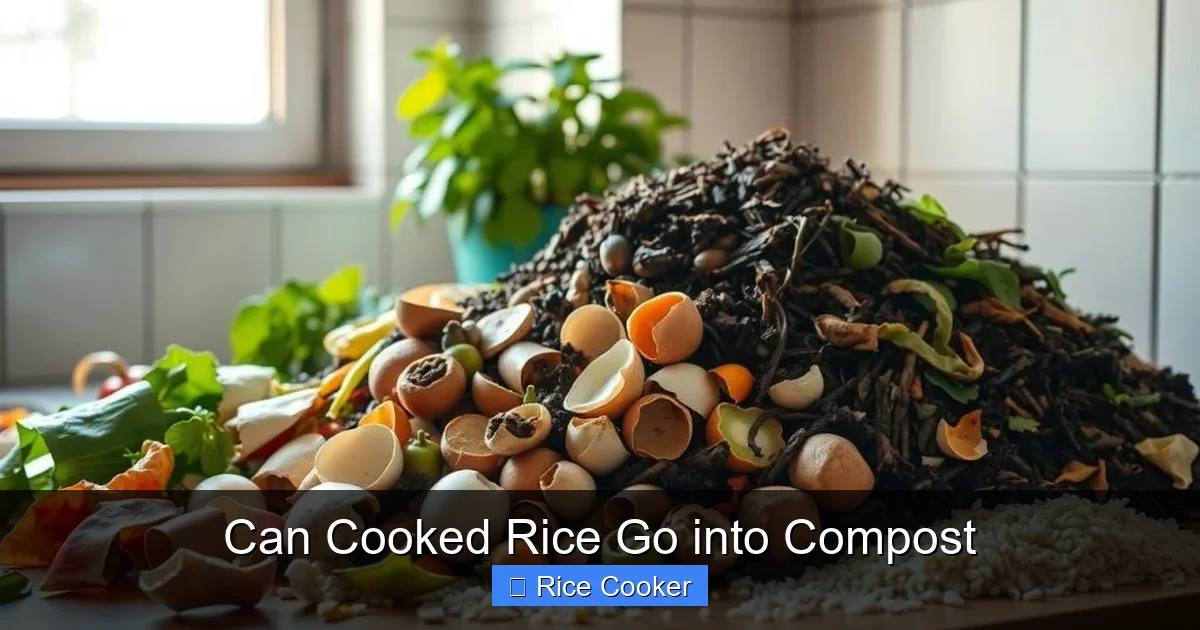
Can cooked rice go into compost? Absolutely! Cooked rice is a fantastic green material that adds nitrogen and carbon to your compost pile, helping it break down faster and enrich your garden soil. Just be sure to compost it in moderation and mix it well with dry browns like leaves or paper to maintain balance. With the right approach, leftover rice becomes a nutrient-rich gift for your plants.
Key Takeaways
- Cooked rice is compostable: Yes, cooked rice can be added to your compost bin as long as it’s not moldy or mixed with grease.
- Balances carbon and nitrogen: Rice provides carbon (brown material) and some nitrogen, helping create the ideal compost ratio.
- Avoid uncooked rice: Raw rice can sprout and attract pests when composting, so always use only cooked leftovers.
- Mix with dry materials: Combine rice with dry browns like cardboard, leaves, or paper to prevent clumping and odors.
- Chop or crumble rice: Breaking up rice into smaller pieces helps it decompose faster and prevents matting in the pile.
- Monitor moisture levels: Too much wet rice can make your compost soggy; aim for a damp, sponge-like texture.
- Use compost wisely: Once fully decomposed, use the rich compost to boost soil health in gardens, pots, or lawns.
📑 Table of Contents
- Can Cooked Rice Go Into Compost? A Complete Guide
- Why Cooked Rice Is Great for Compost
- What About Uncooked Rice?
- How to Add Cooked Rice to Your Compost Safely
- Common Mistakes to Avoid
- What Happens When Cooked Rice Fully Decomposes?
- Alternative Uses for Leftover Rice
- Composting Rice with Other Kitchen Scraps
- Environmental Impact of Composting Food Waste
- Final Thoughts: Yes, Cooked Rice Belongs in Compost
Can Cooked Rice Go Into Compost? A Complete Guide
Have you ever wondered whether that bowl of leftover rice from last night’s dinner can go straight into your compost bin? You’re not alone. Many people toss uneaten rice, pasta, or grains into their compost without thinking twice—but is it actually safe and effective?
The short answer? Yes, cooked rice can go into compost—when done correctly. In fact, cooked rice is an excellent addition to your compost pile because it breaks down quickly and contributes valuable nutrients. But there are some important dos and don’ts to keep in mind to ensure your compost stays healthy, odor-free, and pest-free.
In this article, we’ll walk through everything you need to know about composting cooked rice, from why it works to how to avoid common mistakes. Whether you’re new to composting or a seasoned gardener, you’ll find practical tips to turn your kitchen scraps—like leftover rice—into black gold for your garden.
Why Cooked Rice Is Great for Compost
Visual guide about Can Cooked Rice Go into Compost
Image source: images.squarespace-cdn.com
Cooked rice isn’t just waste—it’s a resource. When you cook rice, you’re essentially breaking down its starches and making them more accessible to microorganisms. This means the composting process happens faster than with raw grains.
Nitrogen and Carbon Balance
Compost thrives on a balance of two key elements: carbon and nitrogen. Think of carbon as the “food” for microbes and nitrogen as the “fuel.” Cooked rice falls somewhere in between—it contains both, but leans slightly toward carbon due to the cooking process.
When added in moderation, rice helps maintain this balance. Too much nitrogen-rich material (like food scraps) without enough carbon can lead to a smelly, slimy pile. But rice, especially when mixed with dry browns, helps regulate moisture and airflow.
Fast Decomposition
Because rice has been softened by boiling, it breaks down rapidly once it enters the compost pile. This means you’ll see results faster than with tougher materials like wood chips or corn husks. For gardeners eager to see progress, this quick decomposition is a big win.
Rich in Nutrients
As rice decomposes, it releases essential nutrients like potassium, phosphorus, and trace minerals. These become available to your plants once the compost is mature. The end result? Healthier soil, stronger roots, and more vibrant growth.
What About Uncooked Rice?
Here’s where things get tricky. While cooked rice is compost-friendly, uncooked rice should generally be avoided in your compost bin. Why? Because uncooked rice retains its ability to absorb water and expand, which can cause it to sprout in your compost pile.
Imagine this: you add a handful of raw rice to your bin, then forget about it for a few weeks. When you check later, you might find tiny rice shoots poking out of the pile. Not only is this unsightly, but sprouted grains can attract rodents and insects looking for a snack.
Additionally, uncooked rice takes much longer to break down, sometimes taking months or even years. It can also create dense, airless pockets in your compost that slow down the entire process.
So unless you’re actively monitoring your pile and turning it regularly, stick to cooked rice only.
How to Add Cooked Rice to Your Compost Safely
Adding cooked rice to compost isn’t complicated, but following a few simple steps ensures success.
1. Let It Cool First
If you just took rice out of the microwave or stovetop, let it cool before tossing it into the bin. Hot materials can kill off beneficial microorganisms that help break down your compost. Plus, adding hot items can raise the temperature too high, creating unpleasant odors.
2. Crumble or Chop It Up
Don’t dump a full serving of rice into the pile at once. Instead, crumble it into small pieces or chop it with a trowel or fork. Smaller bits decompose faster and prevent matting, which can block airflow.
3. Mix With Dry Brown Materials
Rice is relatively wet and rich in carbon, so it needs balancing. Always layer or mix it with dry browns like shredded newspaper, cardboard, dried leaves, or sawdust. Aim for a ratio of roughly 3 parts browns to 1 part greens (like rice or vegetable scraps).
For example:
– Start with a layer of twigs or straw for aeration.
– Add a thin layer of crumbled rice.
– Cover with dried leaves or paper.
– Repeat until the bin is full.
4. Keep Pests Away
Cooked rice can smell tempting to pests like raccoons, rats, or flies—especially if it’s mixed with other food scraps. To minimize risk:
– Avoid adding meat, dairy, or oily foods alongside rice.
– Use a closed-bin system or tumbler.
– Bury the rice under several inches of finished compost or soil to mask the scent.
5. Turn the Pile Regularly
Turning your compost introduces oxygen, which speeds up decomposition and prevents anaerobic conditions (the stuff that causes bad smells). If you add rice frequently, make sure to give your pile a good stir every week or two.
Common Mistakes to Avoid
Even experienced composters make errors. Here are the most common pitfalls when adding cooked rice:
Mistake #1: Adding Too Much at Once
A single large portion of rice can overwhelm your pile. Instead, spread out additions over time. Think of it like feeding your compost in small meals rather than one giant feast.
Mistake #2: Skipping the Brown Layer
Without enough carbon-rich materials, your compost will become wet, heavy, and slow to decompose. Always follow rice with dry, fibrous matter.
Mistake #3: Using Moldy Rice
If your rice has gone bad or developed mold, don’t compost it. Moldy food can harbor harmful bacteria or spread spores. When in doubt, throw it out.
Mistake #4: Neglecting Moisture Control
Too much wet rice turns your compost into a soup. Check the moisture level regularly—your pile should feel like a damp sponge, not a wrung-out mop.
Mistake #5: Expecting Instant Results
Composting takes time. Even with fast-decomposing materials like rice, full maturity usually takes 2–6 months. Patience pays off!
What Happens When Cooked Rice Fully Decomposes?
After several weeks or months, depending on your compost setup, the rice will break down into dark, crumbly humus. This mature compost is loaded with life-giving microbes, organic matter, and nutrients.
When applied to soil, it improves structure, increases water retention, and feeds beneficial fungi and bacteria. Plants grown in compost-amended soil often show better resistance to disease and stress.
You can use your finished compost in:
– Flower beds and vegetable gardens
– Container plants and houseplants
– Lawns (spread lightly over grass)
– Seed starting mixes
Just remember: never use fresh, unfinished compost directly on seedlings—it can burn delicate roots.
Alternative Uses for Leftover Rice
If composting doesn’t fit your routine right now, don’t worry—there are other eco-friendly ways to reuse cooked rice.
Freeze for Later
Portion leftover rice into freezer-safe bags or containers. Frozen rice keeps for months and can be reheated easily when needed. No waste!
Make Rice Pudding or Porridge
Transform old rice into delicious breakfasts, snacks, or desserts. Add milk, cinnamon, fruit, or nuts for flavor.
Use in Baking
Crushed rice can replace some flour in bread or muffin recipes (though it changes texture). Experiment in small batches.
Feed Animals (Sparingly)
Some chickens and ducks enjoy rice as a treat. Offer small amounts occasionally, but avoid giving it to pets like dogs or cats in large quantities.
Composting Rice with Other Kitchen Scraps
Cooked rice pairs well with many other compostable kitchen items. Just remember the golden rule: avoid meat, fish, oils, and dairy—they attract pests and create odors.
Here’s a sample weekly compost menu that includes rice:
– Monday: Crumbled rice + onion skins
– Wednesday: Rice + coffee grounds + eggshells
– Friday: Rice + banana peels + shredded paper
Each addition should be balanced with dry browns. For instance, after adding rice and green scraps, cover with a layer of dried leaves or cardboard.
If you’re using a worm bin (vermicomposting), be cautious. Red wigglers prefer softer materials, but rice can mat together and reduce airflow. Break it into tiny pieces and mix thoroughly.
Environmental Impact of Composting Food Waste
Every year, millions of tons of food waste end up in landfills, where they produce methane—a potent greenhouse gas. By composting rice (and other kitchen scraps), you’re reducing landfill contributions and lowering your carbon footprint.
According to the EPA, food waste accounts for nearly 20% of U.S. municipal solid waste. Turning that waste into usable compost helps close the loop in the natural cycle of life.
Plus, compost enriches soil instead of relying on synthetic fertilizers, which can harm waterways and deplete soil health over time.
Final Thoughts: Yes, Cooked Rice Belongs in Compost
So, can cooked rice go into compost? The answer is a confident yes—with proper handling. When added thoughtfully, rice helps create rich, fertile compost that nourishes your garden and reduces environmental impact.
Remember these key points:
– Only use cooked, cooled rice.
– Crumble it and mix with dry browns.
– Avoid uncooked or moldy rice.
– Keep your pile balanced and turned.
– Be mindful of moisture and pests.
With a little care, your compost bin becomes a powerful tool for sustainability. And who knew something as simple as leftover rice could do so much good?
Whether you’re composting on a balcony, in a backyard bin, or with worms indoors, every grain counts. Start today, and watch your garden—and the planet—thrive.
Frequently Asked Questions
Can I compost rice that has been sitting out overnight?
Yes, as long as it hasn’t spoiled or developed mold. Room-temperature rice is fine for composting, but refrigerated or frozen rice should be thawed and cooled first. Avoid rice that smells off or looks slimy.
Does composting rice attract rats?
Rice itself isn’t highly attractive to rodents, but any food scraps—including rice—can draw pests if not managed properly. Use a sealed bin, bury scraps deep, and avoid adding meat or dairy to reduce risk.
How long does it take for cooked rice to decompose in compost?
In a well-maintained compost pile with regular turning and balanced materials, cooked rice typically breaks down within 2 to 4 weeks. Factors like temperature, moisture, and particle size affect the speed.
Can I compost rice mixed with soy sauce or other sauces?
It’s best to avoid sauces, oil, or seasonings with your rice. These additives can introduce salt, fat, or chemicals that may harm compost organisms or attract pests. Stick to plain cooked rice for safety.
Is it okay to compost rice in a worm bin?
Yes, but only in small amounts and finely chopped. Worm bins need good airflow, so large chunks of rice can mat and suffocate the worms. Always mix rice with bedding like shredded paper or coconut coir.
Can I compost rice from fried dishes?
If the rice was fried with oil or meat, avoid composting it. Oils and fats can create odors and attract pests. Only compost plain boiled or steamed rice without added ingredients.