
Can I cook wild rice in a rice cooker? Absolutely! With the right water ratio and cooking method, your rice cooker makes wild rice quick, easy, and delicious. Unlike long-grain rice, wild rice needs more liquid and longer time—but the result is worth it. You’ll get tender, nutty grains with minimal effort.
Key Takeaways
- Wild rice is not actually rice: It’s the seed of aquatic grass species, giving it a unique texture and nutty flavor compared to true rice.
- Yes, you can use a rice cooker: Most standard and advanced rice cookers handle wild rice well, especially if pre-soaked.
- Use the right water-to-rice ratio: Typically 3:1 or 4:1 (water to dry wild rice) for optimal texture.
- Soaking improves results: Soak wild rice for 30–60 minutes to reduce cooking time and improve digestibility.
- Adjust cooking settings: Use the “white rice” or “long grain” setting, or switch to manual mode for longer cycles.
- Let it rest after cooking: Allow wild rice to stand covered for 10–15 minutes to finish steaming and firm up.
- Fluff gently with a fork: Overmixing breaks apart the chewy kernels—gentle fluffing preserves texture.
📑 Table of Contents
- Introduction: The Surprising Truth About Wild Rice and Your Rice Cooker
- Understanding Wild Rice: What Makes It Different?
- Can a Rice Cooker Handle Wild Rice?
- Step-by-Step Guide: Cooking Wild Rice in a Rice Cooker
- Troubleshooting Common Issues
- Tips to Elevate Your Wild Rice Experience
- Frequently Asked Questions
- Conclusion: Embrace the Adventure of Wild Rice
Introduction: The Surprising Truth About Wild Rice and Your Rice Cooker
Have you ever wondered if you can cook wild rice in a rice cooker? You’re not alone. Many home cooks hesitate because wild rice behaves differently from the white or brown rice they’re used to. But here’s the good news: yes, you absolutely can cook wild rice in a rice cooker—and doing so might just become your new favorite way to prepare this superfood. For safety tips, see our guide on leaving a rice cooker unattended.
Wild rice isn’t technically rice at all. It comes from aquatic grasses native to North America, particularly the Great Lakes region. These seeds grow in shallow lakes and rivers and have been harvested by Indigenous peoples for over 1,000 years. Unlike regular rice, which is ground into starchy grains, wild rice retains its natural shape and structure, resulting in a chewy, earthy bite that’s packed with protein and fiber.
Now, while traditional methods like boiling or simmering work fine, using a rice cooker simplifies the process and reduces the risk of overcooking. Modern rice cookers are designed to manage variable moisture levels and heat distribution, making them surprisingly effective for tricky grains like wild rice. In this guide, we’ll walk you through everything you need to know—from soaking tips to troubleshooting common mistakes—so you can enjoy perfectly cooked wild rice every time.
Understanding Wild Rice: What Makes It Different?
The Real Story Behind “Wild Rice”
Despite its name, wild rice is not a type of cereal grain like jasmine or basmati. Instead, it refers to five species of aquatic grasses: *Zizania palustris* (Northern wild rice), *Zizania aquatica*, *Zizania latifolia*, *Porteresia coarctata*, and *Zizania brasiliensis*. These plants grow in marshes, lakes, and slow-moving streams, and their seeds are harvested by hand or with simple tools.
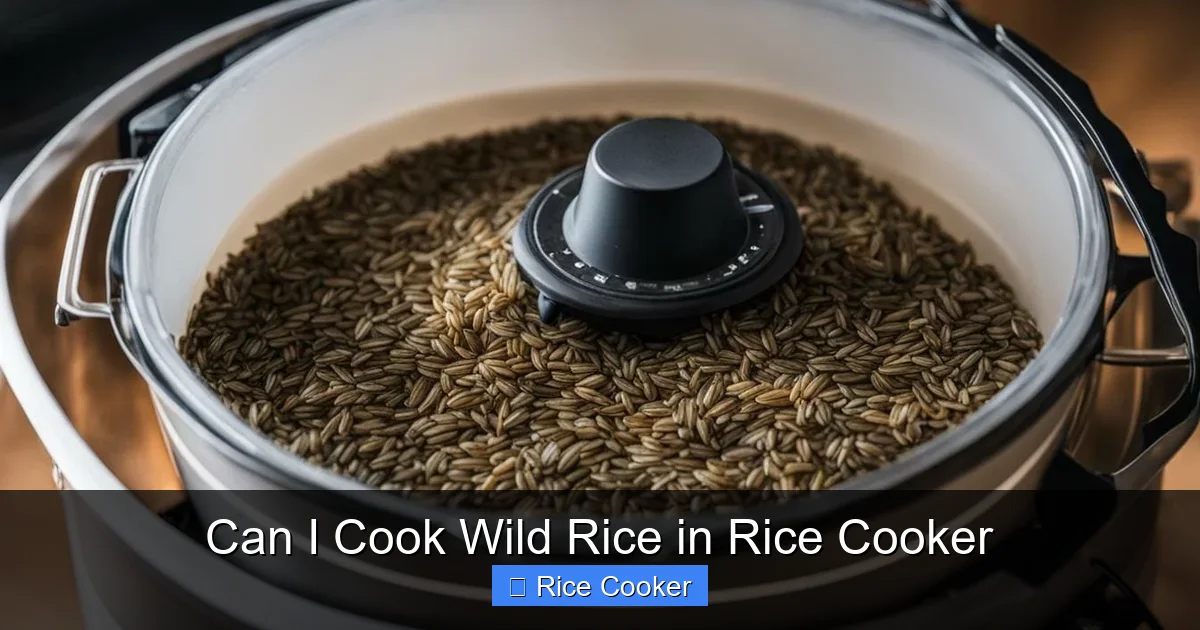
Visual guide about Can I Cook Wild Rice in Rice Cooker
Image source: ricearray.org
Because wild rice isn’t cultivated like other grains, it remains largely free of pesticides and chemical fertilizers. This, combined with its high nutritional profile, has made it a staple in many healthy diets. One cup of cooked wild rice provides about 3.5 grams of fiber, 6 grams of protein, and essential minerals like magnesium and zinc—more than most other whole grains.
Texture and Flavor Profile
What sets wild rice apart is its texture and taste. Each kernel is dark brown on the outside and pale tan inside, with a distinctively chewy, slightly crunchy bite. When cooked properly, it has a nutty aroma and a mild, earthy flavor that pairs beautifully with mushrooms, nuts, dried fruits, and lean proteins.
This unique mouthfeel can be intimidating for beginners. Unlike fluffy white rice, wild rice doesn’t absorb water evenly and tends to clump if overmixed or undercooked. But once you master the basics, you’ll appreciate how satisfying it is to chew through those tiny, resilient grains.
Can a Rice Cooker Handle Wild Rice?
Why People Hesitate (And Why They Shouldn’t)
Many people avoid cooking wild rice in a rice cooker because they assume it requires constant monitoring or special equipment. After all, wild rice takes 45–60 minutes to cook on the stovetop, compared to 20 minutes for white rice. But modern rice cookers come with programmable timers, multiple cooking modes, and precise temperature control—features that make them ideal for handling longer-cooking grains.
Most rice cookers—especially those with fuzzy logic technology—can detect when the grain is done absorbing water and automatically switch to warming mode. This prevents burning and ensures even cooking throughout. Even basic models work well if you adjust the settings manually.
Types of Rice Cookers That Work Best
- Standard Electric Rice Cookers: Affordable and reliable, these work great for wild rice if you use the correct water ratio and allow extra cooking time.
- Multi-Cooker/Pressure Cookers: Devices like Instant Pot allow you to pressure-cook wild rice faster (about 20–25 minutes), though this changes the texture slightly—less chewy, more tender.
- Induction Heating Rice Cookers: High-end models offer precise temperature control and are excellent for delicate grains, including wild rice.
- Microwave-Safe Rice Cookers: Smaller units designed for countertop use; check instructions before microwaving wild rice.
If you already own a rice cooker, chances are it can handle wild rice. Just keep an eye on the first few batches until you understand how your specific machine responds to longer cooking times.
Step-by-Step Guide: Cooking Wild Rice in a Rice Cooker
Gathering Your Ingredients and Tools
Before you begin, gather the following:
- 1 cup dried wild rice (about 3 cups cooked)
- 3–4 cups filtered water (or broth for added flavor)
- A fine-mesh strainer
- A bowl for soaking (optional but recommended)
- Your rice cooker with inner pot and measuring cup
- A fork or rice paddle for fluffing
Preparing the Wild Rice
The key to success starts with preparation. Wild rice contains hulls and debris, so always rinse it thoroughly under cold running water using a mesh sieve. Shake the sieve gently to remove excess moisture—don’t rub or press the grains, as they’re fragile.
For best results, soak the rinsed wild rice for 30–60 minutes. This softens the outer layer, reduces cooking time, and helps the kernels cook more evenly. If you’re short on time, skip soaking—but expect slightly longer cook times and a chewier texture.
Choosing the Right Water Ratio
Unlike white rice, which uses a 1:2 ratio (1 cup rice to 2 cups water), wild rice needs more liquid due to its dense structure. A general rule is:
- 3:1 ratio for softer, more tender rice (ideal if soaked)
- 4:1 ratio for firmer, more distinct grains (better if unsoaked or for salads)
Add the measured water (or broth) to the rice cooker pot, then add the drained wild rice. Swirl gently to distribute evenly—no need to stir.
Setting Up Your Rice Cooker
Place the inner pot into the rice cooker base. Close the lid securely and plug in the unit. Select the appropriate setting: You can also keep it warm for extended periods; learn more about keeping a rice cooker on warm overnight.
- White Rice Mode: Works well for most users
- Long Grain Mode: Slightly better for wild rice’s elongated shape
- Manual/Custom Mode: Set timer for 50–60 minutes (check manufacturer guidelines)
Some advanced models include a “wild rice” preset—use it if available. Otherwise, rely on the default cycle and plan for a total cook time of 45–60 minutes.
Cooking and Resting
Once the cycle begins, resist the urge to open the lid frequently—this releases steam and can affect timing. When the cooker switches to “warm” mode, turn off the power (if possible) and let the rice sit covered for 10–15 minutes. This resting period allows residual heat to finish cooking any uncooked centers and firms up the texture.
Fluffing and Serving
After resting, uncover the rice and fluff it gently with a fork. Avoid vigorous mixing, which breaks apart the delicate kernels. Serve immediately or store leftovers in an airtight container for up to 5 days.
Troubleshooting Common Issues
Too Mushy or Sticky
If your wild rice turns out mushy, you likely used too much water or didn’t drain it properly after soaking. Future batches should use less liquid (start with 3:1) and ensure thorough rinsing. Also, avoid lifting the lid during cooking—steam loss affects consistency.
Undercooked or Hard Kernels
Undercooked wild rice often results from insufficient water or short cooking times. Always follow the 3:1 or 4:1 ratio, and don’t rush the process. If some kernels remain hard after the cycle ends, return the pot to the cooker on warm mode for 10–15 minutes—not boil mode!
Excessive Foam or Scum
Wild rice can produce foam during the initial boiling phase. Don’t panic—this is normal! Simply skim off the surface foam with a spoon before closing the lid. Adding a teaspoon of oil or butter to the water can also reduce foaming.
Grains Clumping Together
Clumping usually happens when the rice isn’t fluffed immediately after cooking or when stored improperly. Always fluff gently right after the resting period. For storage, separate portions with parchment paper between layers to prevent sticking.
Tips to Elevate Your Wild Rice Experience
Add Flavor During Cooking
Water is neutral, but you can infuse your wild rice with flavor by substituting part of the water with:
- Vegetable or chicken broth
- Apple cider vinegar (½ tsp per cup) for brightness
- Dried herbs like thyme, sage, or bay leaf
- A splash of coconut milk for creaminess
Mix With Other Grains
Combine wild rice with brown rice, quinoa, or amaranth for a nutrient-packed side dish. The contrast in texture adds interest—try a 1:1 blend of wild and brown rice.
Use It Beyond Side Dishes
Wild rice shines in pilafs, stuffing, grain bowls, salads (like Waldorf or mushroom), and even breakfast porridge. Its hearty texture holds up well in casseroles and soups too.
Store Properly for Maximum Freshness
Refrigerated wild rice lasts up to 5 days; frozen versions stay fresh for 2–3 months. Thaw overnight in the fridge before reheating. Reheat gently on the stove with a splash of water or broth to restore moisture.
Frequently Asked Questions
Is wild rice gluten-free?
Yes, pure wild rice is naturally gluten-free. However, always check packaging if it’s mixed with other grains, as cross-contamination can occur during processing.
How much wild rice do I need per person?
Plan for about ½ cup of dry wild rice per person. Since it expands significantly, this yields roughly 1.5 cups cooked—perfect for two servings as a side.
Can I freeze cooked wild rice?
Absolutely! Portion cooked wild rice into freezer-safe containers or bags. Label with date and store for up to 3 months. Reheat directly from frozen, adding a bit of water to loosen.
Does soaking wild rice shorten cooking time?
Yes. Soaking for 30–60 minutes softens the outer hull, allowing internal moisture to penetrate faster. This can reduce active cook time by 10–15 minutes.
Can I cook wild rice in a pressure cooker instead?
Yes, in a multi-cooker like an Instant Pot. Use 1.5 cups water per cup of rice, seal the lid, and cook on high pressure for 18–22 minutes. Let pressure release naturally for 10 minutes, then quick-release.
Why does wild rice cost so much?
Wild rice is labor-intensive to harvest—it must be collected by hand or net in shallow waters, then hulled and cleaned manually. Supply is limited, especially since much of it is sourced from Canada and protected Native American lands.
Conclusion: Embrace the Adventure of Wild Rice
Cooking wild rice in a rice cooker is not only possible—it’s one of the easiest ways to enjoy this ancient superfood without constant supervision. With the right technique, patience, and a little experimentation, you’ll soon master the art of transforming humble seeds into a delicious, nutrient-rich meal.
Remember: wild rice rewards attention to detail. Rinsing, soaking, proper ratios, and gentle handling all contribute to a better outcome. And once you taste that perfect balance of chewy, nutty, and aromatic grains, you’ll understand why it’s been treasured for centuries.
So go ahead—grab your rice cooker, measure out that wild rice, and start your journey into a world of wholesome eating. Whether you’re preparing a holiday feast, building a grain bowl, or simply craving something different, wild rice delivers both flavor and nutrition in every bite.
Frequently Asked Questions
What is can i cook wild rice in rice cooker?
can i cook wild rice in rice cooker is an important topic with many practical applications.