
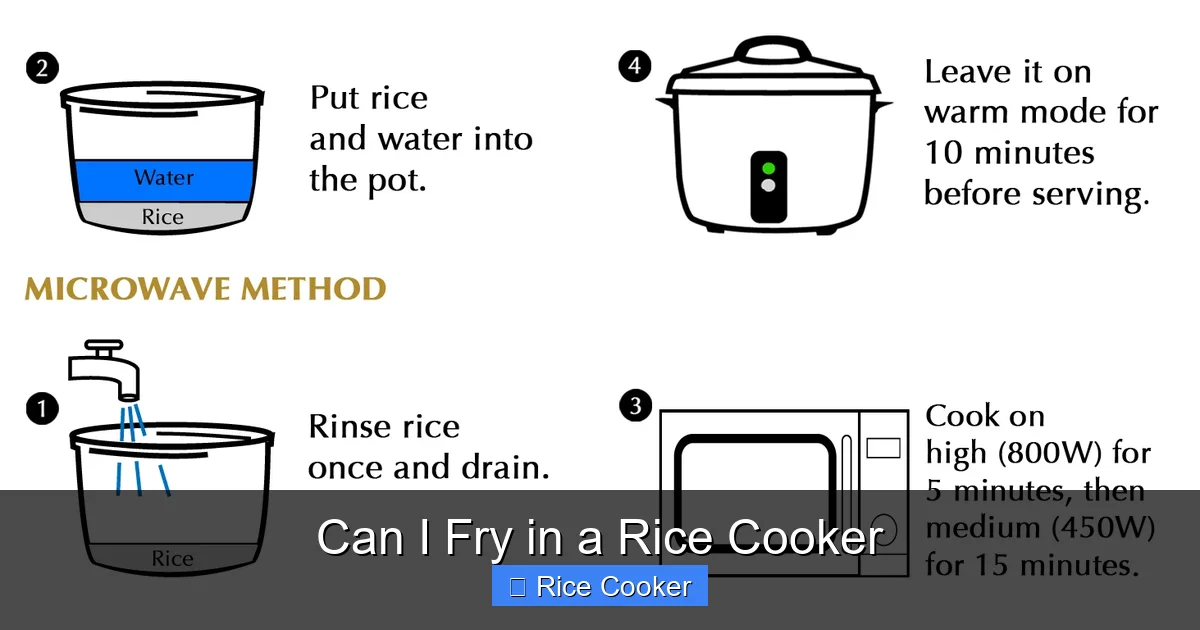
Yes, you can fry in a rice cooker—but not like a traditional skillet. While it doesn’t get as hot or crisp, many models have a “fry” or “keep warm” mode that works surprisingly well for simple dishes like scrambled eggs, pancakes, and sautéed vegetables. The key is using the right ingredients, oil, and timing.
Key Takeaways
- Most modern rice cookers have a “fry” or “keep warm” function that can mimic basic frying when used correctly.
- You can cook fried eggs, pancakes, and stir-fry-style meals with minimal prep and cleanup.
- Use non-stick-safe oils and avoid overcrowding to prevent sticking and uneven cooking.
- Preheating the inner pot helps distribute heat evenly for better browning.
- Clean your rice cooker thoroughly after frying to remove food residue and odors.
- Not all rice cookers are created equal—check your manual for fry capabilities.
- It’s a space- and energy-saving hack for small kitchens or dorm rooms.
📑 Table of Contents
- Can I Fry in a Rice Cooker? Yes, But Here’s What You Need to Know
- Understanding Your Rice Cooker’s Capabilities
- How to Safely Fry in a Rice Cooker
- Delicious Frying Recipes You Can Make in a Rice Cooker
- Tips for Maximizing Your Rice Cooker’s Frying Power
- Common Mistakes to Avoid
- Is It Worth It? Pros and Cons
- Final Thoughts: Should You Fry in a Rice Cooker?
Can I Fry in a Rice Cooker? Yes, But Here’s What You Need to Know
If you’ve ever wondered whether your trusty rice cooker could do more than just cook fluffy jasmine rice, you’re not alone. The idea of frying eggs or making pancakes in a rice cooker might sound like a kitchen experiment gone wrong—but it’s actually a clever trick many home cooks swear by. With the right approach, your rice cooker can become a versatile mini kitchen appliance, handling everything from scrambled eggs to stir-fried noodles.
But before you start tossing butter and flour into your rice cooker, let’s break down what’s possible, what’s not, and how to do it safely and effectively. Whether you live in a studio apartment without a stovetop or just want to save on cleanup, this guide will show you how to unlock your rice cooker’s hidden potential—especially when it comes to frying.
Understanding Your Rice Cooker’s Capabilities
Not all rice cookers are built the same. Some are basic models designed only for boiling water and steaming rice, while others come with advanced features like fuzzy logic sensors, multiple cooking modes, and even induction heating. When it comes to frying, the key factor is the type of heating element and the presence of a dedicated “fry” or keep warm setting.
Visual guide about Can I Fry in a Rice Cooker
Image source: foodiosity.com
Types of Rice Cookers and Their Limits
Traditional Electric Rice Cookers: These usually have a single heating plate at the bottom and rely on steam and conduction to cook grains. They typically don’t reach high enough temperatures for true frying, but some models allow you to use the “keep warm” function to gently reheat or cook delicate foods.
Induction Heating Rice Cookers: These use electromagnetic coils to heat the inner pot directly, allowing for faster, more precise temperature control. Many induction models include a “frying” or “quick boil” mode, which can reach up to 180°F–250°F (82°C–121°C)—enough for browning and searing.
Multifunctional Rice Cookers: Popular in Japan and Asia, these appliances often combine rice cooking with slow cooking, pressure cooking, and even deep frying capabilities. Some even have a “pan-fry” setting that mimics a wok or skillet.
Before attempting any frying method, check your user manual. Look for keywords like “fry,” “keep warm,” “high temp,” or “stir-fry.” If your model lacks these features, you can still try low-heat frying techniques—just be patient and monitor closely.
How to Safely Fry in a Rice Cooker
Frying in a rice cooker isn’t like tossing a burger on a grill. There’s no open flame, no direct airflow, and limited surface contact. But with careful preparation, you can achieve decent results. Here’s how to do it safely and effectively.
Use the Right Oil
Choose a cooking oil with a high smoke point to prevent burning and off-flavors. Canola, avocado, grapeseed, and peanut oil are excellent choices. Avoid olive oil for high-heat frying, as it tends to smoke quickly.
For best results, use a neutral oil spray or a few drops of oil applied with a brush or paper towel. Too much oil can create soggy results, while too little may cause sticking.
Preheat the Inner Pot
Even if your rice cooker doesn’t have a preheat function, you can simulate one. Add a small amount of oil to the inner pot and turn the machine on to the “keep warm” or “fry” setting for 2–3 minutes. This helps create an even cooking surface.
Avoid Overcrowding
Rice cookers have limited space. Just like on a stove, overcrowding leads to steaming instead of frying. Cook in small batches—this ensures even heat distribution and proper browning.
Stir Occasionally
Unlike a pan on the stove, there’sno direct way to stir in most rice cookers. For items like scrambled eggs or sautéed veggies, gently lift and tilt the pot to move ingredients around. Use a non-metallic spatula to avoid scratching the non-stick coating.
Delicious Frying Recipes You Can Make in a Rice Cooker
Now that we’ve covered the basics, let’s talk about what you can actually make. The beauty of frying in a rice cooker is its simplicity—no special equipment, just a few ingredients and your appliance.
Fried Eggs
One of the easiest and most popular rice cooker recipes. Crack an egg directly into the preheated, oiled inner pot. Let it cook undisturbed for 2–3 minutes until the whites set. Flip carefully (or leave it sunny-side up) and cook another minute. Season with salt and pepper.
Pro tip: Add a splash of water to the pot before cracking the egg. This creates steam, helping the top of the egg cook through without drying out.
Pancakes
Who knew pancakes could be made in a rice cooker? Mix 1 cup flour, 2 tbsp sugar, 1 tsp baking powder, 1/4 tsp salt, 1 cup milk, and 1 egg. Pour half the batter into a lightly oiled inner pot. Cover and cook on “fry” or “keep warm” for 5–7 minutes, flipping halfway. Repeat with remaining batter.
The result? Fluffy, golden-brown pancakes with minimal mess. Great for breakfast on busy mornings.
Sautéed Vegetables
Dice onions, bell peppers, and zucchini. Heat oil in the inner pot, add veggies, and stir occasionally. Cook for 8–10 minutes until tender-crisp. Season with soy sauce, garlic powder, and a pinch of black pepper. Serve over rice or quinoa.
Scrambled Eggs with Cheese
Whisk 2 eggs with 1 tbsp milk and a dash of salt. Pour into a greased pot. Cook on medium heat (use “keep warm” and monitor closely). As the eggs begin to set, gently push them from the edges toward the center. Add shredded cheese in the last 30 seconds. Fold and serve immediately.
Rice Cooker French Toast
Soak bread slices in a mixture of beaten eggs, milk, cinnamon, and vanilla. Place in a greased inner pot. Cook on “fry” for 6–8 minutes, flipping once. The result is soft, custardy toast with a slightly crispy exterior—perfect with maple syrup.
Tips for Maximizing Your Rice Cooker’s Frying Power
Want to get the most out of your rice cooker? Follow these expert tips to improve texture, flavor, and safety.
Upgrade to a Non-Stick Inner Pot
If your current pot has scratches or poor adhesion, consider replacing it with a high-quality non-stick model. This reduces the need for excessive oil and makes cleanup easier.
Use a Heat Diffuser (Optional)
Some rice cookers heat unevenly. A ceramic or silicone heat diffuser can help distribute heat more evenly across the bottom of the pot, reducing hot spots.
Monitor Temperature Closely
Since rice cookers don’t have thermostats, you’ll need to watch your food. Keep the lid partially open to release excess moisture and prevent steaming.
Clean Immediately After Use
Food residue left in the pot can harden and cause odors or affect future rice cooking. Rinse the inner pot while warm, then wash with mild soap. Never submerge the main unit in water.
Experiment with Timing
Different ingredients require different cook times. Eggs take 2–4 minutes; pancakes 5–7; veggies 8–12. Start low and adjust based on results.
Common Mistakes to Avoid
Even experienced cooks make errors when adapting kitchen methods. Here are the most common pitfalls when frying in a rice cooker.
Using Too Much Oil
This leads to greasy, soggy results and can damage the non-stick coating. Use sparingly—just enough to prevent sticking.
Skipping the Preheat Step
Cooking cold ingredients in a cold pot causes uneven cooking and steaming. Always preheat briefly before adding food.
Ignoring the Lid
Leaving the lid on traps moisture, turning your fry into a steam. Open it slightly during cooking to allow evaporation.
Using Metal Utensils
Metal can scratch the non-stick surface. Stick to silicone, wood, or plastic tools.
Expecting Crispy Results
Let go of the idea of a perfectly browned sear. Rice cookers excel at gentle cooking, not high-heat frying. Focus on flavor and texture rather than crust.
Is It Worth It? Pros and Cons
Like any kitchen hack, frying in a rice cooker has advantages and drawbacks. Let’s weigh them.
Pros
- Space-saving: Ideal for small kitchens, dorm rooms, or RVs.
- Easy cleanup: One-pot cooking means less scrubbing.
- Energy-efficient: Uses less power than an oven or stovetop.
- Versatile: Can cook rice, steam veggies, fry eggs, and more.
- Beginner-friendly: Simple to operate with minimal risk.
Cons
- Limited temperature control: Not suitable for high-heat frying.
- Small capacity: Hard to cook large batches.
- Uneven browning: Results may lack the crispiness of a skillet.
- Potential odor retention: Strong-smelling foods may linger.
- Not all models support frying: Older or basic models may not work well.
Final Thoughts: Should You Fry in a Rice Cooker?
Absolutely—but with realistic expectations. You won’t replicate a cast-iron skillet, but for quick, simple meals, your rice cooker can be a surprisingly capable tool. Whether you’re making breakfast for one, reheating leftovers, or experimenting with new recipes, the rice cooker offers convenience and efficiency.
Just remember: success depends on your model, technique, and ingredients. Invest in a good non-stick pot, follow safety guidelines, and embrace the quirks of this humble appliance. Soon, you’ll be whipping up rice cooker pancakes, scrambled eggs, and even veggie stir-fries—all in under 15 minutes.
So go ahead, crack an egg, pour in some batter, and discover the unexpected joys of frying in a rice cooker. Your taste buds—and your schedule—will thank you.
Frequently Asked Questions
Can I make French toast in a rice cooker?
Yes, you can make French toast in a rice cooker. Soak bread in a mixture of eggs, milk, and spices, then cook it in a greased inner pot on the “fry” or “keep warm” setting for 6–8 minutes, flipping once. The result is soft, custardy toast with a golden exterior.
What temperature does a rice cooker fry at?
A rice cooker fry function typically heats up to 180°F–250°F (82°C–121°C), depending on the model. This is sufficient for browning and cooking delicate foods like eggs and pancakes but not hot enough for deep frying or achieving a crispy crust like a stovetop.
Do I need a special rice cooker to fry?
Not necessarily. While multifunctional or induction rice cookers with a dedicated “fry” mode offer the best experience, many standard models can handle low-heat frying using the “keep warm” setting. Check your manual to confirm capabilities.
Can I make pancakes in a rice cooker?
Yes, pancakes can be made in a rice cooker. Mix batter, pour it into a greased inner pot, and cook on “fry” or “keep warm” for 5–7 minutes, flipping halfway. The result is fluffy, golden pancakes with minimal mess—perfect for easy breakfasts.
Will frying ruin my rice cooker?
Frying won’t ruin your rice cooker if done properly. Use non-stick-safe oil, avoid metal utensils, and clean the pot immediately after use. However, frequent frying with strong-smelling foods may leave odors, so air out the unit afterward.
How do I clean a rice cooker after frying?
After frying, rinse the inner pot while still warm, then wash with mild soap and a soft sponge. Dry thoroughly before storing. Never immerse the main body of the rice cooker in water. Regular cleaning prevents buildup and maintains performance.