
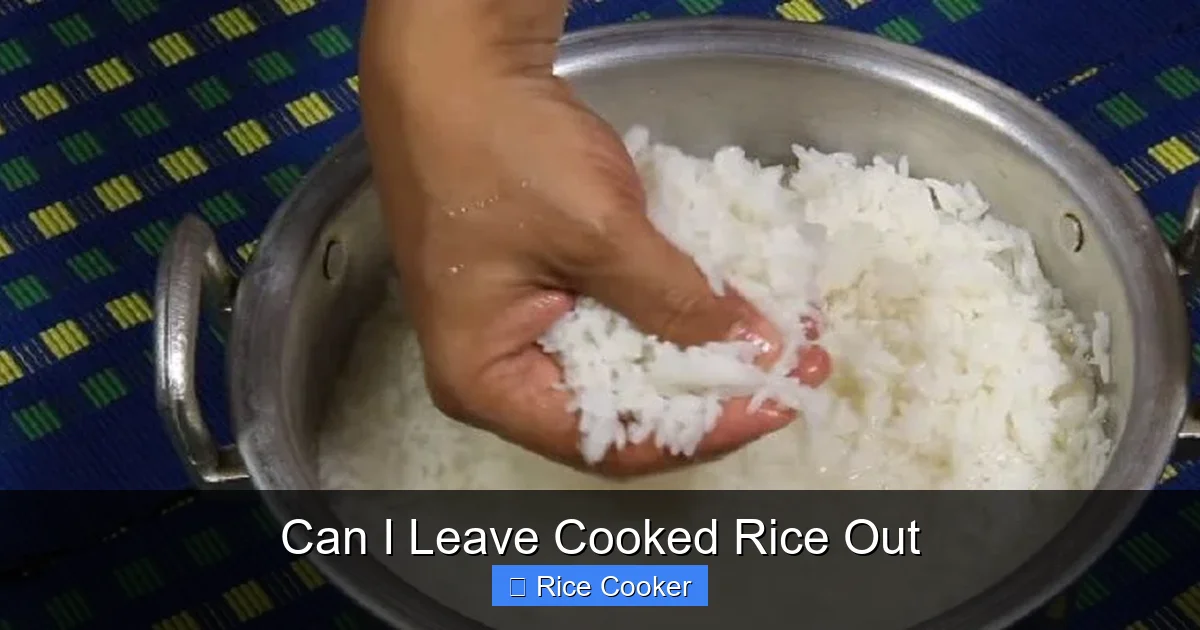
Can I leave cooked rice out? The short answer is no. Cooked rice left at room temperature for more than 1–2 hours becomes a breeding ground for dangerous bacteria like *Bacillus cereus*, which can cause foodborne illness. To keep your rice safe and delicious, always cool it quickly and refrigerate promptly. Whether you’re meal prepping or serving leftovers, proper handling makes all the difference in taste and safety.
Have you ever wondered, “Can I leave cooked rice out?” Maybe you’re rushing to clean up after dinner or forgot to put the rice in the fridge. Before you make that decision, let’s talk about what happens when rice sits at room temperature—and why it matters for your health.
Rice is a staple food around the world, loved for its versatility, affordability, and ability to absorb flavors. But beneath its innocent appearance lies a hidden danger: *Bacillus cereus*. This common bacterium forms spores in uncooked rice, especially in grains like white rice that are typically grown in flooded fields. When you cook the rice, those spores survive—but they don’t immediately become harmful. The real problem starts when cooked rice lingers in the temperature range where bacteria thrive.
That’s right—between 40°F and 140°F, known as the “danger zone,” bacteria multiply fast. And *Bacillus cereus* is particularly sneaky. It doesn’t just grow slowly; it produces toxins that can cause food poisoning within 30 minutes to 6 hours after eating contaminated rice. Symptoms include nausea, vomiting, stomach cramps, and diarrhea. In rare cases, people experience more severe reactions, though most recover quickly without medical help.
So while it might seem harmless to leave a bowl of rice out for “just a few minutes,” the truth is that timing is everything. Even 30 minutes at room temperature can be enough for bacteria to start multiplying, depending on your kitchen environment. That’s why knowing how to safely store and handle cooked rice isn’t just a tip—it’s a necessity for anyone who eats it regularly.
In this article, we’ll break down everything you need to know about whether you can leave cooked rice out, how to cool it properly, how long it stays safe, and what to do with leftovers. Whether you’re using a rice cooker, stovetop, or microwave, these guidelines apply to all types of cooked rice—white, brown, jasmine, basmati, or sushi-grade. Let’s dive in!
Key Takeaways
- Bacterial Growth Risk: Cooked rice contains spores of Bacillus cereus, which survive cooking and multiply rapidly between 40°F and 140°F (the “danger zone”).
- Time Matters: Refrigerate cooked rice within 1–2 hours of cooking or cooling to prevent toxin buildup.
- Cold Water Cooling: Placing rice in shallow containers and immersing them in cold water helps reduce internal temperature faster than leaving it uncovered.
- Reheating Safety: Always reheat rice to an internal temperature of 165°F (74°C) to kill any bacteria that may have formed.
- Freezing Option: For long-term storage, freeze rice in airtight containers; it stays safe for up to 1 year.
- Watch for Signs: Discard rice if it smells off, feels sticky, or shows mold—even if it looks fine.
- Meal Prep Tip: Cook extra rice on weekends and portion it into containers for quick weekday meals.
📑 Table of Contents
- Why Is Cooked Rice Dangerous at Room Temperature?
- How Long Can Cooked Rice Stay Out Safely?
- How to Cool Rice Quickly and Safely
- Can You Reheat Leftover Rice Safely?
- How Long Does Cooked Rice Last in the Fridge?
- Best Practices for Handling Cooked Rice
- Common Myths About Cooked Rice
- Conclusion: Your Rice, Your Rules
Why Is Cooked Rice Dangerous at Room Temperature?
Cooked rice is a favorite target for foodborne illness because of one specific bacterium: *Bacillus cereus*. Unlike many other pathogens, this microbe has a superpower—it forms heat-resistant spores that survive boiling temperatures. So even if you wash and rinse your rice before cooking, those spores remain.
Once cooked, the environment inside the rice changes. The moisture, warmth, and neutral pH create ideal conditions for germination. If the rice is then left sitting out, the spores wake up and begin multiplying. Within hours, they produce enterotoxins that cause what’s often called “fried rice syndrome”—a type of food poisoning linked specifically to improperly stored rice.
What makes this so tricky is that *Bacillus cereus* doesn’t change the smell, taste, or appearance of rice. Your senses won’t warn you that it’s unsafe. That’s why relying on visual cues alone is risky. You might see nothing wrong with a bowl of rice, but it could still make someone sick.
The speed of bacterial growth depends on several factors:
– **Temperature**: Bacteria double every 20 minutes between 70°F and 120°F.
– **Moisture**: Wet environments (like a sealed container) encourage growth.
– **Time**: The longer rice sits in the danger zone, the higher the risk.
– **Air Exposure**: Open containers allow airflow, which slows drying but also increases contamination risk.
This is why restaurants and food service providers follow strict protocols—they use steam tables with lids, never leave rice out overnight, and reheat leftovers multiple times a day. At home, we tend to be less cautious, but that doesn’t mean we should be.
How Long Can Cooked Rice Stay Out Safely?
Visual guide about Can I Leave Cooked Rice Out
Image source: i.pinimg.com
Here’s the golden rule: **refrigerate cooked rice within 1–2 hours of cooking**. That includes rice that’s been cooled naturally or placed in the refrigerator straight from the pot.
But what exactly counts as “room temperature”? Most people assume “room temperature” means 70°F, but kitchens can be warmer—especially during summer months. If your kitchen is above 90°F, bacteria will multiply even faster. In such cases, refrigerating within 1 hour is strongly recommended.
Let’s look at some real-life scenarios:
– **Scenario 1**: You cook rice for dinner at 6 PM, serve it at 6:30 PM, and clean up by 7 PM. By 8 PM, you realize you forgot to put it in the fridge. That’s 2 hours total—borderline acceptable, but pushing it.
– **Scenario 2**: You cook rice in the morning, leave it on the counter while making lunch, and finally put it in the fridge at noon. That’s 5 hours in the danger zone—definitely unsafe.
– **Scenario 3**: You reheat leftover rice from yesterday and eat it immediately. If it was stored properly in the fridge and reheated to 165°F, it’s likely still safe.
These examples show that time is critical. There’s no hard-and-fast rule that applies to everyone, but erring on the side of caution is always wise.
Now, you might wonder: “What about sushi rice?” Sushi rice is often served immediately, sometimes even warm, and never refrigerated until later use. That’s fine—as long as it’s used right away or cooled and stored properly within the 1–2-hour window. The key is consistency in handling.
How to Cool Rice Quickly and Safely
One common mistake is placing a large pot of hot rice directly into the refrigerator. This not only takes forever to cool but can also raise the fridge’s internal temperature, affecting other foods. Plus, thick layers trap heat, creating pockets where bacteria can thrive.
Instead, follow this method:
1. **Transfer to Shallow Containers**: Pour cooked rice into wide, shallow containers or plastic wrap-lined trays. The surface area should be maximized for faster cooling.
2. **Use Cold Water Bath**: Submerge the containers in a large bowl or sink filled with ice-cold water. Stir occasionally to help distribute heat.
3. **Cover Loosely**: Use lids or plastic wrap with holes poked in them to allow steam to escape while preventing contamination.
4. **Stir Occasionally**: Gently stir the rice every 10–15 minutes to ensure even cooling.
5. **Refrigerate Promptly**: Once the rice reaches below 140°F (you can check with a thermometer), move it to the fridge.
This process can cut cooling time from several hours to under 30–40 minutes—well within the safe window.
Another tip: If you’re meal prepping, cook rice in batches and portion it immediately into individual containers. Label each with the date and eat within 3–4 days for best quality and safety.
Can You Reheat Leftover Rice Safely?
Yes—but only if it was stored correctly. Reheating kills bacteria, but it won’t undo toxins already produced by *Bacillus cereus*. That’s why proper storage is non-negotiable.
To reheat rice safely:
– Bring water to a boil in a saucepan or use a steamer.
– Add rice and cover tightly.
– Heat until steaming hot throughout—about 3–5 minutes.
– Check that the internal temperature reaches at least 165°F (74°C). A food thermometer is your best friend here.
Never reheat rice in the microwave without stirring and checking for hot spots. Uneven heating leaves cold areas where bacteria can survive.
Also, avoid repeatedly reheating rice multiple times a day—this increases the risk of contamination each time it’s handled.
If you’re unsure whether rice is safe to eat, it’s better to throw it out. Trust your instincts—if something feels off, even slightly, don’t risk it.
How Long Does Cooked Rice Last in the Fridge?
When stored properly in an airtight container, cooked rice lasts:
– **3–4 days** in the refrigerator.
– **Up to 1 year** in the freezer (though texture may degrade over time).
Always label containers with the date. Brown rice, being less processed, tends to last a bit shorter due to higher oil content, but refrigeration extends its life significantly.
Signs your rice has gone bad:
– Off smell (like vinegar, ammonia, or rotten eggs)
– Mold growth
– Slimy or sticky texture
– Unusual color changes
Even if it passes visual and olfactory tests, if it’s older than 4 days in the fridge, consider it questionable. When in doubt, discard it.
For maximum freshness, eat rice within the first two days of refrigeration. Flavor and texture fade over time, even if it’s technically still safe.
Best Practices for Handling Cooked Rice
To keep yourself and your family safe, adopt these habits:
– **Always cool rice quickly**: Use shallow pans and cold water.
– **Store in airtight containers**: Glass or BPA-free plastic works well.
– **Label and date everything**: Helps track freshness.
– **Reheat thoroughly**: Never serve rice that hasn’t reached 165°F.
– **Avoid cross-contamination**: Use clean utensils when scooping from shared containers.
– **Wash hands and surfaces**: Especially after handling raw rice or cleaning spills.
If you’re preparing rice for a large gathering or event, consider cooking it just before serving. Large quantities are harder to cool and store safely.
For meal preppers: Invest in good-quality food-safe containers and a food thermometer. These small tools save time and prevent illness.
And remember—rice cookers are great, but they don’t automatically make rice safer. Just because it’s cooked doesn’t mean it’s ready to sit out. Always follow storage guidelines regardless of cooking method.
Common Myths About Cooked Rice
There are plenty of misconceptions floating around. Let’s clear them up:
**Myth #1**: “If I wash the rice before cooking, it’s safe to leave out.”
False. Washing removes surface starch but doesn’t eliminate spores deep in the grain.
**Myth #2**: “Leftover rice tastes better when warmed up.”
True—but only if it was stored properly. Bad storage ruins taste and safety.
**Myth #3**: “I can leave rice out all night if I’m going to cook with it tomorrow.”
No. Cooking again doesn’t destroy toxins. Only proper cooling and refrigeration help.
**Myth #4**: “Brown rice is safer than white rice.”
Not necessarily. Both contain *Bacillus cereus* spores. Brown rice just has more fiber and nutrients—but same storage rules apply.
**Myth #5**: “I’ve eaten rice left out for hours before and felt fine.”
Lucky you—but luck isn’t a strategy. Some people are asymptomatic carriers, meaning they don’t get sick themselves but can spread illness to others.
These myths persist because the consequences aren’t immediate. That’s why education is key.
Conclusion: Your Rice, Your Rules
So, back to the original question: **Can I leave cooked rice out?** The honest answer is no—not safely, not reliably, and not without risk. While occasional lapses might not always result in illness, the potential for harm is real and preventable.
By following simple steps—cooling quickly, refrigerating promptly, reheating thoroughly—you protect yourself, your family, and anyone who enjoys your meals. It’s not about being overly cautious; it’s about smart food handling.
Whether you love fried rice, risotto, sushi, or plain steamed rice, treating it with care makes it tastier and safer. And honestly? Taking five extra minutes to cool and store rice properly is worth avoiding a trip to the doctor—or worse, spreading illness to loved ones.
Next time you cook rice, think beyond flavor—think safety. Your future self (and everyone you feed) will thank you.
Frequently Asked Questions
Can I leave cooked rice out overnight?
No, never leave cooked rice out overnight. Bacteria like Bacillus cereus multiply rapidly between 40°F and 140°F, and overnight exposure creates a high risk of food poisoning. Always refrigerate within 1–2 hours.
How long does cooked rice last on the counter?
Cooked rice should not sit on the counter for more than 1–2 hours. After that, it enters the “danger zone” where harmful bacteria can grow and produce toxins.
Is it okay to eat rice that’s been left out for 3 hours?
It depends on the temperature. If your kitchen is cool and you plan to eat it soon, it might be borderline safe—but it’s still risky. For peace of mind, refrigerate within 1–2 hours regardless.
Can you reheat rice more than once?
It’s best to reheat rice only once. Multiple reheating increases contamination risk. Instead, divide leftovers into smaller portions so you only reheat what you’ll eat.
Does washing rice before cooking remove bacteria?
Washing removes surface dirt and some starch but does not eliminate Bacillus cereus spores inside the grain. Cooking kills the bacteria, but spores can survive and regrow if rice is mishandled afterward.
Is frozen rice safe to eat?
Yes! Frozen rice is safe for up to 1 year. Thaw it in the fridge or reheat directly from frozen. Just make sure to reheat it fully to 165°F before eating.