
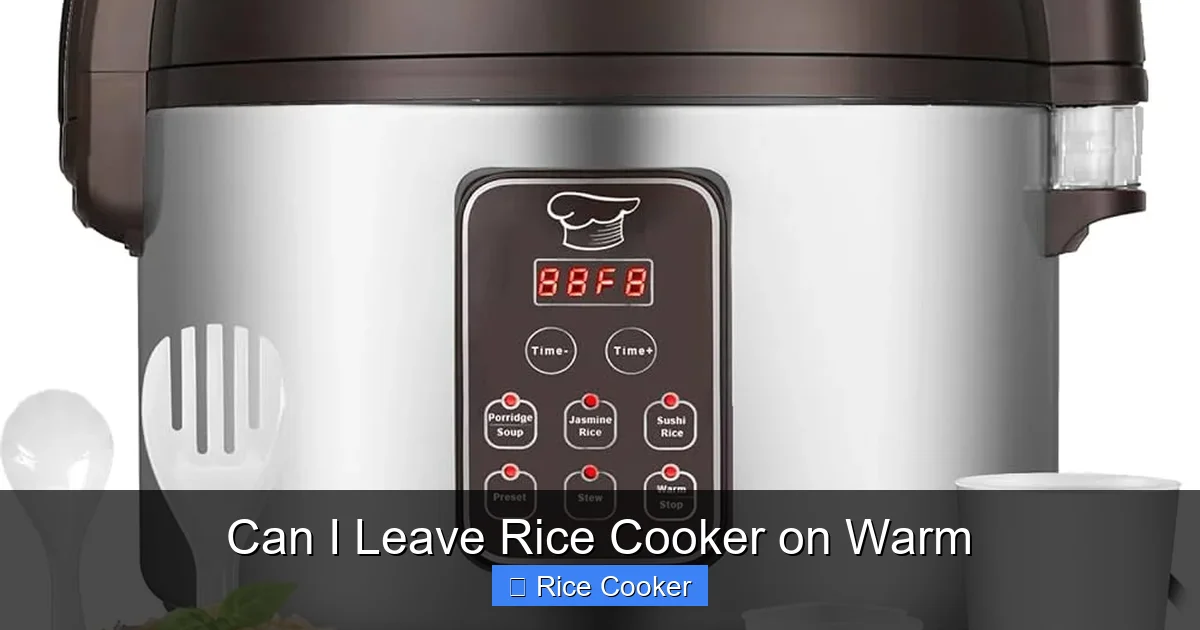
Yes, you can leave a rice cooker on the “Warm” setting—but only after the cooking cycle has finished. This feature is built into most rice cookers to maintain food at a safe temperature (typically 140–160°F) for several hours without overcooking. However, leaving it on warm indefinitely isn’t recommended due to energy waste and potential bacterial growth if left too long. Understanding your model and using the warm function correctly ensures both safety and convenience in your kitchen.
Key Takeaways
- Safety First: The “Warm” function is designed to maintain food at a safe temperature (140–160°F), preventing bacterial growth when used properly.
- Timing Matters: Most rice cookers automatically turn off the warm function after 12–24 hours, but it’s best not to rely on it indefinitely.
- Model Differences: Not all rice cookers handle the “Warm” setting the same way—some may overheat or fail to regulate temperature accurately.
- Energy Efficiency: Leaving your rice cooker on warm uses minimal electricity, but prolonged use wastes energy and may dry out food over time.
- Food Safety Guidelines: Per USDA recommendations, cooked rice should not be kept in the “Danger Zone” (40–140°F) for more than 2 hours.
- Best Practices: Transfer rice to an airtight container once cooked and refrigerate within 2 hours if not eating immediately.
- Cleanliness Counts: Regular cleaning of the inner pot and warming plate prevents mold and bacteria buildup, especially when the unit stays on longer.
📑 Table of Contents
- Can I Leave Rice Cooker on Warm? A Complete Guide
- How Does the “Warm” Setting Work?
- Is It Safe to Leave Rice Cooker on Warm?
- How Long Can You Safely Leave a Rice Cooker on Warm?
- Do All Rice Cookers Handle Warm Settings the Same?
- Energy Usage and Cost Implications
- Best Practices for Using the Warm Setting
- Common Myths About Rice Cooker Warm Settings
- What to Do If Your Rice Cooker Stays on Warm Too Long
- Conclusion: Smart Use Makes It Safe
- Final Tips for Everyday Use
Can I Leave Rice Cooker on Warm? A Complete Guide
You just finished a delicious meal of perfectly fluffy jasmine rice, and now you’re wondering: “Should I leave my rice cooker on warm so it’s ready when I come back?” It’s a common question among home cooks, busy parents, and anyone who wants to avoid reheating meals. After all, the “Warm” setting seems like the perfect solution—keeping your food hot without extra effort. But is it truly safe?
Before you plug in that rice cooker and hit the “Warm” button, let’s dive deep into what happens when you leave your rice cooker on this setting, how it works, and whether it’s really a good idea. We’ll explore the science behind food safety, how different rice cooker models behave, and practical tips to make the most of your appliance—without risking your health or wasting energy.
How Does the “Warm” Setting Work?
Most modern rice cookers come with a “Warm” mode, and understanding how it functions is key to using it safely. When you select “Warm,” the rice cooker stops actively heating the rice and instead maintains a steady, low temperature. This is usually between 140°F and 160°F, which is considered the ideal range for keeping food warm without promoting bacterial growth.
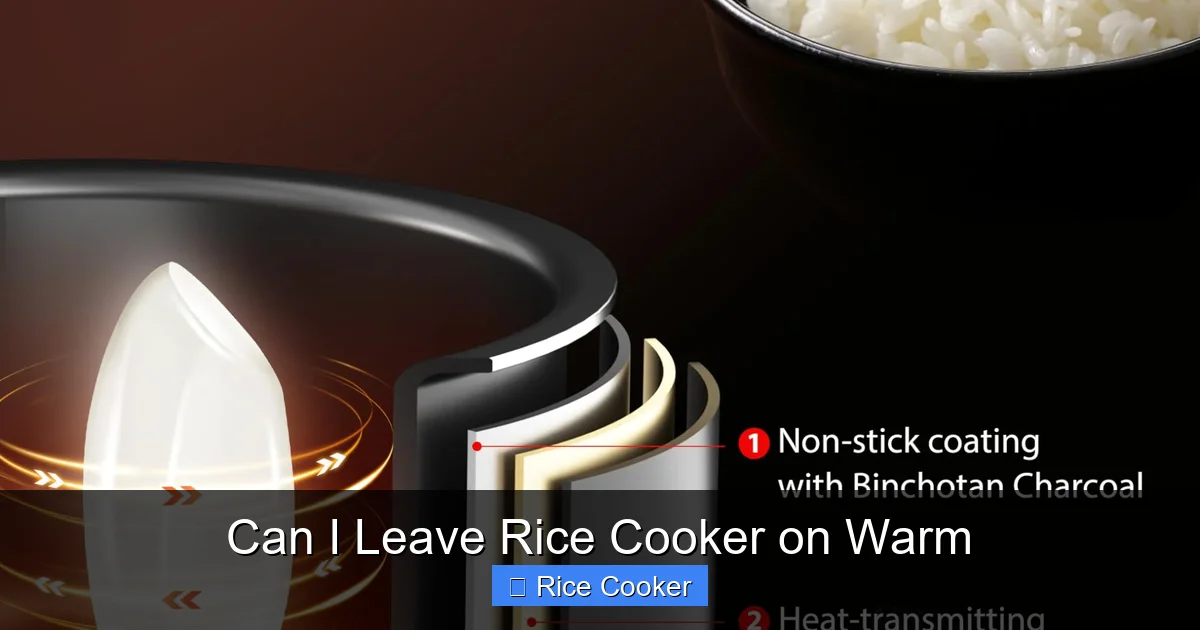
Visual guide about Can I Leave Rice Cooker on Warm
Image source: m.media-amazon.com
The Science Behind Food Temperature Zones
Food safety experts divide temperatures into three main zones:
- Freezing Zone (Below 32°F): Freezes food solid.
- Refrigeration Zone (32°F–40°F): Slows bacterial growth; ideal for storage.
- Danger Zone (40°F–140°F): Where bacteria multiply rapidly. This is why perishable foods shouldn’t sit in this range for more than 2 hours.
When your rice cooker switches to “Warm,” it moves food out of the danger zone by maintaining a temperature above 140°F. This helps preserve food quality and safety—but only if the unit is functioning correctly.
What Happens Inside the Rice Cooker?
Inside the rice cooker, a thermostat and heating element work together to regulate temperature. Once cooking is complete, the thermostat senses that the rice has reached the desired consistency and switches to the “Warm” mode. At this point, the heating element turns on only briefly to counteract heat loss from the environment. Think of it like a thermostat in your house—turning on just enough to stay warm.
This process is efficient and energy-conscious. Unlike stovetops or ovens that continue heating indefinitely, rice cookers are designed to stop heating once the food is warm, reducing the risk of burning or drying out.
Is It Safe to Leave Rice Cooker on Warm?
The short answer: yes, it’s generally safe—but with important caveats.
Most rice cookers are engineered to switch off the warm function automatically after a certain period. For example, many models turn off after 12 hours, while others may run up to 24 hours. This built-in timer prevents overheating and reduces fire hazards.
However, safety depends on more than just the timer. You need to consider:
- Quality of your rice cooker – Cheap models may have poor temperature regulation.
- Type of food being stored – Moist foods like rice are better suited for warm settings than dry items like bread.
- Kitchen environment – High humidity or room temperature can affect performance.
When Shouldn’t You Use the Warm Setting?
There are situations where leaving your rice cooker on warm is not advisable:
- Overnight use: While some cookers support overnight warming, it’s safer to transfer rice to a sealed container and refrigerate it.
- Unattended cooking: If you’re away from home for more than 4–6 hours, don’t rely solely on the warm setting.
- Old or faulty appliances: If your rice cooker has a history of malfunctioning or overheating, avoid using the warm function altogether.
How Long Can You Safely Leave a Rice Cooker on Warm?
Manufacturers typically design the warm setting to last between 12 and 24 hours. After that, the unit shuts down automatically. But just because it turns off doesn’t mean the food stays at a safe temperature.
The 2-Hour Rule
According to the U.S. Department of Agriculture (USDA), perishable foods like cooked rice should never be kept in the danger zone (40°F–140°F) for more than two hours. After that, bacteria such as Bacillus cereus, which causes food poisoning, can thrive.
If your rice cooker turns off after 12 hours, and it’s been sitting in a cool room (say, 70°F), the rice could drop below 140°F within an hour or two. That means you’re now in the danger zone—and that’s risky.
Tips for Extended Warm Storage
If you need to keep rice warm for longer than 6 hours, consider these alternatives:
- Use a food warmer or chafing dish – These devices maintain consistent heat without drying out food.
- Transfer to an insulated container – Stainless steel or ceramic containers retain heat well.
- Reheat before serving – This kills any bacteria that may have developed.
Do All Rice Cookers Handle Warm Settings the Same?
No. Different brands and models vary significantly in how they manage the warm function. Some high-end rice cookers, like those from Zojirushi or Cuisinart, use advanced fuzzy logic to monitor temperature and moisture, ensuring even warmth without scorching. Others, especially budget models, may simply keep heating until manually turned off—which increases the risk of drying or burning.
Signs Your Rice Cooker Is Struggling
If you notice any of these issues, your rice cooker may not be suitable for prolonged warm settings:
- Rice dries out or becomes hard – This indicates poor humidity control.
- Uneven heating – Cold spots suggest faulty thermostats.
- Strange smells or smoke – A sign of electrical or mechanical failure.
How to Test Your Rice Cooker’s Performance
Here’s a simple test: Cook a small batch of rice, then switch to warm. Place a thermometer probe into the center of the rice. After 4 hours, check the temperature. If it’s still above 140°F, your model performs well. If it drops below 120°F, it’s not reliable for long-term warming.
Energy Usage and Cost Implications
Leaving your rice cooker on warm uses very little power—about 15 to 30 watts, depending on the model. That’s roughly equivalent to a nightlight or phone charger. Over a 12-hour period, this adds up to about $0.02 to $0.05 in electricity costs, assuming average rates.
While this isn’t much money, it’s worth considering if you’re using the warm setting multiple times a day. Plus, prolonged use can wear out internal components faster, leading to premature failure.
Eco-Friendly Alternatives
If you want to reduce energy consumption and maintain food safety, try these tips:
- Switch off after cooking – Unless you plan to eat within 2 hours.
- Use a thermal carafe or insulated bowl – Keeps food warm for 2–3 hours naturally.
- Plan meals ahead – Cook extra rice and store it properly for later.
Best Practices for Using the Warm Setting
To get the most out of your rice cooker’s warm function—and keep yourself safe—follow these guidelines:
1. Only Use After Cooking Completes
Never press “Warm” during the active cooking phase. Wait until the unit signals completion (usually a beep or light change). Starting warm mode mid-cycle can cause uneven heating or damage the internal sensors.
2. Limit Warm Time to 2 Hours Max
For optimal safety, use the warm setting for no more than 2 hours. After that, either eat the food or move it to the refrigerator.
3. Keep the Lid Closed
Opening the lid frequently lets heat escape, forcing the heating element to work harder and potentially overheating the rice.
4. Clean Regularly
Dirt, rice grains, and moisture can build up on the warming plate and interior. Wipe it down weekly with a damp cloth and mild detergent. Never submerge the base in water.
5. Avoid Cross-Contamination
Don’t put raw ingredients (like meat or vegetables) directly into a warm rice cooker. Always cook them first, then transfer to a clean container.
6. Store Leftovers Properly
Once rice cools to room temperature (within 1 hour), place it in an airtight container and refrigerate. Consume within 3–4 days for best taste and safety.
Common Myths About Rice Cooker Warm Settings
Let’s debunk some popular misconceptions:
Myth #1: “The Warm Setting Cooks Rice Continuously”
False. Once switched to warm, no further starch conversion occurs. The rice remains at its current texture—no magic cooking happens.
Myth #2: “You Can Leave It On Forever”
Not true. Even with automatic shut-off, prolonged exposure to heat can degrade food quality and increase fire risks over time.
Myth #3: “All Rice Cookers Are the Same”
Different models have varying features. Always read the manual to understand your unit’s capabilities and limitations.
What to Do If Your Rice Cooker Stays on Warm Too Long
If your rice cooker fails to turn off after the expected warm duration, unplug it immediately. Check the user manual for troubleshooting steps or contact customer support. Continuing to use a faulty appliance can lead to electrical hazards or spoiled food.
Warning Signs of a Faulty Unit
- Smoke or burning smell
- Excessive condensation or water pooling
- Uneven heating or cold spots
- Timer or display malfunctions
Conclusion: Smart Use Makes It Safe
So, can you leave your rice cooker on warm? Absolutely—but with responsibility. Modern rice cookers are built to handle brief periods of warming safely, and the feature is incredibly convenient for busy households. Just remember: the warm setting is not a substitute for proper food storage.
Use it wisely—limit it to 2 hours, ensure your model is reliable, and always prioritize cleanliness and freshness. With these practices, your rice cooker becomes not just a kitchen appliance, but a trusted ally in feeding your family safely and efficiently.
Final Tips for Everyday Use
- Invest in a high-quality rice cooker with clear safety indicators.
- Label and date containers of leftover rice for easy tracking.
- Consider purchasing a second rice cooker for meal prep—one for cooking, one for warming.
- Teach family members how to use the warm setting correctly.
- When in doubt, reheat rice thoroughly before eating.
Your rice cooker is more than just a tool—it’s part of your kitchen routine. By using it thoughtfully, you save time, reduce waste, and protect your loved ones from unnecessary risks.
Frequently Asked Questions
Can I leave my rice cooker on warm overnight?
It’s not recommended. While some models support overnight warming, the USDA advises against leaving perishable food in the danger zone for more than 2 hours. Transfer rice to a sealed container and refrigerate for safety.
Will leaving rice cooker on warm burn the rice?
Generally, no. The warm setting uses low, regulated heat. However, cheap models may overheat, causing dry or burnt rice. Always check your model’s specifications and performance.
How long does the warm setting last on most rice cookers?
Most rice cookers automatically turn off the warm function after 12 to 24 hours. Some models have adjustable timers, but it’s best not to rely on it beyond 2 hours for food safety.
Is it safe to leave rice cooker on warm for 6 hours?
Possibly, but only if the rice remains above 140°F and the unit is functioning properly. For extended periods, it’s safer to refrigerate rice and reheat it before serving.
Does leaving rice cooker on warm use a lot of electricity?
No. The warm setting uses about 15–30 watts, similar to a light bulb. Over 12 hours, it costs less than a penny in electricity, making it energy-efficient for short-term use.
What should I do if my rice cooker won’t turn off on warm?
Unplug it immediately and inspect for faults. Check the user manual or contact the manufacturer. Do not continue using a malfunctioning appliance—it poses safety risks.