
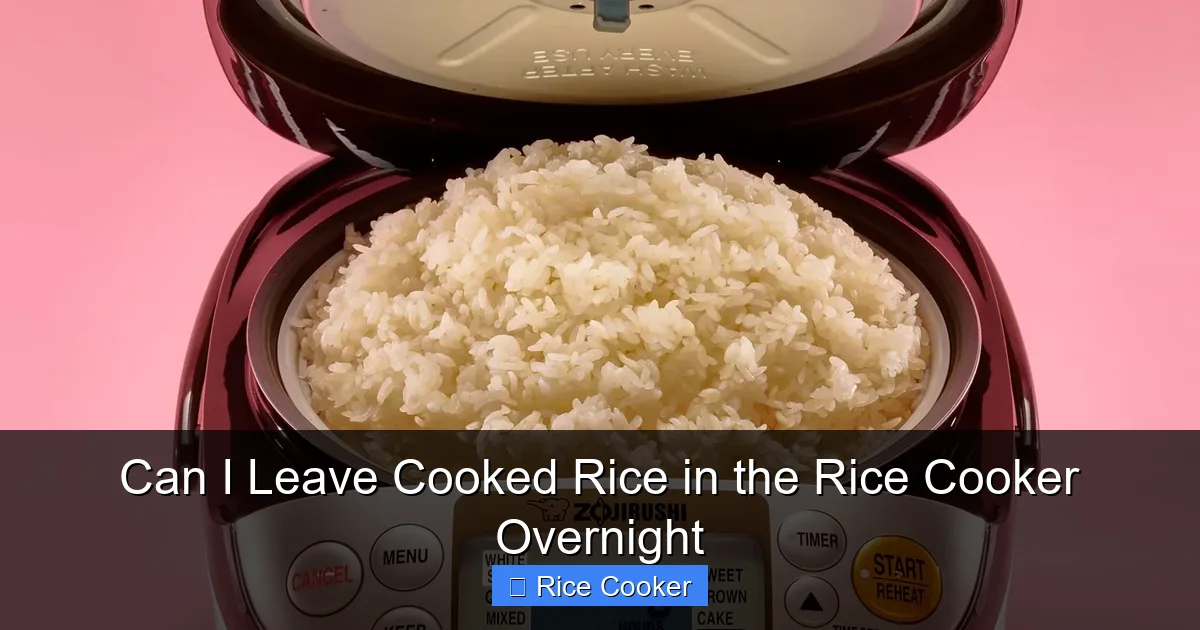
Leaving cooked rice in the rice cooker overnight is not recommended. Rice can harbor Bacillus cereus, a bacteria that thrives in warm environments and may cause food poisoning. For safety, always transfer leftover rice to an airtight container and refrigerate within two hours of cooking.
Key Takeaways
- Rice can grow harmful bacteria if left at room temperature for too long. The starch in rice becomes a breeding ground for Bacillus cereus, which can produce toxins that cause vomiting or diarrhea.
- Refrigeration is essential—store cooked rice in shallow containers and cool it quickly. Never leave rice sitting in the rice cooker after cooking.
- Reheating matters. If you reheat rice, make sure it reaches 165°F (74°C) throughout to kill any potential bacteria.
- Use a timer or smart features to avoid accidentally leaving rice on the “warm” setting all night. Some modern rice cookers have auto-off functions, but they’re not foolproof.
- Label and date your leftovers. Use rice within 3–4 days for best quality and safety.
- Don’t trust the “warm” setting. It only keeps rice between 140–160°F (60–71°C), which is within the danger zone for bacterial growth.
- Consider portion size. Only cook what you plan to eat soon to minimize waste and reduce the need to store leftovers.
📑 Table of Contents
- Can I Leave Cooked Rice in the Rice Cooker Overnight?
- The Science Behind Rice and Bacterial Growth
- What Happens If You Leave Rice in the Cooker All Night?
- Safety Tips: How to Store Rice Properly
- Reheating Rice Safely
- Can You Freeze Rice in the Rice Cooker?
- Smart Alternatives to Leaving Rice in the Cooker
- Signs Your Rice Has Gone Bad
- Special Considerations: Brown Rice vs. White Rice
- Common Myths About Rice Safety
- Conclusion: Prioritize Safety Over Convenience
Can I Leave Cooked Rice in the Rice Cooker Overnight?
You just finished making a perfect pot of rice—fluffy, golden, and ready to enjoy. But life happens: a phone call cuts short your meal prep, or dinner runs late. Before you head out, you pause. Should you just leave the rice in the cooker? Maybe turn it off and let it sit until morning?
This is a question many home cooks have asked—and for good reason. Convenience often wins over caution, especially when you’re tired or pressed for time. But before you click that “keep warm” button and walk away, consider this: leaving cooked rice in the rice cooker overnight might seem harmless, but it could be putting your health at risk.
In this article, we’ll dive deep into why leaving rice in the cooker overnight is dangerous, what the science says about bacterial growth, and how to safely store and reheat your rice so you can enjoy it without worry. Whether you’re meal prepping, feeding a big family, or just trying to simplify your week, understanding rice safety is essential. Let’s get into it.
The Science Behind Rice and Bacterial Growth
To understand why leaving rice in the rice cooker overnight is risky, we need to look at what happens inside that warm, steamy environment. Rice—especially white rice—contains starches that, when cooked, absorb water and become soft. But those same starches can also act as a food source for bacteria.
Visual guide about Can I Leave Cooked Rice in the Rice Cooker Overnight
Image source: becentsational.com
Why Rice Is a Breeding Ground for Bacteria
When rice is cooked, it’s often cooled slowly or left at room temperature for extended periods. This creates the perfect conditions for Bacillus cereus to thrive. This bacterium is naturally present in soil and grains, including rice. When rice is cooked, the starches gelatinize, making them more accessible to bacteria. If the rice isn’t cooled properly, spores of B. cereus can survive the cooking process and begin multiplying in the warm, moist environment of the rice cooker.
Now, here’s the tricky part: B. cereus doesn’t always make you sick immediately. It produces spores that can withstand high temperatures. So even if you reheat rice later, those spores might survive and release toxins that cause food poisoning. That’s why reheated rice can still make you ill, even if it looks and smells fine.
The Danger Zone: What Temperature Does to Rice
Food safety experts refer to the “danger zone” as temperatures between 40°F and 140°F (4°C and 60°C). This is where bacteria multiply most rapidly. The “warm” setting on most rice cookers keeps rice between 140°F and 160°F (60°C to 71°C), which technically falls outside the danger zone. However, this range is still warm enough to encourage bacterial growth over time.
If you leave rice in the cooker overnight—say, for 8 to 10 hours—the rice remains in this borderline-safe range for too long. Even if the cooker turns off automatically, residual heat keeps the rice warm, allowing bacteria to multiply. By the next morning, you could have a bowl of rice that looks fine but contains enough toxins to make you sick.
What Happens If You Leave Rice in the Cooker All Night?
Let’s say you’re in a rush after dinner. You finish cooking rice, turn off the cooker, and decide to leave it in there overnight so it’s ready for breakfast. What actually happens?
Bacterial Multiplication
Overnight, Bacillus cereus can double in number every 20 minutes under ideal conditions. That means what started as a small amount of bacteria could multiply into thousands—or even millions—by morning. These bacteria don’t change the smell, color, or texture of the rice. It will still look fresh and taste normal. That’s why you can’t rely on your senses to tell if rice is unsafe.
Toxin Production
Even worse, some strains of B. cereus produce heat-stable toxins called cereulide. These toxins are not destroyed by reheating. So even if you boil the rice before eating, the toxin remains active and can cause symptoms like nausea, vomiting, and diarrhea within 1 to 5 hours of consumption.
Long-Term Risks
Repeatedly eating contaminated rice increases your risk of chronic gastrointestinal issues, nutrient malabsorption, and weakened immunity. While one incident might just be a stomachache, consistent exposure can lead to more serious health problems over time.
Safety Tips: How to Store Rice Properly
The good news? You don’t have to throw away your rice or give up convenience. With proper handling, you can safely store and enjoy leftover rice without risking food poisoning.
Cool Rice Quickly
The key to safe rice storage is cooling it fast. The USDA recommends cooling food from 135°F to 70°F within 2 hours, and then from 70°F to 40°F within an additional 4 hours. Here’s how to do it:
- Spread it out: Pour rice onto a baking sheet or divide it into shallow containers. This increases surface area, helping it cool faster.
- Use ice baths: Place the container in a larger bowl filled with ice water. Stir occasionally to speed up cooling.
- Refrigerate promptly: Once cooled, transfer rice to airtight containers and refrigerate within 2 hours.
Choose the Right Containers
Airtight containers prevent contamination and help retain moisture. Avoid using open bowls or uncovered dishes. Glass or BPA-free plastic containers work well. Label each container with the date so you know when it was made.
Portion Control
Cook only what you’ll eat. Leftover rice is best consumed within 3–4 days. If you regularly make large batches, consider freezing portions for longer storage. Frozen rice can last up to 6 months if stored properly.
Reheating Rice Safely
You’ve stored your rice safely—now comes the moment of truth: reheating. Many people assume that microwaving rice for a minute is enough. But that’s not always true.
How Hot Is Hot Enough?
To kill bacteria, rice must reach an internal temperature of at least 165°F (74°C). Use a food thermometer to check the center of the dish. If you don’t have one, reheat rice until it’s steaming hot and no cold spots remain.
Best Reheating Methods
- Microwave: Cover rice with a damp paper towel to retain moisture. Heat in 30-second intervals, stirring between each, until hot.
- Stovetop: Add a splash of water or broth, cover the pan, and simmer for 5–10 minutes, stirring occasionally.
- Oven: Place rice in an oven-safe dish, cover with foil, and warm at 300°F (150°C) for 15–20 minutes.
Never reheat rice more than once. Repeated heating increases the risk of bacterial regrowth.
Can You Freeze Rice in the Rice Cooker?
Some rice cookers have a “freeze” or “hold” setting that claims to preserve rice. But these features are designed for short-term holding, not long-term storage. Freezing rice in the cooker isn’t practical—rice cookers aren’t refrigerated or freezer-proof.
Instead, transfer cooled rice to freezer-safe containers. Leave a little space at the top because rice expands when frozen. Thaw in the fridge overnight before reheating.
Smart Alternatives to Leaving Rice in the Cooker
So, what’s the best way to handle rice when you’re not around to serve it? Here are smart, safe alternatives:
Use a Timer
Set a kitchen timer or use your phone to remind yourself to turn off the rice cooker or remove the rice within 2 hours.
Invest in a Rice Cooker with Auto-Off
Modern rice cookers often include timers and automatic shut-off features. While they won’t keep rice perfectly safe all night, they prevent overcooking and reduce the chance of leaving rice on too long.
Meal Prep Smartly
Cook rice in smaller batches on weekends. Portion and store in advance so weekday meals are quick and safe.
Try Instant Pot or Pressure Cooker
These appliances allow precise control over cooking time and can be set to delay start. Just remember to follow the same cooling and storage rules.
Signs Your Rice Has Gone Bad
Even with proper storage, rice can spoil. Watch for these warning signs:
- Unpleasant odor: Sour or rancid smell indicates spoilage.
- Discoloration: Grayish or green patches suggest mold or bacterial growth.
- Texture changes: Sticky, slimy, or overly dry rice may be spoiled.
- Off taste: Bitter or sour flavors are red flags.
If you notice any of these, discard the rice immediately—don’t taste-test it.
Special Considerations: Brown Rice vs. White Rice
You might wonder if brown rice is safer than white rice. Unfortunately, both types carry the same risks. Brown rice has more fiber and nutrients, but it also retains more moisture and can spoil faster if not stored correctly. The key is the same: cool and refrigerate promptly.
Brown rice does take longer to cook, so ensure it’s fully done before storing. But once cooked, treat it the same way as white rice.
Common Myths About Rice Safety
Let’s clear up some misconceptions:
- Myth: “If rice looks and smells fine, it’s safe.”
Fact: Toxins from B. cereus don’t affect smell, taste, or appearance. - Myth: “Boiling rice kills all bacteria.”
Fact: Heat-stable toxins remain even after boiling. - Myth: “The rice cooker’s warm setting is safe for hours.”
Fact: It’s better than room temperature, but still risky for long periods.
Conclusion: Prioritize Safety Over Convenience
Leaving cooked rice in the rice cooker overnight is a shortcut that could cost you your health. While it might seem easier to just walk away, the risk of foodborne illness is real and serious. Always cool rice quickly and refrigerate it within two hours.
With a few simple habits—like using shallow containers, labeling dates, and reheating thoroughly—you can enjoy leftover rice safely and deliciously. Don’t skip the steps just to save time. Your stomach (and future self) will thank you.
Next time you cook rice, ask yourself: Is it worth the risk? Most likely, the answer is no. Keep your rice safe, keep your meals enjoyable, and keep cooking with confidence.
Frequently Asked Questions
Is it safe to leave rice in the rice cooker overnight?
No, it is not safe. Leaving cooked rice in the rice cooker overnight allows bacteria like Bacillus cereus to multiply in the warm environment. These bacteria can produce toxins that survive reheating and cause food poisoning.
How long can rice sit in a rice cooker before it goes bad?
Rice should not sit in the rice cooker for more than 2 hours. After that, it enters the temperature danger zone where bacteria grow rapidly. Always transfer leftover rice to the refrigerator within this time frame.
Can you reheat rice that was left in the rice cooker?
Only if it was removed and refrigerated within 2 hours. If rice was left in the cooker overnight, it is unsafe to eat regardless of reheating. The toxins produced by B. cereus are not destroyed by heat.
Does the “warm” setting on a rice cooker kill bacteria?
No, the “warm” setting keeps rice between 140°F and 160°F (60°C to 71°C), which is still within the range where bacteria can grow. It does not kill existing bacteria or spores.
How should I store cooked rice to keep it safe?
Cool rice quickly by spreading it in shallow containers or using an ice bath. Refrigerate within 2 hours in airtight containers. Label with the date and consume within 3–4 days for best quality and safety.
Can I freeze rice that’s been in the rice cooker?
Yes, but only after removing it and cooling it completely. Do not freeze rice directly in the rice cooker, as it’s not designed for refrigeration or freezing. Transfer to freezer-safe containers and thaw in the fridge before reheating.