
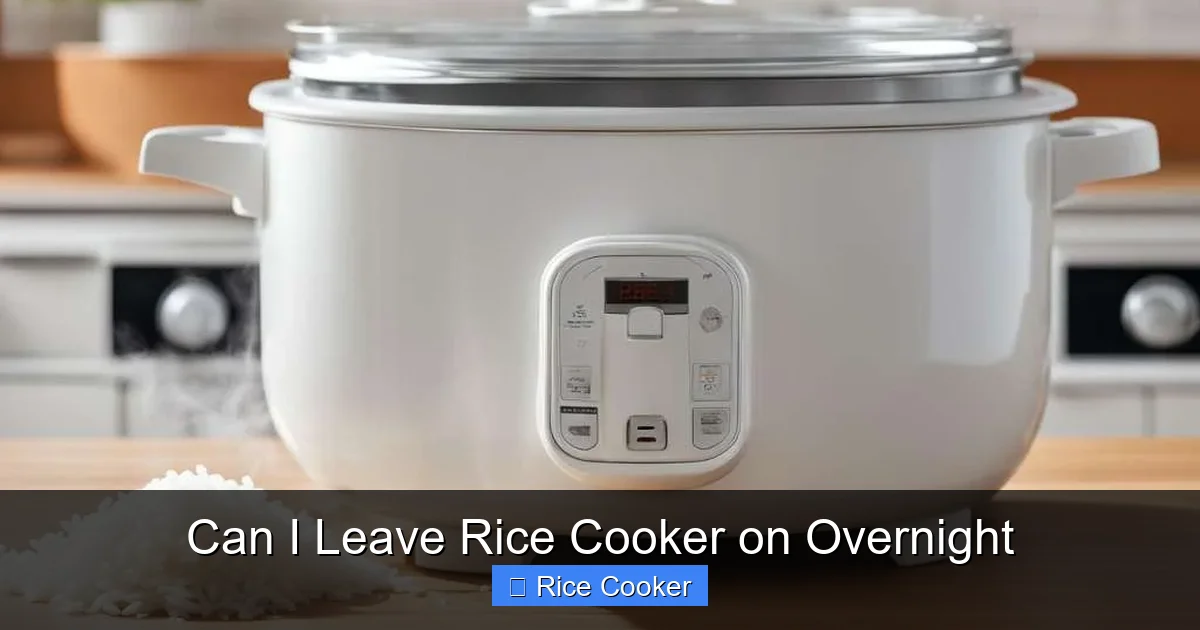
Leaving your rice cooker on overnight is generally safe if it has modern safety features like automatic shut-off and keep-warm functions. However, older models without these protections can pose fire or burn risks. To stay safe, always check your model’s manual, avoid overfilling, and never leave it unattended in high-risk conditions.
# Can I Leave Rice Cooker on Overnight?
Have you ever woken up to perfectly cooked oatmeal or warm rice without lifting a finger? Thanks to the convenience of modern rice cookers, this dream scenario is possible—but it brings up a common question: **Can I leave rice cooker on overnight?** It’s a smart question to ask, especially when you’re multitasking, tired from work, or just want to wake up to breakfast ready to go. You might also wonder if you can make a cake in a rice cooker for dessert.
Rice cookers have become kitchen staples, not only for cooking rice but also for steaming vegetables, making porridge, even baking cakes. With features like programmable timers and keep-warm settings, they’re designed for busy lifestyles. Behind their simplicity lies a complex system of heating elements, sensors, and circuits—all of which need to be understood before you decide to leave them running all night.
In this article, we’ll explore everything you need to know about leaving your rice cooker on overnight. We’ll cover safety concerns, how modern technology helps, what older models lack, and practical tips to do it safely—or choose not to. Whether you’re a college student, a working parent, or someone who loves meal prep, this guide will help you make informed decisions about your rice cooker habits.
## How Do Rice Cookers Work?
Before diving into whether it’s safe to leave your rice cooker on overnight, it’s helpful to understand how these appliances function. A rice cooker typically uses a combination of a heating plate at the bottom and internal temperature sensors to regulate cooking.
When you add water and rice (or another grain), the heating element warms the liquid until it reaches boiling point. Once the water evaporates and the rice absorbs most of the moisture, the temperature inside rises. At that point, the thermostat detects the change and automatically switches the heater off. Many modern rice cookers then activate a lower-power “keep-warm” mode, maintaining the food at a safe serving temperature—usually around 140°F to 150°F.
Some advanced models include fuzzy logic, which adjusts heating based on the type of grain and amount of liquid, mimicking the precision of a human chef. Others come with digital controls, timers, and even smartphone connectivity.
This self-regulating system is one reason why rice cookers are so reliable—but it’s not foolproof, especially when used outside normal operating conditions.
## Is It Safe to Leave a Rice Cooker On Overnight?
The short answer: **It depends.**
For most new rice cookers—especially those manufactured after 2010—the answer leans toward **yes**, it’s safe to leave on overnight, provided they have proper safety mechanisms. These include:
– Automatic shut-off after cooking completes
– Temperature sensors that detect when food is done
– Cool-touch exteriors
– Thermal fuses that cut power if overheating occurs
However, if your rice cooker is an older model without these features, leaving it on overnight could lead to dry burning, smoke, or even fire.
Let’s break it down further.
### Modern Rice Cookers: Designed for Convenience
Newer rice cookers are engineered with safety as a priority. Brands like Zojirushi, Cuckoo, Instant Pot, and Panasonic integrate multiple safeguards:
– **Thermal Fuses:** These are small devices that melt and break the circuit if temperatures get too high.
– **Keep-Warm Mode:** This low-heat setting maintains food temperature without continuing full-power heating.
– **Timer Functions:** You can set the cooker to start at a specific time, cook, and then automatically switch to keep-warm—ideal for waking up to hot meals.
Because of these systems, many experts now say it’s okay to leave a rice cooker on overnight **if it’s functioning properly and hasn’t been damaged**.
But remember: even with safety features, no appliance is 100% risk-free.
### Risks of Leaving Old Rice Cookers On
Older rice cookers—particularly those made before the 2000s—often lack modern safety tech. They might rely solely on a bimetallic thermostat that can fail over time. If the thermostat sticks or fails to detect when the pot is empty, the heating element may continue to operate indefinitely, drying out the contents and potentially causing smoke or fire.
Additionally, older models may have worn-out insulation or cracked inner pots, which increase the risk of electrical issues.
If you own such a unit, it’s strongly advised to **avoid leaving it unattended**, let alone overnight.
## What Happens If You Leave Rice Cooker On All Night?
Let’s imagine a worst-case scenario: you fill your rice cooker with water and rice, press start, and forget about it. What actually happens?
First, the rice cooks normally—boiling, absorbing moisture, then switching to keep-warm. That part is fine. But what about after several hours?
– **Dry Burning:** If the keep-warm function fails or isn’t activated, the rice at the bottom can scorch and burn, creating smoke.
– **Electrical Issues:** Faulty wiring or overheating components may cause sparks or trigger your home’s circuit breaker.
– **Fire Hazard:** In extreme cases, especially with flammable materials nearby (like paper towels or curtains), a malfunctioning rice cooker could ignite a fire.
That said, most modern units are built to prevent these outcomes. But accidents still happen due to manufacturing defects, power surges, or user error.
### Real-Life Example
Sarah, a busy nurse, uses her rice cooker to make overnight oats every morning. She adds rolled oats, almond milk, chia seeds, and fruit, sets the timer for 8 hours, and wakes up to a perfectly textured meal. Her rice cooker has a 10-hour keep-warm cycle and a cool exterior. After two years of use, she’s never had an issue. But she does unplug it when traveling.
Her experience shows that with the right model and usage, leaving a rice cooker on overnight can be both safe and convenient.
## Best Practices for Using Rice Cookers Overnight
Even if your rice cooker is safe, there are smart habits you should adopt to minimize risk.
### 1. Read the Manual
Not all rice cookers are created equal. Some are designed for continuous operation; others warn against it. Always check the manufacturer’s instructions.
For example, some Instant Pot models explicitly state that the keep-warm function is not intended for long-term storage of food beyond 12 hours, though they won’t explode if left longer.
### 2. Use the Keep-Warm Feature Properly
The keep-warm setting is meant to maintain temperature—not to cook or reheat food. It’s fine for short periods (up to 12 hours), but prolonged exposure can lead to bacterial growth if the food sits above 140°F for too long.
### 3. Don’t Overfill
Overfilling increases pressure and strain on the heating system. Plus, if something goes wrong, you’ll have more material to potentially combust.
### 4. Clean Regularly
Food residue and mineral deposits can interfere with temperature sensors. Clean your rice cooker after each use to ensure accurate readings.
### 5. Avoid Unattended Use in High-Risk Areas
Never leave a rice cooker on near flammable materials, in bedrooms without ventilation, or in homes with pets/children who might tamper with it.
### 6. Consider Unplugging
This is the safest option. If you’re worried, just unplug it after cooking. It’s a simple step that eliminates any electrical risk.
Many people do this anyway—why risk it when it takes two seconds?
## Types of Rice Cookers and Their Safety Features
Different brands and models offer varying levels of safety. Here’s a quick breakdown:
| Feature | Older Models (< 2000s) | Modern Models (> 2010s) |
|——–|————————|————————–|
| Auto Shut-Off | Rare | Standard |
| Keep-Warm Mode | Sometimes | Yes, often adjustable |
| Thermal Fuse | No | Yes |
| Cool-Touch Exterior | No | Yes |
| Timer Function | No | Often included |
| Fuzzy Logic | No | Common |
Zojirushi models, for instance, are known for their durability and advanced safety. They include multiple sensors and robust build quality. Cuckoo’s pressure rice cookers also feature explosion-proof designs and automatic pressure release.
On the other hand, basic $20 rice cookers from discount stores may lack even basic safeguards. If you’re considering buying one, prioritize safety certifications like UL or ETL.
## Alternatives to Leaving Rice Cooker On Overnight
If you’re still uncomfortable leaving your rice cooker on, here are safer alternatives:
– **Use a Slow Cooker:** Great for stews, grains, and porridges. Most have timers and are rated for overnight use.
– **Meal Prep the Night Before:** Cook everything during the day and store it in the fridge. Reheat in the morning.
– **Electric Kettle + Oats:** Boil water, mix with oats, and let sit for 5 minutes. Quick, easy, and safe.
– **Smart Appliances:** Look for Wi-Fi-enabled rice cookers that send alerts when cooking is done.
These options give you flexibility without comprometing safety.
## Signs Your Rice Cooker Might Be Unsafe
How do you know if your rice cooker is becoming a hazard? Watch for these red flags:
– **Smoke or Burning Smell:** Especially after prolonged use.
– **Cracked Lid or Inner Pot:** Can lead to steam leaks or electrical shorts.
– **Flickering Lights When Plugged In:** Indicates a wiring issue.
– **Unusual Sounds:** Buzzing, cracking, or grinding noises.
– **Frequent Tripping of Circuit Breakers:** Suggests internal faults.
If you notice any of these, unplug immediately and consider replacing the unit.
## Final Thoughts: Should You Leave It On?
After reviewing all the facts, the decision comes down to your comfort level and your appliance’s capabilities.
If you have a modern rice cooker with auto-shutoff, keep-warm, and safety certifications, **you can likely leave it on overnight with minimal risk**. But if you’re unsure—or if your model is outdated—it’s better to err on the side of caution.
Safety shouldn’t be an afterthought. Just because something *might* work doesn’t mean it’s worth the risk. Unplugging after use is a tiny habit that protects your home, your belongings, and your peace of mind.
And honestly? Waking up to a hot meal is nice—but not worth starting a kitchen fire.
So next time you think, “Can I leave rice cooker on overnight?”—ask yourself: “Is this worth the risk?” And if the answer isn’t a clear yes, take five seconds to unplug it.
Your future self (and your insurance agent) will thank you.
Key Takeaways
- Safety First: Most modern rice cookers have built-in shut-off mechanisms that prevent overheating, making overnight use relatively safe.
- Know Your Model: Older rice cookers may lack safety features; upgrading to a newer model with auto-shutoff and cool-touch designs reduces risk significantly.
- Avoid Overfilling: Filling beyond recommended levels increases pressure and heat buildup, raising the chance of malfunctions.
- Use Keep-Warm Function Wisely: The keep-warm mode keeps food at a safe temperature (around 140°F) but doesn’t eliminate all electrical risks.
- Unplug When Unattended: For maximum safety, especially during sleep or extended absences, unplugging the rice cooker eliminates any potential electrical hazard.
- Monitor for Signs of Wear: Cracked lids, faulty heating elements, or unusual smells are warning signs that mean it’s time to stop using or replace the appliance.
- Follow Manufacturer Guidelines: Always consult your user manual—each brand and model operates differently under different conditions.
Frequently Asked Questions
Is it dangerous to leave a rice cooker on all night?
It depends on the model. Modern rice cookers with auto shut-off and keep-warm features are generally safe to leave on overnight. Older models without these protections may pose fire or burn risks due to continued heating without supervision.
What happens if a rice cooker runs out of water?
If a rice cooker dries out completely, the heating element may overheat, potentially causing smoke, burning smells, or even fire. Some models have thermal fuses that cut power in such cases, but not all do.
Can bacteria grow in rice left in a rice cooker overnight?
Rice left at room temperature for more than 2 hours can harbor bacteria like Bacillus cereus. While keep-warm mode maintains a safe temperature (about 140°F), it’s best to consume rice within 12 hours for food safety.
Should I unplug my rice cooker after use?
Yes, especially if you’re leaving it unattended or sleeping. Unplugging eliminates any electrical hazard and is a simple safety precaution that takes only a few seconds.
Are electric rice cookers energy-efficient overnight?
Modern rice cookers use very little energy in keep-warm mode—typically less than 10 watts. So while they do draw power, the cost is negligible. Still, unplugging saves a tiny bit of energy and enhances safety.
How long can rice stay in a rice cooker’s keep-warm mode?
Most manufacturers recommend using the keep-warm function for no more than 10–12 hours. Beyond that, food quality declines and bacterial growth becomes a concern, even at safe temperatures.