
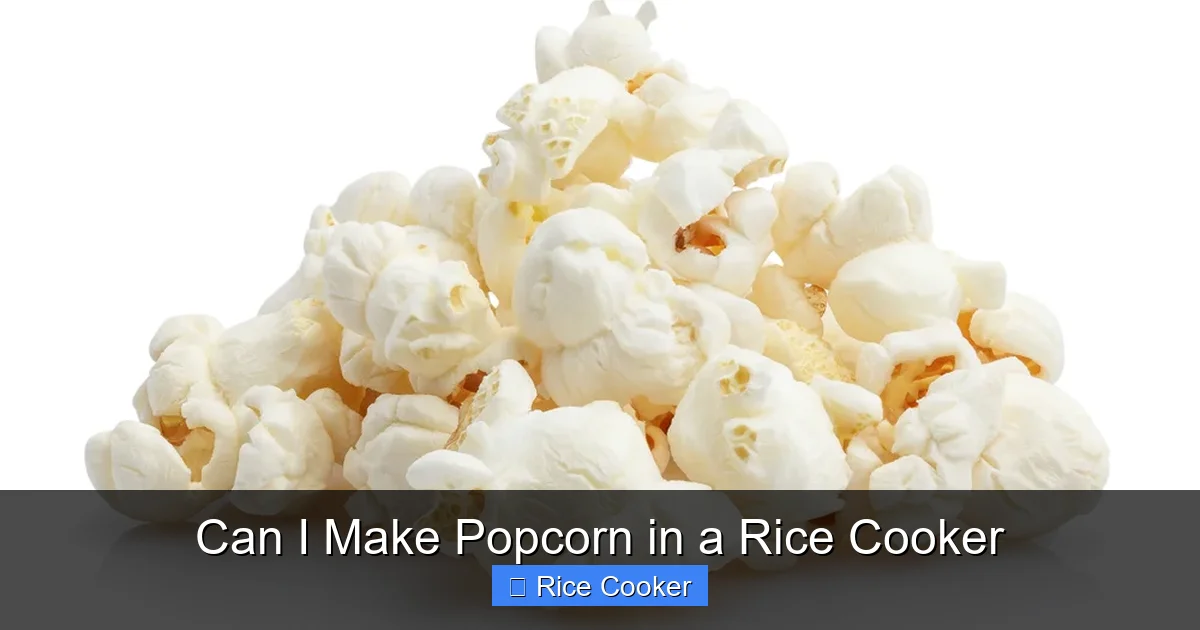
Making popcorn in a rice cooker is not only possible—it’s simple, efficient, and produces fluffy, delicious results every time. With the right technique and a few quality ingredients, your rice cooker can double as a popcorn maker without any extra equipment. This clever kitchen hack saves time, reduces cleanup, and works with most standard models. Whether you’re craving movie-night snacks or want a healthier alternative to microwave popcorn, your rice cooker has got you covered.
Key Takeaways
- Rice cookers are effective for popping corn: The even heat distribution and automatic shut-off feature make them ideal for making popcorn safely and consistently.
- You don’t need oil—but it helps: While some methods work without oil, using a small amount enhances flavor and prevents burning.
- Choose the right kernels: Only use unpopped popcorn kernels (not cereal or pre-popped), and ensure they’re dry and fresh for best results.
- Cleanup is minimal: Non-stick rice cooker pots are easy to wipe clean, making this method mess-friendly compared to stovetop popping.
- Experiment with flavors: Add cheese powder, butter, or spices before or after popping to customize your snack.
- Safety first: Always monitor the process and avoid overfilling the pot to prevent overflow and potential damage.
📑 Table of Contents
- Can I Make Popcorn in a Rice Cooker?
- The Science Behind Popping Corn
- What You’ll Need to Make Popcorn in a Rice Cooker
- Step-by-Step Guide: How to Make Popcorn in a Rice Cooker
- Tips for Perfect Popcorn Every Time
- Flavor Variations and Creative Twists
- Common Mistakes and How to Fix Them
- Is It Safe to Use My Rice Cooker for Popcorn?
- Environmental and Health Benefits
- Frequently Asked Questions
- Final Thoughts
Can I Make Popcorn in a Rice Cooker?
If you love popcorn but hate the hassle of stovetop popping or the chemicals in microwave bags, you’re in luck. Yes—you can absolutely make popcorn in a rice cooker. In fact, many home cooks swear by this method for its convenience, consistency, and ability to produce light, airy popcorn without sticking or burning. Whether you’re a busy parent, a college student living off ramen and dreams, or just someone who enjoys experimenting in the kitchen, your rice cooker might already be the secret weapon you never knew you had.
Popping corn in a rice cooker leverages the appliance’s core function: controlled, dry-heat cooking. Unlike microwaves that rely on radiation or stovetops that require constant attention, a rice cooker heats evenly and shuts off automatically when done. That means less babysitting and more snacking. Plus, because the pot is typically non-stick and enclosed, there’s far less mess than traditional methods. So, if you’ve ever wondered whether your trusty rice cooker can do more than just cook grains, the answer is yes—and popcorn is just the beginning.
The Science Behind Popping Corn
Before we dive into the how-to, let’s talk about the science. Popcorn pops because of its unique structure. Inside each kernel is a tiny pocket of water and a soft starch. When heated, the water turns to steam, building pressure inside the hull. Once the pressure exceeds the strength of the hull, it ruptures—boiling the starch outward into a fluffy white sphere. This transformation happens at around 356°F (180°C).

Visual guide about Can I Make Popcorn in a Rice Cooker
Image source: missvickie.com
A rice cooker reaches this temperature range quickly and maintains it steadily, especially during the warming mode. Most modern rice cookers use induction or infrared heating elements that distribute heat evenly across the bottom of the pot. This consistent warmth ensures that kernels heat uniformly, reducing the chance of burnt or unpopped pieces. The sealed environment also traps moisture and heat, helping the popping process along efficiently.
What You’ll Need to Make Popcorn in a Rice Cooker
You don’t need fancy gadgets or specialty equipment. In fact, all you really need is your rice cooker and a few basic ingredients. Here’s what to gather before you start:
- Unpopped popcorn kernels: Use only true popping corn (Zea mays everta), not cereal or flavored varieties. Look for fresh, dry kernels—they should rattle when shaken and feel heavy for their size.
- Oil (optional): A neutral-flavored oil like canola, vegetable, or coconut oil helps conduct heat and adds richness. About 1 tablespoon per cup of kernels is sufficient.
- Seasonings: Salt, butter, nutritional yeast, garlic powder, or cheese powder can elevate your snack.
- Measuring tools: A measuring cup and spoon help portion ingredients accurately.
- Tongs or spatula: For stirring and testing popped corn.
Most standard rice cookers come with a removable inner pot—this is what you’ll use. Make sure it’s clean and dry before starting. If your model has a glass lid, you may want to leave it slightly ajar to allow steam to escape, though many people skip it entirely since the pot seals tightly.
Step-by-Step Guide: How to Make Popcorn in a Rice Cooker
1. Prepare Your Rice Cooker Pot
Start by ensuring your inner pot is spotless. Any residue from previous meals could affect taste or cause uneven heating. Dry it thoroughly with a clean towel. If your rice cooker has a non-stick coating, avoid metal utensils that might scratch it—use silicone or wooden tools instead.
2. Measure Your Kernels
Use about one-quarter to one-third cup of unpopped kernels per serving. A good rule of thumb is ¼ cup yields roughly 4–6 cups popped popcorn. Too many kernels increase the risk of overflow; too few waste energy. If you’re new to this method, start small until you get the hang of it.
3. Add Oil (Optional)
Drizzle 1 tablespoon of oil into the pot. Swirl gently to coat the bottom. Some purists skip oil altogether, relying solely on the rice cooker’s dry heat—this works, but oil improves texture and flavor. Coconut oil gives a subtle sweetness, while avocado oil handles high heat well.
4. Heat and Pop
Turn your rice cooker to the “Cook” setting. As soon as it starts heating, cover the pot with the lid (if removable) or leave it open slightly. Listen carefully—once you hear the first few pops, give it 30 seconds before covering fully. This lets initial bursts escape without building excessive pressure.
Continue listening through the “popping burst,” which usually lasts 1–3 minutes. When the sounds slow to about one pop every 2–3 seconds, turn off the machine. Let it sit for another minute to catch any late pops.
5. Season and Serve
Carefully remove the hot pot using oven mitts or potholders. Pour the popcorn into a large bowl. Add melted butter, salt, or your favorite seasoning while it’s still warm—the heat helps meld flavors. Toss gently with a spatula or your hands (after cooling slightly) to distribute evenly.
Tips for Perfect Popcorn Every Time
Even the simplest recipes benefit from a few pro tips. Follow these guidelines to maximize success:
- Fresh kernels are key: Stale or old kernels won’t pop well. Store them in an airtight container away from heat and light.
- Don’t overfill: Limit to half the pot’s capacity to prevent splatter and ensure even popping.
- Preheat briefly: Let the rice cooker heat up for 30 seconds before adding kernels. This kickstarts the process.
- Use the warming mode wisely: After the main cycle ends, switch to “Warm” to keep popcorn hot without drying it out.
- Test before committing: Try popping 10 kernels first to gauge timing and heat level.
One common mistake is opening the lid too often during popping. Each time you lift it, cool air rushes in, slowing down the process. Resist the urge to peek—trust the rhythm of the pops instead.
Flavor Variations and Creative Twists
Once you’ve mastered plain popcorn, it’s fun to experiment. Your rice cooker isn’t just for savory snacks—sweet options shine too. Here are some crowd-pleasing ideas:
Classic Butter & Salt
Melt 2 tablespoons of unsalted butter in a small saucepan. Mix with ¾ teaspoon fine sea salt. Drizzle over warm popcorn and toss. For extra richness, add a pinch of black pepper or smoked paprika.
Cheesy Delight
In addition to butter, sprinkle ¼ cup grated Parmesan or nutritional yeast over the hot popcorn. Shake the bowl to coat evenly. Top with a dash of garlic powder for depth.
Cinnamon Sugar
Mix 2 tablespoons granulated sugar with ½ teaspoon ground cinnamon. Sprinkle generously over warm popcorn. For a twist, drizzle with maple syrup after coating.
Spicy Kick
Add ½ teaspoon cayenne pepper or chili powder to melted butter before mixing with popcorn. Pair with lime wedges for a ceviche-inspired treat.
Everything Bagel Style
Melt butter, then stir in dried onion flakes, garlic powder, oregano, and poppy seeds. Coat popcorn thoroughly while warm.
Remember: heavier sauces may clump if applied too early. Best practice is to add liquid-based seasonings last and reserve dry powders (like ranch mix) for tossing after cooling slightly.
Common Mistakes and How to Fix Them
Like any new kitchen technique, making popcorn in a rice cooker comes with a few hiccups. But most issues have simple fixes:
- Bursting kernels outside the pot: This happens when too much oil is used or the pot isn’t heated enough. Reduce oil to 1 tsp per ¼ cup kernels and preheat the machine longer next time.
- Burnt or bitter taste: Usually caused by scorched oil or residual food particles. Clean the pot thoroughly before use and avoid high-smoke-point oils like peanut oil if overheating occurs.
- Underpopped kernels: May result from low-quality kernels or insufficient heat. Test freshness by soaking 10 kernels in water overnight—if none float, discard them.
- Excessive smoke: Turn off immediately and ventilate the kitchen. Check if the oil is too hot or the pot is dirty. Never leave unattended.
- Rice cooker malfunctions: If the unit fails to pop or behaves erratically, unplug it and consult the manual. Some models aren’t designed for high-heat applications beyond rice.
If you consistently get poor results, consider investing in a dedicated popcorn maker or upgrading to a rice cooker with higher wattage and better thermal control.
Is It Safe to Use My Rice Cooker for Popcorn?
Yes—but with caveats. Most modern rice cookers are built to handle dry-heat cooking beyond just rice. However, always check your owner’s manual first. Some budget models have plastic components near the heating element that can melt if exposed to prolonged high temperatures. Also, avoid using metal utensils that could damage non-stick coatings.
Another safety tip: Never operate the rice cooker without water or dry ingredients for extended periods. While popping corn doesn’t require liquid, occasional dry runs shouldn’t harm most appliances—just don’t make it a habit.
Lastly, keep children and pets away during operation. Hot steam and popping kernels can be hazardous if disturbed mid-cycle.
Environmental and Health Benefits
Making popcorn in a rice cooker aligns with sustainable living and healthier eating. Unlike microwave popcorn bags—which often contain perfluorinated compounds (PFCs) and artificial flavors—homemade versions allow full control over ingredients. You can choose organic kernels, skip unhealthy oils, and avoid preservatives entirely.
Energy efficiency is another plus. Rice cookers use significantly less electricity than ovens or stovetops. One 3-cup batch takes about 5–7 minutes and consumes roughly 0.02 kWh—less than powering a single light bulb for an hour.
Plus, zero packaging waste! Reusable containers or cloth bags eliminate disposable plastic forever.
Frequently Asked Questions
Can I make air-popped style popcorn in a rice cooker?
Yes, but it won’t be exactly “air-popped” since air poppers circulate hot air. However, skipping oil and using dry heat mimics the concept. Results will be lighter than oiled versions but may lack richness.
How much popcorn does one cup of kernels yield?
Approximately 12–15 cups popped. Volume increases dramatically due to expansion—perfect for sharing!
Can I reuse the same kernels twice?
No. Once popped, kernels lose moisture and structural integrity. Reusing them leads to uneven results and wasted effort.
Do I need a special rice cooker for this?
Not necessarily. Standard electric rice cookers work fine. Avoid pressure cookers unless specifically labeled safe for dry-heat applications.
Will this work with brown rice cooker settings?
Yes! The principle is the same. Just ensure the temperature reaches 356°F+ for proper popping.
Can I make sweet popcorn like caramel or kettle corn?
Technically yes, but it’s not recommended. Sugary liquids can damage non-stick coatings and create sticky residue. Stick to dry or lightly oiled methods for best outcomes.
Final Thoughts
Making popcorn in a rice cooker isn’t just a clever trick—it’s a practical solution for everyday snacking. It’s fast, affordable, customizable, and surprisingly reliable once you master the basics. Whether you’re whipping up a quick breakfast treat, prepping snacks for movie night, or teaching kids kitchen skills, this method fits seamlessly into any routine.
So go ahead—unlock the hidden potential of your rice cooker. Next time hunger strikes, skip the microwave and reach for your trusted appliance instead. With a little practice, you’ll wonder how you ever lived without it.
Frequently Asked Questions
Can I make air-popped style popcorn in a rice cooker?
Yes, but it won’t be exactly “air-popped” since air poppers circulate hot air. However, skipping oil and using dry heat mimics the concept. Results will be lighter than oiled versions but may lack richness.
How much popcorn does one cup of kernels yield?
Approximately 12–15 cups popped. Volume increases dramatically due to expansion—perfect for sharing!
Can I reuse the same kernels twice?
No. Once popped, kernels lose moisture and structural integrity. Reusing them leads to uneven results and wasted effort.
Do I need a special rice cooker for this?
Not necessarily. Standard electric rice cookers work fine. Avoid pressure cookers unless specifically labeled safe for dry-heat applications.
Will this work with brown rice cooker settings?
Yes! The principle is the same. Just ensure the temperature reaches 356°F+ for proper popping.
Can I make sweet popcorn like caramel or kettle corn?
Technically yes, but it’s not recommended. Sugary liquids can damage non-stick coatings and create sticky residue. Stick to dry or lightly oiled methods for best outcomes.