
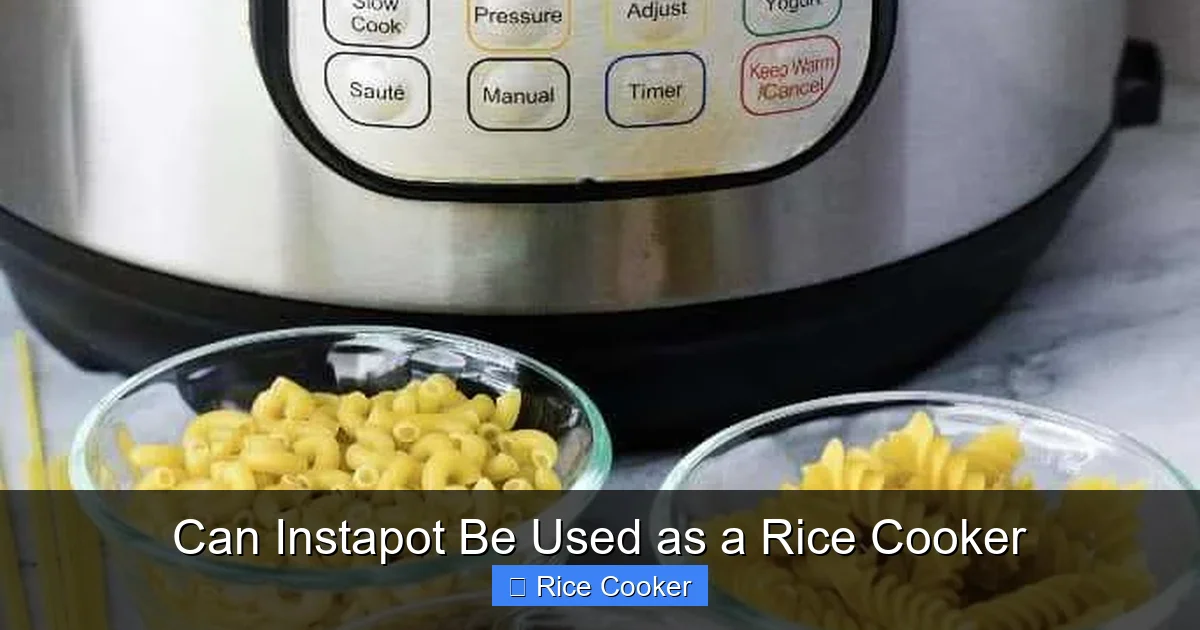
Can your Instant Pot double as a rice cooker? The short answer is YES, and in many ways, it’s even better than a dedicated rice cooker. With features like pressure cooking, slow cooking, and one-touch settings, the Instant Pot delivers perfectly cooked rice—whether you’re making jasmine, basmati, or brown rice—with minimal effort. In this guide, we’ll walk you through everything you need to know about using your Instant Pot for rice, including tips, troubleshooting, and when it might be better to stick with a traditional rice cooker.
Key Takeaways
- Instant Pots are versatile kitchen tools: Beyond pressure cooking, they offer slow cooking, sautéing, and even yogurt-making functions—making them more than just a rice cooker.
- You can make perfect rice in an Instant Pot: Using the “Manual” or “Pressure Cook” setting at high pressure, you can cook rice quickly and evenly.
- Different rice types require different methods: White rice, brown rice, sushi rice, and even risotto all have unique cooking times and water ratios.
- No need for a separate appliance: Save counter space and money by using your Instant Pot for both meals and rice.
- Troubleshooting common issues: From mushy to dry rice, we cover how to fix overcooked or undercooked results.
- It’s not always the best tool for every job: For someone who only cooks rice occasionally, a traditional rice cooker may still be simpler.
- Customization is key: Adjust cooking time, water ratio, and resting time based on grain type and desired texture.
[FEATURED_IMAGE_PLACEHOLDER]
Can an Instant Pot Be Used as a Rice Cooker? The Short Answer
Absolutely. In fact, if you already own an Instant Pot (or any electric pressure cooker), you might not need a separate rice cooker at all. The Instant Pot’s ability to cook rice under pressure—combined with its precise timing and temperature control—makes it surprisingly effective at producing fluffy, tender grains every time. Whether you’re preparing a quick weeknight dinner or serving sushi-grade sushi, your Instant Pot can handle it.
But before you toss out your old rice cooker or decide to skip buying one altogether, let’s dig deeper. While the Instant Pot excels at many things, there are nuances to consider—like rice texture, cooking method, and long-term convenience. In this comprehensive guide, we’ll explore how to use your Instant Pot as a rice cooker, compare it to traditional models, and help you decide which appliance best fits your lifestyle.
How an Instant Pot Works: More Than Just Pressure Cooking
The Instant Pot isn’t just a pressure cooker. It’s a multi-functional kitchen appliance that combines several cooking techniques into one device. At its core, it uses heat and pressure to cook food faster than traditional methods. But it also includes features like slow cooking, sautéing, steaming, yogurt making, and yes—rice cooking.
The Science Behind Pressure Cooking
When you seal the lid and set the Instant Pot to high pressure, the internal temperature rises above 100°C (212°F)—the boiling point of water at sea level. This increased pressure forces steam into the food, breaking down fibers and speeding up the cooking process. For rice, this means grains absorb moisture rapidly and cook uniformly, resulting in a tender yet firm bite.
Unlike stovetop rice, where uneven heat distribution can lead to burnt or undercooked spots, the sealed environment of the Instant Pot ensures consistent results. Plus, the built-in timer lets you set exact cooking durations, reducing guesswork.
Why People Love Using Their Instant Pot for Rice
Many home cooks swear by their Instant Pot for rice because of its speed and reliability. Here’s why:
- Saves time: Cooks white rice in under 30 minutes—often faster than boiling on the stove.
- Consistent results: No more checking every few minutes or worrying about overflow.
- Hands-off cooking: Once you press start, the pot does the rest.
- Energy efficient: Uses less electricity than keeping a pot simmering on the burner.
- Versatile: Can cook rice as part of larger meals like pilafs, stir-fries, or casseroles.
Step-by-Step Guide: How to Make Perfect Rice in an Instant Pot
Cooking rice in an Instant Pot isn’t rocket science—but getting it right requires attention to detail. Follow these steps for foolproof results every time.
What You’ll Need
- Instant Pot
- Rice (any variety)
- Measuring cup (preferably a rice cup)
- Water
- Fine-mesh strainer (optional, for rinsing)
- Wooden spoon or spatula
Basic Steps for White Rice
- Rinse the rice: Place rice in a fine-mesh strainer and rinse under cold water until the water runs clear. This removes excess starch and prevents gummy rice.
- Add rice and water: For every 1 cup of rice, add 1 cup of water (for white rice). Use the measuring cup that came with your pot for accuracy.
- Add flavor (optional): Stir in a pinch of salt, a teaspoon of oil, or a pat of butter for extra flavor.
- Close the lid and set the valve: Ensure the sealing ring is properly seated and the vent knob is turned to “Sealing.”
- Select the “Manual” or “Pressure Cook” setting: Set the timer to 4 minutes for white rice.
- Natural release: After cooking, let the pressure release naturally for 10–15 minutes. Then do a quick release by turning the valve to “Venting.”
- Fluff and serve: Open the lid away from your face, fluff the rice with a fork, and enjoy.
Adjustments for Different Rice Types
Not all rice is created equal. Here’s how to adapt your method:
| Rice Type | Water Ratio | Cooking Time | Notes |
|---|---|---|---|
| White Rice | 1:1 | 4 minutes | Quick and easy; great for everyday meals. |
| Brown Rice | 1.25:1 | 22–25 minutes | Soak overnight for softer results. May need longer natural release. |
| Basmatic or Jasmine | 1.1:1 | 3 minutes | Use slightly less water for fluffier grains. |
| Sushi Rice | 1:1 | 3 minutes | Rinse thoroughly to remove excess starch. |
| Risotto | 2:1 | 18–20 minutes (slow cook) | Use the “Slow Cook” setting; stir occasionally. |
Pros and Cons: Is the Instant Pot Better Than a Rice Cooker?
While the Instant Pot is undeniably capable, it’s important to weigh its advantages and limitations compared to a dedicated rice cooker.
Advantages of Using an Instant Pot for Rice
- Multi-functionality: One appliance replaces several others—pressure cooker, slow cooker, rice maker, steamer, etc.
- Faster cooking: Pressure cooking cuts rice prep time significantly.
- Compact design: Takes up less space than multiple small appliances.
- Affordable: A single Instant Pot often costs less than buying separate rice and pressure cookers.
- Great for large batches: Makes enough rice for a family in one go.
Limitations and Drawbacks
- Limited capacity: Most Instant Pots max out at 6 or 8 quarts—less than some high-end rice cookers.
- Less intuitive for beginners: Requires learning pressure release techniques and safety protocols.
- Texture differences: Some users find Instant Pot rice slightly firmer or drier than traditional rice cooker results.
- No warming function: Unlike rice cookers, Instant Pots don’t keep rice warm after cooking.
- Learning curve: Getting the right water ratio and timing takes practice.
Common Mistakes and How to Fix Them
Even experienced Instant Pot users sometimes run into issues with rice. Don’t worry—most problems have simple fixes.
Mushy or Gummy Rice
This usually happens when too much water is used or the rice isn’t rinsed. Try reducing the water by ¼ cup and always rinse white rice before cooking.
Dry or Undercooked Rice
Over-releasing pressure or using too little water causes this. Stick to recommended ratios and allow a full natural release for brown rice.
Rice Sticking to the Bottom
Non-stick inner pots are designed to prevent sticking, but overheating can damage them. Always use medium heat when sautéing, and avoid metal utensils.
Uneven Texture
Old or improperly stored rice can clump. Store rice in an airtight container and use fresh grains for best results.
Too Much Steam Buildup
If your rice tastes bland or lacks aroma, try adding a splash of broth instead of water, or cook on the “Slow Cook” setting for more even absorption.
Tips for Fluffier, Better-Tasting Rice
Want restaurant-quality rice at home? These pro tips will elevate your results.
- Use room-temperature water: Cold water can affect cooking consistency.
- Let rice sit after cooking: Resting for 5 minutes helps redistribute moisture.
- Fluff gently: Use a fork, not a whisk or spoon, to avoid mashing grains.
- Add fat: A teaspoon of oil or butter adds richness and prevents sticking.
- Experiment with broths: Replace half the water with chicken or vegetable broth for added flavor.
Can You Cook Other Grains in an Instant Pot?
Yes! Your Instant Pot isn’t limited to just rice. It’s perfect for cooking quinoa, barley, farro, millet, and even oatmeal.
Cooking Quinoa
For every 1 cup quinoa, use 2 cups water. Rinse well first. Cook on high pressure for 1 minute, then natural release for 10 minutes.
Making Oatmeal
Combine 1 cup oats + 2 cups liquid (water or milk). Pressure cook for 3 minutes, natural release for 5. Top with fruit and nuts.
Pilafs and Grain Bowls
Sauté onions and spices first, then add rice and water. Cook under pressure for 4–6 minutes depending on grain type.
Should You Buy a Dedicated Rice Cooker Instead?
There’s no one-size-fits-all answer. Consider these factors:
- If you cook rice daily: A traditional rice cooker may offer smoother operation and better texture control.
- If space is tight: An Instant Pot saves room and money.
- If you value simplicity: Rice cookers often have preset buttons (white, brown, sushi) and auto-warm functions.
- If you entertain often: A larger rice cooker might be better for feeding crowds.
That said, if you already own an Instant Pot and love its versatility, there’s no urgent need to buy another appliance—unless you’re a serious sushi chef or rice purist.
Final Thoughts: Is the Instant Pot Worth It for Rice?
In most households, yes. The Instant Pot delivers reliable, tasty rice without the hassle of constant monitoring. Its speed, efficiency, and multi-use design make it a smart investment for busy families, meal preppers, and anyone who values kitchen simplicity.
While it may not replicate every feature of a top-tier rice cooker—like fuzzy logic or induction heating—it gets the job done admirably. And when you factor in cost and functionality, the Instant Pot often comes out ahead.
So go ahead—use your Instant Pot for rice. Experiment with different grains, flavors, and techniques. You might just discover it’s your new favorite way to cook rice.
FAQs
Can you make sushi rice in an Instant Pot?
Yes! Use 1 cup sushi rice with 1.1 cups water. Rinse well before cooking. Set to high pressure for 3 minutes, then natural release for 10 minutes. Let sit 5 minutes before fluffing.
Do I need to rinse rice before cooking in an Instant Pot?
Yes, especially for white rice. Rinsing removes excess starch that can make rice sticky. Skip rinsing only if using pre-rinsed or instant rice.
How much water should I use for brown rice in an Instant Pot?
Use 1.25 cups water per 1 cup brown rice. Soak overnight for softer results. Cook on high pressure for 22–25 minutes, then natural release for 15 minutes.
Can I keep rice warm in an Instant Pot after cooking?
No, unlike rice cookers, Instant Pots don’t have a warming function. Transfer rice to a thermal bowl or insulated container to retain heat.
Is it safe to open the Instant Pot immediately after cooking rice?
Never open it during pressure build-up. Wait until natural or quick release is complete. Always turn the vent to “Venting” before opening.
Can I cook frozen rice in my Instant Pot?
Not recommended. Frozen rice can cause uneven cooking and increase risk of burns. Thaw completely before adding to hot liquid.
This is a comprehensive guide about can instapot be used as a rice cooker.
Key Takeaways
- Understanding can instapot be used as a rice cooker: Provides essential knowledge
Frequently Asked Questions
What is can instapot be used as a rice cooker?
can instapot be used as a rice cooker is an important topic with many practical applications.