
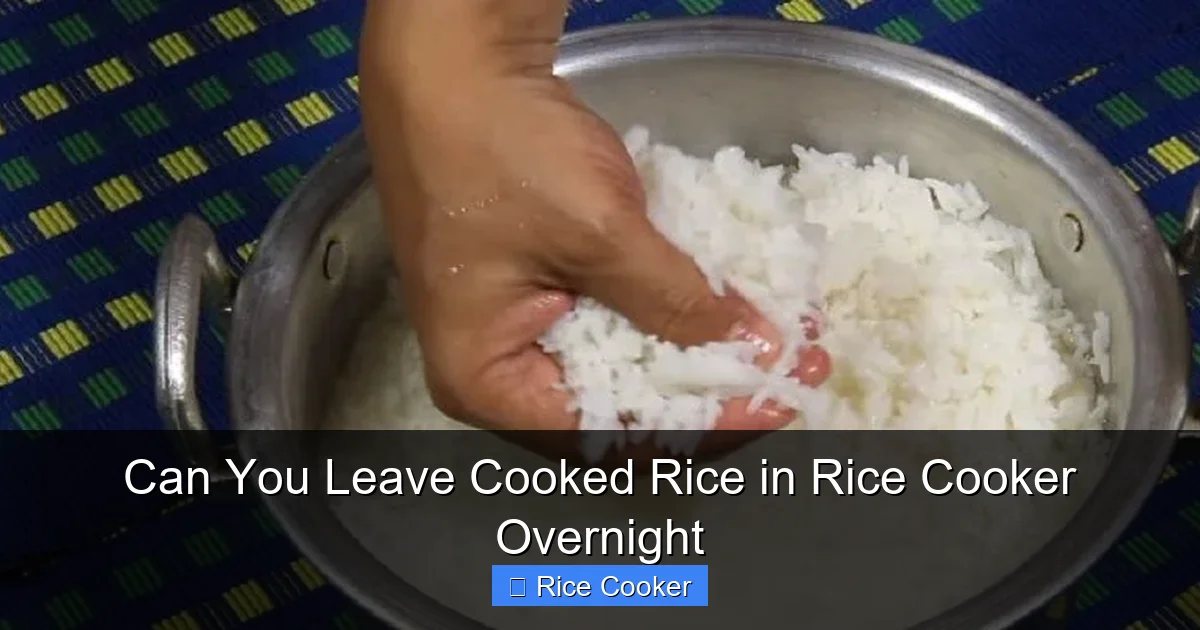
Can you leave cooked rice in the rice cooker overnight? The short answer is no, and here’s why. Rice cookers are designed to cook, not store food, and leaving cooked rice inside creates the perfect environment for harmful bacteria like Bacillus cereus. This bacteria thrives at room temperature and produces toxins that can cause food poisoning. For safety and taste, always transfer leftovers to an airtight container and refrigerate within two hours of cooking.
Key Takeaways
- Safety First: Leaving cooked rice in the rice cooker overnight increases the risk of bacterial growth and foodborne illness.
- Bacillus Cereus Risk: This toxin-producing bacteria commonly contaminates rice and multiplies rapidly in warm conditions.
- Proper Storage Matters: Transfer cooked rice to a shallow, airtight container and refrigerate within two hours.
- Reheating Is Crucial: Always reheat rice to at least 165°F (74°C) to kill potential bacteria.
- Rice Cooker Functionality: Most rice cookers lack refrigeration or ventilation needed for safe food storage.
- Quality Declines Over Time: Even if rice looks fine, texture and flavor suffer after sitting in the cooker too long.
- Best Practices: Plan meals ahead, store safely, and use your rice cooker only for cooking.
📑 Table of Contents
- Introduction: Why Rice Cookers Aren’t Storage Units
- Why You Shouldn’t Leave Cooked Rice in the Rice Cooker
- Safe Alternatives: How to Store Leftover Rice Properly
- Can You Freeze Rice in the Rice Cooker Pot?
- How Long Can You Safely Keep Rice in the Cooker?
- Practical Tips for Busy People
- Common Myths About Storing Rice
- Conclusion: Safety Over Convenience
Introduction: Why Rice Cookers Aren’t Storage Units
You just finished making a big pot of rice using your trusty rice cooker—perfectly fluffy, golden, and ready to serve. But life gets busy, and dinner plans change. You’re left with half a pot and wonder: *Can I just leave it in there overnight?* Before you press “Keep Warm” and walk away, let’s talk about what really happens when you do that.
Rice cookers are amazing kitchen appliances. They take the guesswork out of boiling water, measuring, and timing. But their job isn’t done once the rice is cooked. In fact, most models enter a “keep warm” mode that maintains heat between 140–170°F (60–77°C). Sounds cozy, right? But here’s the catch—this temperature range is ideal for bacterial growth, especially in starchy foods like rice.
In this article, we’ll explore the science behind why leaving cooked rice in the rice cooker overnight is a bad idea. We’ll also share practical tips on safe storage, proper reheating, and how to avoid common mistakes. Whether you’re meal prepping for the week or just trying to minimize cleanup, understanding how to handle leftover rice safely is essential.
Why You Shouldn’t Leave Cooked Rice in the Rice Cooker
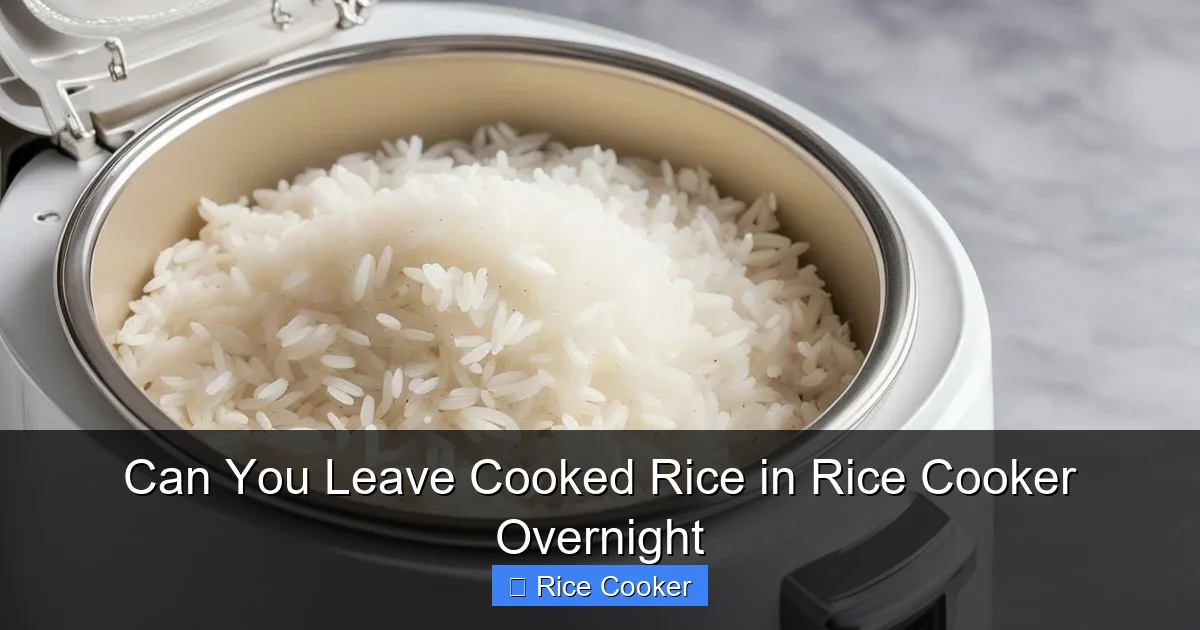
Visual guide about Can You Leave Cooked Rice in Rice Cooker Overnight
Image source: ricearray.org
Let’s start with the basics: rice cookers aren’t designed for food storage. Unlike refrigerators or insulated coolers, they don’t control humidity, airflow, or temperature fluctuations. Once your rice is done, the appliance shifts into “warm” mode—a setting meant to maintain readiness, not preserve freshness.
The problem? Bacteria love warmth and moisture. And rice, especially when freshly cooked, is a perfect breeding ground. Within minutes of cooking, spores from *Bacillus cereus* (a common soil bacterium) can begin multiplying. These spores survive cooking temperatures but become dangerous when rice sits in the “danger zone” between 40°F and 140°F (4°C to 60°C) for more than two hours.
Even if your rice cooker’s keep-warm function stays within the safe upper range, inconsistent heating and condensation buildup create microclimates where bacteria thrive. Plus, the rice itself retains moisture—ideal for rapid reproduction. So while your rice may look fine, the risk of food poisoning increases significantly after several hours.
The Dangers of Bacillus Cereus
*Bacillus cereus* isn’t something you see or smell. It produces two types of toxins: one that causes vomiting (emetic type) and another linked to diarrhea (diarrheal type). The emetic toxin survives cooking and grows slowly in stored rice, leading to symptoms like nausea and stomach cramps within 30 minutes to 6 hours after eating.
This is particularly dangerous because the spores are already present in raw rice. Cooking doesn’t eliminate them—it just activates their ability to multiply. When rice is left in a warm, moist environment, these bacteria can double in number every 20 minutes. That means a small amount of contaminated rice can quickly become a full-blown health hazard.
Studies have shown that reheated rice left at room temperature for over four hours poses a high risk of contamination. And since rice cookers don’t cool rice down or refresh the air, they’re essentially incubators for bacteria.
What Happens to the Texture and Flavor?
Beyond health risks, leaving rice in the cooker overnight affects its quality. The “keep warm” cycle often involves gentle steaming, which can make rice sticky or mushy. Over time, grains absorb excess moisture and lose their structure. Reheated rice becomes gummy, dry in spots, or clumpy—unpleasant to eat even if it’s technically still edible.
Additionally, the rice cooker’s heating element may cycle on and off irregularly, causing uneven warming. Some areas stay damp while others dry out. This inconsistency ruins the mouthfeel and makes the rice less enjoyable.
If you’ve ever opened your rice cooker the next morning to find a soggy, smelly mess, you’ve experienced this firsthand. Trust us—your taste buds and stomach will thank you for avoiding this scenario.
Safe Alternatives: How to Store Leftover Rice Properly
Visual guide about Can You Leave Cooked Rice in Rice Cooker Overnight
Image source: recipeofbangladesh.com
So what should you do instead? The good news is that storing rice is simple if you follow basic food safety rules. Here’s how to keep your rice safe and tasty:
Step 1: Cool It Quickly
After cooking, let the rice sit for no more than 10–15 minutes at room temperature. While some sources say you can let it cool naturally, rapid cooling is better. If you’re in a hurry, spread it out on a baking sheet or shallow tray to speed up the process.
Step 2: Use Airtight Containers
Never store rice in the original rice cooker pot unless it’s specifically labeled as freezer-safe and airtight. Instead, transfer portions to glass or BPA-free plastic containers with tight-fitting lids. Shallow containers help rice cool faster and reduce condensation.
Step 3: Refrigerate Within Two Hours
This is non-negotiable. Per USDA guidelines, perishable food should not be left out for more than two hours (one hour if it’s above 90°F/32°C outside). Place the container in the coldest part of your fridge—ideally below 40°F (4°C).
Step 4: Label and Date
Write the date on the container so you know how long it’s been stored. Cooked rice lasts best in the fridge for 3–4 days. Freezing extends shelf life to 1 month.
Step 5: Reheat Thoroughly
When you’re ready to eat, reheat rice to at least 165°F (74°C) throughout. Add a splash of water or broth while microwaving to prevent drying out. Stir well and check for hot spots.
By following these steps, you can enjoy leftover rice safely without worrying about bacteria or ruined texture.
Can You Freeze Rice in the Rice Cooker Pot?
Some people wonder if freezing rice directly in the rice cooker pot is safe. The short answer: yes—but with caveats.
Most modern rice cooker pots are made of stainless steel or nonstick aluminum. If yours is freezer-safe (check the manufacturer’s instructions), you can freeze rice in it. However, ensure the lid is sealed tightly to prevent freezer burn and odor absorption.
That said, it’s easier to portion rice before freezing. Use ice cube trays or small containers for quick defrosting later. Also, never refreeze rice that has already been thawed and reheated—each freeze-thaw cycle degrades quality and increases contamination risk.
Tips for Freezing Rice Successfully
- Cool rice completely before freezing.
- Leave ½-inch headspace in containers to allow expansion.
- Label with contents and date.
- Thaw in the fridge overnight, not at room temperature.
How Long Can You Safely Keep Rice in the Cooker?
The general rule is: **don’t leave cooked rice in the rice cooker overnight**. But let’s break down the timeline:
– **Up to 2 hours**: Safe if kept on “warm” mode. Still not ideal, but lower risk.
– **2–4 hours**: High risk of bacterial growth. Avoid unless you plan to eat soon.
– **Over 4 hours**: Dangerous. Discard immediately.
– **Overnight (8+ hours)**: Extremely unsafe. Do not consume.
Even if your rice cooker has advanced features like auto-shutoff or steam release, it doesn’t eliminate the core issue: maintaining a warm, humid environment. Bacteria won’t care about fancy tech—they’ll keep reproducing.
Some newer models claim to “preserve” flavor or reduce stickiness, but none replace proper refrigeration. If you need to keep rice warm for serving at a potluck or family gathering, consider transferring it to a thermos or warming drawer instead.
Practical Tips for Busy People
We get it—life moves fast. Between work, kids, and household chores, you might not always remember to move the rice. Here are some real-world hacks to help:
Meal Prep Hack: Cook Once, Serve Many
Make a big batch of rice on Sunday and divide it into individual servings. Store in freezer bags or containers. Each night, just pop one in the microwave for 2–3 minutes.
Use a Timer
Set an alarm after cooking to remind yourself to remove the rice. A simple phone notification works wonders.
Invest in a Rice Storage Container
Buy a set of stackable, leak-proof containers designed for leftovers. They fit neatly in the fridge and make reheating easy.
Don’t Rely on “Warm” Mode Long-Term
If you’re hosting guests, switch off the “warm” mode after 30 minutes and serve immediately. Or use a chafing dish with warm water underneath.
These small changes add up to big improvements in safety and convenience.
Common Myths About Storing Rice
There are plenty of myths floating around about rice and safety. Let’s clear them up:
Myth #1: “Rice Cookers Are Sanitized, So It’s Fine”
False. While the pot may seem clean, bacteria multiply based on time and temperature—not appliance hygiene. A clean surface doesn’t mean safe food.
Myth #2: “Leftover Rice Is Always Safe After Reheating”
Not necessarily. Reheating kills active bacteria but doesn’t destroy heat-stable toxins produced by *Bacillus cereus*. If the rice was contaminated before storage, reheating won’t save it.
Myth #3: “I’ve Done This Before and Never Got Sick”
Lucky you! But that doesn’t mean it’s safe. You might have consumed a low dose that didn’t trigger symptoms. Consistently doing something risky puts you at higher long-term risk.
Stay smart, not lucky.
Conclusion: Safety Over Convenience
Leaving cooked rice in the rice cooker overnight might seem harmless—after all, it’s still hot, still in the same pot, and probably tastes okay. But the truth is, convenience shouldn’t compromise safety. The tiny effort of transferring rice to a container and popping it in the fridge could prevent a nasty case of food poisoning.
Rice cookers are fantastic tools, but they’re not storage units. Their purpose is to cook perfectly, not preserve indefinitely. By understanding the risks and adopting simple habits—like cooling quickly, refrigerating promptly, and reheating thoroughly—you protect both your health and your enjoyment of meals.
Next time you make rice, think ahead. Plan portions, use proper containers, and treat leftovers like any other perishable food. Your future self will thank you.
Frequently Asked Questions
Is it safe to leave rice in the rice cooker overnight?
No, it’s not safe. Bacteria like Bacillus cereus can grow rapidly in the warm, moist environment of a rice cooker. Even if the rice looks and smells fine, toxins may have formed overnight, increasing the risk of food poisoning.
How long can rice sit in a rice cooker on “warm” mode?
It’s best to limit keep-warm mode to 2 hours maximum. Beyond that, the temperature and humidity create ideal conditions for bacterial growth. After 2 hours, transfer rice to an airtight container and refrigerate.
Can you reheat rice that was left in the cooker overnight?
Only if it was stored properly in the fridge within 2 hours of cooking. If rice was left out overnight, discard it—reheating won’t remove heat-stable toxins from Bacillus cereus.
Does freezing rice kill bacteria?
Freezing slows bacterial growth but doesn’t kill bacteria or neutralize toxins. However, properly frozen and thawed rice is safer than rice left at room temperature. Always reheat thoroughly after thawing.
Are all rice cooker pots safe to freeze?
Check your model’s manual first. Only pots labeled as freezer-safe should be used for freezing. Otherwise, transfer rice to freezer containers to avoid potential damage or chemical leaching.
What’s the best way to store cooked rice?
Transfer to a shallow, airtight container and refrigerate within 2 hours. Label with the date and consume within 3–4 days. For longer storage, freeze in portions for easy reheating.