
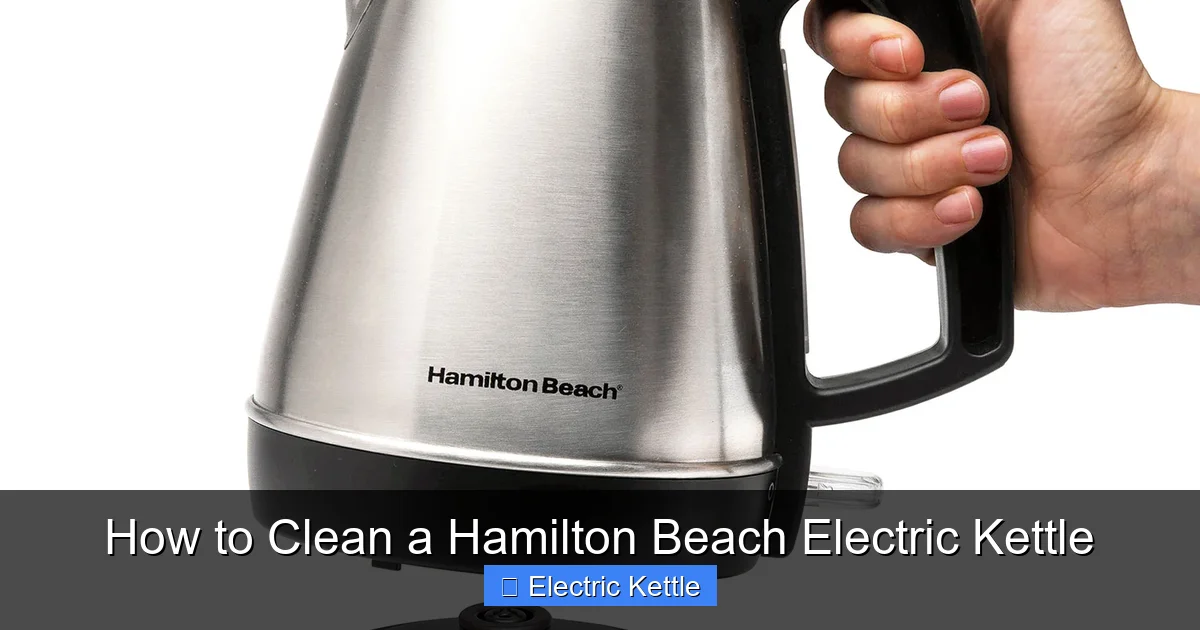
Keeping your Hamilton Beach electric kettle clean ensures better-tasting beverages and extends the appliance’s lifespan. Regular cleaning removes limescale, mineral deposits, and lingering odors using safe, household ingredients like vinegar and lemon.
Key Takeaways
- Clean your kettle regularly: Aim for every 1–2 weeks if you use it daily to prevent limescale and bacteria buildup.
- Use vinegar or lemon for descaling: Both are natural, effective, and safe for removing hard water deposits without harsh chemicals.
- Never submerge the base: The heating element and electrical components must stay dry—only clean the interior and exterior with a damp cloth.
- Rinse thoroughly after cleaning: Residual cleaning solution can affect taste, so rinse at least 2–3 times before reuse.
- Wipe the exterior gently: Use a soft cloth and mild soap to avoid scratching the stainless steel or plastic finish.
- Check the filter and spout: Remove and clean the mesh filter regularly to prevent clogs and ensure smooth pouring.
- Store with the lid open: This allows air circulation and prevents musty odors from developing inside the kettle.
📑 Table of Contents
- Why Cleaning Your Hamilton Beach Electric Kettle Matters
- What You’ll Need to Clean Your Kettle
- Step-by-Step Guide to Cleaning the Interior
- Cleaning the Exterior and Removable Parts
- How Often Should You Clean Your Kettle?
- Troubleshooting Common Cleaning Issues
- Conclusion: Keep Your Kettle Clean for Better-Tasting Drinks
Why Cleaning Your Hamilton Beach Electric Kettle Matters
You love your morning tea or instant coffee, but have you ever stopped to think about what’s lurking inside your Hamilton Beach electric kettle? Over time, minerals from hard water—like calcium and magnesium—build up as white, chalky deposits known as limescale. This not only affects the taste of your drinks but can also reduce the kettle’s heating efficiency and shorten its lifespan. Even if you use filtered water, residue and odors can still accumulate, especially if you frequently brew flavored teas or add honey and spices.
Cleaning your electric kettle isn’t just about aesthetics—it’s about health, performance, and flavor. A dirty kettle can harbor bacteria, mold, or stale odors that transfer to your beverages. Imagine sipping your favorite green tea only to taste a hint of yesterday’s chamomile or, worse, a metallic tang from mineral buildup. Regular maintenance keeps your kettle running smoothly and ensures every cup tastes as fresh as the first. Plus, a clean kettle heats water faster and uses less energy, which saves you money in the long run.
What You’ll Need to Clean Your Kettle
Before you start, gather a few simple supplies. The good news? You probably already have most of them in your kitchen. Cleaning a Hamilton Beach electric kettle doesn’t require specialty tools or expensive cleaners. In fact, the best solutions are natural, non-toxic, and gentle on both your appliance and the environment.

Visual guide about How to Clean a Hamilton Beach Electric Kettle
Image source: howtocleaneasily.com
Essential Cleaning Supplies
- White distilled vinegar: This is the gold standard for descaling. Its acidity breaks down limescale without damaging the kettle’s interior.
- Lemon juice or fresh lemon: A natural alternative to vinegar, lemon works well for light buildup and leaves a fresh scent.
- Baking soda: Great for scrubbing stubborn spots or neutralizing odors, especially when combined with water to form a paste.
- Soft sponge or cloth: Avoid abrasive scrubbers that can scratch stainless steel or plastic surfaces.
- Mild dish soap: For wiping down the exterior and cleaning the filter.
- Water: Obviously! You’ll need plenty for rinsing.
Optional but Helpful Tools
- Toothbrush: Perfect for reaching tight spots around the spout or under the lid.
- Kettle descaling solution: If you prefer a commercial product, choose one labeled safe for electric kettles—avoid bleach or ammonia-based cleaners.
- Microfiber cloth: Ideal for polishing the exterior without leaving streaks.
Remember, never use steel wool, harsh chemicals, or anything that could scratch or corrode the kettle’s interior. Hamilton Beach kettles typically have a stainless steel or BPA-free plastic interior, both of which are durable but sensitive to abrasives. Stick to gentle, natural cleaners for the best results.
Step-by-Step Guide to Cleaning the Interior
The interior of your kettle is where most of the action happens—and where most of the buildup occurs. This is the part that comes into direct contact with water and heat, making it prone to limescale, stains, and odors. Cleaning it properly ensures your drinks taste clean and fresh every time.
Method 1: Vinegar Descaling (Best for Heavy Buildup)
This is the most effective method for removing limescale, especially if you live in an area with hard water. Vinegar is cheap, safe, and works like a charm.
- Fill the kettle halfway with equal parts water and white vinegar. For example, if your kettle holds 1.7 liters, use about 425 ml of water and 425 ml of vinegar. Don’t overfill—leave room for boiling.
- Let it sit for 1–2 hours. This gives the vinegar time to dissolve mineral deposits. For severe buildup, you can leave it overnight.
- Boil the solution. Turn on the kettle and let it run through a full cycle. The boiling action helps loosen stubborn scale.
- Turn off and let it cool. Never handle a hot kettle immediately after boiling. Wait at least 15–20 minutes.
- Scrub gently if needed. Use a soft sponge or cloth to wipe away any remaining residue. For tight spots, a toothbrush works well.
- Rinse thoroughly. Fill the kettle with clean water, swish it around, and pour it out. Repeat 2–3 times to remove all vinegar taste.
- Run a rinse cycle. Fill the kettle with fresh water, boil it, and discard the water. This ensures no vinegar flavor remains.
Method 2: Lemon Juice Descaling (Great for Light Buildup and Odors)
If you’re not a fan of vinegar’s smell or have only mild scaling, lemon is a fantastic alternative. It’s natural, refreshing, and leaves your kettle smelling citrusy clean.
- Cut a lemon in half and squeeze the juice into the kettle. Use about half a lemon for a standard-sized kettle.
- Add water to cover the bottom. You don’t need to fill it completely—just enough to submerge the lemon juice and reach the affected areas.
- Let it sit for 30 minutes to 1 hour. The citric acid will start breaking down mineral deposits.
- Boil the mixture. Turn on the kettle and let it run until it shuts off automatically.
- Cool and scrub. Allow the kettle to cool, then wipe the interior with a soft cloth. Use a toothbrush for the spout or hard-to-reach areas.
- Rinse well. Fill with clean water, swish, and pour out. Repeat 2–3 times.
- Boil fresh water. Run one final cycle with plain water to eliminate any lemon taste.
Method 3: Baking Soda for Stubborn Stains or Odors
Baking soda is excellent for tackling odors and light discoloration. It’s mild, non-abrasive, and safe for regular use.
- Make a paste. Mix 1–2 tablespoons of baking soda with a small amount of water to form a thick paste.
- Apply to stained areas. Use a soft cloth or sponge to gently rub the paste onto the interior walls, focusing on discolored spots.
- Let it sit for 15–20 minutes. This gives the baking soda time to neutralize odors and lift stains.
- Rinse thoroughly. Pour out the paste and rinse the kettle multiple times with clean water.
- Boil water. Fill the kettle with fresh water, boil it, and discard the water to ensure no residue remains.
For best results, combine methods. For example, use vinegar for heavy descaling once a month and lemon or baking soda for weekly maintenance. Always rinse thoroughly after any cleaning method to avoid altering the taste of your drinks.
Cleaning the Exterior and Removable Parts
While the interior gets the most attention, don’t forget the outside of your kettle. Dust, fingerprints, and water splashes can make it look dull or dirty over time. Plus, removable parts like the lid, filter, and spout need regular care to function properly.
Wiping Down the Exterior
The exterior of your Hamilton Beach kettle is usually made of stainless steel or high-quality plastic. Both materials are durable but can show smudges, water spots, or grease.
- Unplug the kettle and let it cool completely. Safety first—never clean a hot or plugged-in appliance.
- Dampen a soft cloth with warm, soapy water. Use a mild dish soap—nothing abrasive or bleach-based.
- Wipe the entire exterior. Pay attention to the handle, base, and control panel. Avoid getting water into the electrical components.
- Dry with a clean, dry cloth. This prevents water spots and streaks, especially on stainless steel.
- For extra shine, use a microfiber cloth. It’s great for polishing without leaving lint or scratches.
Avoid spraying cleaners directly onto the kettle. Instead, apply them to the cloth first. Never use ammonia, bleach, or scouring pads—they can damage the finish or leave harmful residues.
Cleaning the Lid and Spout
The lid and spout are common areas for buildup, especially if you frequently brew tea or add ingredients directly into the kettle.
- Remove the lid if possible. Some Hamilton Beach models have a detachable lid—check your user manual.
- Wash with warm, soapy water. Use a soft sponge to clean the inside and outside of the lid.
- Use a toothbrush for crevices. The hinge area and spout opening can trap residue—gentle brushing helps.
- Rinse and dry completely. Moisture left in the lid can lead to mold or odors.
Maintaining the Mesh Filter
Many Hamilton Beach kettles come with a removable mesh filter near the spout. This catches tea leaves, coffee grounds, or other particles, but it can clog over time.
- Remove the filter. Gently pull it out from the spout—most are designed to pop out easily.
- Rinse under running water. Use your fingers or a soft brush to dislodge trapped debris.
- Soak if necessary. For stubborn buildup, soak the filter in vinegar or soapy water for 15–30 minutes.
- Reinsert carefully. Make sure it’s securely in place before using the kettle again.
Clean the filter every time you descale the kettle or whenever you notice reduced water flow. A clogged filter can slow pouring and affect performance.
How Often Should You Clean Your Kettle?
There’s no one-size-fits-all answer, but a good rule of thumb is to clean your Hamilton Beach electric kettle every 1–2 weeks if you use it daily. If you live in an area with hard water, you may need to descale more frequently—perhaps weekly. For occasional users, monthly cleaning is usually sufficient.
Signs It’s Time to Clean
Don’t wait for a schedule—watch for these telltale signs that your kettle needs attention:
- White or chalky deposits inside the kettle. This is limescale—the most common issue.
- Slow heating or longer boil times. Mineral buildup insulates the heating element, reducing efficiency.
- Unusual tastes or odors in your drinks. Stale water or residue can affect flavor.
- Visible stains or discoloration. Brown or yellow spots may indicate rust or mineral buildup.
- Gurgling or sputtering sounds. This can mean the heating element is struggling due to scale.
Preventive Maintenance Tips
Cleaning doesn’t have to be a chore. A few simple habits can keep your kettle in top shape:
- Use filtered water. This reduces mineral content and slows limescale formation.
- Empty the kettle after each use. Don’t let water sit overnight—it promotes bacteria and scale.
- Wipe the interior weekly. A quick rinse with water and a soft cloth can prevent buildup.
- Store with the lid open. This allows moisture to evaporate and prevents musty smells.
- Descale before long storage. If you won’t use the kettle for a while, clean it thoroughly and dry it completely.
Think of it like brushing your teeth—regular care prevents bigger problems down the line. A little effort now saves you from dealing with a clogged, inefficient, or smelly kettle later.
Troubleshooting Common Cleaning Issues
Even with the best care, you might run into a few hiccups. Here’s how to handle common problems without damaging your kettle.
Vinegar or Lemon Taste Lingers
If your tea still tastes like vinegar or lemon after cleaning, you likely didn’t rinse thoroughly enough. Simply fill the kettle with fresh water, boil it, and pour it out. Repeat 2–3 times. You can also add a pinch of baking soda to neutralize any remaining acidity.
Stubborn Limescale Won’t Come Off
For really tough buildup, try a longer soak. Leave the vinegar solution in the kettle overnight, then boil it the next day. If that doesn’t work, repeat the process or use a commercial descaler designed for kettles.
Kettle Smells Musty
This usually happens when water is left sitting inside. Clean the interior with vinegar, rinse well, and leave the lid open for a day to air out. Adding a few drops of lemon juice to a full kettle of water and boiling it can also help eliminate odors.
Exterior Looks Dull or Streaky
For stainless steel models, use a dedicated stainless steel cleaner or a mixture of water and a few drops of olive oil on a soft cloth. Buff gently to restore shine. Avoid using vinegar on the exterior—it can dull the finish over time.
Filter Won’t Come Out
Don’t force it. Gently wiggle the filter while pulling. If it’s stuck due to mineral buildup, soak the spout area in warm vinegar for 30 minutes to loosen the deposit.
Remember, patience is key. Most issues can be resolved with the right technique and a little time. If problems persist, consult your user manual or contact Hamilton Beach customer support.
Conclusion: Keep Your Kettle Clean for Better-Tasting Drinks
Cleaning your Hamilton Beach electric kettle doesn’t have to be complicated or time-consuming. With a few simple steps and common household ingredients, you can keep it looking and performing like new. Regular maintenance not only improves the taste of your tea, coffee, and other hot beverages but also extends the life of your appliance.
By descaling with vinegar or lemon, wiping down the exterior, and cleaning removable parts, you’ll prevent limescale, odors, and inefficiency. Make it part of your routine—just like washing dishes or wiping counters—and you’ll never have to worry about off-flavors or slow heating again. A clean kettle is a happy kettle, and a happy kettle means better drinks every day.
Frequently Asked Questions
Can I use bleach to clean my Hamilton Beach kettle?
No, never use bleach or any harsh chemical cleaners. They can damage the interior lining, leave toxic residues, and affect the taste of your drinks. Stick to natural cleaners like vinegar, lemon, or baking soda.
How do I clean a kettle with a non-removable lid?
Use a soft cloth or sponge to wipe the inside of the lid. For hard-to-reach areas, wrap a cloth around a butter knife or use a toothbrush. Be gentle to avoid scratching the surface.
Is it safe to boil vinegar in my electric kettle?
Yes, boiling vinegar is safe and effective for descaling. Just make sure to rinse the kettle thoroughly afterward to remove any vinegar taste. Avoid boiling pure vinegar—always dilute it with water.
Can I clean my kettle in the dishwasher?
No, Hamilton Beach electric kettles are not dishwasher safe. The electrical components and heating element must stay dry. Only removable parts like the filter or lid (if detachable) can be hand-washed.
Why does my kettle make a gurgling noise?
This is often caused by limescale buildup on the heating element. The scale traps steam, causing popping or gurgling sounds. Descale the kettle with vinegar to resolve the issue.
How can I prevent limescale in the first place?
Use filtered or distilled water, empty the kettle after each use, and clean it regularly. Avoid letting water sit inside for long periods, as this promotes mineral buildup.