
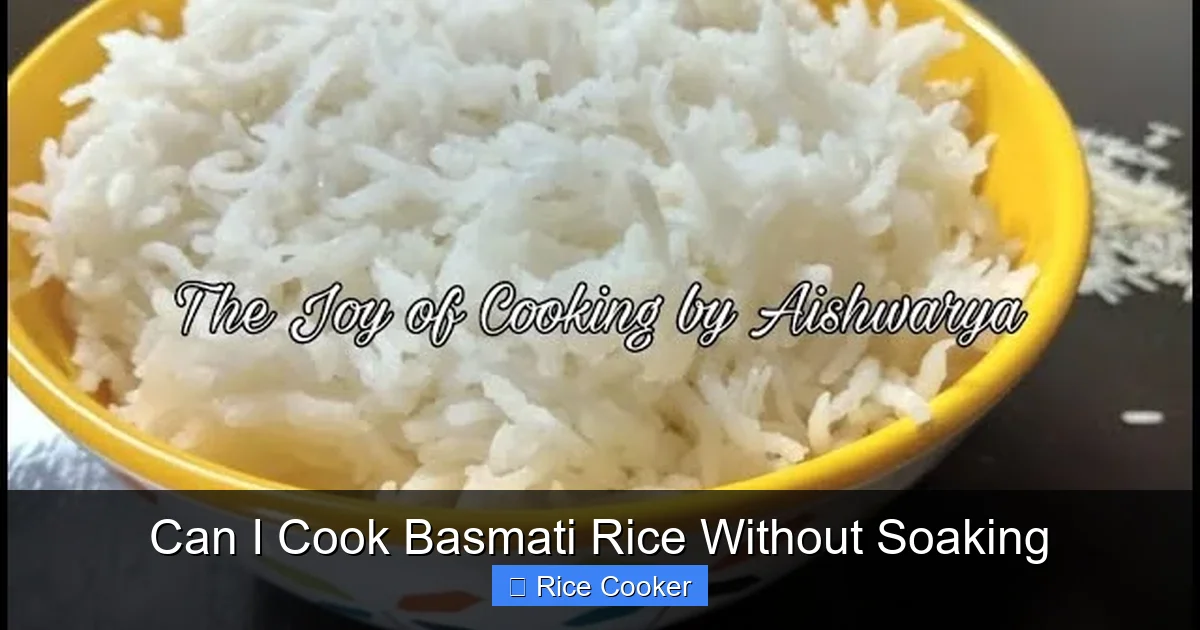
Can you skip soaking basmati rice before cooking? Absolutely—but doing so changes how it cooks and feels in the mouth. While soaking helps absorb water more evenly and results in fluffier grains, many people successfully cook basmati rice without this step using standard methods. With the right technique, even unsoaked basmati rice can turn out tender and delicious in a rice cooker. This guide walks you through everything you need to know to make perfect basmati rice, whether you choose to soak or not.
Key Takeaways
- Soaking is optional but beneficial: It shortens cooking time and improves grain separation, though unsoaked rice works fine with adjusted timing.
- Water ratio matters more than soaking: The key to fluffy basmati rice lies in the right water-to-rice ratio, especially when using a rice cooker.
- Pre-washing removes excess starch: Always rinse basmati rice until the water runs clear to prevent clumping.
- Cooking time increases without soaking: Unsoaked basmati typically needs 18–20 minutes instead of 12–15 minutes when soaked.
- Rice cooker settings make a difference: Use the “white rice” or “fluffy” setting for best results with basmati.
- Resting after cooking is essential: Let the rice sit covered for 5–10 minutes to finish steaming and firm up.
- Flavor enhancement tips: Add a pinch of salt, a drop of oil, or a bay leaf during cooking for richer taste.
[FEATURED_IMAGE_PLACEHOLDER]
Introduction: The Basics of Cooking Basmati Rice
There’s something comforting about a warm bowl of basmati rice—whether it’s paired with biryani, curry, or just a simple side dish. But if you’re new to cooking basmati rice or have had inconsistent results, you might be wondering: Can I cook basmati rice without soaking? The short answer is yes—you absolutely can. But understanding why soaking is often recommended, and how to adjust your method accordingly, will help you achieve restaurant-quality results every time.
Basmati rice is a long-grain variety known for its aromatic fragrance, delicate texture, and ability to stay separate when cooked properly. Unlike short-grain rice, which tends to become sticky due to high amylopectin content, basmati has more amylose, which gives it that signature fluffy, non-glutinous quality. However, this also means it requires precise handling. Soaking allows the grains to plump up gradually, absorb water evenly, and cook more uniformly. That said, life gets busy, and sometimes you just want to throw rice into the pot and walk away. The good news? You don’t always need to soak your basmati rice—especially when using a reliable kitchen tool like a rice cooker.
In this article, we’ll explore the science (and simplicity) behind cooking basmati rice without soaking, share expert tips, and walk you through step-by-step instructions that guarantee perfect results—no soaking required. Whether you’re using an electric rice cooker, stovetop pot, or even a microwave, we’ve got you covered. Let’s dive in!
Understanding Basmati Rice: Why It’s Different
The Science Behind the Fluff
Before we talk about soaking (or skipping it), let’s understand what makes basmati rice special. Basmati is a type of indica rice originally grown in the Indian subcontinent, particularly in regions like Punjab. Its unique flavor comes from compounds called 2-acetyl-1-pyrroline (2-AP), which give it that nutty, popcorn-like aroma. These compounds are sensitive to heat and moisture, so proper cooking preserves their fragrance.
The structure of basmati rice grains also plays a role. The long, slender shape means each grain needs consistent hydration to expand fully without breaking. When water penetrates the grain during soaking, it begins the gelatinization process—where starches swell and thicken. Without soaking, this process starts later in the cooking phase, which can lead to uneven textures if not managed carefully.
Why People Soak Basmati Rice
Most chefs and home cooks recommend soaking basmati rice for 20–30 minutes before cooking. Here’s why:
- Even absorption: Soaking ensures water spreads evenly throughout the grain, preventing dry spots or mushy centers.
- Reduced cooking time: Pre-hydrated grains cook faster because they’ve already begun absorbing moisture.
- Improved texture: Soaked rice tends to be fluffier and less likely to clump together.
- Better flavor distribution: Salt and seasonings penetrate more effectively after soaking.
But again—soaking isn’t mandatory. Many people cook basmati rice successfully without it, especially when using modern appliances like rice cookers that regulate temperature automatically.
Can You Cook Basmati Rice Without Soaking? Yes—Here’s How
The Short Answer: Absolutely!
Yes, you can cook basmati rice without soaking. In fact, most packaged basmati rice today is pre-cleaned and ready to cook straight from the bag. However, skipping the soak means paying closer attention to a few key details: rinsing, water ratio, and cooking time. A rice cooker simplifies much of this by handling the timing and heat control automatically.
Step-by-Step Guide: Cooking Unsoaked Basmati Rice in a Rice Cooker
Follow these simple steps for foolproof results every time:
- Rinse the rice thoroughly: Place 1 cup of uncooked basmati rice in a fine-mesh strainer. Rinse under cold running water, gently rubbing the grains with your fingers. Continue until the water runs completely clear—this removes excess surface starch that causes clumping.
- Add water: For unsoaked basmati rice, use a 1:1.7 to 1:1.9 water-to-rice ratio. That means 1 cup rice to 1.7–1.9 cups water. (If you prefer firmer rice, go toward 1.7; for softer rice, use 1.9.)
- Add flavor boosters (optional): Stir in a pinch of salt, a teaspoon of ghee or oil, or a bay leaf for extra aroma.
- Cook in the rice cooker: Transfer the rinsed rice and water to the inner pot. Close the lid and select the “White Rice” or “Fluffy” setting. Avoid the “Quick Cook” mode—it doesn’t give the rice enough time to cook evenly.
Once the cycle ends, let the rice sit, covered, for 5–10 minutes. This allows steam to redistribute moisture evenly and firms up the texture. Use a fork to fluff the rice—don’t mash it! This keeps the grains intact.
This method yields tender, separated grains that are slightly chewier than soaked rice but still delicious. Over time, you’ll learn your rice cooker’s quirks and adjust ratios accordingly.
Common Mistakes to Avoid
If your unsoaked basmati rice turns out too soft or sticky, you might be making one of these common errors:
- Not rinsing enough: Leftover starch creates a gluey texture. Always rinse until water runs clear.
- Wrong water ratio: Too much water = mushy rice; too little = hard, undercooked grains.
- Skipping the rest period: Resist the urge to open the lid mid-cycle. Let the rice finish steaming naturally.
Cheap basmati may lack the right starch balance. Invest in a reputable brand labeled “extra-long grain” or “aged.”
Comparing Soaked vs. Unsoaked Basmati Rice
Cooking Time Differences
One of the biggest differences between soaked and unsoaked basmati rice is cooking time. When soaked, basmati typically takes 12–15 minutes to cook fully. Without soaking, expect 18–20 minutes—sometimes longer depending on your appliance and altitude.
For example, if you soak 1 cup of basmati for 30 minutes and drain it, it’ll absorb about 1/4 cup of water. That pre-hydration reduces the total cooking time because the rice starts absorbing moisture before heat is applied. Unsoaked rice must do all the water absorption during the cooking phase, which takes extra time.
Texture and Flavor Comparison
Soaked basmati usually has a silkier, more uniform texture and a cleaner flavor profile since it cooks more evenly. Unsoaked rice may feel slightly firmer and have a subtly different mouthfeel—some describe it as “more substantial.”
However, experienced cooks argue that the difference is minimal for everyday meals. In blind tastings, many people can’t distinguish between soaked and unsoaked basmati unless told which method was used. The rice cooker’s precision minimizes variability, making both methods reliable.
Convenience Factor
Let’s be honest: soaking adds an extra step to meal prep. If you’re making dinner after work, you probably don’t have 30 minutes to spare. Cooking unsoaked rice streamlines the process while still delivering excellent results. Just remember to rinse well and follow the right water ratio.
Tips for Perfect Basmati Rice Every Time
Master the Water Ratio
The single most important factor in cooking basmati rice—with or without soaking—is the water ratio. Too little water leaves you with chalky, undercooked grains. Too much turns it into porridge.
General guidelines:
- Unsoaked basmati: 1 cup rice : 1.7–1.9 cups water
- Soaked basmati: 1 cup rice : 1.5–1.7 cups water
Always measure using liquid cups, not dry ones. A kitchen scale offers the most accuracy, but measuring cups work fine for most home kitchens.
Choose the Right Rice Cooker
Not all rice cookers are created equal. Look for models with:
- Multiple cooking modes: White rice, brown rice, quick cook, etc.
- Keep-warm function: Keeps rice at ideal serving temperature without drying out.
- Non-stick inner pot: Makes cleanup easier and prevents rice from sticking.
- Transparent lid: Lets you monitor progress without lifting the cover.
Popular brands like Zojirushi, Instant Pot, and Cuckoo offer excellent options for basmati rice. Read reviews focusing on long-grain performance before purchasing.
Season Like a Pro
While plain basmati rice tastes great, a few tweaks elevate it:
- Salt: A pinch enhances flavor without overpowering.
- Oil or ghee: Adds richness and prevents sticking.
- Aromatics: A whole cinnamon stick, cardamom pods, or saffron steeped in warm milk add luxury notes.
- Lemon juice: A splash after cooking brightens the flavor.
Store Leftovers Properly
Refrigerated basmati rice stays fresh for 3–4 days. Reheat it with a splash of water and a minute in the microwave to restore moisture. Avoid reheating in the rice cooker—it’s designed for cooking, not warming.
Alternative Methods: Stovetop & Microwave Options
Stovetop Method (No Soaking)
If you don’t have a rice cooker, the stovetop works beautifully:
- Rinse 1 cup basmati rice until water runs clear.
- Combine with 1.8 cups water in a heavy-bottomed pot.
- Bring to a boil, then reduce heat to low. Cover tightly.
- Cook for 18–20 minutes without lifting the lid.
- Turn off heat and rest for 10 minutes.
- Fluff with a fork.
Use a tight-fitting lid and avoid stirring—this disrupts the steam buildup needed for even cooking.
Microwave Method (Quick & Easy)
Perfect for small batches:
- Rinse ½ cup basmati rice.
- Place in a microwave-safe dish with ¾ cup water.
- Cover with a damp paper towel (not plastic wrap).
- Microwave on high for 10 minutes.
- Let stand 5 minutes, then fluff.
This method is faster but less consistent than a rice cooker or stovetop.
Frequently Asked Questions
Does soaking basmati rice make it stickier?
No—soaking actually helps prevent stickiness by allowing even water absorption. Unsoaked rice is more likely to clump if not rinsed properly or cooked with too much water.
How long can I soak basmati rice?
Soak for up to 2 hours at room temperature. For best results, 20–30 minutes is sufficient. Don’t soak overnight unless refrigerated, as prolonged soaking can affect texture.
Can I cook basmati rice in a pressure cooker without soaking?
Yes! Use a 1:1.5 water ratio and cook on high pressure for 2 minutes, then natural release for 10 minutes. Soaking isn’t necessary with pressure cooking due to rapid steam penetration.
Why is my basmati rice always mushy?
Mushiness usually stems from too much water, insufficient rinsing, or overcooking. Try reducing water by 1/4 cup and ensure you’re not opening the lid during cooking.
Is aged basmati rice better for cooking without soaking?
Aged basmati (often labeled “aged” or “premium”) has lower moisture content and firmer grains, which handle unsoaked cooking well. Younger rice may be softer and benefit more from soaking.
Can I freeze cooked basmati rice?
Yes! Cool completely, portion into containers, and freeze for up to 3 months. Thaw in the fridge and reheat with added water or broth.
Conclusion: Skip the Soak—You Won’t Miss It
So, can you cook basmati rice without soaking? The answer is a confident yes—especially if you’re using a rice cooker. While soaking offers slight advantages in texture and speed, modern cooking tools eliminate much of the guesswork. By rinsing thoroughly, using the right water ratio, and letting the rice rest after cooking, you’ll get fluffy, fragrant basmati every time, soaked or not.
The beauty of cooking lies in flexibility. Whether you’re soaking for perfection or skipping it for convenience, the goal remains the same: delicious, satisfying rice that complements your meal. Experiment with ratios, seasonings, and techniques until you find your favorite method. And remember—there’s no shame in opening a package and starting the cooker. Sometimes, simplicity wins.
Next time you reach for that bag of basmati rice, skip the sink full of soaking water. Grab your rice cooker, add your ingredients, and let technology do the rest. Your taste buds—and your busy schedule—will thank you.
This is a comprehensive guide about can i cook basmati rice without soaking.
Key Takeaways
- Understanding can i cook basmati rice without soaking: Provides essential knowledge
Frequently Asked Questions
What is can i cook basmati rice without soaking?
can i cook basmati rice without soaking is an important topic with many practical applications.