
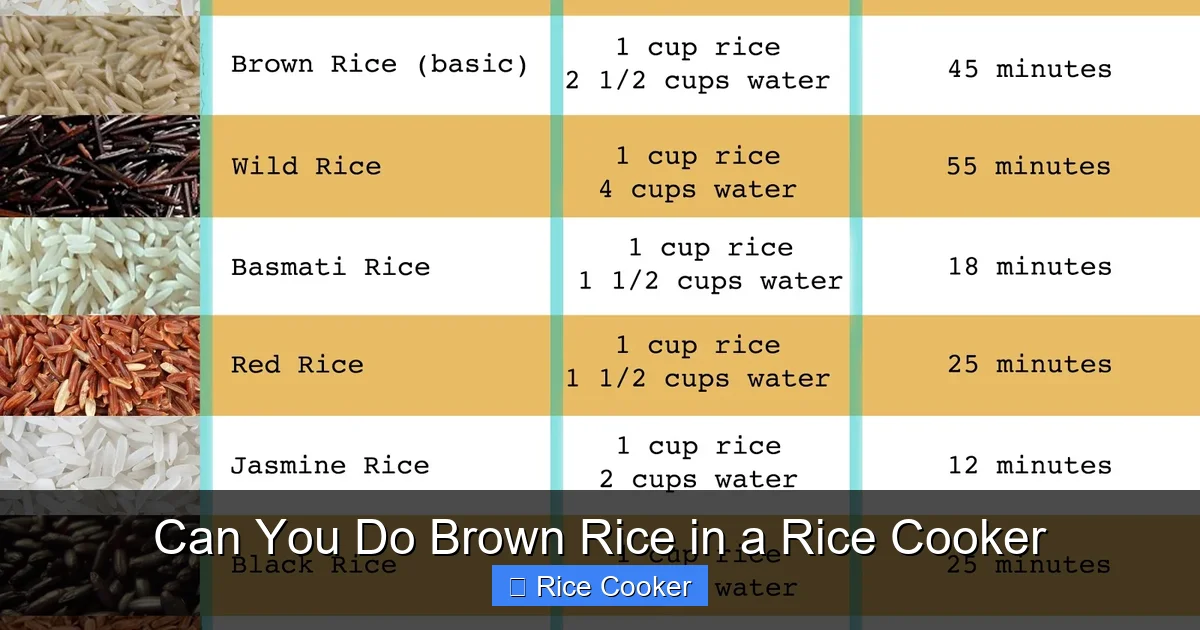
Can you do brown rice in a rice cooker? Absolutely! With the right ratio and a few helpful tips, your rice cooker can produce tender, nutritious brown rice just like white rice. It’s easier than you think and makes meal prep so much simpler.
Key Takeaways
- Brown rice works great in most rice cookers: Standard electric rice cookers handle brown rice without any special settings.
- Use the correct water-to-rice ratio: Brown rice needs more water than white rice—typically 1.5 to 1.75 cups of water per cup of rice.
- Rinse the rice first: Removing excess starch helps prevent mushiness and improves texture.
- Let it rest after cooking: Standing covered for 10–15 minutes lets steam finish the job and fluff up the grains.
- Check your cooker’s manual: Some models have specific settings or timers optimized for brown rice.
- Experiment with soaking: Soaking brown rice overnight can reduce cooking time and improve digestibility.
- Clean your rice cooker regularly: Built-up residue affects taste and performance over time.
[FEATURED_IMAGE_PLACEHOLDER]
Introduction: The Surprising Truth About Brown Rice and Rice Cookers
Have you ever stood in your kitchen, staring at a bag of whole grain brown rice, wondering if your trusty rice cooker is up to the task? You’re not alone. For years, many people assumed that only white rice belonged in a rice cooker—that brown rice required extra effort, longer cooking times, or even a different appliance altogether. But here’s the good news: yes, you can absolutely do brown rice in a rice cooker, and doing it this way can save you time while delivering delicious, nutritious meals.
Modern rice cookers are surprisingly versatile. While they were originally designed for white rice, most models can handle brown rice just fine—no modifications needed. In fact, using a rice cooker for brown rice offers several advantages: consistent results every time, hands-off cooking, and perfect moisture control. Whether you’re meal prepping for the week or making dinner for a family, mastering brown rice in your rice cooker is a game-changer. And the best part? You don’t need to be a chef or spend hours watching the pot. Just follow a few simple steps, and you’ll have fluffy, golden-brown grains ready to go.
In this guide, we’ll walk you through everything you need to know—from choosing the right type of brown rice to troubleshooting common issues. We’ll also share pro tips that even experienced cooks swear by. By the end, you’ll feel confident cooking brown rice in your rice cooker like a pro. Ready to upgrade your whole-grain game? Let’s get started.
Understanding Brown Rice: What Makes It Different?
Why Brown Rice Is Healthier (But Harder to Cook)
Brown rice is more than just a trendy superfood—it’s genuinely packed with nutrients. Unlike white rice, which has been stripped of its bran and germ during processing, brown rice retains those natural layers. This means it’s higher in fiber, B vitamins, magnesium, and antioxidants. Studies suggest that diets rich in whole grains like brown rice may help lower cholesterol, stabilize blood sugar, and support heart health.
But this nutritional boost comes with a trade-off: cooking difficulty. The outer bran layer of brown rice acts as a barrier, slowing down water absorption and making it take longer to cook than white rice. If you rush the process or use the wrong ratio, you risk ending up with undercooked, hard kernels or mushy, glue-like clumps. That’s why many people shy away from cooking brown rice—even when they want to eat healthier.
The Science Behind Cooking Time
Here’s the science: white rice has a shorter grain structure and no bran layer, so water penetrates quickly. Brown rice, on the other hand, takes 45–60 minutes to fully absorb moisture. Most rice cookers are programmed for white rice (which cooks in about 20 minutes), so you might worry that your appliance won’t keep up.
But modern rice cookers—especially newer models with fuzzy logic or AI technology—can detect when the rice is done based on moisture levels, not just time. This means they’re actually better suited for brown rice than older stovetop methods, where inconsistent heat can lead to uneven results.
Is Your Rice Cooker Suitable for Brown Rice?
Standard Electric Rice Cookers: Yes, They Work!
If you have a basic electric rice cooker—the kind with a simple on/off switch and no fancy features—you’re already set. These appliances use internal sensors to monitor temperature and steam, automatically switching to “warm” mode once the rice is cooked. As long as your cooker reaches full heat and maintains it long enough, brown rice will cook perfectly.
Tip: Avoid ultra-cheap or single-use rice cookers labeled “for white rice only.” Even if the packaging says that, most still function well with brown rice. Check your user manual just to be safe.
Advanced Models: Fuzzy Logic and More
High-end rice cookers—like those from Zojirushi, Panasonic, or Tiger—often feature “fuzzy logic” technology. This system analyzes the type of rice, water level, and ambient conditions to adjust cooking time and temperature automatically. Some models even have dedicated settings for brown rice, jasmine, sushi, or even porridge.
If your rice cooker has multiple settings, look for one labeled “brown rice” or “whole grain.” These programs extend the cooking cycle to ensure the rice gets properly steamed without burning. But again, even without a special setting, most rice cookers can handle brown rice—just give it a bit more time.
Stovetop vs. Rice Cooker: Which Is Better?
Some people prefer stovetop cooking because they feel they have more control. But honestly, for brown rice, the rice cooker usually wins. Why? Because it provides steady, consistent heat and doesn’t require constant stirring or babysitting. Plus, once it’s done, it stays warm without drying out.
That said, if you’re cooking large batches or experimenting with recipes like biryani or risotto, the stovetop might make sense. But for everyday brown rice? Stick with your rice cooker.
How to Cook Perfect Brown Rice in a Rice Cooker
Step-by-Step Instructions
Cooking brown rice in a rice cooker is shockingly simple. Follow these steps, and you’ll never go back to guessing:
- Measure your rice: Start by measuring out the amount you want to cook. A standard serving is about 1/2 cup uncooked brown rice per person.
- Rinse thoroughly: Place the rice in a fine-mesh strainer and rinse under cold running water for 30–60 seconds. Stop when the water runs clear. This removes excess starch and prevents gunkiness.
- Add water: Use a liquid measuring cup to add water. The general rule is 1.5 to 1.75 cups of water per 1 cup of dry brown rice. If you’re unsure, start with 1.5 cups.
- Optional: Soak the rice: For even better texture, soak the rinsed rice in water for 30 minutes to overnight. This softens the bran layer and cuts cooking time by up to 20%.
- Place in the inner pot: Make sure the inner pot is clean and dry before adding the rice and water.
- Close the lid and press “Cook”: No need to adjust settings unless your model has a brown rice option. Let the machine do its thing.
- Wait and rest: Once the cycle ends, let the rice sit, covered, for 10–15 minutes. This allows residual steam to finish cooking the grains and fluff them up.
- Fluff and serve: Use a fork to gently stir the rice before serving. Enjoy it plain, with butter, herbs, or as part of a stir-fry or salad.
Water Ratios That Actually Work
Getting the water right is key. Too little, and your rice turns out chewy and undercooked. Too much, and it becomes soupy. Here’s a quick reference:
- Short-grain brown rice: 1.5 cups water per 1 cup rice
- Medium-grain brown rice: 1.6 cups water per 1 cup rice
- Long-grain brown rice: 1.75 cups water per 1 cup rice
Note: These ratios assume room-temperature water. If your water is hot or cold, adjust slightly—hot water speeds up absorption; cold slows it down.
Troubleshooting Common Issues
Even with the right method, things can go wrong. Here’s how to fix them:
- Mushy rice: Likely caused by too much water or over-steaming. Next time, reduce water by 1/4 cup and avoid opening the lid during cooking.
- Gummy or sticky texture: Happens when starch isn’t rinsed off. Always rinse your brown rice before cooking.
- Undercooked center: Usually due to insufficient water or low power. Try soaking the rice first or adding an extra 1/4 cup of water.
- Bitter taste: Can happen if old or low-quality brown rice is used. Store rice in a cool, dark place in an airtight container.
Tips to Elevate Your Brown Rice Game
Soaking: The Secret Weapon
Ever notice how restaurant-style brown rice looks almost identical to white rice? That’s often thanks to soaking. By letting brown rice sit in water for at least 30 minutes—or ideally overnight—you soften the bran layer, making it easier to digest and cook evenly.
Pro tip: After soaking, drain and rinse again before cooking. This ensures any loose bran particles don’t end up in your final dish.
Adding Flavor Without Salt
Want flavorful brown rice without oversalting? Try these tricks:
- Use broth instead of water (vegetable or chicken broth adds depth).
- Add a splash of apple cider vinegar or lemon juice after cooking for brightness.
- Toss in a bay leaf or a few cloves of garlic while cooking (remove before serving).
- Drizzle with olive oil or ghee at the end for richness.
Cooking Large Batches for Meal Prep
Brown rice stores beautifully in the fridge for up to 5 days. To meal prep:
- Cook a double batch using 2 cups rice and 3 cups water.
- Let it cool completely, then divide into containers.
- Reheat on the stove with a splash of water or microwave with a damp paper towel.
This makes it easy to add healthy carbs to salads, bowls, or wraps all week long.
Pairing Brown Rice with Proteins and Veggies
Brown rice shines as a base for balanced meals. Try pairing it with:
- Grilled chicken, tofu, or tempeh
- Roasted sweet potatoes or broccoli
- Avocado slices and black beans
- Sesame seeds and soy sauce for an Asian-inspired twist
Common Myths About Brown Rice Debunked
Myth #1: “Brown Rice Takes Forever to Cook”
While brown rice does take longer than white rice, modern rice cookers cut that time significantly. With soaking and the right settings, you can have perfectly cooked brown rice in under an hour—easier than boiling pasta or making scrambled eggs.
Myth #2: “You Need Special Equipment”
Nope! Any standard electric rice cooker works. You don’t need a pressure cooker, slow cooker, or dedicated “brown rice maker.” Save your money for organic brown rice instead.
Myth #3: “Brown Rice Is Always Chewier Than White Rice”
This depends on how it’s prepared. Rinsed, soaked, and cooked properly in a rice cooker, brown rice can be wonderfully tender—almost like white rice, but with more texture and nutrition.
Myth #4: “All Brown Rice Is the Same”
There are different varieties: short, medium, and long grain. Each has a slightly different texture and water requirement. Experiment to find your favorite!
Storage and Reheating Tips
How Long Does Cooked Brown Rice Last?
When stored properly in an airtight container in the refrigerator, cooked brown rice lasts up to 5 days. Freeze portions in ice cube trays for up to 3 months—perfect for soups or stir-fries later.
Best Ways to Reheat
Avoid microwaving without covering—it dries out the rice. Instead:
- Steam it in a covered pot with a splash of water for 5–7 minutes.
- Microwave with a damp paper towel over the bowl to retain moisture.
- Add to sauces or curries while reheating—the rice absorbs flavor beautifully.
Conclusion: Brown Rice Made Simple
So, can you do brown rice in a rice cooker? Absolutely—and now you know exactly how. With the right technique, a little patience, and your trusty appliance, you can enjoy consistently fluffy, nutritious brown rice every time. No more mushy messes or burnt bottoms. Just simple, reliable results.
Whether you’re new to whole grains or a seasoned cook looking to simplify mealtime, mastering brown rice in your rice cooker is a win-win. It’s healthier, tastier, and easier than you thought possible. Plus, once you get the hang of it, you’ll wonder why you ever avoided it.
Ready to try it tonight? Grab your rice cooker, measure out some brown rice, and follow the steps above. Before you know it, you’ll be serving up restaurant-quality grains at home—without leaving your kitchen. Happy cooking!
FAQs
Can you cook brown rice in any rice cooker?
Yes, most standard electric rice cookers can handle brown rice. Even basic models work fine—just remember to adjust water ratios and allow extra cooking time.
Do I need to soak brown rice before cooking?
Soaking isn’t mandatory, but it helps reduce cooking time and improves texture. For best results, soak rinsed brown rice for 30 minutes to overnight.
How much water do I use for brown rice in a rice cooker?
Use 1.5 to 1.75 cups of water per 1 cup of dry brown rice, depending on grain type. Short-grain needs less water than long-grain.
Why is my brown rice mushy in the rice cooker?
Mushy rice usually means too much water or over-steaming. Try reducing water by 1/4 cup and avoid lifting the lid during cooking.
Can I cook brown rice in a rice cooker with a “white rice” setting?
Yes! Most rice cookers don’t distinguish between white and brown rice—they just cook until the moisture is absorbed. Just add extra water and let it run longer.
How do I prevent brown rice from being undercooked?
Ensure you’re using enough water, rinse the rice well, and let it rest after cooking. Soaking also helps prevent undercooking by softening the bran layer.
This is a comprehensive guide about can you do brown rice in a rice cooker.
Key Takeaways
- Understanding can you do brown rice in a rice cooker: Provides essential knowledge
Frequently Asked Questions
What is can you do brown rice in a rice cooker?
can you do brown rice in a rice cooker is an important topic with many practical applications.