
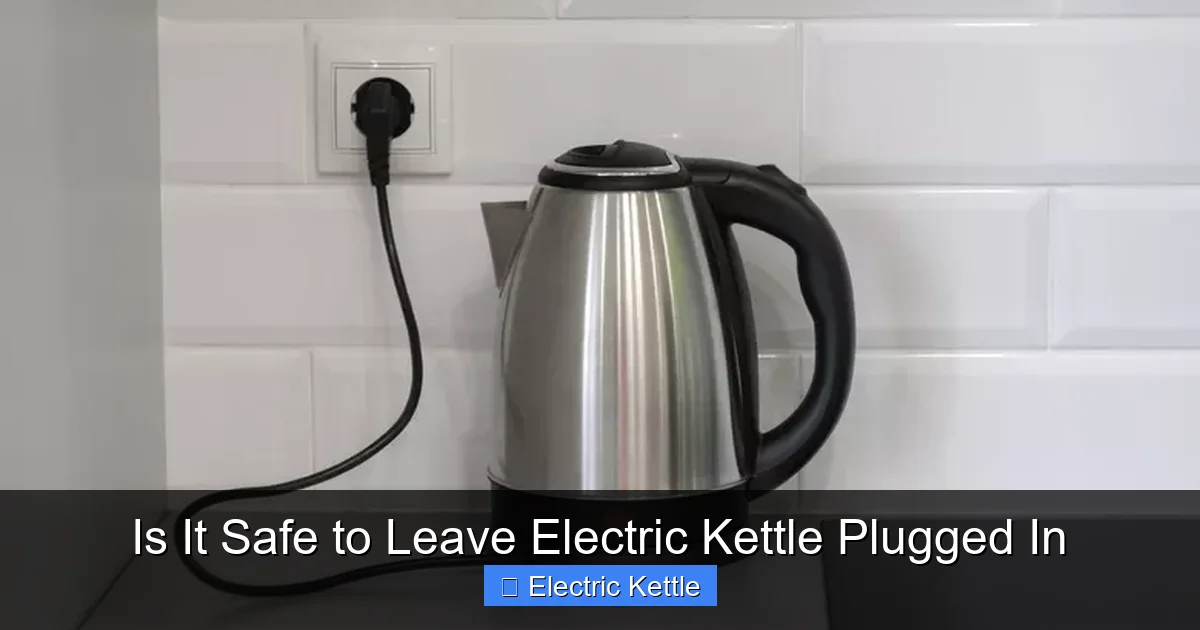
Leaving your electric kettle plugged in is generally safe due to built-in safety features, but it’s not without risks. While modern kettles auto-shut off and use minimal standby power, prolonged plugging can lead to wear, electrical hazards, or fire risks in rare cases. Unplugging when not in use boosts safety, saves energy, and extends the kettle’s life.
Key Takeaways
- Modern electric kettles are designed with safety in mind: Most come with auto shut-off, boil-dry protection, and thermal fuses to prevent overheating and accidents.
- Standby power consumption is low but not zero: Even when off, a plugged-in kettle draws a small amount of electricity, contributing to phantom load over time.
- Leaving it plugged in increases long-term wear: Constant electrical connection can degrade internal components, especially in older or lower-quality models.
- Fire and electrical hazards are rare but possible: Faulty wiring, damaged cords, or power surges can turn a plugged-in kettle into a safety risk.
- Unplugging improves safety and efficiency: It eliminates standby power use, reduces fire risk, and helps preserve the kettle’s lifespan.
- Best practice: Unplug when not in use: Especially overnight or when away from home, unplugging is a simple habit that enhances safety.
- Regular maintenance matters: Clean your kettle, inspect the cord, and replace it if damaged to ensure safe operation whether plugged in or not.
📑 Table of Contents
- Is It Safe to Leave an Electric Kettle Plugged In?
- How Electric Kettles Work and Why Safety Matters
- Risks of Leaving Your Electric Kettle Plugged In
- When Is It Safe to Leave the Kettle Plugged In?
- Best Practices for Safe Electric Kettle Use
- Energy Efficiency and Environmental Impact
- Conclusion: Make Safety a Habit
Is It Safe to Leave an Electric Kettle Plugged In?
You’ve just finished your morning tea, and instead of unplugging your electric kettle, you leave it plugged in on the counter. It’s convenient—ready for the next cup whenever you want it. But have you ever stopped to wonder: is it actually safe to leave your electric kettle plugged in all the time?
It’s a question many of us overlook, but it’s an important one. Electric kettles are among the most commonly used kitchen appliances, prized for their speed and efficiency. Yet, like any electrical device, they come with potential risks—especially when left connected to power for extended periods. The good news? Most modern electric kettles are built with multiple safety features that make them remarkably safe, even when plugged in. But that doesn’t mean there’s no risk at all.
In this article, we’ll explore the ins and outs of leaving your electric kettle plugged in. We’ll look at how these appliances work, what safety mechanisms are in place, the potential dangers, and practical tips to keep your home safe. Whether you’re a tea lover, coffee enthusiast, or just someone who values kitchen safety, this guide will help you make informed decisions about your electric kettle use.
How Electric Kettles Work and Why Safety Matters
Visual guide about Is It Safe to Leave Electric Kettle Plugged In
Image source: irrorwxhiqijjr5q.ldycdn.com
Before diving into whether it’s safe to leave your kettle plugged in, it helps to understand how these devices function. Electric kettles are simple in design but powerful in performance. They consist of a heating element (usually hidden under the base), a water reservoir, a thermostat, and a control system. When you press the “on” button, electricity flows to the heating element, which rapidly heats the water. Once the water reaches boiling point (around 212°F or 100°C), the thermostat detects the temperature and automatically cuts off the power. This is known as auto shut-off—a key safety feature.
But what happens when the kettle is turned off but still plugged in? The heating element is inactive, and no water is being heated. However, the kettle remains connected to the electrical circuit. This is where the debate begins: is that connection harmless, or does it pose a hidden danger?
Safety matters because even small risks can escalate. Electrical fires, though rare, often start with overlooked appliances. According to the National Fire Protection Association (NFPA), cooking equipment is involved in nearly half of all home structure fires. While electric kettles aren’t the leading cause, they’re not immune to malfunction. A frayed cord, a faulty thermostat, or a power surge could turn a seemingly harmless appliance into a hazard—especially if it’s left plugged in for days or weeks.
The Role of Built-In Safety Features
Thankfully, manufacturers have responded to these concerns by incorporating advanced safety features into modern electric kettles. Let’s look at the most important ones:
Auto Shut-Off: As mentioned, this feature turns off the kettle once the water boils. It prevents overheating and reduces the risk of fire. Even if you walk away, the kettle won’t keep heating indefinitely.
Boil-Dry Protection: If you accidentally turn on the kettle without water, this feature detects the lack of liquid and shuts off the heating element. This prevents damage to the kettle and reduces fire risk.
Thermal Fuse: This is a fail-safe device that cuts power if the kettle overheats beyond safe limits. Unlike a resettable thermostat, a thermal fuse is one-time use—once it blows, the kettle must be repaired or replaced.
Cool-Touch Exterior: Many kettles have insulated bodies that stay cool to the touch, even when the water inside is boiling. This reduces the risk of burns and adds another layer of safety.
Overheat Protection: Some high-end models include sensors that monitor internal temperature and shut down the kettle if something goes wrong.
These features make modern electric kettles much safer than older models. But they’re not foolproof. A damaged cord, water leakage into electrical components, or a manufacturing defect can still cause problems—especially if the kettle is left plugged in for long periods.
Standby Power: The Hidden Energy Drain
Another reason to consider unplugging your kettle is energy efficiency. Even when turned off, a plugged-in electric kettle consumes a small amount of electricity—known as standby power or “phantom load.” This happens because the internal circuitry remains active, waiting for a signal to turn on.
While the amount is tiny—typically less than 1 watt—it adds up over time. If you leave your kettle plugged in 24/7, it could consume several kilowatt-hours per year. That might not sound like much, but across thousands of households, it contributes to unnecessary energy waste and higher electricity bills.
For example, a kettle using 0.5 watts in standby mode would use about 4.4 kWh per year (0.5W × 24 hours × 365 days ÷ 1000). At an average electricity rate of $0.13 per kWh, that’s about $0.57 per year—just for one appliance. Multiply that by all the devices in your home (TVs, chargers, microwaves), and the cost grows.
More importantly, reducing standby power supports environmental sustainability. Less energy use means lower carbon emissions, especially if your electricity comes from fossil fuels.
Risks of Leaving Your Electric Kettle Plugged In
So, is it safe to leave your electric kettle plugged in? The short answer is: usually, yes—but with caveats. While modern kettles are designed to be safe, leaving them plugged in isn’t risk-free. Let’s explore the potential dangers.
Electrical Fire Hazards
One of the biggest concerns is the risk of electrical fire. While rare, it’s not impossible. Fires can start if:
– The power cord is frayed or damaged.
– Water leaks into the electrical base.
– The kettle overheats due to a faulty thermostat.
– A power surge occurs during a storm.
Leaving the kettle plugged in increases the window of opportunity for these issues to cause harm. For instance, a damaged cord might spark when the kettle is turned on—but if it’s already plugged in, that spark could ignite nearby materials.
According to the U.S. Fire Administration, electrical distribution systems (including outlets and cords) are responsible for about 8% of home fires. While kettles aren’t the top culprit, they’re part of the broader category of small appliances that can contribute to such incidents.
Component Wear and Reduced Lifespan
Constantly being plugged in can accelerate wear on internal components. The thermostat, heating element, and control board are designed for thousands of cycles—but not for continuous electrical stress. Over time, this can lead to:
– Premature failure of the thermostat.
– Corrosion in the heating element.
– Degradation of insulation in wires.
For example, a kettle used daily and left plugged in might last 3–5 years. But if unplugged when not in use, it could last 5–7 years or more. That’s a significant difference in both cost and convenience.
Power Surges and Lightning Strikes
Power surges are sudden spikes in voltage that can damage electronics. They can be caused by lightning strikes, grid switching, or large appliances turning on/off. Most homes have surge protectors, but not all outlets are protected.
If your kettle is plugged in during a surge, it could fry the internal circuitry—even if it’s turned off. In extreme cases, this could cause a short circuit or fire. Unplugging appliances during storms is a simple way to reduce this risk.
Water Damage and Leakage
Electric kettles aren’t waterproof—especially at the base where the cord connects. If water spills into the electrical compartment, it can cause a short circuit. This is more likely if the kettle is left on a wet counter or near a sink.
Leaving the kettle plugged in increases the danger because electricity is still flowing to the base. A small leak might not cause immediate harm, but over time, it can corrode components and create a fire hazard.
Child and Pet Safety
If you have young children or curious pets, a plugged-in kettle poses additional risks. A child might press the button, not understanding the danger. A pet could knock the kettle over, spilling hot water or damaging the cord.
While auto shut-off helps, it’s not a substitute for supervision. Unplugging the kettle removes the risk entirely when no one is around to monitor it.
When Is It Safe to Leave the Kettle Plugged In?
Despite the risks, there are situations where leaving your electric kettle plugged in is perfectly safe—and even practical.
Modern, High-Quality Kettles
If you own a newer kettle from a reputable brand (like Breville, Cuisinart, or Hamilton Beach), it likely has robust safety features. These models are tested for durability and safety, making them safer to leave plugged in—especially if used daily.
For example, a kettle with a thermal fuse, boil-dry protection, and a grounded plug is far less likely to malfunction than an older, no-name model.
Short-Term Use and Supervision
If you’re home and plan to use the kettle multiple times a day, leaving it plugged in is reasonable. The convenience outweighs the minimal risk, especially if the kettle is in good condition.
Just make sure it’s placed on a dry, stable surface away from edges and out of reach of children.
Homes with Surge Protection
If your home has whole-house surge protection or you use power strips with surge protection, the risk of damage from power spikes is greatly reduced. This makes it safer to leave appliances plugged in.
Low-Risk Environments
In a clean, dry kitchen with minimal electrical interference, the risks are lower. If your kettle is well-maintained and your electrical system is up to code, leaving it plugged in is unlikely to cause problems.
Best Practices for Safe Electric Kettle Use
Whether you choose to leave your kettle plugged in or not, following these best practices will keep you safe and extend the life of your appliance.
Unplug When Not in Use
The simplest and most effective safety tip: unplug the kettle when you’re done using it. This eliminates standby power use, reduces fire risk, and protects against power surges.
Make it a habit—like turning off the lights when you leave a room.
Inspect the Cord and Plug Regularly
Check the power cord for fraying, cracking, or burn marks. Look at the plug for bent prongs or discoloration. If you notice any damage, stop using the kettle immediately and have it repaired or replaced.
A damaged cord is one of the most common causes of electrical fires.
Keep It Dry and Clean
Wipe down the exterior after each use, especially the base. Never submerge the kettle in water or let water pool around the electrical compartment.
Descale the interior regularly to prevent mineral buildup, which can affect performance and safety.
Use a Surge Protector
Plug your kettle into a surge-protected power strip. This adds an extra layer of protection against voltage spikes.
Avoid daisy-chaining multiple high-wattage appliances on the same strip.
Replace Old or Damaged Kettles
If your kettle is more than 5–7 years old, shows signs of wear, or has malfunctioned in the past, consider replacing it. Newer models are safer, more efficient, and often come with better warranties.
Store Properly When Not in Use
If you’re going on vacation or won’t use the kettle for a while, unplug it and store it in a dry place. Coil the cord neatly to prevent damage.
Energy Efficiency and Environmental Impact
Beyond safety, there’s an environmental reason to unplug your kettle. As mentioned earlier, standby power contributes to energy waste. While one kettle uses little energy, the cumulative effect across millions of homes is significant.
The U.S. Department of Energy estimates that phantom load accounts for about 5–10% of residential electricity use. That’s equivalent to the output of several large power plants.
By unplugging appliances like kettles, you reduce your carbon footprint and support a more sustainable energy system.
Additionally, energy-efficient habits lower your electricity bill. Over time, even small savings add up.
Conclusion: Make Safety a Habit
So, is it safe to leave your electric kettle plugged in? The answer is nuanced. Modern kettles are designed to be safe, and for many people, leaving them plugged in poses minimal risk—especially with built-in safety features and good maintenance.
However, unplugging your kettle when not in use is the safest, most energy-efficient, and most responsible choice. It reduces fire risk, prevents component wear, saves energy, and gives you peace of mind.
Think of it like wearing a seatbelt: the risk of an accident is low, but the protection is worth the small effort. Similarly, unplugging your kettle takes just a second—but it could prevent a disaster.
Make it a habit. Inspect your kettle regularly. Use surge protection. And when in doubt, err on the side of caution. Your safety, your wallet, and the planet will thank you.
Frequently Asked Questions
Is it safe to leave an electric kettle plugged in overnight?
It’s generally not recommended. While modern kettles have safety features, leaving them plugged in overnight increases the risk of electrical issues, especially if there’s a power surge or cord damage. Unplugging reduces this risk.
Does leaving a kettle plugged in use a lot of electricity?
No, but it does use some. Standby power consumption is typically less than 1 watt, but over time, this adds up. Unplugging saves energy and reduces your electricity bill slightly.
Can a plugged-in kettle cause a fire?
It’s rare, but possible. Faulty wiring, damaged cords, or water leakage can create fire hazards. Unplugging when not in use minimizes this risk significantly.
How often should I unplug my electric kettle?
Ideally, unplug it after each use, especially if you’re not planning to use it again soon. This is the safest practice and helps extend the kettle’s lifespan.
What should I do if my kettle sparks or smells burnt?
Stop using it immediately. Unplug it, let it cool, and inspect for damage. If you see frayed wires, burn marks, or smell burning, have it repaired or replaced by a professional.
Are newer electric kettles safer to leave plugged in?
Yes, newer models often have better safety features like thermal fuses, boil-dry protection, and improved insulation. However, unplugging is still the safest option for long-term use.