
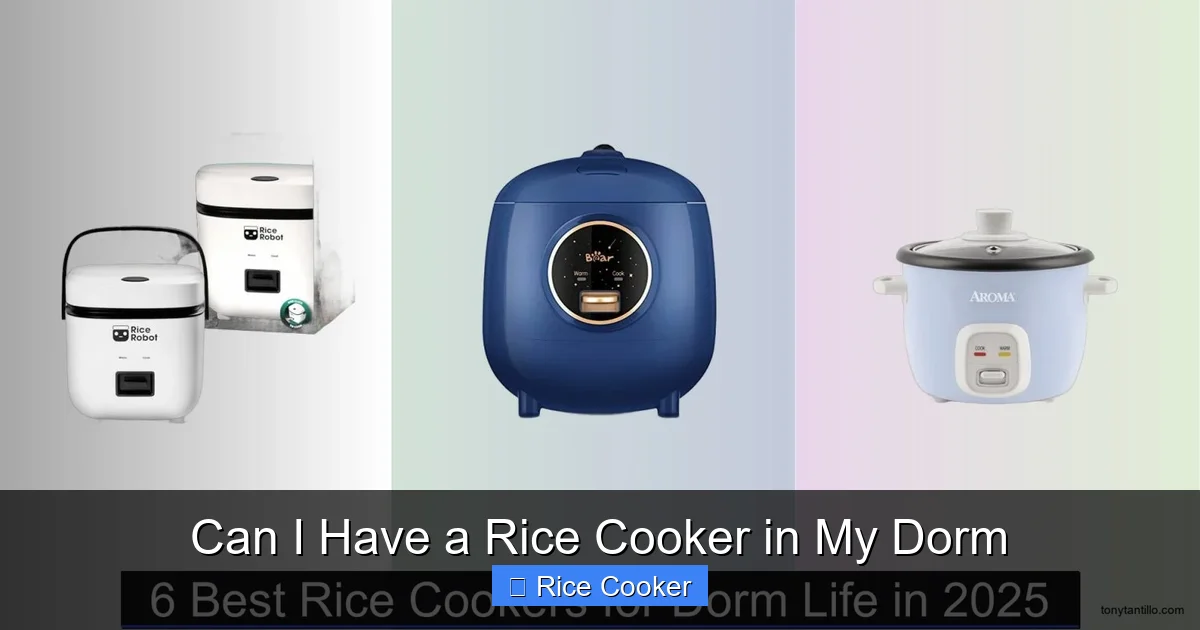
Can I have a rice cooker in my dorm? The answer depends on your school’s housing rules, but many allow them with proper precautions. We’ll help you understand dorm regulations, safety guidelines, and smart ways to use a rice cooker without breaking the rules or setting off alarms. It’s also important to consider safety aspects such as not leaving a rice cooker unattended for long periods.
Key Takeaways
- Dorm policies vary: Always check your university’s housing handbook or contact your residence life office before bringing in appliances.
- Power limits matter: Most dorms restrict high-wattage devices; standard rice cookers under 1000W usually work fine.
- Safety is key: Use only UL-listed, non-electric models or ensure your electric version has auto shut-off and cool-touch surfaces.
- Creative uses expand value: Beyond cooking rice, rice cookers can steam veggies, make oatmeal, bake simple desserts, or even warm meals.
- Storage and cleanliness count: Keep your rice cooker tidy and stored when not in use to avoid complaints from roommates or staff.
- Noise and smell are concerns: Opt for quieter, odor-free models and ventilate well to prevent smoke detectors from triggering.
- Alternatives exist: If your dorm bans all small appliances, consider portable stoves, microwaves (if allowed), or instant pots with caution.
📑 Table of Contents
- Introduction: The Rice Cooker Dilemma in College Life
- Understanding Your Dorm’s Appliance Policy
- Choosing the Right Rice Cooker for Your Dorm
- Using Your Rice Cooker Responsibly in a Dorm Setting
- Cooking Beyond Rice: Creative Uses for Your Dorm Rice Cooker
- What to Do If Your Dorm Bans All Small Appliances
- Conclusion: Eat Well Without Breaking the Rules
Introduction: The Rice Cooker Dilemma in College Life
College is supposed to be about independence—learning how to manage your own schedule, balance academics, and discover new flavors. For many students, especially those from cultures where rice is a staple, having a reliable way to prepare it at home is more than convenient—it’s essential. But then comes the real question: Can I have a rice cooker in my dorm?
The short answer? It depends. While some universities welcome small kitchen appliances like rice cookers as long as they follow safety guidelines, others impose strict bans due to fire hazards, power surges, or shared living concerns. Navigating these rules can feel overwhelming, especially when you’re trying to stick to a budget-friendly diet or maintain dietary habits from home.
In this article, we’ll walk you through everything you need to know about bringing a rice cooker into your dorm room. From understanding common dorm restrictions to choosing the right model and using it safely, we’ve got you covered. Whether you’re craving fluffy jasmine rice after a long day of classes or want to try making bibimbap in your tiny corner of campus, read on—we’re here to help you eat well, stay safe, and respect your living space.
Understanding Your Dorm’s Appliance Policy

Visual guide about Can I Have a Rice Cooker in My Dorm
Image source: insanelygoodrecipes.com
Before you unbox that brand-new rice cooker, take a deep breath and do your homework. Dormitory rules aren’t universal—they differ widely between schools, residence halls, and even individual buildings. Ignoring these policies might lead to fines, confiscation of your appliance, or worse, being asked to leave your room temporarily.
Where to Find Official Guidelines
Most colleges publish detailed housing handbooks online. Look for sections titled “Residence Hall Policies,” “Allowed/Prohibited Items,” or “Electrical Safety.” These documents often list permitted appliances by wattage or type. Some schools even provide downloadable PDFs or host orientation sessions explaining what’s okay.
If the information isn’t clear, don’t hesitate to reach out directly. Email your Resident Assistant (RA), Housing Office, or Residence Life Coordinator. A simple question like, “Does the policy allow rice cookers under 800 watts?” can save you time and stress later. It’s also wise to avoid leaving a rice cooker on warm for extended periods to prevent overheating.
Common Restrictions You Might Encounter
Even if your school doesn’t explicitly mention rice cookers, they may fall under broader categories:
– **High-wattage appliances**: Anything over 1200–1500 watts is often banned.
– **Open-flame devices**: No hot plates, chafing dishes, or candles.
– **Shared kitchen-only items**: Microwaves, blenders, or toasters may require approval or be limited to communal areas.
– **Safety certifications**: Some dorms require all electronics to be UL-listed (Underwriters Laboratories).
For example, a student at State University might find that only microwaves under 800 watts are allowed in single rooms, while Rice University permits rice cookers as long as they’re used responsibly and cleaned regularly.
Choosing the Right Rice Cooker for Your Dorm
Not all rice cookers are created equal—especially when space, power, and safety are top priorities. Selecting the wrong model could mean returning it unused or facing consequences from your RA.
Electric vs. Non-Electric: What’s the Difference?
– **Electric rice cookers** plug into an outlet and come in various styles—from basic white rice models to advanced ones with steaming baskets and delay timers. Most are compact and energy-efficient, but always check the wattage.
– **Non-electric (or induction) rice cookers** use magnetic heating pads instead of electricity. They’re ultra-safe, silent, and don’t draw power from your room’s circuit, making them ideal for strict dorm environments.
If your dorm allows only non-electric appliances, look for brands like Zojirushi’s Nees or Cuckoo’s portable induction units. They’re lightweight, easy to clean, and perfect for dorm-sized servings.
Wattage Matters More Than Size
A smaller rice cooker isn’t automatically better. Focus on wattage instead:
– **Under 600 watts**: Safest bet for most dorms.
– **600–900 watts**: Often acceptable if approved.
– **Over 1000 watts**: Likely prohibited due to power draw.
Check the label inside the lid or bottom of your unit. If it says “1000W” or higher, double-check with your housing office before buying.
Compact, Safe, and Student-Friendly Features
Look for these traits:
– **Auto shut-off**: Prevents overheating if forgotten.
– **Cool-touch exterior**: Avoid burns during transport.
– **Removable inner pot**: Dishwasher-safe for easy cleaning.
– **Small capacity (1–2 cups)**: Reduces waste and fits dorm kitchens.
Brands like Tiger, Panasonic, and Instant Pot offer dorm-approved options under 700 watts with smart designs tailored for apartment and small-space living.
Using Your Rice Cooker Responsibly in a Dorm Setting
Assuming you’ve gotten the green light from your RA, it’s time to cook—but safely. Dorms are shared spaces, so consideration goes a long way.
Placement Is Everything
Never place your rice cooker on carpet, near curtains, or directly against walls. Choose a flat, stable surface on your desk, nightstand, or under your bed (with a tray underneath). Leave at least six inches of clearance around the unit to prevent overheating.
Power Management Tips
– Plug into a surge protector with overload protection—not just any extension cord.
– Avoid daisy-chaining multiple devices; this strains circuits and increases fire risk.
– Unplug when not in use, especially overnight or during study breaks.
Remember: dorm electrical systems weren’t built for heavy loads. Even if your rice cooker seems harmless, adding a mini-fridge and laptop charger together might trip a breaker. It’s also wise to avoid leaving a rice cooker on overnight unless the model has an auto shut-off feature.
Cleanliness Counts
Sticky residue attracts pests and annoys roommates. Clean your inner pot after each use with mild soap and water. Wipe down the exterior weekly. If your dorm has a shared kitchenette, rinse your rice cooker there instead of leaving dirty dishes in your room.
Cooking Beyond Rice: Creative Uses for Your Dorm Rice Cooker
Rice cookers aren’t just for plain white rice. With a little creativity, they become versatile kitchen tools—perfect for dorm life.
Steaming Vegetables and Eggs
Use the included steaming basket to cook broccoli, carrots, or even dumplings. Add eggs to the basket for soft-boiled perfection without boiling water.
Baking Simple Desserts
Yes, really! Mix batter (like banana bread or chocolate cake) and set the timer. Many modern rice cookers have a “bake” function that works surprisingly well for light treats.
Making Oats, Grains, and Soups
Swap water for broth or milk to make creamy oatmeal, quinoa, or even miso soup. Just remember to stir occasionally to prevent sticking.
Reheating Leftovers Safely
Place food in a sealed container and add a splash of water to create steam. This method avoids microwave odors and keeps your room smelling fresh.
What to Do If Your Dorm Bans All Small Appliances
Sometimes, no amount of research changes the rule: microwaves, blenders, and yes—rice cookers—are outright forbidden. Don’t panic. There are still ways to enjoy rice and other staples.
Explore Communal Kitchens
Many dorms have designated cooking zones with microwaves, hot plates, or full stoves. Use these during open hours (usually evenings or weekends). Bring your own utensils and clean up thoroughly afterward.
Rent or Share Equipment
Ask classmates if they own a rice cooker or Instant Pot you can borrow. Some students even split costs for a shared unit stored in the lounge.
Embrace No-Cook Options
Frozen rice packs, instant ramen with added veggies, or pre-cooked brown rice from the dining hall can fill the gap until you graduate. It’s not ideal, but temporary solutions keep you fed and focused on exams.
Conclusion: Eat Well Without Breaking the Rules
Bringing a rice cooker into your dorm isn’t impossible—it just requires attention to detail, respect for your community, and a willingness to adapt. By checking your school’s policy first, choosing a safe and low-power model, and using it mindfully, you can enjoy homemade meals that support both your health and academic success.
Whether you’re whipping up a quick dinner between lectures or sharing a comforting bowl of rice with friends during finals week, your rice cooker can be a small but mighty tool in your college toolkit. Stay informed, stay safe, and most importantly—stay curious about what you can cook!
Frequently Asked Questions
Is it illegal to have a rice cooker in a dorm?
No, it’s not illegal, but it may violate your dorm’s housing agreement. Most universities regulate small appliances for safety reasons, so always check your school’s specific rules before bringing one in.
Do dorms allow rice cookers?
Many dorms do allow rice cookers, especially non-electric or low-wattage models under 1000W. However, policies vary by institution, so consult your residence life office for clarification.
What appliances are usually not allowed in dorms?
Commonly banned items include hot plates, space heaters, toaster ovens over 1200W, and open-flame devices. Always verify with your housing provider, as restrictions depend on building age and wiring.
Can you use a rice cooker on a shared dorm circuit?
Yes, if your rice cooker is under 1000W and used alone on a dedicated outlet. Avoid plugging it into an already busy circuit with a mini-fridge, laptop, and phone charger simultaneously.
Are electric rice cookers safe for dorms?
They can be safe if they meet dorm standards—look for UL certification, auto shut-off, and cool-touch exteriors. Electric versions are generally safer than open-heating alternatives like rice cooker stovetop burners.
Can I bring a rice cooker to college if I live off-campus?
Off-campus apartments typically have fewer restrictions, but landlords may still limit high-wattage appliances. Check your lease agreement or ask your landlord directly about allowed devices.