
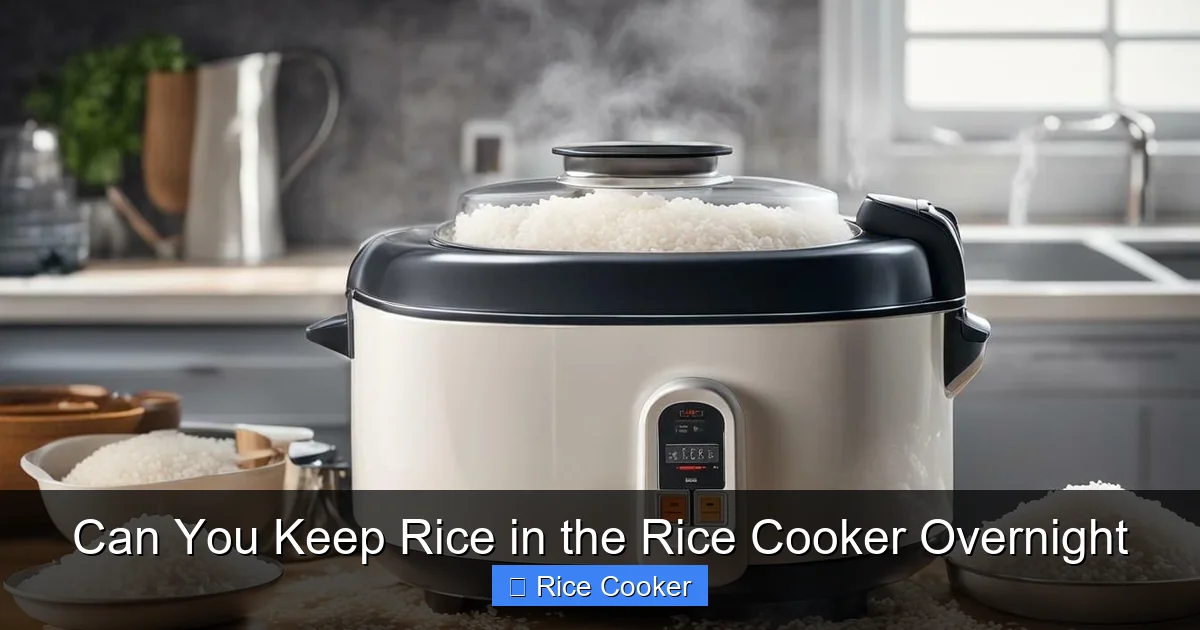
Yes, you can keep rice in the rice cooker overnight—but only if done correctly. Leaving cooked rice in a warm rice cooker after it’s finished cooking is unsafe due to bacterial growth. For short-term storage, transfer the rice to an airtight container and refrigerate within 1–2 hours. Always reheat thoroughly before eating. Proper storage is key to preventing food poisoning.
Key Takeaways
- Rice cookers are not refrigerators: They maintain warmth but don’t cool food, creating ideal conditions for bacteria like Bacillus cereus.
- Never leave rice in a warm rice cooker overnight: The temperature (86°F–104°F / 30°C–40°C) allows harmful bacteria to multiply rapidly.
- Refrigerate promptly: Cool rice quickly and store in airtight containers within 1–2 hours of cooking.
- Reheat properly: Reheat rice until steaming hot throughout (at least 165°F / 74°C) to kill any bacteria.
- Use within 3–4 days: Freshly cooked rice keeps best in the fridge for up to four days.
- Freezing extends shelf life: Frozen rice can last 6–8 months and is safe when thawed and reheated correctly.
- Check for spoilage signs: Discard rice that smells off, feels slimy, or shows mold.
📑 Table of Contents
- Can You Keep Rice in the Rice Cooker Overnight?
- Why Leaving Rice in the Rice Cooker Is Dangerous
- What Happens When You Leave Rice in the Rice Cooker All Night?
- Safety Guidelines: How to Store Rice Properly
- How to Safely Reheat Leftover Rice
- Can You Freeze Rice for Long-Term Storage?
- Signs That Rice Has Gone Bad
- Tips for Using Your Rice Cooker Wisely
- Common Myths About Rice Storage
- Conclusion: Safety Over Convenience
Can You Keep Rice in the Rice Cooker Overnight?
You’ve just finished making a perfect pot of rice—fluffy, golden, and ready to enjoy. But life gets busy, and instead of serving dinner right away, you decide to save the rest for tomorrow. Your rice cooker is still on, keeping everything warm. So, is it safe to leave rice in the rice cooker overnight?
The short answer: No, it’s not safe. While rice cookers are designed to keep food warm after cooking, they aren’t meant for long-term storage. In fact, leaving cooked rice in a warm rice cooker creates the perfect environment for dangerous bacteria to grow. That includes Bacillus cereus, a common culprit behind food poisoning from improperly stored rice.
In this article, we’ll dive deep into why keeping rice in the rice cooker overnight is risky, what the science says about bacterial growth, and how to safely store your rice so it stays fresh and safe to eat. We’ll also share practical tips, storage hacks, and answers to common questions so you can make informed choices in the kitchen.
Why Leaving Rice in the Rice Cooker Is Dangerous
When rice is cooked, it contains spores of Bacillus cereus. These spores are harmless until they’re exposed to the “danger zone” temperature range—between 40°F and 140°F (4°C to 60°C). Once rice cools into this range, the spores can germinate, grow, and produce toxins that cause food poisoning.

Visual guide about Can You Keep Rice in the Rice Cooker Overnight
Image source: i.ytimg.com
The Danger Zone Explained
The U.S. Food and Drug Administration (FDA) defines the danger zone as temperatures between 40°F and 140°F. This is where bacteria multiply most rapidly. Most rice cookers keep food at around 170°F to 190°F (77°C to 88°C), which kills bacteria—but only while the rice is still hot. The moment the rice begins to cool, especially in an insulated rice cooker, it enters the danger zone.
If you leave rice in a warm rice cooker overnight, it will slowly cool down over several hours. By the time morning comes, the internal temperature may have dropped well below 140°F. This gives bacteria a chance to thrive.
How Long Does It Take for Bacteria to Grow?
Bacteria like Bacillus cereus can double in number every 20 minutes under ideal conditions. Within 8 hours, a small amount of bacteria could multiply into thousands—enough to make you sick. Symptoms of rice-related food poisoning include nausea, vomiting, and diarrhea, usually appearing 6 to 15 hours after consumption.
Even if your rice cooker has a “keep warm” function, it doesn’t actively cool the food. Instead, it maintains a high temperature (usually above 140°F) for a limited time—often just 12 to 24 hours. Beyond that, the risk increases significantly.
What Happens When You Leave Rice in the Rice Cooker All Night?
Imagine this scenario: you cook rice at 6 p.m., let the rice cooker do its thing, and go to bed. By 8 a.m., the rice has been sitting in the cooker for 14 hours. What’s happening inside?

Visual guide about Can You Keep Rice in the Rice Cooker Overnight
Image source: eatingwell.com
Temperature Drop and Bacterial Growth
Most rice cookers lose heat gradually. After 6–8 hours, the internal temperature may drop below 140°F, especially if the room is cool. This means bacteria can start growing. The longer the rice stays in the danger zone, the higher the risk.
Texture and Flavor Changes
Leaving rice in the rice cooker overnight can also affect its texture. It may dry out, become sticky, or develop an off smell. These changes are signs of spoilage, even if the rice looks okay.
Cross-Contamination Risks
Opening the rice cooker to serve portions introduces air and potential contaminants. If raw foods (like vegetables or meat) were handled nearby, there’s a risk of cross-contamination, especially if the rice is eaten cold or reheated poorly.
Safety Guidelines: How to Store Rice Properly
So, what should you do with leftover rice? Follow these steps to keep it safe and delicious.
Cool Quickly
After cooking, cool rice as fast as possible. The FDA recommends cooling food from 135°F to 70°F within 2 hours, then from 70°F to 41°F within 4 more hours. Use shallow containers or ice baths to speed up cooling.
Store in Airtight Containers
Transfer cooled rice to clean, airtight containers. Glass or BPA-free plastic containers work well. Avoid metal containers, as they can react with acidic foods.
Label and Date
Always label containers with the date. Freshly cooked rice should be eaten within 3–4 days in the refrigerator.
Refrigerate Promptly
Place containers in the refrigerator within 1–2 hours of cooking. Don’t leave rice on the counter for more than 2 hours (or 1 hour if the room is above 90°F).
How to Safely Reheat Leftover Rice
Reheating rice properly is just as important as storing it correctly. Follow these steps to reduce the risk of foodborne illness.
Microwave Method
Place rice in a microwave-safe dish. Add a tablespoon of water to prevent drying. Cover with a lid or damp paper towel. Microwave on high for 1–2 minutes, stir, then microwave another 1–2 minutes until steaming hot throughout.
Stovetop Method
Heat rice in a saucepan over medium heat. Stir frequently and add a splash of water or broth to restore moisture. Continue heating until the rice is uniformly hot.
Oven Method
Preheat your oven to 350°F (175°C). Spread rice on a baking sheet or oven-safe dish. Cover tightly with foil. Bake for 15–20 minutes, stirring halfway through.
Important: Never reheat rice more than once. Each reheating cycle increases the risk of bacterial growth.
Can You Freeze Rice for Long-Term Storage?
Yes! Freezing is one of the safest ways to store rice for weeks or even months. Here’s how to do it right.
Portion Control
Divide rice into meal-sized portions. This makes it easier to thaw only what you need without wasting food.
Flash Freeze First
Lay portions on a baking sheet and freeze for 1–2 hours. Once frozen solid, transfer to freezer bags. Label with the date and contents.
Store in Freezer-Safe Containers
Use freezer bags or airtight containers. Leave a little headspace, as liquids expand when frozen.
Thawing Tips
Thaw rice in the refrigerator overnight. Reheat thoroughly before eating—never thaw at room temperature.
Frozen rice can stay safe for 6–8 months. Just make sure the freezer is set at 0°F (-18°C) or lower.
Signs That Rice Has Gone Bad
Trust your senses. If rice looks, smells, or feels off, don’t eat it.
Visual Clues
- Mold or fuzzy spots
- Discoloration (dark patches or gray tones)
- Dry, crumbly, or clumpy texture
Smell and Taste
- Sour, rancid, or ammonia-like odor
- Off or unpleasant taste
Safety First
When in doubt, throw it out. Food poisoning is no joke. Better safe than sorry!
Tips for Using Your Rice Cooker Wisely
Your rice cooker is a great tool—but it’s not a food storage unit. Here’s how to use it responsibly.
Avoid the “Keep Warm” Feature for More Than 12 Hours
Most manufacturers recommend using the keep warm function only for up to 12 hours. After that, transfer rice to the fridge.
Clean After Every Use
Residue from old rice can harbor bacteria. Wash the inner pot and lid after each use to prevent contamination.
Don’t Use the Rice Cooker for Other Foods
Some rice cookers can cook soups or stews, but never leave perishable foods (like chicken soup or beans) in the cooker overnight.
Consider a Timer or Smart Plug
Use a programmable timer or smart plug to turn off the rice cooker after a set time. This prevents accidental over-warming.
Common Myths About Rice Storage
Let’s clear up some misconceptions.
Myth 1: “If It Smells Fine, It’s Safe”
Bacillus cereus produces heat-stable toxins that aren’t affected by smell or taste. Even if rice looks and smells normal, it can still make you sick.
Myth 2: “Rice Cookers Kill All Bacteria”
Cooking rice at high heat kills bacteria, but it doesn’t eliminate spores. Those spores can survive and grow later if the rice isn’t stored properly.
Myth 3: “Leftover Rice Is Always Safe”
Only if handled correctly. Improper storage ruins even the freshest rice.
Conclusion: Safety Over Convenience
While it might seem convenient to leave rice in the rice cooker overnight, the risks far outweigh the benefits. The danger zone, bacterial growth, and potential for food poisoning make this practice unsafe. Instead, follow simple steps: cool quickly, store in airtight containers, refrigerate promptly, and reheat thoroughly.
Remember, rice cookers are for cooking, not long-term storage. Treat them with care, and your meals will be safer and tastier. With proper handling, leftover rice can be a quick, nutritious part of your meals—without the worry.
Next time you cook rice, plan ahead. Serve what you’ll eat now, and save the rest in the fridge. Your stomach (and your peace of mind) will thank you.
Frequently Asked Questions
Is it safe to leave cooked rice in the rice cooker overnight?
No, it’s not safe. The rice will cool into the danger zone (40°F–140°F), allowing harmful bacteria like Bacillus cereus to grow. This increases the risk of food poisoning.
How long can rice sit in the rice cooker on keep-warm mode?
Manufacturers typically recommend not exceeding 12 hours. After that, bacteria can begin multiplying as the rice cools into the danger zone.
Can I eat rice that’s been in the rice cooker for 8 hours?
It depends. If the rice was still above 140°F after 8 hours, it might be safe. But once it drops below that, bacterial growth becomes likely. When in doubt, discard it.
Does reheating rice kill all bacteria?
Proper reheating (until steaming hot throughout) can destroy bacteria, but it won’t break down toxins produced by Bacillus cereus. That’s why storage matters more than reheating.
How long does cooked rice last in the fridge?
Freshly cooked rice lasts 3–4 days in the refrigerator if stored properly in airtight containers.
Can you freeze rice from the rice cooker?
Yes, absolutely. Let it cool, portion it, and freeze in airtight containers. Frozen rice can last 6–8 months and is safe when thawed and reheated correctly.